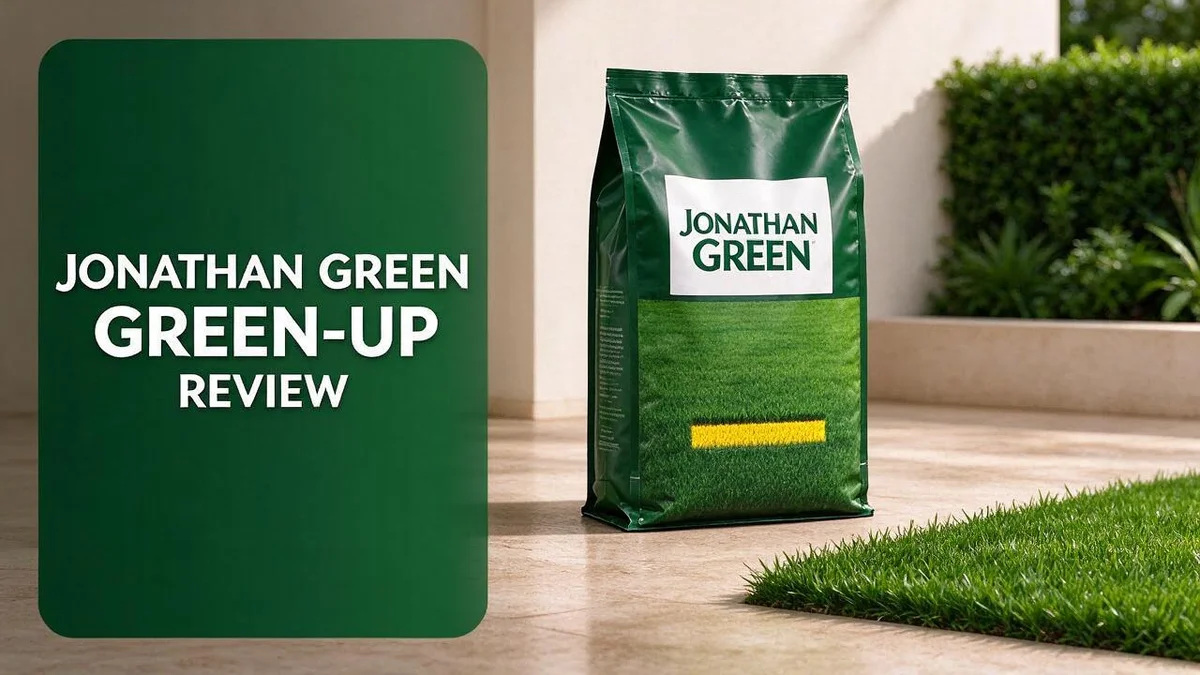
Jonathan Green Green-Up Review: Live Up To The Hype?
Is your lawn looking tired, patchy, or full of weeds? You are not alone. Many homeowners want a thick, green yard without spending every weekend on heavy work. Jonathan Green Green-Up aims to solve that problem.
The lineup includes two main options. The standard 29-0-3 Green-Up Lawn Food covers up to 5,000 square feet. The Weed & Feed version, rated 21-0-3, controls 250 broadleaf weeds and feeds your grass for up to three months.
In this honest review, we look at what this lawn care line does well. We also cover where it falls short. Keep reading to see if it fits your yard.
In a Nutshell
Here is a quick look at what this lawn care line offers.
- Lawn health focus: The Jonathan Green line aims to improve lawn health. It also helps protect grass against drought and disease.
- Triple action weed control: The Weed & Feed version kills spring and fall weeds. It controls 250 broadleaf weeds and feeds the lawn for up to 3 months. Apply it to a damp lawn for best results.
- Coverage for bigger yards: The standard lawn food covers up to 5,000 square feet of grass. That makes it a practical pick for larger yards.
- Forgiving grass seed: Reddit users call the Jonathan Green seed very forgiving. It looks strong with low maintenance care.
- Hard to find in stores: Reddit users say it sells mainly at small farm stores. Shoppers may not find it at big box retailers. Many people may need to search a bit to find a bag.
- Few customer ratings: The Walmart listing shows zero reviews so far. Readers may want to check other sources first before buying.
Nutrient Formula: 29-0-3 Green-Up vs. 21-0-3 Weed & Feed

- Made in United States
- Package length : 28.0"
Last update on 2026-11-25 / Affiliate links / Images from Amazon Product Advertising API
Every fertilizer bag shows three numbers. These numbers stand for nitrogen, phosphorus, and potassium. Nitrogen drives leafy green growth, so the first number matters most for a lawn that needs color.
The 29 0 3 Green Up formula is nitrogen heavy. It carries a high nitrogen load, which gives grass a deep green look fast. The middle zero means it has no phosphorus. That suits a lawn with healthy roots that just looks pale.
The 21 0 3 Weed & Feed formula takes a lighter approach. It still provides nitrogen for color, but at a lower level. Because it also targets weeds, the formula balances feeding with weed control.
Timing changes how each product works. The Weed & Feed version needs a damp lawn before you spread it. Moisture helps the granules stick to the weeds and grass, so the product works more evenly. Water the lawn lightly the day before if the soil feels dry.
The 3 at the end of each formula stands for potassium. Potassium supports stress resilience, so it helps grass handle heat and cold. Both bags share this level, so neither gives a clear edge here. Your choice rests on nitrogen and weed needs instead.
Overapplying either product can burn grass. Nitrogen rich formulas push fast growth, so spread them evenly and follow the bag rate. Sweep any granules off driveways and walkways right away.
Choosing between them comes down to your lawn’s needs. Pick the 29 0 3 formula if your grass looks thin and pale but weeds are not a major problem. Pick the 21 0 3 Weed & Feed if you see clover, dandelions, or other broadleaf weeds mixed in with your grass.
Broadleaf Weed Control Across Spring and Fall
Broadleaf weeds do not follow a set schedule. Dandelions and clover often appear in spring. Other weeds grow strong as cooler fall weather arrives.
That is why a plan for both seasons makes sense. The Weed & Feed version targets broadleaf weeds in both spring and fall.
Spring weeds often sprout once the ground warms up. Treating them early stops them from spreading seeds across your lawn.
Fall treatment matters too. Many broadleaf weeds store energy in their roots before winter. Clearing them then can weaken their return next year.
The label says the Weed & Feed version controls 250 broadleaf weeds. That is a wide range, yet results still depend on weed type and weather.
Thick grass crowds out weeds on its own.
The Weed & Feed version feeds for up to 3 months, so one application can support your turf through a good part of the season.
Bare patches invite weeds fast. Reseed thin areas soon after treating weeds so new grass fills the gaps.
Spread evenly and follow the label rates. Uneven coverage leaves untreated spots where weeds can return. Measure your lawn first so you use the right amount.
Mark spring and fall dates on your phone so you do not forget. A reminder helps you treat weeds while they are small and easy to control.
Weeds that survive one round often return. A second look a few weeks later helps you spot stragglers and decide whether a spot treatment is needed.
Coverage Area, Bag Size, and Feeding Duration
Measure your lawn before you buy. Grab a tape measure or check a property map. Multiply the length and width of each area. Add those numbers for your total square footage.
Match the bag size to your yard. The Jonathan Green line comes in a 15 lb bag. A bag like this suits a small front yard or a patch of backyard. Bigger lawns need more bags, so plan your shopping list early.
Divide and count. Divide your total square footage by the coverage printed on the label. This gives you a clear bag count. Buy one extra bag for edges, corners, and odd spots.
Think about feeding time. Lawn food works over weeks, not in one day. Choose a bag you can spread in one or two sessions. Leftover product should stay dry and sealed in a cool place.
Store the bag correctly. Moisture can clump the granules. Keep the bag off concrete floors and away from pets. Roll the top shut after each use.
Plan for the next season. Spring and fall care often means a second bag later. Note the date you opened the bag. This helps you track your lawn schedule.
Know when a bag runs short. Patchy edges or long strips may need extra product. Measure again before you buy more, so you do not overspread.
Check the label before each use. Rates can differ by product. Follow the printed coverage so your lawn gets the right amount. Read the label again each season.
Pick the size that fits your routine. A small bag keeps things simple for a backyard. A larger setup works well if you enjoy a long lawn project. Either choice can lead to a greener yard.
Top 3 Alternatives
Scotts Turf Builder

- FERTILIZER FOR NEW LAWNS: Scotts Turf Builder Starter Food for New Grass is a specially formulated...
- SAFE FOR ALL GRASS TYPES: This 24-25-4 NPK lawn care product is safe to use on any grass type

Last update on 2026-11-25 / Affiliate links / Images from Amazon Product Advertising API
Scotts Turf Builder feeds your lawn with slow-release nitrogen. This steady feeding helps grass grow thick and green over several weeks. It also supports strong roots, so your lawn handles heat and foot traffic better.
Spread it evenly with a broadcast spreader. Apply it in spring or fall for the best results. Water the lawn after feeding to help the nutrients soak in.
Miracle-Gro Lawn Food

- LASTING COLOR: Miracle-Gro Tree & Shrub Plant Food Spikes are fertilizer spikes for trees and shrubs...
- PROVIDES NUTRITION: These easy-to-use outdoor tree food spikes provide slow release nutrients directly to...
Last update on 2026-11-25 / Affiliate links / Images from Amazon Product Advertising API
Miracle-Gro Lawn Food works fast. Many people notice greener grass within a few days. It dissolves quickly in water, which makes it easy to mix and apply.
Use it during active growing seasons. Always follow the label directions to avoid burning your grass. Keep kids and pets off the lawn until the area dries.
Espoma Lawn Food

- CONTAINS: Turf-tone Fall Winterizer — a premium 8-0-5 fertilizer made from the finest natural and...
- FOR USE ON: Use for all lawns. Ideal for fescues, bluegrass, rye grass, St. Augustine and zoysia. Won’t...
Last update on 2026-11-25 / Affiliate links / Images from Amazon Product Advertising API
Espoma Lawn Food is an organic option. It uses natural ingredients that feed the soil and the grass slowly. This approach builds healthy soil over time.
Pet and family owners often prefer it. It works well for gardeners who want a greener yard without harsh chemicals. Expect steady results rather than a quick color boost.
Application Method on a Damp Lawn
Start by testing the lawn’s moisture. Walk across the grass and check the blades. They should feel cool and slightly wet, not soggy. Dry grass needs a light watering first.
Water the day before if the lawn is dry. A light sprinkle from a hose works well. Heavy watering can puddle the soil, so keep it gentle and even.
Use a spreader for even coverage. A broadcast or drop spreader helps you cover the yard in steady passes. Set the dial to the rate on the label before you start. Overlap each pass a little so no strip gets missed.
Pick the right time of day. A calm morning or cool evening works best. Wind can push granules onto driveways and flower beds, where they do nothing for your grass.
Check the forecast first. Heavy rain soon after you apply can wash product off the blades. Calm, dry weather gives the granules time to settle in.
Sweep up stray granules right away. Sidewalks and patios can hold product that you do not want there. Sweep it back onto the lawn or into the trash.
Keep kids and pets off until the grass dries. Granules can stick to paws and shoes. Wait until the lawn looks dry before anyone walks across it.
Mark your application date on the calendar. Knowing when you applied helps you judge when the next round fits. Your notes also show how the lawn responds over time.
Watch for thin spots after a few weeks. Look for bare or pale areas that need attention. Small touch-ups keep the whole yard even.
Where to Find It and Availability
Finding this lawn food often starts at a local farm store. Reddit users say small farm supply shops carry it more often than big box chains. Shoppers who like to buy close to home may have the easiest time.
Big box stores may not stock it on the shelves. You could walk the aisles and leave with nothing. A quick phone call saves time and gas.
Start with a search for feed stores and independent garden centers near you. Many of these shops know their lawn products well. Staff can tell you which bags are in stock and when a new shipment arrives.
Ask about special orders. If the shelf is empty, the store may order a bag for you. Some shops will also set a bag aside if you ask.
Online shopping is another option to consider. The Walmart listing is live, but it shows zero customer reviews so far. That means you should read the product details carefully before you buy.
Check the bag details before you purchase. Confirm the product name, the bag size, and the exact formula. The Weed and Feed version and the standard lawn food can look similar on the shelf.
Stock levels can change fast during spring. Lawn care products sell quickly once the weather warms. Buying early in the season helps you avoid empty shelves and last minute trips.
Plan your shopping trip around your lawn schedule. Pick up the bag before you need to treat the grass. That way, you can apply it on a calm day with a damp lawn.
Pricing and Bundle Value
Jonathan Green sells several bundles, and each one targets a different lawn need. The Weed & Fertilizer bundle pairs feeding with weed control. The Fungus Control and Summer Survival bundles focus on disease and heat stress instead.
Start with your main problem. If weeds crowd your grass, the Weed & Fertilizer bundle may fit well. If brown patches appear during hot weather, a summer bundle may serve you better. Matching the bundle to the problem keeps your choice simple.
Read every item name. Bundles can include products you already own. Doubling up on the same weed control can stress your grass. Compare the contents with what your lawn truly needs.
Skip the bundle if you are starting fresh. New lawns need different care. The starter fertilizer from the same brand works for seeding and sodding. It fits better than a lawn food bundle.
Use the label as your guide. The Walmart listing shows no customer reviews yet, so star ratings cannot guide you. The label lists coverage, timing, and application steps.
Trust those details first. Reddit users also warn against large retail seed brands such as Scotts. Read the facts on each bag before you decide.
Fungus and summer products work best when stress shows up. Apply each item only when your lawn needs it. Using them all year long wastes effort.
Bundles also save time on the hunt. You get matched products in one visit. Still, a bundle helps only when its contents match your lawn. Read the front and back of each bag first.
A bundle makes sense when several jobs need attention at once. A single bag suits one clear problem. Be honest about what your lawn needs before you choose.
Pros and Cons
Pros
– Marketed to improve overall lawn health
– Helps protect grass against drought stress
– Helps guard lawns against disease
– Weed & Feed uses 3-way action on broadleaf weeds
– Reddit users call the seed forgiving for beginners
Cons
– Weed & Feed only targets broadleaf weeds
– Grassy weeds need a separate fix
– Only a 15 lb size appears in the research
– No independent test results were found
Who Should Buy It
This lawn line fits some homeowners better than others. Start by measuring your yard. One bag covers up to 5,000 square feet, so bigger lawns may need more than one bag.
Busy homeowners often make the best match. A feed that lasts up to three months cuts down on trips across the yard. Fewer steps mean less planning each season.
Gardeners who like low effort care may enjoy it. Less daily attention fits a schedule that changes often. Some people simply prefer one product for the whole season.
Owners with weed trouble may also benefit. The Weed & Feed option targets broadleaf weeds like clover and dandelions. Grassy weeds need a separate plan, though.
People who want a simple routine can appreciate this approach. Read the label before every use. Follow the timing and rate printed on the bag.
Shoppers who like clear instructions will feel at ease. The bag names the product and gives directions for use. Matching the bag to your yard size keeps things simple.
Think about your local weather too. Heavy rain and long heat can change how your grass grows. Watch your lawn closely and adjust your care plan as seasons shift.
Anyone with a patchy lawn should check first. A thin, bare lawn may need reseeding before any feed helps much. A quick look at the soil can guide your choice.
Who should skip it? Lawns that need a full renovation may need more than this product offers. Owners of tiny yards may not need a large bag either.
Think about when your weeds appear. Plan your application before the lawn gets crowded, so you can keep up with growth. Good timing makes each step count.
Final Verdict
Our final verdict is a cautious yes. Jonathan Green Green-Up can serve many homeowners well. Still, the research leaves a few gaps you should weigh before you buy.
Think of it as a dependable base, not a quick fix. Your soil, sun exposure, and mowing habits shape the final result over time. No bag can override those factors on its own.
Shoppers should also weigh the store question. Reddit users say the product sits mostly at small farm stores. Call ahead so you do not waste a trip. That quick call saves time and fuel.
Missing reviews mean you must test it yourself. Public feedback is thin right now. A small test patch can show you how the grass responds before you treat the whole yard.
Experienced growers may want more control. This line suits people who prefer a simple plan over fine tuning. Those who enjoy adjusting soil care in detail may feel limited.
Keep a simple lawn log this season. Write down the date of each feeding, the weather, and any new weeds. A log shows what works and guides your next purchase.
Compare the label with your yard before you decide. Store staff can also point you to the right bag for your grass type.
Your final choice should rest on your yard. If you want a simple routine, weeds worry you, and you can find it locally, this line deserves a look. If not, explore other options with confidence.
Thanks for reading. Take your time, read the bag, and trust what your lawn shows you. A patient approach often brings the best results over a full growing season.
Frequently Asked Questions
Does my lawn need to be damp before I apply Weed & Feed?
Yes, the Weed & Feed version works best on a damp lawn. Water your grass lightly before you spread it. Then check the bag for the exact steps.
Where can I find Jonathan Green Green-Up?
Many shoppers find it at small farm stores rather than big-box retailers. Call a local store first to check stock. This saves a trip across town.
How do I measure my yard before buying?
Multiply your lawn’s length by its width to get the total square feet. Then compare that number with the coverage listed on the bag. Measure the areas you plan to treat, not the whole property.
Is my lawn safe for kids and pets after feeding?
Follow the label for waiting times. Keep pets and children off the grass until it dries. Read the bag for any extra safety notes.
Can I use Green-Up on a brand-new lawn?
The research does not say. Check the bag directions first. For seeding or sodding, the Veri-Green Starter Fertilizer from the same brand may fit better.

Hi, I’m Jane! As a passionate gardener and product enthusiast, I spend my days testing garden tools, comparing products, and writing honest reviews so you don’t have to learn the hard way. Got a question? Feel free to reach out — I’d love to hear from you!


