
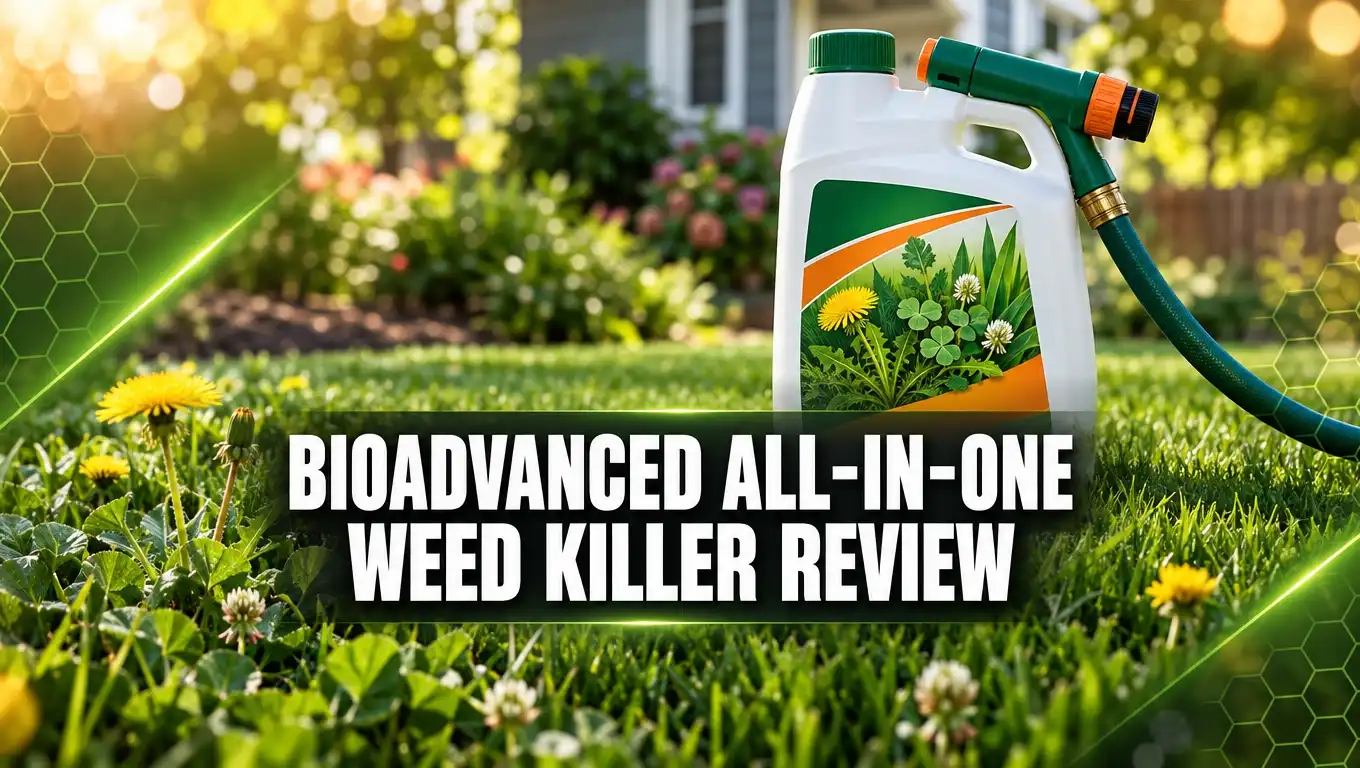
BioAdvanced All-in-One Weed Killer Review: Does It Really Clear Lawn Weeds and Crabgrass?
Weeds can ruin a nice lawn fast. Dandelions, clover, and crabgrass pop up every spring. You want a fix that works without hurting your grass.
Bioadvanced All In One Weed Killer aims to solve that problem. It promises one bottle that does much of the hard work for you.
Here is what you need to know. The product comes in a 1 gallon ready to use bottle. It also comes as a 40 oz or 32 oz concentrate. The 40 oz size covers up to 20,000 square feet.
The formula kills over 200 broadleaf weeds. It also tackles crabgrass. It penetrates to the root, so weeds have a harder time coming back. Rain within one hour will not wash it away.
Many users report good results when they use it as directed. Some saw little change on spotted spurge.
This review covers the features, pros, and cons.
In a Nutshell
-
Fast rain protection: Light rain soon after spraying will not wash the product away. You can treat your lawn on a cloudy morning and keep your afternoon plans.
-
Flexible setup options: You can use a tank sprayer or a hose end sprayer. Pick the tool that fits your yard size and your schedule.
-
A simple spring routine: Dandelions and crabgrass often appear at the same time. One spray session can tackle both problems on one trip outdoors.
-
Easy choice for mixed lawns: Many grass types can handle this formula. It suits lawns that include more than one kind of turf.
-
Test before you spread: One user saw little to no change on spotted spurge. Spray a small test patch first so you can see how your weeds respond.
-
Set realistic expectations: Reviews say it works well on some weeds but not every weed in the yard. Pair it with high mowing and regular deep watering for the best long term lawn health.
Weed and Crabgrass Control

- ALL-IN-ONE FORMULA: BioAdvanced's All-in-One formula kills listed lawn weeds and crabgrass without...
- KILLS TOUGH WEEDS: Control over 200 broadleaf weeds like dandelion, clover, and crabgrass using our...

Last update on 2026-11-25 / Affiliate links / Images from Amazon Product Advertising API
Crabgrass spreads fast in thin, sunny patches. Many homeowners only notice it after it has taken over the lawn.
This product targets crabgrass and broadleaf weeds in one step. You do not need a separate product for each pest.
Timing matters for crabgrass control. Apply when weeds are young and actively growing. Young plants take in more product than old, woody ones.
Mowing habits also play a role. Keep grass taller, around three inches, so it shades the soil. Shade makes it harder for crabgrass seeds to sprout.
Choose the right weather window. Apply on a calm day with mild temperatures. Strong wind can carry spray onto flower beds and vegetable plants.
Watch for regrowth. Some weeds may return from seed later in the season. Check the lawn every few weeks and treat new growth quickly.
Read the label before you start. It lists the weeds and grass types covered. Reading it first helps you avoid surprises.
Thick turf is your best defense. Dense grass leaves little room for weed seeds. Overseed bare spots in early fall while the soil stays warm.
Keep a simple log of your treatments. Write down the date, the weather, and the weeds you saw. This record shows what works in your yard over time.
Be patient with stubborn patches. Some weeds need a second application. Give the product a few weeks before you judge the results.
Protect pets and kids during application. Keep them off the lawn until the spray dries. Store the bottle in a locked place away from food.
Sweep clippings from sidewalks after spraying. This keeps the product where it belongs. Rinse your sprayer well before storing it for next season.
Lawn Safety and Grass Compatibility
Safety starts before you spray. Read the full label first. Check that your grass type appears on it. Keep the bottle away from food and drinks.
Keep kids and pets off the lawn until the spray dries completely. Give the area extra time to settle before anyone walks barefoot on it. Bring pets inside if they like to chew on grass.
Protect the plants you love. Spray on a still day so the mist stays on target. Drift can reach flower beds, vegetable rows, and young shrubs. Cover nearby plants or move them if you can.
Hose end sprayers can splash more than you expect. Wear gloves, long sleeves, and closed shoes. Aim the nozzle low, close to the weeds, to limit splatter. Rinse the sprayer well after every use.
Keep water safe. Do not spray near ponds, streams, or storm drains. Rain can carry leftover product into these areas. Leave a clear buffer zone along any water source.
Bees often visit blooming clover. Spray with care when flowers are open. Pollinators need healthy habitat, so avoid treating large flowering patches all at once.
Give new grass extra time. Young turf and freshly seeded patches need more time to recover. Wait until the grass looks mature before you treat the area. Confirm any waiting period on the label.
Store the product in its original container. Keep it locked away from children and pets. Never move leftovers into soda bottles or food jars. Keep empty containers out of the trash until local rules say how to dispose of them.
Watering habits matter too. Healthy roots handle stress better. Water deeply and less often so the grass stays strong. Strong grass also resists weeds better over time.
Wash your hands after you finish. Change clothes if you get spray on them. Wash those clothes separately from the rest of your laundry.
Formats and Coverage Area
This product comes in three options. Each one fits a different yard size and routine. Choosing the right format makes lawn care easier.
The one gallon ready to use bottle is the simplest choice. You do not need to mix anything. You pour it in and start spraying right away.
Concentrates work a little differently. You mix them with water before you apply them. This step gives you more control over the strength of each batch.
The 40 ounce concentrate is the larger option. It treats up to 20,000 square feet. This size suits big front yards, back yards, and wide open lawns.
The 32 ounce concentrate is the smaller choice. It treats up to 5,000 square feet. It fits small lawns, side yards, or a few problem patches.
Check your lawn size before you buy. Measure the length and width of each section. Then add the totals together. This number shows which format fits best.
Many homeowners overbuy or underbuy. A quick measurement helps you avoid both mistakes. It also keeps your treatment plan on track.
Think about how often you plan to treat weeds. A larger concentrate may suit a full season of care. A ready to use bottle may suit quick spot treatments in spring.
Coverage numbers assume the rates listed on the label. Using more product does not cover more ground. Stick to the directions for the best results.
Other brands sell different sizes too. One rival offers a 32 ounce ready to spray bottle. The company claims coverage for over 90 listed weeds. Compare the size and coverage details before you decide.
Each format gives you flexibility. Pick the size that fits your lawn today. Then think about what you will need next season.
Your lawn size is the best guide. Start with the area you need to treat. Then match that number to the format that works for you.
Top 3 Alternatives
Roundup Weed Killer

- Roundup Weed & Grass Killer₄ with Comfort Wand kills tough weeds and grasses to the root, including...
- It is rainproof in as fast as 30 minutes and produces visible results in hours
Last update on 2026-11-25 / Affiliate links / Images from Amazon Product Advertising API
Roundup Weed Killer is a well-known choice for homeowners. It works on many common weeds, such as dandelions and clover.
You can use it in lawns, patios, and garden beds. Results often show within hours, and full results can take a few days. Always read the label before you spray.
Scotts Weed B Gon

- WEED KILLER SPRAY FOR LAWNS: With a simple hose-end application, kill weeds in your lawn, including...
- FAST-ACTING WEED CONTROL: This weed killer hose sprayer kills listed weeds like crabgrass, dandelion...
Last update on 2026-11-25 / Affiliate links / Images from Amazon Product Advertising API
Scotts Weed B Gon is made for lawns. It targets broadleaf weeds like plantain and chickweed while helping your grass stay green.
Many people like its simple spray setup. Wait for a dry day with calm weather. Rain soon after spraying can wash the product away.
Spectracide Weed Killer

- KILLS WEEDS AND GRASSES: Use this weed killer spray on driveways and walkways, and around fences, trees...
- KILLS THE ROOT: Visible results as fast as 3 hours – replant new flowers, trees and shrubs after just...
Last update on 2026-11-25 / Affiliate links / Images from Amazon Product Advertising API
Spectracide Weed Killer is another popular pick for yards and driveways. It works well on stubborn weeds that grow in cracks and along edges.
You can choose a ready-to-use spray or a concentrate. Pick the option that fits how much area you need to cover. Keep kids and pets off treated areas until the spray dries.
Application Method and Rainfast Timing
Your sprayer shapes how well this product works. A tank sprayer gives steady pressure, so coverage stays even across the lawn. Many people find it easier to control than a hose end setup.
Before adding the product, test your sprayer with plain water. Watch the spray pattern on the driveway. A uniform fan shape means the nozzle works well. Clogs or uneven streams need fixing first.
Walk at a slow, steady pace. Keep the nozzle at the same height as you move. Stopping in one spot or swinging the wand creates heavy patches and missed areas. A steady rhythm gives the most even coat.
Start with the edges and borders. Then spray the open middle in straight rows. Overlap each pass a little so no strip gets skipped. Do not go back over the same area just to add more product.
Plan your work around the one hour rainfast window. Once the spray dries, rain will not wash it away. Check the forecast before you mix anything. A clear hour gives the product time to soak in. Set a timer on your phone if that helps you stay on track.
If a storm arrives early, do not panic. Wait for the lawn to dry, then check the results. Rain before the hour ends can reduce the results. You may need to treat the missed spots on a later day.
Mix only the amount you need for one session. Leftover mixed solution loses strength over time. Clean the tank and nozzle with plain water after each use. This keeps the sprayer ready for the next round.
Treat timing as a planning tool, not a rush. Pick a day with a clear forecast and free time. Set up your gear the night before. Lay out your sprayer, gloves, and measuring cup so you can start fast. Good prep saves time and stress on spray day.
Coverage Gaps and Limitations
Not every weed responds the same way. Reviews describe results on “some” weeds, not all. That difference matters when you plan your yard.
Spotted spurge stands out as a clear gap. One user reported little to no results on this weed. If it crowds your lawn, expect to need another plan.
The 200+ weed claim needs a closer look. The research does not list every weed tested. Check the packaging for the full list before you buy.
Competitors make bigger promises. One 32 ounce ready to spray option claims 90+ listed weeds. Its brand name is not given in the research, so compare lists carefully.
Community threads mention other alternatives too. Those options stay unnamed in the research. Treat forum tips as clues, not proof.
Customer reports are not lab results. The research relies on what people say they saw. Controlled, independent trials are not included, so results may vary.
Weed type and growth stage shape outcomes. Young seedlings often respond differently than mature plants. Older, deep rooted patches may need a second round or hand removal.
Crabgrass claims deserve attention too. The product lists crabgrass as a target. Results may differ based on how established the crabgrass is.
Thick lawns can hide weeds. Dense patches make it hard to spot every weed. Walk the lawn before and after you spray.
This product does not fix bare spots. Thin grass and open soil invite new weeds. Overseeding or other lawn repair steps may be needed.
Weed control works best as one part of a plan. It handles weeds already growing in your lawn. It does not stop every seed from blowing in later.
Set realistic expectations before you start. Give the lawn time to show results. Then decide whether a follow up treatment makes sense.
Pros and Cons
Pros
- It handles broadleaf weeds and crabgrass in one pass.
- It works on several grass types, so mixed lawns stay simple.
- Customers say it works well when they follow the label.
- You may not need a separate product for each weed type.
- It can fit into a regular weekend lawn care routine.
Cons
- Some weeds may still need a spot treatment later.
- It does not feed the lawn or fill in bare patches.
- Shoppers cannot easily check the full weed list before buying.
- Results can vary from one weed to the next.
Who Should Buy It
This product fits homeowners with a mixed lawn. Many yards have dandelions, clover, and crabgrass all at once. A single product that handles these weeds can cut down on guesswork.
Size matters too. The 32 ounce bottle suits small yards up to about 5,000 square feet. The 40 ounce concentrate covers larger lawns up to 20,000 square feet.
People with several grass types also benefit. The formula works on many grasses, so a lawn with mixed turf stays simple. You do not need to sort your yard by grass type first.
Anyone with a sprayer already on hand is a good match. A tank sprayer or hose end sprayer works with this product. If you own one, you can start soon after reading the label.
Busy households also gain from fewer products. One bottle can replace several separate sprays for different weeds. That means less time spent reading labels and mixing.
Weekend gardeners often like this kind of simple routine. It fits into a normal Saturday task list. Pick a calm day with a clear forecast and get it done.
Gardeners with a specific weed problem should look closer. Spotted spurge gave one user little to no results. If that weed fills your lawn, plan for a separate treatment.
Shoppers who need a full weed list before buying may want more proof. The research does not list every weed tested. Compare the label against your own yard to confirm it matches your needs.
Anyone hoping for lawn food or bare patch repair should look elsewhere. This product does not feed grass or fill in thin spots. It targets weeds only, so pair it with your regular care plan.
In short, this product suits busy homeowners with common weeds. Match the bottle size to your lawn, test your sprayer, and read the label before you start.
Final Verdict
Is this weed killer the right pick for you? It depends on your lawn, your weeds, and your expectations. For many mixed yards, it makes a practical first choice.
Think of this product as one tool in a bigger plan. A thick, healthy lawn crowds out weeds on its own. Mow at a higher setting and water deeply, so the grass can win the space.
Pay attention to the label. Mix the solution exactly as written. Measure your lawn before you spray, so you use the right amount. Careful measuring helps you get more from each bottle.
Shoppers should also check the lawn after each treatment. Walk the yard and note which weeds still stand. That simple record shows where extra attention is needed and guides any spot treatment later.
Timing matters just as much. Pick a calm day with little wind, so the spray stays on target. Check the forecast before you start, even though the product holds up after an hour.
Keep pets and kids off the treated area until the spray dries fully. Read the label for the exact safety steps. This quick habit protects your family and keeps your routine safe.
Give it a fair test. Start with a small section of the lawn first. Compare that area with the rest after a few weeks. This small test shows whether the product fits your yard before you commit to a full treatment.
So, what is the bottom line? This option suits people who want less clutter in the garage and fewer steps. It does not promise a perfect lawn.
Treat it as a strong starting point, and judge it by how your yard looks after a few weeks.
Final thought: Choose this product for one simple option against common lawn weeds. Skip it if you need a guaranteed result on every single weed. Honest expectations lead to happier results.
Frequently Asked Questions
What should I do if spotted spurge stays in my lawn?
Some users saw little to no change on spotted spurge. Pull the stubborn plants by hand or use a separate spot treatment. Watch the area over the next few weeks to see what changes.
Should I mow before I spray?
Wait a day or two after mowing. Weeds need fresh leaves to absorb the spray well. Hold off on mowing again until the spray dries and the label allows it.
Can I seed or plant new grass after spraying?
Check the label first. New seed often needs a waiting period before it goes down. Plan your reseeding for a later date so new sprouts stay safe.
How often can I apply it?
Follow the label for the repeat schedule. Never spray more often than the label says. Give the lawn time to show results before you apply another round.
Will the spray drift onto my flower beds?
Yes, drift can happen on windy days. Cover nearby plants with cardboard or a cloth before you start. Spray on a calm morning and keep the nozzle close to the weeds.

Hi, I’m Jane! As a passionate gardener and product enthusiast, I spend my days testing garden tools, comparing products, and writing honest reviews so you don’t have to learn the hard way. Got a question? Feel free to reach out — I’d love to hear from you!


