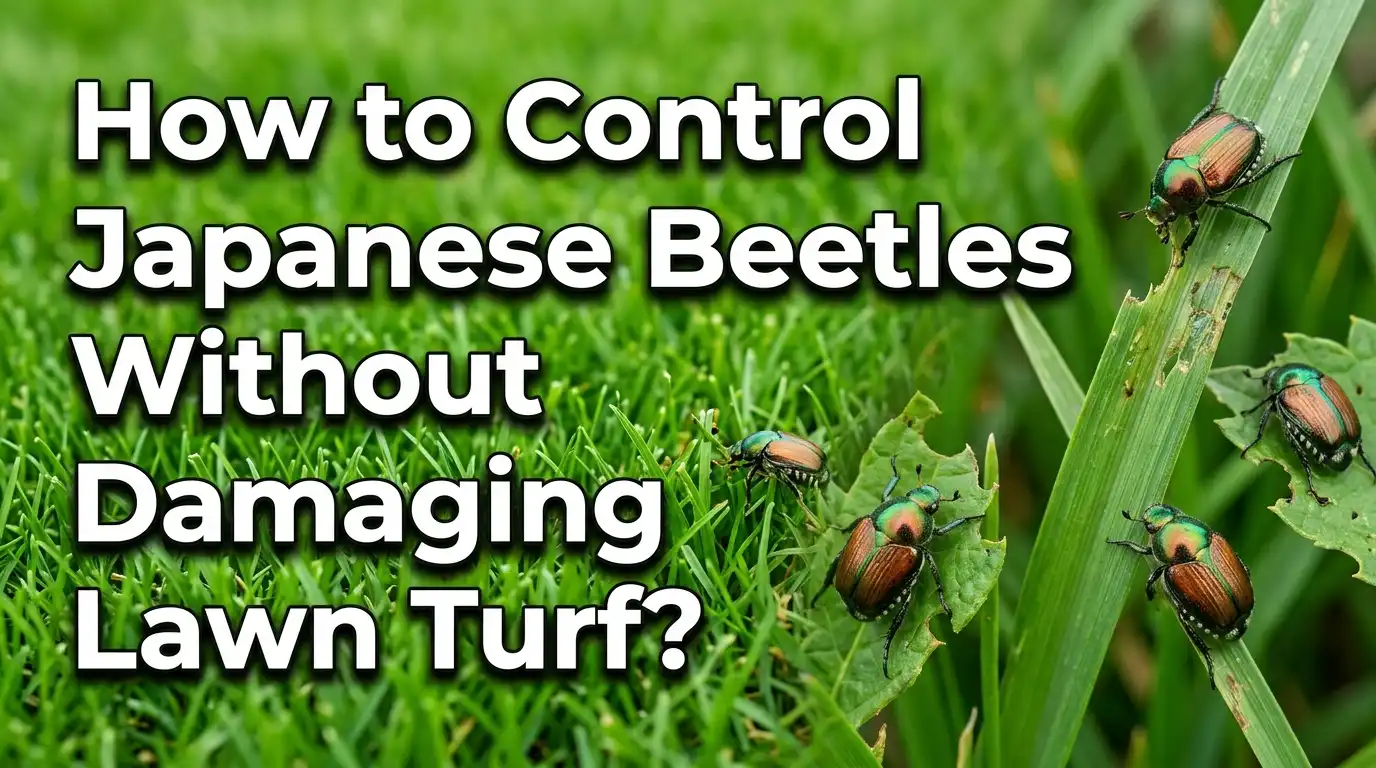
How to Control Japanese Beetles Without Damaging Lawn Turf?
Japanese beetles can turn a healthy yard into a frustrating mess. The adults chew leaves and flowers. The grubs feed below ground and weaken grass roots. Soon, your lawn looks dry, thin, and tired even when you water it.
The good news is simple. You do not need to scorch your lawn with random treatments. You also do not need to guess. The safest plan is to learn the beetle life cycle, confirm grub damage, use the right timing, and choose methods that protect turf instead of stressing it.
This guide gives you a clear, step by step plan. You will learn how to spot the real cause of turf injury, how to lower beetle pressure without making things worse, and how to repair weak grass so it recovers fast.
Key Takeaways
- Start with proof, not panic. Brown patches do not always mean Japanese beetle grubs. Drought, disease, dog spots, and compacted soil can look similar. Lift a small section of turf and count grubs before you treat. A healthy lawn often tolerates a low grub count without major loss. That one step can save money and spare your grass from needless stress.
- Timing matters more than force. Young grubs are easier to control than large ones. Preventive treatments work before or just as eggs hatch. Curative treatments work later, while grubs are still small and active near the surface. A late, random treatment often gives weak results and adds risk without solving the problem.
- Strong turf handles pressure better. Deep watering, proper mowing, and quick repair of thin spots help grass survive root feeding. Healthy turf can often tolerate up to about 10 grubs per square foot, and some irrigated lawns tolerate more. That means lawn care is part of beetle control, not a separate job.
- Adult control helps best on a small scale. Hand removal can reduce feeding damage on favorite plants. One study highlighted by extension experts found that once a day removal, especially in the evening, lowered damage. It is simple, cheap, and turf safe.
- Some popular methods are overhyped. Traps often attract more beetles than they catch near your yard. Milky spore has mixed support in extension advice. Beneficial nematodes can help, but results vary. Use these methods with realistic expectations, and build them into a full plan instead of trusting one magic fix.
- The best plan is integrated control. Combine monitoring, lawn care, adult removal, careful timing, and repair. That mix protects turf better than a spray first mindset. It also reduces wasted effort and gives you a lawn that stays stronger next season.
Understand the Japanese Beetle Life Cycle Before You Treat
If you want control without turf damage, you need to know when Japanese beetles are vulnerable. Adults usually show up in summer. They feed on leaves and flowers, then females move into the soil and lay eggs, often in turf. The eggs hatch in midsummer.
Young grubs begin feeding on grass roots. In fall, they keep feeding until cold weather pushes them deeper into the soil. In spring, they return near the surface and feed again before turning into pupae and then adults. That full cycle takes about one year.
This matters because the safest control points are tied to that cycle. Young grubs are easier to manage than older, deeper ones. Adults are easier to hand remove when numbers are still low. Large spring grubs and late fall grubs are harder to control well.
A common mistake is treating at the wrong time just because beetles were visible on roses or grapes. Adult feeding does not always mean the lawn below will suffer heavy grub damage. You need timing plus monitoring.
Pros of using the life cycle as your guide: you avoid wasted treatments, you protect turf from needless stress, and you spend less money on products that miss the target stage.
Cons: it takes patience and a little calendar tracking. It also means you may need different actions in summer, fall, and spring.
The best approach is simple. Watch adults in summer. Check turf for grubs later in the season. Plan prevention before egg hatch if your lawn has a real history of damage. That gives you control with a lighter touch.
Confirm Grub Damage Before You Do Anything Else
Brown grass does not always mean Japanese beetle grubs. That is why confirmation is the first real step. Grub damaged turf often looks dry, pale, or patchy. But drought stress, disease, poor soil, and pet spots can look very similar.
The fastest check is to grab a thinning patch and tug upward. If the sod lifts easily like a loose carpet, root feeding may be the cause. Grubs eat roots, so badly hit turf loses its anchor. Extension experts also note that skunks, raccoons, crows, and geese may dig in grub infested lawns, which gives you another clue.
For a better check, dig a sample. USDA APHIS advises cutting a square about 8 by 8 inches and about 3 inches deep. Turn the sod over, search the roots and soil, count the grubs, then multiply that number by 2.25 to estimate grubs per square foot. This is simple, direct, and far more useful than guessing from surface color alone.
Pros of confirming first: you avoid treating the wrong problem, you protect helpful insects, and you spare your lawn from extra chemical or mechanical stress.
Cons: it takes a few minutes and a shovel. Some people skip it because the damage feels urgent.
Do not skip it. A proof based decision is the safest decision for turf. Once you know the real cause, your next step becomes much easier and much smarter.
Know the Damage Threshold So You Do Not Overtreat
One of the best ways to protect lawn turf is to stop treating every small grub count like an emergency. A few grubs in the soil are normal. What matters is whether the lawn can still function.
This means your threshold depends on turf health. If your lawn is dry, compacted, or already thin, lower numbers may still cause visible injury. If your lawn is irrigated and well rooted, the same grub count may not justify treatment.
This is where many homeowners go wrong. They see one or two grubs and apply a product anyway. That can stress the turf, waste money, and fail to improve the lawn.
Pros of using thresholds: smarter decisions, fewer unnecessary treatments, better lawn health, and less disruption to soil life.
Cons: thresholds are not perfect. Weather, root depth, and animal digging can change how damage shows up.
Use the count as your guide, then add common sense. If you have weak turf plus rising grub numbers plus easy sod lift, act. If the lawn is stable and numbers are low, focus on care instead of panic. That is a much safer path.
Protect Turf First With Smart Watering and Mowing
Strong grass is your best buffer against Japanese beetle grub injury. Grubs prune roots. That makes turf less able to take up water. So a lawn under grub pressure becomes more likely to look drought stressed and can even die in hot, dry weather.
The simple fix is not constant watering. It is smart watering. Water deeply enough to support roots, especially during fall and spring recovery periods when grubs feed and turf needs strength.
Michigan State notes that irrigation in fall and spring is one of the best ways to avoid turf loss. At the same time, too much irrigation in late June and early July can make turf more attractive for egg laying adults. So timing matters.
Mowing matters too. Keep grass at a sensible height for your turf type and avoid scalping. Taller leaf blades support deeper roots and better moisture balance. That helps the lawn survive moderate grub feeding without falling apart.
Pros of this method: safe for people and pets once dry, supports overall lawn health, and improves recovery even if you later choose another control step.
Cons: it does not kill beetles by itself. It also takes steady care, not one quick fix.
Think of watering and mowing as your support system. A healthy lawn tolerates stress better, shows damage later, and repairs faster. That is how you fight the pest without hurting the turf you want to save.
Remove Adult Beetles by Hand Before Numbers Explode
Hand removal sounds old fashioned, but it remains one of the safest turf friendly ways to cut adult feeding on a small property. The goal is simple. Reduce adult numbers on favorite plants before they build feeding groups that attract even more beetles.
A simple routine works best. Check favorite plants daily during peak season. Knock beetles into soapy water. Repeat for one to two weeks during the heaviest flush. This is low cost, direct, and very kind to lawn turf because you are not treating the soil at all.
Pros: no turf injury, no soil residue, very cheap, and effective on a small scale. It also helps stop the feeding signal that draws more beetles to damaged plants.
Cons: labor goes up if you have many plants. It also works best on small gardens and yards, not large landscapes.
If you only do one low impact control step, this is a smart place to start. Small daily action often beats one late, heavy response.
Reduce Adult Feeding Pressure on Plants Near the Lawn
Japanese beetles love certain plants. Roses, grapes, lindens, crabapples, cherries, raspberries, basil, and several others are frequent targets. As they feed, damaged plants release scents that attract even more beetles. That means heavy adult feeding near your lawn can build a local beetle hotspot fast.
You can lower that pressure without hurting turf. Cover small, high value plants with fine netting during peak adult activity. Remove badly damaged blooms when practical. If you are planning future planting, avoid placing many highly favored host plants right next to stressed lawn areas. That does not remove beetles from the neighborhood, but it can reduce how strongly your own yard pulls them in.
This section matters because adult control on plants and grub control in turf are linked by yard pressure. Adults can fly in from nearby properties, so grub control alone will not stop every adult you see. Illinois extension clearly notes that treating your lawn for grubs will not have a big effect on adult beetles coming from elsewhere.
Pros: protects favorite ornamentals, reduces feeding signals, and avoids turf stress from unnecessary lawn treatments.
Cons: netting takes setup, and plant choice changes are a slow fix.
Still, this is a smart move. Less adult feeding near the lawn often means less drama in the whole yard.
Skip Beetle Traps Near the Lawn
Japanese beetle traps look helpful, but extension advice is very clear on one point. They often attract more beetles than they catch in the area around your yard. That can increase feeding pressure on plants and may even add beetles to the general turf area nearby.
This does not mean traps have zero value. They can help you notice when adults first emerge. Michigan State says they are useful as monitoring tools. But using them as your main control tool close to prized plants or lawn turf is usually a bad trade. You may feel busy and proactive while making the local problem worse.
If you already own traps, treat them as a distant monitoring tool only. Put them well away from the plants and turf you care most about. Even then, do not expect them to solve the problem.
Pros of traps: easy to use, useful for watching emergence timing, and they do catch many adults.
Cons: poor control near valued areas, may increase local damage, and can create false confidence.
This is one of the clearest cases where doing less is actually better. Skipping a poorly placed trap protects your lawn more than hanging one beside it. If you want real control, put your effort into monitoring, hand removal, turf care, and proper grub timing instead.
Try Beneficial Nematodes for a Lower Impact Grub Option
If you want a biological control that can target grubs without putting broad stress on the lawn, beneficial nematodes are worth a look. Extension sources often mention Heterorhabditis bacteriophora as a useful species for Japanese beetle grubs. These microscopic organisms enter the grub and kill it. They are applied as a soil drench and watered into the turf.
Application details matter a lot. Nematodes work best when grubs are present and active near the surface. Apply during cool, cloudy weather or in the evening. Water the lawn before and after application so the nematodes move into the root zone and do not dry out. This is not a dump and forget product. Living controls need the right conditions.
Pros: softer on the lawn system, good fit for people who want fewer synthetic inputs, and can work well when timing and moisture are right.
Cons: results can be inconsistent, heat and dry soil reduce success, and storage and handling matter because they are living organisms.
Nematodes are best for homeowners who are ready to follow directions closely. They are also a good fit for moderate infestations rather than a lawn that is already collapsing.
If you want a biological step with real potential, this is a smarter choice than many popular myths. Just be honest about the limits. Nematodes can help, but they work best as part of a full plan.
Be Careful With Milky Spore Claims
Milky spore gets a lot of attention in Japanese beetle discussions. The appeal is obvious. It is often described as a long lasting biological option that targets Japanese beetle grubs. That sounds ideal if you want turf safe control.
The problem is the evidence. Michigan State notes that there has been little scientific evidence over the past two decades showing that milky spore products work well enough for them to recommend it for grub control. That does not mean every user sees zero effect. It means the research support is too weak for strong confidence.
So where does that leave you? Use caution before building your whole lawn plan around it. If you want to test it, do so with modest expectations and keep using monitoring, turf care, and adult management. Do not assume it will rescue a lawn that already has clear grub injury.
Pros: targeted idea, low disruption appeal, and it may sound attractive for long term use.
Cons: inconsistent support from extension sources, slow results at best, and easy to overtrust.
This is a good example of why practical lawn care beats wishful thinking. A method can sound natural and still fail to give dependable control. If your goal is to protect turf this season, milky spore should be a side note, not your main plan.
Use Preventive Grub Treatments Only When the Lawn Has a History of Damage
Preventive grub control can be effective, but it should not be automatic every year. The best reason to use a preventive treatment is a clear history of grub damage in that lawn plus the right timing. Extension guidance points to a window before or around egg hatch, while grubs are still very young.
If you use a preventive, follow the label exactly. Water it in so it reaches the root zone. Mow first if there are flowering weeds, because pollinator safety matters. The safest preventive choice is the one used only when needed and at the right time.
Pros: very effective on young grubs, helps avoid major fall turf loss, and can reduce the need for rescue treatments later.
Cons: poor value if your lawn had no real grub problem, wrong timing reduces results, and some actives may affect more than the target pest.
A practical rule is this. If last year brought easy sod lift, heavy grub counts, or animal digging, a preventive may make sense. If not, monitor first. Preventive control is for repeat trouble, not fear based lawn care.
Use Curative Treatments Only for Active, Confirmed Infestations
Curative treatments are rescue tools. They are best when you have confirmed grubs, visible turf injury, and the timing still fits active feeding near the surface. Extension sources commonly cite curative options such as trichlorfon, carbaryl, or clothianidin, but rules and availability vary by state, so always check the current label and local extension advice before you buy or apply anything.
The key is speed plus timing. University of Minnesota notes that curative treatment works best from late July into mid September while grubs are still relatively small. Michigan State notes useful windows in late summer and again in spring for some curative products. In all cases, watering in after application is critical so the active ingredient reaches the grub zone.
Pros: fast action for real infestations, helpful when the lawn is already declining, and good for rescue use when threshold counts are exceeded.
Cons: narrow timing window, less turf friendly than cultural steps, and weaker results if grubs are large or deep in cool weather.
Use curative control like a fire extinguisher, not like room spray. Bring it out when the problem is proven and active. That keeps the lawn safer and your decision sharper.
Repair Turf Fast After Grub Damage
Once grubs weaken roots, the lawn can thin fast. Even after control, the turf may still need help. This is where many homeowners stop too soon. Killing grubs does not rebuild roots or fill bare spots by itself.
Start by raking out loose dead material where the sod will not recover. Lightly loosen the top layer of soil. Reseed with a grass type suited to your region and light level. Keep seed moist until it establishes. In thin but still living areas, a gentle fall or spring recovery plan with water and proper mowing may be enough. The sooner you repair, the less space weeds get to claim.
Watch for animal damage too. Skunks, raccoons, and birds often rip up turf while hunting grubs. Smooth those areas, press the sod back if possible, and water to help roots reconnect. Michigan State notes that animal feeding can add major visible damage beyond what the grubs alone cause.
Pros of quick repair: faster lawn recovery, better weed resistance, stronger root system before the next season, and a cleaner looking yard.
Cons: reseeding takes follow through, and heavy traffic can slow recovery.
A lawn that suffered grub injury needs support, not neglect. Repair is part of control. If you restore density quickly, the turf becomes far less likely to spiral into a second round of stress.
Build a Simple Season by Season Plan That Protects Turf All Year
The most effective way to control Japanese beetles without damaging lawn turf is to stop thinking in one time fixes. Think in seasons.
In early summer, watch for adult emergence and protect favorite plants. Hand remove beetles once a day if numbers rise. Skip traps near the lawn. In midsummer, note where adults are heavy and where turf stays moist, because those spots may get eggs. In late summer, sample suspicious turf and count grubs.
If the threshold is exceeded, choose the least disruptive option that still fits the level of damage. In fall, repair weak areas and keep turf growing steadily. In spring, check recovery, water wisely, and decide whether a history of damage justifies a preventive plan.
This season by season approach works because it combines monitoring, lawn strength, adult control, and grub timing. You are no longer reacting late. You are getting ahead of the problem without hitting the turf harder than needed.
Pros: fewer surprises, lower chance of overtreatment, healthier turf, and better results over time.
Cons: it takes notes and consistency.
Still, this is the smartest path for most homeowners. Japanese beetles are persistent. Your plan should be steady too. A calm, repeatable system protects the lawn better than any panic purchase ever will.
FAQs
How do I know if Japanese beetles or drought caused my brown lawn?
Check the roots. If the sod pulls up easily like a loose mat, grubs may be feeding below. Dig a small sample and count grubs in the root zone. Drought alone usually does not make turf peel back that way. If you find only a few grubs, the main issue may be water stress or another lawn problem.
Will treating grubs in my lawn stop adult Japanese beetles on my plants?
Usually no. Adults can fly in from nearby yards. Lawn grub control may reduce future local emergence, but it does not stop beetles from arriving from other places. That is why adult plant protection and hand removal still matter.
Are Japanese beetle traps a good idea for home lawns?
Usually no, especially near valued plants or turf. They can attract more beetles into the area than they catch. Use them only with care as a distant monitoring tool, not as your main control method.
What is the safest low impact control to try first?
Start with monitoring, deep lawn care, and hand removal of adults from favorite plants. If you want a biological grub option, beneficial nematodes can be worth trying when timing and soil moisture are right.
When should I sample for grubs?
Late summer into early fall is a very useful time because young grubs are active in the root zone and turf symptoms often begin to show. Spring checks can also help in lawns with a known history of damage.
Should I use a preventive grub treatment every year?
No. Use a preventive only if your lawn has a real pattern of grub injury or high counts. If you treat every year without proof, you may waste time and money and add stress without much benefit.

Hi, I’m Jane! As a passionate gardener and product enthusiast, I spend my days testing garden tools, comparing products, and writing honest reviews so you don’t have to learn the hard way. Got a question? Feel free to reach out — I’d love to hear from you!