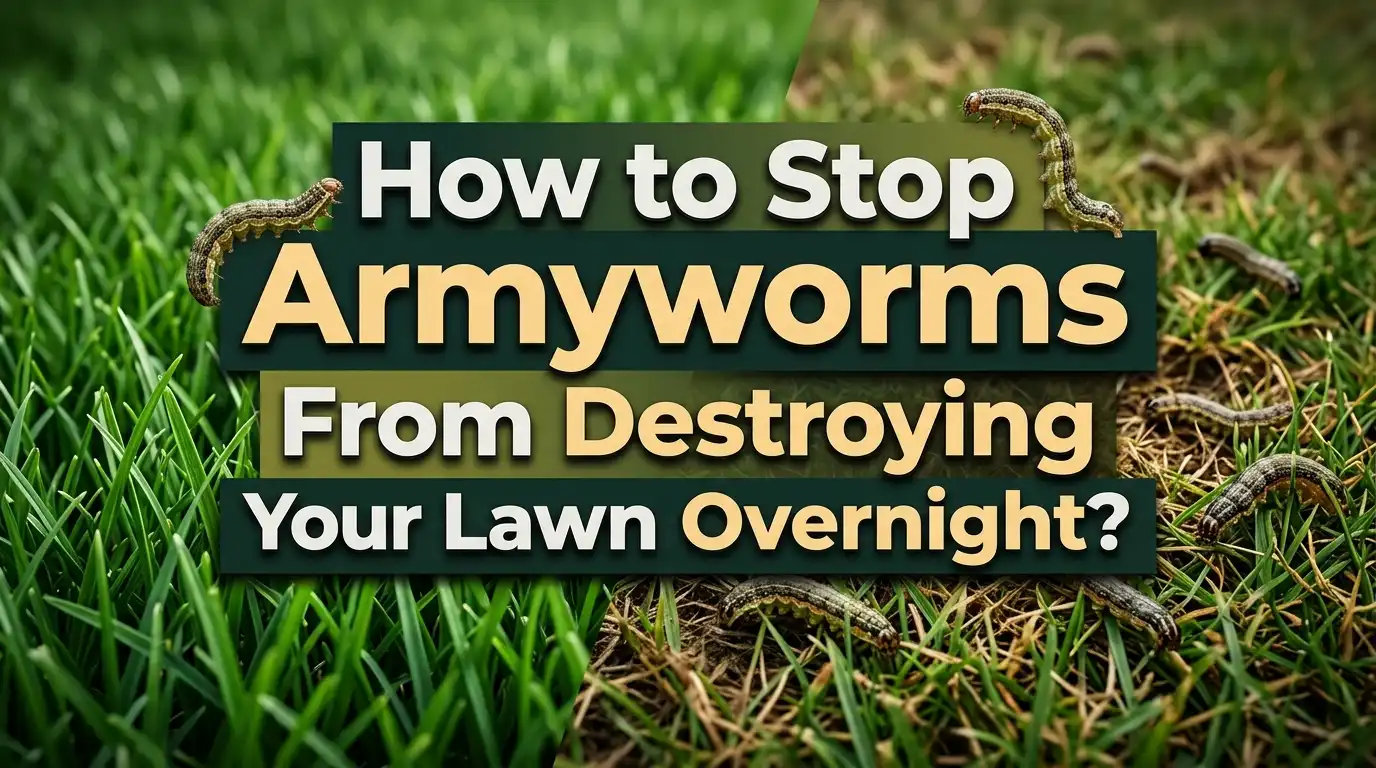
How to Stop Armyworms From Destroying Your Lawn Overnight?
You wake up one morning and notice brown patches spreading across your lawn. Yesterday, everything looked green and healthy. Today, large sections look chewed, ragged, and almost dead.
If this sounds familiar, you are probably dealing with armyworms. These destructive caterpillars feed in large groups, mostly at night, and can devastate an entire lawn in just 24 to 48 hours.
The worst part? Most homeowners do not even realize they have an infestation until the damage is already severe.
But there is good news. You can fight back. Whether you prefer chemical treatments, organic solutions, or a mix of both, this guide walks you through every step you need to identify, treat, and prevent armyworm damage. Keep reading, because your lawn’s survival depends on fast action.
Key Takeaways
- Armyworms feed mostly at night and in the early morning, which makes them hard to spot during the day. A soap flush test is the fastest way to confirm their presence in your lawn.
- Speed is everything. Armyworms can strip a lawn bare in one to two days. The moment you suspect an infestation, begin treatment immediately.
- Chemical insecticides containing bifenthrin or lambda cyhalothrin provide the fastest knockdown of armyworm populations. Apply them in the late afternoon or early evening for best results.
- Organic options like Bacillus thuringiensis (Bt) and spinosad work well on younger larvae but require repeat applications and careful timing. They are safest for pets, children, and beneficial insects.
- A healthy lawn recovers faster. Proper watering, fertilization, and mowing after treatment help grass bounce back within a few weeks for warm season varieties.
- Prevention is your best long term strategy. Regular scouting, proper lawn maintenance, and avoiding excess nitrogen fertilizer reduce the chances of a severe armyworm outbreak.
What Are Armyworms and Why Are They So Destructive
Armyworms are the larvae of certain moth species, most commonly the fall armyworm (Spodoptera frugiperda). The adult moths are grayish brown and fly at night, laying clusters of eggs on grass blades and other surfaces. A single female moth can lay up to 2,000 eggs during her lifetime.
Once the eggs hatch, the tiny caterpillars begin feeding immediately. Young larvae are light green and only a few millimeters long, making them almost invisible. As they mature, they grow up to 1.5 inches long and develop distinctive stripes along their bodies. The most recognizable feature is an inverted Y shaped marking on the head.
Armyworms are so destructive because they feed in massive numbers. They prefer well maintained, fertilized grass, which means your best looking lawn is their favorite target. They consume leaf blades from the top down, leaving behind ragged, brown, and transparent tips. A large infestation can eat an entire lawn down to the soil in just one or two nights.
They are most active during late summer and early fall, though infestations can occur from spring through late autumn depending on your region. Warm, moist weather creates ideal conditions for rapid population growth.
How to Identify Armyworm Damage on Your Lawn
The first sign of armyworm damage often looks like drought stress. You may see small brown patches that appear to be drying out, even though your lawn is getting enough water. These patches expand quickly, sometimes doubling in size overnight.
Look closely at individual grass blades. Armyworms chew from the edges inward, leaving ragged, torn edges rather than clean cuts. Early feeding damage creates transparent “window pane” marks on the grass where larvae have eaten the green tissue but left the thin membrane behind. This is a telltale sign that separates armyworm damage from drought or disease.
Another clue is the pattern of damage. Armyworms move in a wave across the lawn, feeding on one area before marching to the next. You may notice a sharp line between healthy green grass and completely brown turf. This advancing front is a strong indicator of an active infestation.
Birds congregating on your lawn in unusual numbers is another red flag. Birds love to eat armyworms, so a sudden increase in bird activity can signal a pest problem below. You may also notice increased wasp activity, as wasps prey on caterpillars as well.
Check your lawn during the early morning or late evening hours. Armyworms avoid midday heat and hide in the thatch layer during the day. If you see small caterpillars curled up near the soil surface at dawn, you have confirmed the problem.
The Soap Flush Test: Confirm Armyworms in Minutes
Before you spend time and money on treatment, confirm that armyworms are actually present. The soap flush test is the fastest and most reliable way to do this at home.
Mix 2 to 3 tablespoons of lemon scented liquid dish soap into one gallon of water. Pour this mixture evenly over a small area of your lawn, roughly one square yard. Focus on the edges of damaged areas where healthy grass meets brown patches. This is where active feeding is most likely happening.
The soapy water irritates the skin of any larvae hiding in the thatch. Within 5 to 10 minutes, armyworms and other caterpillars will crawl to the surface. Count the number of larvae you see. According to university extension services, finding three or more armyworms per square foot generally warrants treatment.
Pros of the soap flush test: It is cheap, easy, quick, and requires no special equipment. It gives you a clear answer within minutes and helps you target treatment to the right areas.
Cons of the soap flush test: It only reveals larvae in the specific area you test. You may need to repeat the test in several spots across your lawn to get an accurate picture of the full infestation. It also works best in the early morning or late evening when larvae are closer to the surface.
Perform this test before applying any insecticide. Accurate scouting prevents unnecessary chemical use and saves you money.
Chemical Insecticides: The Fastest Way to Kill Armyworms
Chemical insecticides deliver the quickest results against armyworm infestations. Pyrethroid based products are the most commonly recommended option by lawn care professionals and university extension offices. Active ingredients to look for include bifenthrin, lambda cyhalothrin, and permethrin.
These products kill armyworms on contact and provide residual protection for several days to weeks. Liquid sprays tend to work faster than granular products because they coat the grass blades where armyworms feed. For best results, mow your lawn before application to reduce the depth the insecticide needs to penetrate. Light watering several hours before treatment can also bring larvae closer to the surface.
Always apply chemical insecticides in the late afternoon or early evening. This is when armyworms become active and begin feeding, which maximizes contact with the treated grass. Morning applications are less effective because the larvae retreat into the thatch during the heat of the day.
Pros of chemical insecticides: They work fast, often killing armyworms within hours. They provide residual control that prevents reinfestation for days or weeks. They are effective against all larval stages, including larger, harder to kill caterpillars.
Cons of chemical insecticides: They can harm beneficial insects like bees, parasitic wasps, and ground beetles. They may pose risks to pets and children if not applied correctly. Repeated use can lead to pesticide resistance over time. Always follow the product label instructions carefully.
For severe infestations, a second application may be needed 7 to 14 days after the first treatment to catch any newly hatched larvae.
Organic and Natural Armyworm Treatments
If you prefer to avoid synthetic chemicals, several organic options can effectively control armyworms. The two most widely recommended are Bacillus thuringiensis (Bt) and spinosad.
Bt is a naturally occurring soil bacterium that produces a protein toxic to caterpillars. When armyworms eat grass treated with Bt, the protein destroys their gut lining. It is highly specific to caterpillars and does not harm bees, birds, pets, or humans. The key limitation is that Bt works best on young, small larvae. Larger caterpillars are much harder to kill with Bt alone.
Spinosad is another naturally derived insecticide made from soil bacteria. It works on contact and through ingestion, giving it an advantage over Bt. Spinosad is effective against a broader range of larval sizes and breaks down quickly in the environment. It is approved for organic use by many certification programs.
Pros of organic treatments: They are safe for pets, children, and beneficial insects. They break down quickly and leave no long lasting chemical residues. They are a good fit for households with environmental concerns.
Cons of organic treatments: They are slower acting than chemical alternatives. Bt degrades rapidly in sunlight and may need repeat applications every 3 to 5 days. They are most effective on young larvae and less reliable against mature caterpillars. Timing and consistent coverage are critical for success.
Neem oil is another organic option. It disrupts the feeding and growth cycle of caterpillars. However, it works more as a deterrent and growth regulator than a direct killer, so it is best used as a supplement to Bt or spinosad rather than a standalone treatment.
Beneficial Nematodes: A Biological Weapon Against Armyworms
Beneficial nematodes are microscopic worms that live in the soil and attack insect larvae. The species Steinernema carpocapsae is particularly effective against armyworms and other caterpillar pests. These nematodes enter the larvae through natural openings and release bacteria that kill the host within 24 to 48 hours.
To apply beneficial nematodes, mix them with water according to the package directions and spray the solution onto your lawn. The soil should be moist before and after application because nematodes need moisture to move through the ground. Apply them in the early morning or late evening to avoid UV damage, as sunlight kills nematodes quickly.
Beneficial nematodes establish themselves in your soil and can provide ongoing pest control for weeks or even months after a single application. They reproduce inside dead larvae, so their population grows as they find more hosts.
Pros of beneficial nematodes: They are completely natural and safe for people, pets, plants, and beneficial insects. They target soil dwelling pests without disrupting the ecosystem. They can provide long term suppression of multiple pest species.
Cons of beneficial nematodes: They are slower to act than chemical insecticides. They require specific soil conditions, including adequate moisture and moderate temperatures between 60 and 85 degrees Fahrenheit. They have a limited shelf life and must be used soon after purchase. Results can be inconsistent in very dry or very hot conditions.
Beneficial nematodes work best as part of an integrated pest management (IPM) approach, combined with other treatments for faster initial knockdown.
How to Time Your Treatment for Maximum Effectiveness
Timing can make or break your armyworm treatment. The wrong application time reduces effectiveness dramatically, regardless of which product you choose.
Mow your lawn first. Cutting the grass short removes excess canopy and allows insecticides to reach the larvae more directly. It can also mechanically destroy some caterpillars during the process. After mowing, lightly irrigate the lawn several hours before applying treatment. This encourages larvae to move closer to the grass surface where they will contact the insecticide.
Apply all treatments in the late afternoon or early evening. Armyworms are nocturnal feeders. They begin moving and eating as temperatures cool down at dusk. Treating just before this active period means the larvae will immediately encounter the insecticide as they start feeding. Morning or midday applications expose the product to hours of sunlight and heat before larvae even emerge, reducing potency.
For chemical sprays, avoid watering your lawn for at least 24 hours after application unless the product label states otherwise. This gives the active ingredient time to bond with the grass blades. For granular products, you typically need to water them in immediately to activate the ingredients in the soil.
Monitor your lawn for 3 to 5 days after treatment. If you still see active larvae, a second application may be necessary. Young larvae from recently hatched eggs may emerge after the initial treatment, so follow up scouting is essential. Repeat the soap flush test to determine whether retreatment is needed.
Why Armyworms Love Well Maintained Lawns
It seems unfair, but armyworms actually prefer the healthiest, greenest lawns. Research from Texas A&M AgriLife Extension confirms that armyworms are picky eaters that target well managed and heavily fertilized turf. This is because lush, green grass offers the most nutritious food source for growing larvae.
Lawns that receive frequent applications of quick release nitrogen fertilizer are especially attractive. High nitrogen levels make grass blades softer, more tender, and richer in protein, which is exactly what armyworm larvae need to grow quickly. This creates a frustrating situation for homeowners who invest heavily in lawn care.
One simple prevention strategy is to switch to slow release nitrogen fertilizers. Clemson University’s extension service recommends this approach to reduce the attractiveness of your lawn to armyworms. Slow release fertilizers provide a steady, moderate supply of nitrogen rather than a sudden flush of lush growth.
This does not mean you should neglect your lawn. A healthy lawn with strong roots will recover faster after an armyworm attack. The goal is to avoid over fertilizing and creating the ideal buffet for these pests. Balance is key. Keep your lawn well maintained, but do not push excessive green growth, especially during late summer and early fall when armyworm populations peak.
Overwatering can also create favorable conditions for armyworm moths to lay eggs. Moist, dense turf provides shelter and humidity that moths seek when choosing egg laying sites.
How to Use Integrated Pest Management (IPM) for Armyworms
Integrated pest management combines multiple control strategies to manage pests effectively while reducing reliance on any single method. For armyworms, an IPM approach gives you the best long term results.
Step one is monitoring. Scout your lawn regularly during peak armyworm season, which runs from mid summer through early fall in most regions. Use the soap flush test every one to two weeks in areas where you have had past problems. Early detection is the single most important factor in preventing serious damage.
Step two is cultural control. Maintain proper mowing height for your grass type. Water deeply but less frequently to encourage deep root growth. Use slow release fertilizers to avoid creating overly lush, attractive turf. Remove thatch buildup, which gives armyworms a place to hide.
Step three is biological control. Encourage natural predators in your yard. Birds, parasitic wasps, ground beetles, and spiders all feed on armyworms. Avoid broad spectrum insecticides that kill these beneficial organisms. Consider beneficial nematodes for ongoing soil level pest suppression.
Step four is chemical control as a last resort. If scouting reveals a threshold level infestation (three or more larvae per square foot), apply the least toxic effective treatment first. Start with Bt or spinosad. Escalate to synthetic pyrethroids only if the infestation is severe or organic methods prove insufficient.
Pros of IPM: It reduces chemical use, preserves beneficial insects, prevents resistance buildup, and provides sustainable long term control.
Cons of IPM: It requires more effort, consistent monitoring, and patience. It may not provide the instant knockdown that severe infestations demand.
How to Recover Your Lawn After Armyworm Damage
Once you have eliminated the armyworms, your focus shifts to lawn recovery. The good news is that warm season grasses like Bermuda, Zoysia, and St. Augustine usually recover on their own if the root system and crown are still intact. Armyworms primarily eat the leaf blades, so the growing points often survive.
Start by watering deeply and consistently. Give your lawn 1 to 1.5 inches of water per week, split into two or three sessions. Deep watering encourages roots to grow stronger and supports new blade growth. Avoid light, frequent watering that keeps only the surface moist.
Raise your mower blade during recovery. Cutting grass too short puts additional stress on plants that are already weakened. Allow blades to grow taller than usual so they can capture more sunlight and produce more energy through photosynthesis. This speeds up the recovery process significantly.
Apply a balanced fertilizer two to three weeks after the infestation ends. A slow release formula gives the lawn a steady supply of nutrients without triggering the kind of rapid growth that attracts new armyworms. Avoid heavy nitrogen applications right away.
For cool season grasses like fescue and ryegrass, recovery may be slower. These grasses do not spread by runners the way Bermuda and Zoysia do. If the damage is severe, you may need to overseed bare patches. Wait until soil temperatures are appropriate for your grass type before seeding.
In extreme cases, resodding may be the fastest path to a restored lawn. Core aeration before reseeding or resodding improves soil conditions and helps new roots establish more quickly.
How Moth Traps and Monitoring Can Prevent Future Outbreaks
Preventing armyworm damage starts with monitoring adult moth activity. Pheromone traps attract male armyworm moths using synthetic versions of the chemicals released by female moths. These traps do not eliminate the population, but they tell you when adult moths are active in your area.
Place traps around the perimeter of your lawn starting in late spring or early summer. Check them weekly. A sudden increase in moth captures signals that egg laying is likely happening on or near your property. This gives you a two to three week warning before larvae become large enough to cause visible damage.
Light traps can also attract armyworm moths, which are drawn to lights at night. If you notice a large number of grayish brown moths fluttering around your porch lights or outdoor fixtures, inspect your lawn within the next week for tiny, newly hatched larvae.
Pros of moth traps: They provide early warning of impending infestations. They are inexpensive and easy to maintain. They help you time preventive treatments precisely.
Cons of moth traps: They do not reduce armyworm populations on their own. They require regular checking and interpretation. Wind and weather can affect trap performance. They may also catch non target moth species, which can create confusion.
Combine moth monitoring with regular soap flush tests for the most accurate picture of armyworm activity on your property. This two pronged approach catches problems early, before you lose a single patch of grass.
Common Mistakes Homeowners Make When Fighting Armyworms
Many homeowners lose their lawns to armyworms not because they do nothing, but because they make critical timing or application errors. Knowing these common mistakes helps you avoid them.
Waiting too long to act is the biggest mistake. Armyworms grow exponentially. A small, manageable population today can become an overwhelming infestation within three to five days. The moment you see signs of damage or confirm larvae with a soap flush test, begin treatment immediately. Every day of delay means significantly more damage.
Applying insecticides at the wrong time of day is another common error. Spraying at noon wastes product because UV light degrades many insecticides, and larvae are hiding deep in the thatch. Always treat in the late afternoon or evening.
Using granular insecticides without watering them in reduces their effectiveness. Granules need moisture to release active ingredients into the soil and thatch where larvae hide. Read the label and irrigate as directed.
Ignoring follow up treatment is a frequent problem. A single application may kill existing larvae but miss eggs that hatch later. Scout your lawn five to seven days after treatment and reapply if you find new larvae.
Over fertilizing with quick release nitrogen after an attack is another trap. While your lawn needs nutrients to recover, a heavy dose of fast acting nitrogen creates the exact conditions that attract new armyworm infestations. Use slow release products instead.
Finally, killing off natural predators with broad spectrum pesticides removes your lawn’s built in defense system. Birds, beneficial wasps, and ground beetles eat large numbers of armyworms. Targeted treatments preserve these allies.
When to Call a Professional Lawn Care Service
Sometimes an armyworm infestation is too severe or too advanced for DIY treatment. Knowing when to call a professional saves you time, money, and a lot of frustration.
Call a professional if the infestation covers a large area of your lawn and is spreading quickly. Professionals have access to commercial grade equipment that delivers uniform coverage across large properties. Backpack sprayers and hose end attachments used by homeowners can leave gaps that allow larvae to survive and continue feeding.
You should also seek professional help if your first treatment did not work. Repeated treatment failures may indicate pesticide resistance, incorrect product selection, or improper application technique. A lawn care professional can assess the situation and choose the most effective product for your specific conditions.
If you are unsure whether your lawn can recover on its own, a professional can evaluate the extent of root and crown damage. They can recommend whether your lawn needs simple aftercare, overseeding, or complete resodding.
Pros of hiring a professional: They have expertise, commercial products, and equipment for fast, effective treatment. They can diagnose the problem accurately and recommend a recovery plan.
Cons of hiring a professional: It costs more than DIY treatment. You may need to wait for scheduling availability, which is a problem when armyworms are actively feeding. Not all lawn care companies specialize in pest management.
A good middle ground is to handle minor infestations yourself and call a professional for severe or recurring problems. Either way, do not wait. Armyworms will not slow down while you make a decision.
Long Term Prevention Strategies to Protect Your Lawn
Prevention is always cheaper and easier than treatment. Building a lawn that resists armyworms and detecting them early are the two pillars of long term protection.
Choose resistant grass varieties if you are planting a new lawn or overseeding. Some turf grass cultivars contain endophytes, which are beneficial fungi that live inside the grass plant and produce compounds toxic to many insect pests, including armyworm larvae. Endophyte enhanced fescue and ryegrass varieties offer built in pest resistance.
Maintain proper mowing practices. Keep your grass at the recommended height for its species. Mowing too short stresses the plant and weakens its ability to recover from pest damage. Mowing regularly also removes moth eggs that may have been laid on blade tips.
Reduce excessive thatch. A thick thatch layer gives armyworm larvae a place to hide during the day and protects them from insecticide applications. Dethatch your lawn once a year if the thatch layer exceeds half an inch. Core aeration also helps break up thatch and improve soil health.
Water wisely. Deep, infrequent watering builds strong root systems. Avoid evening watering that keeps the lawn surface moist overnight, as this creates an inviting environment for moths to lay eggs.
Scout regularly. Perform a soap flush test every two weeks during peak season (July through October in most areas). Catching an infestation when larvae are small makes treatment far easier and more effective. A few minutes of scouting each week can save your entire lawn.
Finally, build a diverse landscape around your lawn. Flowering plants and native shrubs attract parasitic wasps, birds, and other natural enemies of armyworms. A balanced ecosystem provides free, ongoing pest control.
Frequently Asked Questions
Can armyworms kill my lawn permanently?
Armyworms eat grass blades but usually do not destroy the root system or crown. Warm season grasses like Bermuda and Zoysia almost always recover within a few weeks with proper watering and fertilization. Cool season grasses like fescue may need overseeding if damage is severe. Permanent lawn death is rare if you act quickly and provide good aftercare.
What time of year are armyworms most active?
Armyworms are most active during late summer and early fall, typically from August through October. However, in warmer southern states, infestations can begin as early as June. Adult moths migrate northward on wind currents each year, so the timing varies by region and weather patterns.
Will my lawn grow back after armyworm damage?
Yes, in most cases. Warm season grasses have underground runners (stolons and rhizomes) that survive armyworm feeding and send up new growth. Cool season grasses that grow in clumps may need reseeding in heavily damaged areas. Consistent watering and a balanced fertilizer speed up recovery significantly.
How do I know if I have armyworms or another lawn pest?
Armyworms leave ragged, chewed grass blade edges and create rapidly expanding brown patches with a sharp border between healthy and damaged turf. The soap flush test will bring larvae to the surface for identification. Look for striped caterpillars with an inverted Y marking on the head. Grubs, by contrast, feed on roots below ground and cause spongy turf that pulls up easily.
Is it safe to let my pets on the lawn after armyworm treatment?
This depends on the product used. Organic treatments like Bt and spinosad are generally safe for pets once the application has dried. Chemical insecticides require more caution. Always read the product label for specific reentry guidelines. Most synthetic insecticides recommend keeping pets off treated areas for 24 to 48 hours after application.
Can I prevent armyworms from coming back next year?
You cannot guarantee complete prevention because adult moths fly in from distant areas. However, you can reduce the risk significantly. Use slow release fertilizers, scout regularly, encourage natural predators, and consider preventive insecticide applications during peak moth flight season. Healthy lawns with good cultural practices experience less severe infestations and recover faster.

Hi, I’m Jane! As a passionate gardener and product enthusiast, I spend my days testing garden tools, comparing products, and writing honest reviews so you don’t have to learn the hard way. Got a question? Feel free to reach out — I’d love to hear from you!