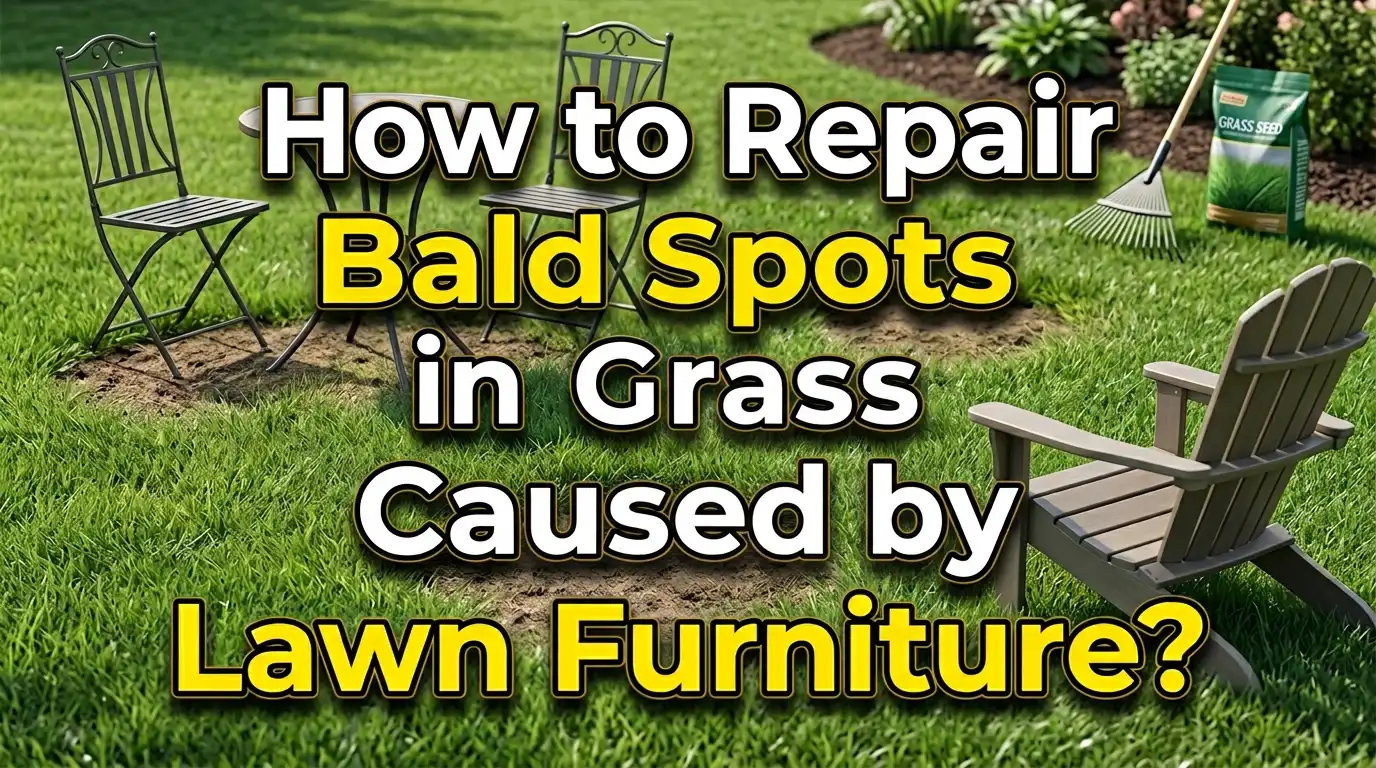
How to Repair Bald Spots in Grass Caused by Lawn Furniture?
A chair, table, bench, or lounger can leave your lawn looking tired fast. The grass under the legs gets pressed down. Light cannot reach the blades well. Air and water stop moving through the soil the way they should. After a while, you see yellow grass, thin spots, or a bare patch that stands out every time you look at the yard.
The good news is that this problem is common, and it is fixable. You do not need expert tools for every patch. In many cases, you can bring the grass back with a few simple steps, the right timing, and steady aftercare.
This guide shows you exactly what to do, what to avoid, and how to keep the same problem from coming back.
In a Nutshell
- Remove the pressure first. If furniture still sits on the same area, grass cannot recover well. Move the item and keep the patch open. Grass needs space before it needs seed.
- Check whether the grass is dead or only flattened. Some spots look worse than they are. If the crown and roots still have life, light raking, watering, and a few days of rest may help the area green up again.
- Loosen compacted soil before any repair. Furniture legs press the soil tight. That blocks roots, water, and air. If you skip this step, seed often fails. A hand fork, garden rake, or core aerator can help.
- Match the repair method to the size of the problem. Small spots often do well with seed. Medium spots may need top dressing plus seed. Large or urgent repairs may do better with sod or plugs. Each method works best in the right situation.
- Time matters a lot. Cool season lawns usually recover best in late summer or early fall. Warm season lawns usually recover best in late spring or early summer. If you repair at the wrong time, growth slows and weeds get ahead.
- Protect the new grass after repair. Water lightly and often at first. Keep feet and furniture away. Wait to mow until the new grass is tall enough. Most failed lawn patches fail after planting, not during planting.
Why Lawn Furniture Causes Bald Spots in Grass
Lawn furniture hurts grass in two main ways. First, it blocks sunlight. Second, it presses the grass and soil down. Grass blades need light to make energy. Roots need loose soil with small air spaces. When a heavy chair or table sits in one place too long, both needs get cut off.
The damage usually starts slowly. You may first see flattened grass or a pale ring around each leg. Then the area turns yellow or brown. If the furniture stays put, the grass crown can die. The soil below may also harden. That hard layer is a big reason many bare spots do not fill in on their own.
Moisture adds another problem. After rain or watering, furniture traps dampness and slows air movement. This can weaken grass even more. In hot weather, the patch may also heat up faster than the rest of the lawn. In shaded yards, the area may stay wet too long. Both conditions stress turf.
Some grasses handle pressure better than others. Spreading warm season grasses can recover faster in active growth. Many cool season lawns need reseeding once a true bald spot appears. A dead patch is not a waiting game. It is a repair job.
The good part is that furniture damage is usually local. That means you can target the problem without redoing the whole lawn.
Pros of fixing furniture damage early: less work, lower cost, faster fill in, fewer weeds.
Cons of waiting too long: harder soil, larger bare area, more weed growth, slower repair.
Check the Damage Before You Repair
Before you grab seed or sod, take a close look at the patch. This step saves time and helps you pick the right fix. A flat patch does not always mean dead grass. Sometimes the grass is bent and weak, but the crown still lives.
Start by moving the furniture away. Then lift the grass with your fingers or a leaf rake. Look at the base of the plants. If you still see some green tissue near the crown, the patch may recover with light care. If the area has bare soil, loose dead blades, or a dry straw look with no green at the base, you likely need a full repair.
Press your hand into the soil. If it feels hard like packed clay, compaction is part of the problem. Push a screwdriver or hand fork into the patch. If it goes in with effort, roots will struggle too. This is your sign to loosen the area before planting anything.
Also ask what caused the spot besides weight. Did the furniture stay there for weeks? Did people sit there often and add foot traffic? Did a grill mat, rug, or cover sit under it? Did water collect there after rain? These details matter because a patch will return if the cause stays in place.
Size matters too. Small spots are easy to seed. Medium spots may need top dressing first. Large patches may look better faster with sod or plugs.
A good repair starts with a clear diagnosis. If you guess wrong, you may repeat the work in a few weeks.
Pros of careful inspection: better method choice, fewer wasted materials, faster success.
Cons of skipping inspection: poor seed result, missed soil issue, repeat damage.
Start With the Simplest Recovery Test
Not every furniture mark needs a full lawn patch. If the grass is only flattened, you may be able to wake it up without reseeding. This simple test is worth trying first, especially if the furniture sat there for only a short time.
Rake the area lightly with a leaf rake or your hand. Lift the blades so air and light can reach them again. Then water the patch well, but do not flood it. Give it two to five days and watch for color change. Grass that still has life often starts to stand up and regain green color after pressure is removed.
You can trim back any mushy or fully dead blades during this test. That helps you see what remains alive. If the area stays pale but shows some green tips, keep it lightly moist and give it another few days. Patience can save you from reseeding a spot that was only stressed.
This approach works best in mild weather. It works less well in extreme heat, deep shade, or badly compacted soil. If the soil feels very hard, even living grass may not bounce back well without loosening the surface.
A recovery test is also useful if you are unsure about timing. If you are outside the best seeding season, a simple recovery attempt may buy time until a better planting window opens.
Still, do not wait too long if the patch stays bare. Bare soil invites weeds, dries out fast, and becomes harder to fix later.
Pros of the recovery test: free, quick, low effort, good for minor damage.
Cons of the recovery test: does not solve dead grass, may delay repair if used too long, limited help for compacted soil.
Clear Dead Grass and Open the Soil
If the patch does not recover, the next job is cleanup. Dead grass sitting on top of the soil blocks seed contact and traps moisture in the wrong way. New grass needs a clean start.
Use a steel rake or hand cultivator to remove dead blades, loose roots, and surface thatch from the bald spot. Pull out weeds too. If weeds already own the patch, remove them before you seed. Seed and weeds should never fight on day one.
After cleanup, scratch the soil surface. For a small spot, loosen the top one to two inches with a hand fork or sturdy rake. For a larger area, use a garden cultivator. Your goal is simple. Break the hard crust and create a crumbly top layer where seed can settle.
Level the area as you work. Furniture legs can leave dips. Fill small low spots so the patch sits even with the lawn around it. If the patch sinks, water may pool there later. That can slow germination and weaken roots.
Do not bury the area under a thick layer of loose material. New grass seed needs contact with real soil, not a fluffy pile. The texture should feel loose on top but firm underneath.
This step often decides whether the repair lasts. Many failed lawn patches happen because the seed sits on hard ground and dries out before rooting.
Pros of proper cleanup and soil opening: better seed contact, better root growth, smoother patch, lower weed pressure.
Cons: takes time, can feel messy, may expose how hard the soil really is.
Fix Compacted Soil So Roots Can Grow
Compaction is the hidden problem under many furniture spots. Even if you reseed well, roots struggle in tight soil. Water may run off instead of soaking in. Air stays out. The patch stays weak.
For a small bald spot, use a hand fork and push it into the ground several times across the area. Wiggle it gently to open the soil. For a larger patch, a core aerator works better because it removes plugs and creates room for air and roots. Core aeration helps more than simple spike holes because it removes soil instead of only pushing it aside.
If the patch sits in clay soil, do not try to fix it by dumping sand alone on top. That often creates a hard layer over time. A light top dressing of compost blended into the loosened surface is usually more helpful for small repairs.
Also check drainage. If the furniture spot sits in a low area that stays wet, compaction may keep coming back. In that case, you may need to raise the patch a little, redirect water, or reduce traffic there.
This is also the time to think about use patterns. If a table always sits in the same place, or if people walk around it every day, the soil will keep packing down. Fixing the patch without changing the pattern gives only short term results.
Healthy roots need breathing room. If you remember one repair step besides watering, remember this one.
Pros of fixing compaction: stronger roots, better drainage, better seed success, longer lasting repair.
Cons: more labor, may require a tool rental for bigger spots, can expose extra leveling work.
Improve Poor Soil With Top Dressing
Once the soil is loose, you may need to improve it. Furniture damage often reveals thin topsoil, dry crusty soil, or low spots where grass never grew well in the first place. A light top dressing can help new roots settle in faster.
Use a thin layer of screened compost or good topsoil over the prepared patch. Keep it light. About one quarter to one half inch is enough for many spots. You want to improve the seed bed, not bury the area. Mix some of it into the loosened top layer and leave a light finish on top.
Top dressing helps in several ways. It holds moisture around seed. It smooths small dents left by furniture legs. It can also add organic matter that helps the surface stay open. That makes watering more useful because water can sink in instead of sliding away.
Do not overdo rich material. A thick layer can stay too wet or settle unevenly. If you use bagged topsoil, break all clumps apart first. New grass struggles in lumps.
If your lawn sits over very poor construction soil, one small patch repair may show you a bigger problem. In that case, you may need to improve more than the bald spot later. For now, focus on making the repair area level, open, and fertile enough for new roots.
Pros of top dressing: better moisture hold, smoother surface, better seed bed, helpful organic matter.
Cons: too much can smother the patch, poor quality soil can contain weed seeds, extra cost over seed alone.
Pick the Best Repair Method for Your Lawn
You have three main ways to repair a furniture bald spot. You can use seed, sod, or plugs. The best choice depends on grass type, season, patch size, and how fast you want the lawn to look normal again.
Grass seed works well for many small to medium spots. It costs the least and gives you many planting points across the patch. It also blends well with cool season lawns if you match the seed type. The trade off is time. Seed needs prep, steady moisture, and patience.
Sod gives instant cover. It is useful for bigger spots or for places where you want a fast visual fix. It can also help stop erosion on a sloped area. The downside is higher cost and the need for careful soil contact and watering. Poor prep under sod leads to poor rooting.
Plugs are small pieces of live grass planted into the patch. They are often a smart choice for spreading warm season grass. They cost less than sod and can fill in well during active growth. The weak side is slower coverage than sod and a patchy look at first.
Here is the simple breakdown.
Seed pros: low cost, easy to find, good for many lawns.
Seed cons: slower, needs close watering, easy to fail if soil stays hard.
Sod pros: instant green cover, fast result, strong visual improvement.
Sod cons: higher cost, more prep, can dry out fast before rooting.
Plug pros: good for spreading grasses, lower cost than sod, strong long term match.
Plug cons: slower fill in, more gaps at first, less useful for some grass types.
Pick the method that fits your lawn, not just your budget. The cheapest method can become the most expensive if you have to redo it.
Seed Bare Spots the Right Way
If you choose seed, take your time and do each step in order. Seed works very well on furniture spots when the soil is ready and the timing is right.
First, match the seed to your lawn. A cool season lawn often needs the same type already growing there, such as fescue, bluegrass, or rye blend. A warm season lawn may need a different plan, because some warm season grasses are not commonly repaired from seed with equal ease.
Spread seed evenly over the patch. Use enough to cover the area well, but do not pile it too thick. Lightly rake so the seed sits just under or right at the soil surface. Then press it down gently with the back of a rake, your hand, or a small roller. Seed that touches soil has a much better chance of sprouting.
Add a light cover if needed. A thin layer of clean straw or a seed blanket can help hold moisture on open patches. Do not smother the seed. You should still see some soil through the cover.
Water right away with a soft spray. Keep the area evenly moist during germination. Do not blast the patch and wash seed away.
Timing matters here. Cool season lawns usually do best with this work in late summer or early fall. Warm season lawns usually respond best in late spring or early summer while they are growing fast.
Pros of seeding: simple process, low cost, easy to match many lawns.
Cons of seeding: slower finish, needs frequent watering, birds and runoff can reduce success.
Never just throw seed on a hard bare patch and hope. Proper contact and moisture are the real keys.
Use Sod or Plugs for Faster Results
Sometimes seed is not the best answer. If the patch is large, if you need a quick visual fix, or if your grass spreads well by runners, sod or plugs can make more sense.
Use sod when you want the area to look finished fast. Cut the patch edges clean. Prepare and level the soil just as carefully as you would for seed. Then cut the sod piece to fit the spot. Press it firmly so the roots touch the soil below. Water it right away and keep it moist while it roots in. The biggest mistake with sod is poor contact underneath. If air gaps remain, the piece dries out and fails.
Use plugs when you have a spreading grass that can knit together over time. Plant the plugs evenly across the patch. Leave space for growth, then water and protect them while they spread. This method is common for warm season lawns in active growth.
Sod gives the fastest look. Plugs give a slower but often strong long term repair. Seed still wins on cost, but these live options can beat seed in speed.
Sod pros: instant cover, tidy look, good for bigger bare spots.
Sod cons: high cost, heavier work, can dry out fast.
Plug pros: strong for spreading grasses, lower cost than sod, good long term fit.
Plug cons: slower fill in, visible gaps at first, needs warm growth weather.
If speed matters most, use sod. If long term spread matters most, use plugs. That simple rule helps many homeowners decide fast.
Water, Mow, and Protect New Grass
Repair does not end after planting. The next two to six weeks decide whether the patch blends in or fails. New grass needs a gentle routine.
For seed, water lightly and often at first. The top layer should stay moist, not soaked. Once seedlings appear and start rooting, water a little deeper and less often. For sod, keep the piece evenly moist until it grabs the soil below. For plugs, water each one well and keep the whole patch from drying out.
Do not let people walk on the area. Keep furniture away too. If needed, mark the patch with small stakes or string so nobody steps on it by habit. Fresh repairs fail fast under pressure.
Wait to mow until the new grass reaches normal mowing height and feels anchored. Use a sharp blade. Do not scalp the patch. A slightly higher cut often helps new grass keep more energy.
Feed lightly only if your lawn plan supports it and the season fits. Do not dump strong fertilizer on a weak patch in heat. Too much feeding can stress tender growth.
Keep watching for weeds. Hand pull small weeds early so they do not crowd the repair.
Pros of good aftercare: thicker fill in, deeper roots, smoother color match, less weed trouble.
Cons of poor aftercare: patchy germination, washout, thin roots, quick relapse.
The patch needs quiet time. Give it moisture, light, and rest, and it has a real chance to match the lawn around it.
Stop Furniture From Causing New Bald Spots
Once you fix the lawn, you want it to stay fixed. The best prevention is movement. Do not let furniture sit in one exact spot for long periods, especially in wet weather or peak heat.
Move lightweight chairs often. Shift tables and benches on a regular schedule. Even a small change in position spreads the pressure out. If you use furniture on grass all season, consider creating a firm sitting area with pavers, gravel, mulch, or a small patio base instead of asking turf to do that job forever.
You can also spread weight better. Wide feet or support pads reduce pressure compared with narrow legs. This helps, but it does not remove the need for movement. Grass still needs light and air.
If a family gathering or event will place furniture on the lawn for several days, choose the strongest part of the yard. Avoid soft wet ground. After the event, lift the grass, water it, and watch for stress signs early.
Mowing height matters too. Grass kept a bit taller often handles stress better because it has deeper roots and more leaf area. A stronger lawn recovers faster from temporary pressure.
Pros of moving furniture and spreading weight: less compaction, fewer bald spots, easier lawn care, longer furniture life on dry ground.
Cons: requires habit change, may limit layout choices, may push you to create a hard surface area.
The simplest prevention tip is this. If you would not park a car in one lawn spot for weeks, do not let heavy furniture act like one.
FAQs
Can bald spots from lawn furniture grow back on their own?
Yes, but only if the grass is still alive and the soil is not badly compacted. Move the furniture, rake the grass upright, and water the area. If the patch stays brown or bare after several days, repair work is the better path.
What is the best time to repair furniture damage in grass?
Cool season lawns usually do best in late summer or early fall. Warm season lawns usually repair best in late spring or early summer. Try to plant during the active growth period for your grass type.
Should I use seed or sod for small bald spots?
Seed is usually the better choice for small spots because it costs less and blends in well. Sod works if you want a faster visual fix. If your lawn is a spreading warm season type, plugs can also work very well.
How long should I keep furniture off a repaired patch?
Keep furniture off the area until the new grass is well rooted. Seeded patches may need several weeks. Sod can look ready fast, but it still needs time to root. Wait until the patch feels firm and grows like the rest of the lawn.
Will putting more water on the patch solve the problem?
Water helps, but it does not solve dead grass or compacted soil by itself. A bald spot usually needs cleanup, loosened soil, and the right repair method. Water is part of the process, not the whole fix.
How can I stop this problem from happening again?
Move furniture often, avoid leaving it on wet grass, and spread the weight if possible. For a long term sitting area, build a small hard surface space instead of using the same patch of turf all season.

Hi, I’m Jane! As a passionate gardener and product enthusiast, I spend my days testing garden tools, comparing products, and writing honest reviews so you don’t have to learn the hard way. Got a question? Feel free to reach out — I’d love to hear from you!