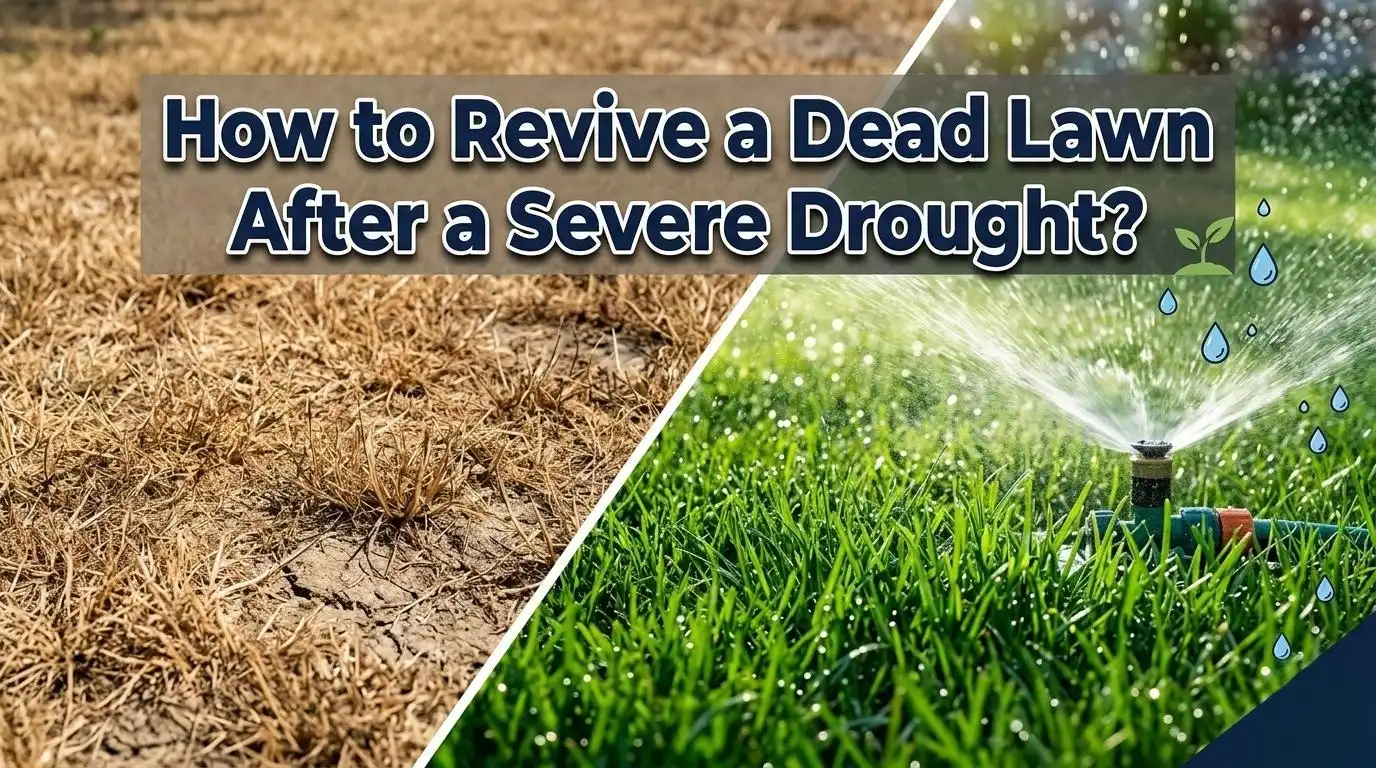
How to Revive a Dead Lawn After a Severe Drought?
A brown, crunchy lawn after a severe drought can feel like a total loss. You walk outside, and the once green carpet of grass now looks lifeless. But here is the good news: your lawn may not be as dead as you think.
Many grass species can survive weeks of drought by going dormant, and even lawns with significant dead patches can be restored with the right approach.
Every year, homeowners across the country face this exact problem. Extended dry spells push lawns past their limits. Grass blades turn brown, soil becomes rock hard, and weeds start to creep in. The question is always the same: can I save my lawn, or do I need to start over?
This guide gives you a clear, step by step plan to bring your lawn back to life. You will learn how to assess the real damage, rehydrate your soil properly, choose the right recovery strategy, and prevent future drought damage.
Key Takeaways
- Check if your grass is dormant or dead first. Grab a handful of brown grass and tug. If it resists and stays rooted, it is dormant and can recover. If it pulls out easily with no resistance, it is dead and will need reseeding.
- Start with deep, slow watering sessions. Water your lawn with about 1 to 1.5 inches per week, spread across two to three sessions. Water early in the morning to reduce evaporation and give the soil time to absorb moisture.
- Aerate compacted soil before doing anything else. Drought turns soil into a hard, dense surface that repels water. Core aeration breaks up compacted layers and lets water, air, and nutrients reach the root zone.
- Overseed bare and dead patches with the right grass type. Choose a grass seed that matches your climate zone. Tall fescue and Kentucky bluegrass work well in cool season areas. Bermudagrass and zoysiagrass thrive in warm season regions.
- Add a thin layer of compost as topdressing. A half inch layer of compost improves soil structure, adds slow release nutrients, and increases the soil’s ability to hold moisture during future dry spells.
- Adjust your long term mowing and maintenance habits. Keep your mower blade set to 3 to 4 inches. Taller grass shades the soil, retains moisture, and develops deeper roots that resist drought stress.
Determine If Your Grass Is Dormant or Dead
The first and most important step in lawn recovery is figuring out what you are actually dealing with. Dormant grass and dead grass look almost identical on the surface. Both turn brown. Both feel dry and crunchy underfoot. But the difference matters because it changes your entire recovery plan.
Here is a simple test. Walk to a brown section of your lawn and grab a small clump of grass blades. Give them a firm tug. If the grass holds tight in the soil and resists pulling, the roots are still alive. Your grass is dormant, and it can recover with proper care. If the grass slides out of the ground easily with no root resistance, it is dead.
Another way to check is the water test. Pick a small brown patch and water it deeply every day for about a week. Dormant grass will start showing green shoots within 5 to 7 days. Dead grass will show no change at all. This test costs you nothing but a bit of water and patience.
Also look at the pattern of browning. If your entire lawn is uniformly brown, that usually signals dormancy. If you see random circles or irregular patches of brown surrounded by green, those dead spots could be caused by disease, insect damage, or localized root death rather than drought alone.
Assess the Full Extent of Drought Damage
Once you know whether your grass is dormant or dead, take a full inventory of your lawn’s condition. Walk the entire property and note which areas have the worst damage. Some sections may be fully dead while others might still recover on their own.
Pay close attention to the soil itself. Squeeze a handful of soil from different spots. Healthy soil should feel slightly moist and crumble apart. Drought damaged soil often feels powdery, dustite, and bone dry even several inches below the surface. Compacted soil is one of the biggest barriers to lawn recovery because it physically prevents water from reaching roots.
Check for thatch buildup as well. Thatch is the layer of dead grass, roots, and organic debris that sits between the green blades and the soil surface. A thin layer of thatch (under half an inch) is normal and even helpful. But a thick thatch layer acts like a waterproof blanket that blocks moisture from entering the soil.
Consider a soil test from your local extension office. A basic soil test costs very little and tells you the pH level, nutrient content, and soil type. This information helps you choose the right fertilizer and amendments for recovery. Skipping this step means you are guessing, and guesses can waste time and money.
Rehydrate Your Soil the Right Way
The temptation after a drought is to blast your lawn with as much water as possible. But this approach actually does more harm than good. Hard, compacted soil from drought conditions repels water instead of absorbing it. Heavy watering just creates runoff that flows into the street rather than into the root zone.
Start with a technique called cycle and soak watering. Run your sprinklers for 10 to 15 minutes, then stop and wait 30 minutes. Repeat this cycle two to three times per session. The short bursts let water gradually penetrate the soil surface without causing runoff. This is far more effective than a single long watering session.
Aim for 1 to 1.5 inches of water per week during the initial recovery phase. You can measure this by placing a few empty tuna cans around your lawn while the sprinklers run. When the cans hold about a quarter inch of water, you have completed one cycle.
Water early in the morning, ideally between 5 AM and 9 AM. This timing reduces evaporation losses from afternoon heat and gives the grass blades time to dry before nightfall. Wet grass at night creates conditions for fungal diseases, which is the last thing your struggling lawn needs.
Pros of cycle and soak watering: Prevents runoff on compacted soil, encourages deeper water penetration, and reduces total water usage.
Cons of cycle and soak watering: Requires more time and attention than a simple set and forget schedule, and may need timer adjustments depending on soil type.
Aerate Compacted Soil to Restore Airflow
Drought turns your soil into something close to concrete. Water sits on the surface, roots can’t expand, and beneficial soil organisms die off. Core aeration is one of the most effective steps you can take to reverse this damage.
A core aerator is a machine that pulls small plugs of soil out of the ground, leaving holes about 2 to 3 inches deep. These holes allow water, oxygen, and nutrients to reach the root zone directly. Leave the soil plugs on the lawn surface. They will break down naturally and add organic matter back into the soil.
The best time to aerate is when the soil has some moisture in it. Bone dry soil is too hard for an aerator to penetrate properly. Water your lawn a day or two before aerating to soften the top few inches. For cool season grasses, early fall is the ideal aeration window. For warm season grasses, late spring or early summer works best.
You can rent a core aerator from most equipment rental shops. Make two passes over the lawn in different directions for the best coverage. Focus extra attention on high traffic areas and slopes, as these tend to compact the most during dry conditions.
Pros of core aeration: Immediately improves water absorption, breaks up compacted soil layers, and creates better growing conditions for new and existing roots.
Cons of core aeration: Requires equipment rental or professional service, temporarily makes the lawn look rough, and should not be done on extremely dry or frozen soil.
Remove Thatch and Dead Grass Debris
A thick layer of thatch and dead grass acts like a barrier between your lawn and any recovery efforts. Water, seed, and fertilizer cannot reach the soil if a dense mat of dead material sits on top. Removing this debris is a critical step before overseeding or applying amendments.
Use a dethatching rake or a power dethatcher (also called a scarifier) to pull up the dead material. Run the dethatcher across the lawn in parallel rows, then make a second pass at a 90 degree angle. Rake up and remove all the debris. This process exposes the bare soil beneath and creates much better conditions for new seed germination.
For small lawns, a sturdy metal rake does the job well. For larger lawns, a power dethatcher saves significant time and effort. The goal is to see soil between the remaining grass plants when you are finished.
Be careful not to dethatch too aggressively if you have dormant grass that is still alive. Aggressive dethatching can rip out living crowns and turn a recoverable lawn into a dead one. If your lawn has a mix of dormant and dead areas, adjust your approach. Go lighter on areas where the tug test showed root resistance.
Pros of dethatching: Opens up the soil surface for better seed contact, removes disease harboring debris, and improves water penetration immediately.
Cons of dethatching: Can damage still living grass if done too aggressively, requires labor or equipment rental, and generates a large amount of yard waste that needs disposal.
Overseed Bare and Dead Patches
If sections of your lawn are truly dead, overseeding is the fastest path to recovery. New grass seed fills in bare spots before weeds can take over and restores a uniform green appearance. The key to successful overseeding is good seed to soil contact.
Mow the existing grass short, around 2 to 2.5 inches, and bag the clippings. Rake the bare areas to loosen the top quarter inch of soil. If you have already aerated, those holes will serve as perfect little seed beds. Spread the seed with a broadcast or drop spreader at the rate recommended on the seed label.
Choose a grass seed that matches your region and conditions. For cool season lawns (northern U.S.), tall fescue is an excellent drought recovery choice because of its deep root system and strong heat tolerance. Kentucky bluegrass is another solid option that spreads to fill in gaps. For warm season lawns (southern U.S.), bermudagrass and zoysiagrass offer outstanding drought tolerance.
After spreading seed, lightly rake it into the soil surface and apply a thin layer of straw mulch or compost to retain moisture. Keep the seeded areas consistently moist (but not waterlogged) for the first two to three weeks. This may require light watering once or twice daily until the seedlings establish.
Pros of overseeding: Fills in dead patches quickly, introduces potentially more drought tolerant grass varieties, and prevents weed invasion of bare soil.
Cons of overseeding: Requires consistent watering during germination, new seedlings are fragile and need protection from foot traffic, and results take 3 to 6 weeks to become visible.
Apply the Right Fertilizer at the Right Time
Fertilizing a drought stressed lawn requires careful timing. Applying fertilizer too early can burn already weakened grass and make the problem worse. Wait until your lawn shows clear signs of recovery, typically two to three weeks after you resume consistent watering.
Use a balanced, slow release fertilizer with an NPK ratio close to 10 10 10 or similar. The nitrogen promotes green blade growth, phosphorus supports root development, and potassium strengthens the plant’s overall stress tolerance. For overseeded areas, a starter fertilizer with higher phosphorus content helps new seedlings establish faster.
Apply fertilizer according to the label instructions. More is not better. Over fertilization puts salt stress on roots that are already recovering, and it can cause a flush of tender growth that is even more vulnerable to the next dry spell. A light feeding now, followed by another application in 4 to 6 weeks, gives better results than one heavy dose.
Organic options like compost tea or fish emulsion provide gentler nutrient delivery. These products are less likely to burn grass and also feed beneficial soil microorganisms. However, they typically contain lower nutrient concentrations, so results take longer to appear.
Pros of balanced fertilization: Speeds recovery, strengthens root systems, and restores green color faster.
Cons of balanced fertilization: Risk of burning stressed grass if applied too early or too heavily, synthetic fertilizers can harm soil biology if overused, and organic alternatives work more slowly.
Topdress With Compost to Rebuild Soil Health
Drought does not just damage grass. It damages the soil itself. Beneficial microorganisms die, organic matter levels drop, and the soil loses its ability to hold water. Topdressing with compost is one of the best ways to restore soil health after a severe dry period.
Spread a thin layer of screened, finished compost over your lawn, about a quarter inch to a half inch thick. Use the back of a rake or a specialized lawn leveling tool to work it into the grass canopy and down to the soil surface. The compost should settle between the grass blades, not smother them.
This layer of compost does several things at once. It introduces billions of beneficial microorganisms back into the soil. It adds slow release nutrients. It improves soil structure so that water moves through the profile more effectively. And it increases the soil’s water holding capacity, which directly helps your lawn survive the next drought.
Compost topdressing works best when combined with aeration. The compost fills the aeration holes and brings organic matter directly into the root zone. Over time, this builds a deeper, healthier soil profile that supports stronger grass growth.
Pros of compost topdressing: Improves soil biology, increases water retention, adds nutrients naturally, and improves soil structure over time.
Cons of compost topdressing: Requires sourcing quality compost, labor intensive for large lawns, and results develop gradually rather than immediately.
Adjust Your Mowing Height and Habits
How you mow your lawn plays a huge role in drought recovery and future drought resistance. Most people cut their grass too short, which removes the leaf area the plant needs for photosynthesis and exposes the soil to direct sunlight and evaporation.
Raise your mowing height to 3 to 4 inches during and after drought recovery. Taller grass blades shade the soil surface, which keeps it cooler and reduces water loss. The extra leaf area also allows the plant to produce more energy through photosynthesis, fueling root growth and recovery. Research from Ohio State University confirms that taller mowing heights reduce evapotranspiration and improve drought survival.
Follow the one third rule: never remove more than one third of the grass blade length in a single mowing. If your target height is 4 inches, mow when the grass reaches about 6 inches. Cutting more than one third stresses the plant and slows recovery.
Keep your mower blades sharp. Dull blades tear grass instead of cutting it cleanly. Torn grass tips lose more water and are more vulnerable to disease. A clean cut heals faster and loses less moisture.
Manage Weeds Without Damaging Recovery
Weeds love bare soil and weakened lawns. After a drought, you will likely see crabgrass, dandelions, and other opportunistic weeds filling in where grass has died. The goal is to control weeds without harming the grass that is trying to recover.
If you have recently overseeded, do not apply any herbicide for at least 6 to 8 weeks after the new seedlings emerge. Most herbicides will kill young grass seedlings along with the weeds. Hand pulling is the safest weed removal method during this fragile period.
For established areas that were not overseeded, a selective broadleaf herbicide can target dandelions and clover without harming grass. Apply herbicides on calm, cool days to reduce drift and prevent stress on recovering turf. Spot treating individual weeds is always better than blanket applications during recovery.
The best long term weed prevention strategy is a thick, healthy lawn. Dense turf blocks sunlight from reaching weed seeds in the soil, which prevents them from germinating. Focus your energy on building thick grass coverage, and weed pressure will decrease naturally over time.
Pros of hand pulling weeds during recovery: Zero risk to recovering grass, effective for small areas, and costs nothing.
Cons of hand pulling weeds during recovery: Time consuming for large infestations, does not prevent new weed seeds from germinating, and some weeds (like crabgrass) are difficult to pull effectively.
Consider Drought Tolerant Grass Varieties for the Future
If your lawn died completely and you are starting from scratch, this is the perfect opportunity to choose a grass type that handles drought better than what you had before. Not all grasses have the same water needs or survival strategies.
For warm season regions, bermudagrass is one of the most drought tolerant options available. It goes dormant quickly during dry spells and bounces back fast when water returns. Zoysiagrass is another strong choice that offers a dense, attractive lawn with moderate water needs. Buffalograss is a native option that thrives on very little supplemental water.
For cool season regions, tall fescue stands out as the best drought performer. Its deep root system (reaching 2 to 3 feet in good soil) allows it to access moisture that other cool season grasses cannot reach. Fine fescue blends also work well in low water situations, especially in shaded areas.
Before choosing a variety, think about your lawn’s specific conditions. How much sun does it get? How much foot traffic? What is your soil type? A grass that matches these conditions will establish faster and require less ongoing maintenance. Your local cooperative extension office can recommend specific cultivars that perform well in your area.
Pros of switching to drought tolerant varieties: Lower water bills, better survival during future droughts, and often lower overall maintenance needs.
Cons of switching to drought tolerant varieties: Requires full lawn renovation (removal and reseeding or sodding), some varieties have different textures or colors than traditional lawns, and establishment takes several months.
Create a Long Term Drought Prevention Plan
Reviving your lawn once is great, but preventing the same damage from happening again is even better. A few changes to your routine can dramatically improve your lawn’s ability to survive the next dry spell.
Build deeper roots through deep, infrequent watering. Train your grass to send roots deep into the soil by watering heavily once or twice per week rather than lightly every day. Shallow, frequent watering encourages shallow roots that dry out quickly during drought.
Improve your soil structure every year. Annual aeration combined with compost topdressing gradually builds a soil profile that holds more water and supports stronger root systems. Over a period of two to three years, these practices can transform compacted clay soil into a much better growing medium.
Consider installing a rain gauge and a smart irrigation controller. A rain gauge helps you track exactly how much natural rainfall your lawn receives. A smart controller adjusts watering schedules based on weather conditions, so you do not waste water on rainy weeks or underwater during hot, dry stretches.
Mulch your grass clippings instead of bagging them. Clippings break down quickly and return nitrogen and moisture to the soil. This free source of organic matter slowly builds healthier soil over every mowing season.
Know When to Call a Professional
Sometimes drought damage is severe enough that a professional lawn care service can save you significant time and frustration. If more than 50% of your lawn is dead, or if you are dealing with compacted clay soil and serious grading issues, a professional assessment may be worthwhile.
A lawn care specialist can perform a thorough soil test, identify the best grass varieties for your conditions, and handle large scale aeration, seeding, and topdressing efficiently. They also have access to commercial grade equipment that produces better results than consumer rental machines.
Professionals can spot problems that homeowners often miss. Drainage issues, buried debris, compacted subsoil layers, and pest damage can all mimic or worsen drought damage. Getting an expert opinion early in the process can prevent you from spending weeks on a recovery plan that addresses the wrong problem.
That said, most moderate drought recovery projects are well within the ability of a motivated homeowner. If you have the time and willingness to follow the steps in this guide, you can achieve professional level results on your own. Start with the basics: water, aerate, seed, feed, and mow high.
Track Your Progress and Adjust
Lawn recovery after a severe drought is not an overnight process. Expect 4 to 8 weeks before you see significant improvement, and a full growing season before the lawn looks truly restored. Tracking your progress helps you stay on course and make adjustments when something is not working.
Take photos of your lawn from the same spots each week. This visual record makes it easy to see gradual improvement that you might miss day to day. It also helps you identify problem areas that need extra attention, like low spots that stay dry or shaded areas where seedlings struggle.
Adjust your watering schedule as the lawn recovers. New seedlings need light, frequent watering. Established grass needs deep, infrequent watering. Transitioning between these two approaches at the right time helps the lawn develop strong roots without wasting water.
Monitor for signs of disease or pest activity, especially during the vulnerable recovery period. Brown patch, dollar spot, and grub damage can derail your recovery efforts. Catching these problems early and treating them promptly keeps your timeline on track. Patience and consistency are your two most important tools throughout this process.
Frequently Asked Questions
How long does it take for a lawn to recover from severe drought?
Most lawns show visible improvement within 3 to 4 weeks of consistent watering and care. Full recovery, where the lawn looks thick and green again, typically takes one full growing season. Dormant grass recovers faster than dead grass because the root system is still intact. Overseeded areas need about 6 to 8 weeks before new grass fills in.
Will watering dead grass bring it back?
No. If the grass is truly dead (roots pull out easily, no green at the crown), watering will not revive it. Dead grass must be removed, and the area needs to be reseeded or resodded. However, many lawns that appear dead are actually dormant. A one week watering test will show you which condition your grass is in.
What is the best time of year to reseed a lawn after drought?
For cool season grasses (fescue, bluegrass, ryegrass), early fall is the best seeding window. Soil is still warm, which speeds germination, and cooler air temperatures reduce stress on young seedlings. For warm season grasses (bermuda, zoysia, buffalo), late spring through early summer gives the best results.
How much water does a recovering lawn need per week?
Aim for 1 to 1.5 inches of water per week during the initial recovery phase. Use the tuna can method to measure your sprinkler output. Divide this total across two to three watering sessions per week rather than applying it all at once. Morning watering between 5 AM and 9 AM is most efficient.
Should I fertilize a drought stressed lawn immediately?
No. Wait at least two to three weeks after you resume regular watering before applying any fertilizer. Fertilizing stressed, dehydrated grass can cause root burn and worsen the damage. Let the lawn rehydrate and show some signs of green growth first, then apply a balanced, slow release fertilizer at half the normal rate.
Can I just lay sod instead of seeding to fix dead patches?
Yes. Sod provides instant coverage and eliminates the waiting period for seed germination. It works especially well for smaller dead areas. However, sod is more expensive than seed, and it still requires proper soil preparation, including aeration, compost amendment, and consistent watering for the first few weeks to establish roots in the existing soil.

Hi, I’m Jane! As a passionate gardener and product enthusiast, I spend my days testing garden tools, comparing products, and writing honest reviews so you don’t have to learn the hard way. Got a question? Feel free to reach out — I’d love to hear from you!