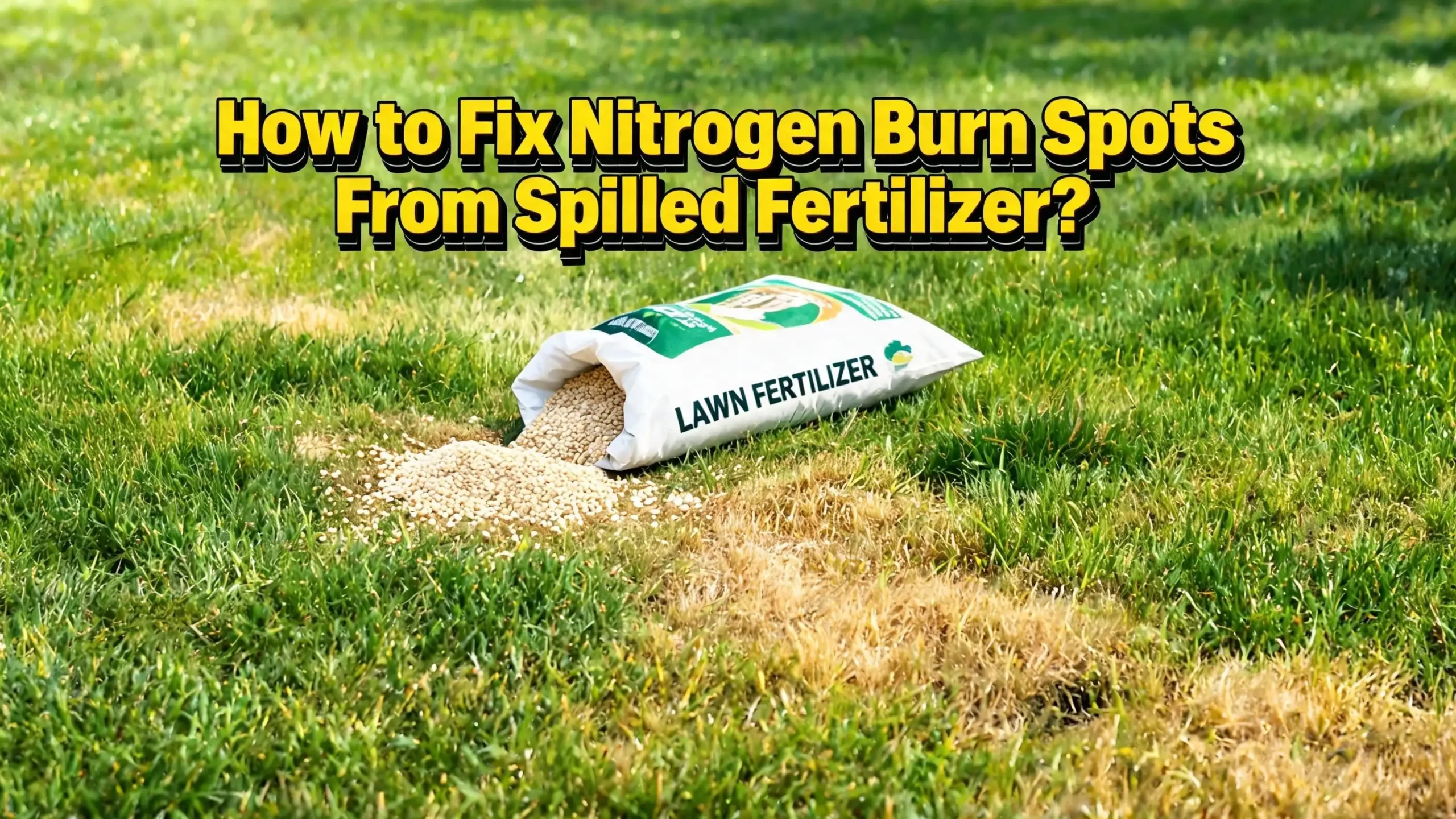
How to Fix Nitrogen Burn Spots From Spilled Fertilizer?
You just spilled a bag of fertilizer on your lawn. Now there are ugly yellow and brown patches staring back at you. That sinking feeling in your stomach is real, and you are not alone. Nitrogen burn from spilled fertilizer is one of the most common lawn care accidents homeowners face every single year.
The good news? Your lawn is probably not ruined forever. Most nitrogen burn damage can be reversed if you act fast and follow the right steps. The grass blades might look crispy and dead right now, but the roots underneath could still be alive and ready to bounce back.
This guide will walk you through every step of the repair process. You will learn how to assess the damage, flush the excess nitrogen from your soil, nurse your grass back to health, and prevent this from happening again.
Key Takeaways
- Nitrogen burn is a form of salt damage. Synthetic fertilizers contain nitrogen salts. A concentrated spill dumps an extreme amount of these salts into one spot. The salts pull water away from the grass roots through a process called reverse osmosis, and the grass dries out from the inside.
- Speed matters. The faster you respond to a fertilizer spill, the better your chances of saving the grass. If you catch a spill within a few hours, a thorough flushing with water can often prevent permanent damage.
- Water is your most powerful tool. Deep, repeated watering over several days is the single best method for flushing excess nitrogen and salt out of the soil. Aim for at least one inch of water per day for seven to fourteen days.
- Dead grass will need to be reseeded. If the grass turns completely brown and crunchy and shows no new growth after two to three weeks of treatment, those patches will need fresh seed, topsoil, and patience.
- Prevention saves time and money. Simple habits like closing the hopper when you stop moving, using slow release fertilizers, and filling your spreader on a hard surface can eliminate most spill accidents entirely.
- A soil test can guide your recovery. Testing your soil after a burn event tells you exactly what nutrient levels look like so you can adjust your care plan and avoid making things worse.
What Is Nitrogen Burn and Why Does It Happen
Nitrogen burn is a type of drought stress caused by an excess of fertilizer salts in the soil. Most synthetic fertilizers contain nitrogen, phosphorus, and potassium in salt form. These salts dissolve in water and deliver nutrients to grass roots quickly.
The problem starts when too much salt builds up in one spot. A spill creates an extreme concentration of nitrogen salts in a small area. Under normal conditions, water moves from the soil into the grass roots. But high salt concentrations reverse this process. Water actually gets pulled out of the roots and back into the salty soil.
The grass loses moisture rapidly. Blades turn yellow, then brown. The tips get crispy. If the salt concentration stays high long enough, the roots die and the grass cannot recover on its own. This entire process can happen within 24 to 48 hours during hot weather.
Temperature plays a big role too. Fertilizer burns are more severe during summer heat because the grass is already under stress. The combination of heat, low moisture, and salt overload creates the perfect storm for serious damage.
How to Identify Nitrogen Burn on Your Lawn
Knowing what nitrogen burn looks like helps you separate it from other lawn problems like disease, insect damage, or pet urine spots. Fertilizer burn has a few unique visual signatures that make it fairly easy to identify.
The most obvious sign is a patch of yellow or brown grass that matches the shape of the spill area. Unlike fungal diseases that spread in irregular circles, fertilizer burn usually shows up as a defined spot or streak. If you spilled a bag, you will see a concentrated brown patch. If your spreader overlapped, you might see parallel lines or a checkerboard pattern.
Look at the grass closely. Nitrogen burned grass feels crispy and crunchy to the touch. Healthy dormant grass still has some flexibility, but burned grass snaps when you bend it. You might also notice a white or grayish salt crust on the soil surface around the damaged area.
Check the edges of the burn zone. You will often see a ring of very dark green, fast growing grass just outside the brown patch. This happens because the outer edge received a moderate dose of nitrogen, which actually helped it grow. The center got too much and burned.
Root inspection is the final test. Pull up a small section of the damaged turf. If the roots are white or light colored and still somewhat pliable, the grass has a chance. If the roots are brown, dry, and brittle, that section is dead and will need reseeding.
Immediate Steps to Take After a Fertilizer Spill
The clock starts ticking the moment fertilizer hits the ground in a concentrated pile. Your first 30 minutes to two hours are critical. Fast action can mean the difference between a quick recovery and a dead patch that needs full renovation.
Step one is to remove as much of the spilled fertilizer as possible. If you spilled granular fertilizer, grab a broom, dustpan, or shop vacuum and sweep up every visible granule. Do not push them into the grass. Pick them up and dispose of them. The less fertilizer sitting on the surface, the less salt will soak into the soil.
Step two is to flood the area with water immediately. Turn on a hose and soak the spill zone thoroughly. Your goal is to dilute the fertilizer that has already started dissolving and push it down below the root zone. Apply water slowly and steadily so it soaks deep rather than running off the surface.
Do not wait until your next scheduled watering day. Do not wait until the weekend. Water the spot right now. Every hour of delay allows more salt to concentrate around the roots. Quick flushing can often prevent visible burn damage entirely if you catch the spill early enough.
If you used a liquid fertilizer, you cannot sweep it up. Your only option is aggressive watering. Start soaking immediately and continue for at least 20 to 30 minutes on the affected area.
How to Flush Excess Nitrogen From the Soil
Flushing is the most important repair technique for nitrogen burn. The process is simple: you use large amounts of water to dissolve and carry the excess salts down past the root zone and deeper into the soil where they cannot harm the grass.
Apply at least one inch of water to the affected area every day for seven to fourteen days. One inch of water equals roughly 0.6 gallons per square foot. For a spill area of about 10 square feet, that means around 6 gallons of water per watering session. Use a sprinkler or a hose with a gentle spray nozzle to avoid disturbing the soil.
Water in the morning whenever possible. Morning watering gives the soil time to absorb moisture throughout the day and reduces the risk of fungal problems that can develop from evening watering.
Pros of the flushing method: It is free, requires no special equipment, works on any soil type, and is effective for mild to moderate burn damage. Most lawns respond well within two weeks.
Cons of the flushing method: It uses a large amount of water, which can be costly in drought restricted areas. Overwatering can also cause temporary soggy conditions that invite fungal growth. This method may not fully save grass that has already suffered severe root death.
After about a week of daily watering, check the damaged area for signs of new green growth. Fresh shoots at the base of the grass blades mean the roots survived and recovery is underway.
Should You Remove the Burned Grass or Leave It
This question comes up often, and the answer depends on the severity of the damage. Mildly burned grass that still has some green color should be left in place. Those blades are still photosynthesizing and feeding the roots, even if they look rough.
Do not mow the burned area for at least two weeks after treatment begins. Taller grass blades help the plant absorb more sunlight and recover faster. Cutting them short while the plant is already stressed removes valuable leaf surface and slows healing.
Severely burned grass that is completely brown and crunchy should be raked out after you have completed the flushing process. Dead grass left on the surface can form a mat that blocks water, air, and sunlight from reaching the soil. Removing it creates space for new seeds or for surviving grass to spread into the bare area.
Use a stiff garden rake to pull out the dead material. Be thorough but gentle. You do not want to tear up the soil or damage any surviving root systems around the edges of the burn zone.
Wait at least two full weeks of watering before you decide to remove any grass. Some grass that looks completely dead will surprise you with tiny green shoots emerging from the crown. Patience is important during the first phase of recovery.
How to Reseed Bare Spots Left by Nitrogen Burn
If your flushing efforts saved some areas but left others completely bare, reseeding is the next step. Do not rush into seeding right away. The soil needs time to stabilize and the excess salt needs to be fully flushed before new seeds can germinate properly.
Continue watering the bare spots for at least one full week after the dead grass has been removed. This final flush ensures the salt levels in the top layer of soil have dropped enough for seeds to survive. Seeds planted in salty soil will fail to germinate or die shortly after sprouting.
Once the soil is ready, follow these steps. First, loosen the top half inch of soil with a rake. This gives seeds good contact with the ground. Second, spread a thin layer of fresh topsoil or compost over the area. This adds organic matter and helps retain moisture around the new seeds. Third, scatter grass seed that matches your existing lawn type. Fourth, press the seeds gently into the soil with your foot or a lawn roller. Fifth, water lightly two to three times per day to keep the seedbed moist.
Pros of reseeding: It is affordable, gives you control over grass variety, and allows you to match your existing lawn. Seeds establish strong root systems over time.
Cons of reseeding: It takes four to eight weeks for full coverage. Seeds are vulnerable to washout, birds, and dry spells. You need to keep foot traffic off the area during establishment.
Using Topsoil and Compost to Speed Recovery
Adding organic matter to burned areas is one of the best things you can do to accelerate the healing process. Topsoil and compost improve soil structure, add beneficial microbes, and help dilute residual salt concentrations.
After flushing the area with water for one to two weeks, spread a quarter inch to half inch layer of quality compost or screened topsoil over the damaged zone. This thin layer serves multiple purposes. It introduces fresh, nutrient balanced soil that helps buffer the salt damaged ground. It also provides a better environment for grass roots to regenerate or for new seeds to germinate.
Compost is especially valuable because it contains beneficial bacteria and fungi that help break down excess nutrients in the soil. These microorganisms process the leftover nitrogen and convert it into forms that are less harmful and more gradually available to plants.
Do not pile on too much topsoil at once. A thick layer can smother surviving grass. Keep it light and even. If you are covering a large area, use the back of a rake to spread the material uniformly.
Pros of adding compost: Improves soil biology, retains moisture, reduces salt stress, feeds the grass slowly, and is easy to apply. It also improves long term soil health beyond just fixing the burn.
Cons of adding compost: Quality compost can be expensive for large areas. It may contain weed seeds if not properly processed. Results take a few weeks to become visible.
The Role of Soil Testing After a Burn Event
Many homeowners skip soil testing, but a simple soil test can save you from making the wrong repair decisions. After a major fertilizer spill and the initial flushing period, a soil test tells you exactly where your nutrient levels stand.
High nitrogen levels in the test results mean you need to continue flushing with water. You should also hold off on any fertilizer applications for the rest of the season. High salt readings confirm that the burn process is ongoing and more water is needed.
Most local university extension offices offer affordable soil testing services. You collect a small soil sample from the affected area, mail it in, and receive a report with nutrient levels and pH readings within a week or two.
Pay close attention to the electrical conductivity reading on your soil test. This number measures total salt concentration. A reading above 4 dS/m indicates saline conditions that can harm most turfgrasses. Your goal is to get this number below 2 dS/m through continued flushing.
Soil pH can also shift after a heavy nitrogen application. Some nitrogen fertilizers, especially those containing ammonium, can lower the soil pH over time. If your soil pH drops below 6.0, you may need to apply lime to bring it back into the ideal range of 6.0 to 7.0 for most lawn grasses.
Testing removes the guesswork. It gives you data driven answers about what your lawn actually needs instead of relying on visual clues alone.
How Long Does It Take for Nitrogen Burn to Recover
Recovery time depends on several factors: the severity of the burn, your grass type, the season, and how quickly you responded to the spill. Mild burns where the grass turns yellow but stays somewhat flexible can recover in one to two weeks with proper watering.
Moderate burns that produce brown, dry patches with some green still visible at the edges typically take three to four weeks to show significant improvement. The grass fills back in from the edges of the burn zone, and surviving crowns push out new growth.
Severe burns where the grass is completely dead and the soil shows salt crust damage will require reseeding. Full recovery from a severe burn can take six to twelve weeks because you need time for flushing, soil preparation, seed germination, and establishment.
Warm season grasses like Bermuda and Zoysia tend to recover faster from moderate burns because of their aggressive spreading habits. Cool season grasses like Kentucky Bluegrass and Perennial Ryegrass are more sensitive to salt stress and may need more time.
The season matters too. Burns that happen in spring or early fall recover faster because temperatures are mild and moisture levels are higher. Summer burns are the hardest to fix because heat stress compounds the salt damage and slows the grass’s ability to heal. Water demands are also higher during summer, making consistent flushing more challenging.
Activated Charcoal as an Emergency Soil Treatment
Activated charcoal is a lesser known tool that can help in severe fertilizer spill situations. It works by adsorbing excess chemicals in the soil, binding them to its porous surface and reducing their availability to plant roots.
Professional turf managers on golf courses use activated charcoal to decontaminate soil after accidental chemical spills, including fertilizer overdoses. The material is spread on the affected area and watered in, where it begins trapping excess nutrients and salts.
For homeowners, you can apply a thin dusting of granulated activated charcoal over the spill area after you have swept up visible fertilizer granules. Water it in thoroughly. The charcoal will not remove all the excess nitrogen, but it can reduce the concentration enough to give your grass a better chance of survival.
Pros of activated charcoal: Acts quickly, reduces chemical concentration in soil, safe for grass and the environment, and can be combined with the flushing method for better results.
Cons of activated charcoal: It can be hard to find in large quantities for lawn use. It may also adsorb beneficial nutrients along with the harmful excess. Overuse can temporarily reduce soil fertility. It is also more expensive than simple water flushing alone.
Consider activated charcoal as a supplemental treatment rather than a replacement for thorough watering. It works best when used immediately after the spill, alongside aggressive flushing with water.
How to Prevent Fertilizer Spills in the Future
Prevention is always easier than repair. A few simple habits can eliminate most accidental fertilizer spills and protect your lawn from nitrogen burn.
Always fill your spreader on a hard surface like a driveway or sidewalk, never on the lawn. If granules spill during loading, you can easily sweep them up from concrete. On grass, they fall between the blades and become nearly impossible to recover.
Close the hopper on your spreader every single time you stop moving, turn around at the end of a row, or pause for any reason. An open hopper sitting in one spot for even a few seconds can dump a damaging amount of fertilizer on a single area.
Read and follow the application rate on the fertilizer label. More is not better with fertilizer. The label rate is calculated to deliver the right amount of nitrogen without causing damage. Doubling the rate does not double the results. It doubles the risk of burn.
Switch to slow release fertilizers for general lawn feeding. These products deliver nitrogen gradually over several weeks instead of all at once. They are much more forgiving if you slightly over apply and they produce steady, even growth instead of a quick flush followed by stress.
Water your lawn after every fertilizer application. A thorough watering session dissolves the granules and moves them off the grass blades and into the soil where the roots can use them safely.
Organic Fertilizer vs Synthetic: Which Causes Less Burn
Understanding the difference between organic and synthetic fertilizers helps you choose the right product for your situation and reduce your risk of future burn incidents.
Synthetic fertilizers contain concentrated mineral salts that dissolve quickly in water. They deliver a fast burst of nitrogen that makes grass green up rapidly. But this speed comes with risk. The high salt content and fast release rate make synthetic fertilizers the most common cause of nitrogen burn, especially during spills.
Organic fertilizers are made from natural materials like composted manure, bone meal, blood meal, and seaweed. They release nutrients slowly as soil microorganisms break them down. This gradual release makes organic fertilizers much less likely to cause burn damage, even if you accidentally over apply.
Pros of organic fertilizers: Lower burn risk, improve soil health and microbial activity, release nutrients gradually, and are better for the environment. They feed the soil ecosystem, not just the grass.
Cons of organic fertilizers: Slower visible results, often more expensive per pound of nitrogen, may have an odor during application, and nutrient content can vary between batches.
Pros of synthetic fertilizers: Fast results, precise nutrient ratios, widely available, and cost effective per unit of nitrogen.
Cons of synthetic fertilizers: High burn risk, can damage soil biology with overuse, contribute to salt buildup over time, and require more careful application.
For homeowners who have experienced a bad spill, switching to an organic or slow release synthetic fertilizer can provide peace of mind and reduce the chance of it happening again.
Common Mistakes to Avoid During the Repair Process
Even well intentioned homeowners make errors during the recovery phase that can slow healing or cause additional damage. Knowing these pitfalls helps you avoid them.
Do not apply more fertilizer to “help” the grass recover. This is the most common mistake. The soil already has too much nitrogen. Adding more, even at a low rate, just extends the problem and delays recovery. Let the flushing process do its job first. Wait at least six to eight weeks after a burn event before any new fertilizer application.
Do not skip watering days during the flush period. Consistency matters. One heavy watering session followed by three dry days is far less effective than moderate daily watering for two straight weeks. The goal is sustained dilution, not a single rinse.
Avoid applying herbicides or weed killers to the burned area during recovery. The grass is already stressed and vulnerable. Adding chemical herbicides on top of salt stress can kill grass that otherwise would have survived.
Do not scalp mow the damaged area. Keep your mower blade at the highest setting or skip mowing the burn zone entirely for the first few weeks. Short grass has less leaf surface for photosynthesis and recovers much more slowly than taller grass.
Finally, do not give up too soon. Some grass varieties take three to four weeks before they show any visible signs of recovery. If the roots were still alive when you started treatment, new growth is likely happening below the surface even if you cannot see it yet.
When to Call a Professional for Help
Sometimes a fertilizer spill is severe enough that DIY repair is not practical or effective. Knowing when to call in a lawn care professional can save you time and prevent further damage.
If the burned area covers more than 25 percent of your lawn, professional help is worth considering. Large scale damage often requires specialized equipment for soil testing, aeration, and reseeding that most homeowners do not have.
A professional can perform a comprehensive soil analysis and create a targeted recovery plan based on actual nutrient levels. They can identify whether the damage is purely from nitrogen burn or if secondary issues like fungal infection or compaction are also present.
Professionals also have access to commercial grade soil amendments and seed blends that may not be available at local garden centers. They can apply these materials at precise rates using calibrated equipment.
If you have tried flushing for two weeks and see zero new growth, or if the burned area seems to be spreading rather than shrinking, that is a strong signal to get expert eyes on the situation. Spreading damage could indicate a secondary problem like fungal disease triggered by the excess moisture from your flushing efforts.
Pros of hiring a professional: Accurate diagnosis, specialized tools and materials, faster recovery, and less risk of making the problem worse.
Cons of hiring a professional: Higher cost than DIY repair, scheduling availability may vary, and you still need to maintain watering and mowing practices on your own between service visits.
Frequently Asked Questions
Can nitrogen burn kill grass permanently?
Yes, nitrogen burn can kill grass permanently if the damage is severe enough to destroy the root system. Mild to moderate burns where the roots remain alive are usually reversible with proper flushing and care. Severe burns where the roots are brown, dry, and brittle will not recover. Those areas will need to be cleared and reseeded with fresh grass. Acting quickly after a spill gives you the best chance of avoiding permanent death.
How much water do I need to flush nitrogen from the soil?
You should apply at least one inch of water per day to the burned area for seven to fourteen days. One inch of water equals about 0.6 gallons per square foot. Water slowly and deeply so it soaks into the root zone rather than running off the surface. Morning watering is best because it allows the soil to absorb moisture throughout the day and reduces the risk of fungal problems.
Will fertilizer burn spread to other parts of my lawn?
No, fertilizer burn does not spread like a disease. It stays confined to the area where the excess fertilizer was applied or spilled. The only way damage can expand is if rain or irrigation washes the concentrated fertilizer into adjacent areas. Proper flushing helps prevent this by diluting and pushing the salts below the root zone.
Can I use gypsum to fix fertilizer burn?
Gypsum can help improve soil structure and add calcium, but it is not a direct fix for nitrogen burn. Gypsum works best for correcting sodium damage in heavy clay soils. It can be a helpful supplemental treatment after the primary flushing is complete, especially if a soil test shows high sodium levels. However, water flushing remains the primary and most effective treatment for nitrogen burn.
How do I know if my grass is dead or just dormant after a burn?
Pull up a small section of the damaged grass and examine the roots. White or light colored roots that still feel pliable indicate the grass is alive and has a chance of recovery. Brown, brittle roots that snap easily mean the grass is dead. You can also wait two to three weeks with consistent watering. Dormant grass will start pushing out small green shoots from the crown. Dead grass will show no new growth at all.
Is it safe to let pets and children on a lawn recovering from fertilizer burn?
It is best to keep pets and children off the recovering area during the active flushing phase. Excess fertilizer salts on the surface can irritate skin and are harmful if ingested by pets. Once you have completed at least a week of heavy watering and no visible granules remain on the surface, the area is generally safe. If you have reseeded, keeping traffic off the new grass for four to six weeks helps the seedlings establish strong roots.

Hi, I’m Jane! As a passionate gardener and product enthusiast, I spend my days testing garden tools, comparing products, and writing honest reviews so you don’t have to learn the hard way. Got a question? Feel free to reach out — I’d love to hear from you!