How to Eradicate Dollar Spot Fungus in Tall Fescue Grass?
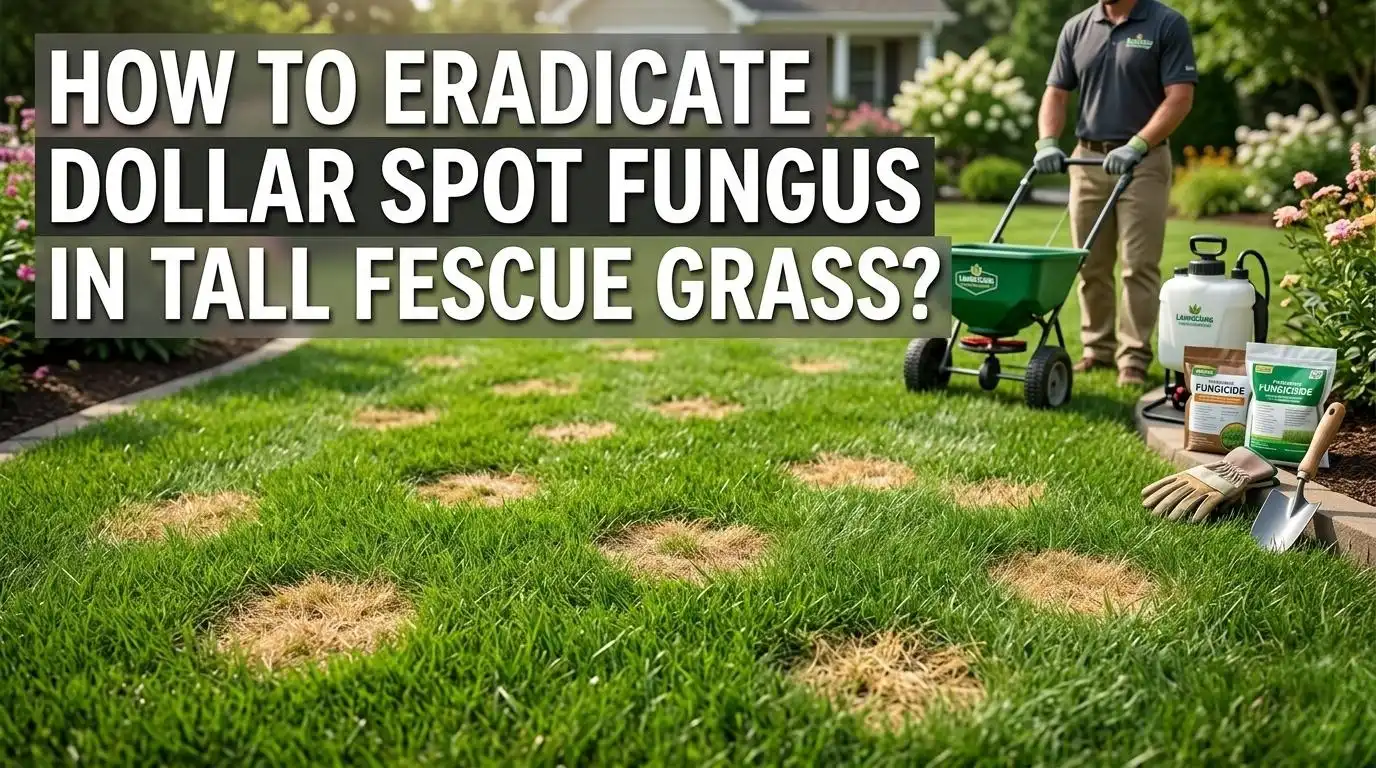
Dollar spot can make a healthy tall fescue lawn look tired in just a few days. You may see small straw colored spots, thin patches, and blades with tan marks that spread fast after warm days and damp nights.
The good news is this problem usually responds well when you fix the lawn stress that helped it start.
This disease often shows up when the grass stays wet too long, the lawn runs low on nitrogen, or the root zone swings between dry and wet. Tall fescue is often more resistant than some other cool season grasses, but it can still get hit when conditions line up.
In this guide, you will learn exactly how to spot dollar spot, what causes it, and how to stop it with practical steps you can use right away. Let us start with the big picture so you know what to do first and what to avoid.
Key Takeaways
- Dollar spot usually starts in stressed tall fescue. The fungus becomes more active in warm weather with cool damp nights, heavy dew, and long periods of leaf wetness. Low nitrogen and drought stress often make the problem worse. If you only treat the spots and ignore the stress, the disease often returns.
- Correct diagnosis matters before you act. Dollar spot usually creates small bleached patches and leaf lesions with tan centers and reddish brown edges. In tall fescue, the lesions often show near the leaf margins. Small patches point you in one direction. Large smoky circles often point to a different disease.
- Watering time can help or hurt your lawn. Deep watering in the early morning is one of the best cultural fixes. Evening watering keeps leaves wet too long. Frequent shallow watering also creates trouble. The goal is moist soil with dry leaf blades for most of the day.
- Nitrogen is a major lever for recovery. Lawns with low nitrogen often show worse dollar spot. Light feeding can help the grass grow through the damage. Too much quick nitrogen at the wrong time can create other issues, so use a moderate rate and watch the weather.
- Fungicide is useful in some cases, but it is not the whole answer. If the lawn is heavily infected or keeps relapsing, fungicide may help. Still, fungicide works best with good mowing, watering, dew control, and airflow. Without those steps, the result is often short lived.
- Recovery and prevention should happen together. Clean up thatch, ease compaction, improve airflow, and reseed thin areas at the right season for tall fescue. A stronger lawn resists future outbreaks better than a weak lawn that only got a temporary treatment.
What Dollar Spot Looks Like in Tall Fescue
Dollar spot usually starts as small bleached patches that look light tan or straw colored. On a home lawn, the spots are often a few inches wide. In tall fescue, they can blend together and form larger weak areas if the problem keeps spreading.
Look closely at the leaves. You will often see narrow lesions with pale centers and darker reddish brown edges. On tall fescue, these marks often show near the leaf margins. Early in the morning, you may also notice a thin white cottony growth on the grass when dew is still present. That early morning clue is very useful.
The disease usually appears during active grass growth in weather that stays warm and humid. It often becomes worse when nights are cool enough for heavy dew and the lawn stays wet for many hours. That is why people often notice it after a stretch of sticky weather, frequent irrigation, or cloudy mornings.
Pros of early identification: you can fix watering, fertility, and mowing before the damage spreads. You may avoid fungicide if the outbreak is still small.
Cons of late identification: the patches merge, the lawn thins out, and recovery takes much longer.
A smart first step is to inspect the lawn at sunrise. Kneel down and part the grass. Check several spots, not just one. If you only look at the lawn from a distance, dollar spot can look like simple drought stress or mower injury. A close leaf check gives you a much better answer.
If the marks fit this pattern, move fast. Small outbreaks are much easier to stop than large ones.
Make Sure It Is Dollar Spot and Not Brown Patch
Tall fescue owners often confuse dollar spot with brown patch. That mistake leads to weak results because the two problems do not thrive under the exact same pattern of stress. Correct diagnosis saves time, money, and lawn tissue.
Dollar spot usually shows many small straw colored spots that may merge later. Brown patch often creates larger circular or irregular patches. Dollar spot lesions tend to have tan centers and darker margins. Brown patch can create a more water soaked look on leaf blades during active infection. Size is a strong clue. Small scattered spots often suggest dollar spot. Large rings or wide patches often suggest brown patch.
Weather clues help too. Dollar spot tends to like warm days, cool nights, heavy dew, and long periods of leaf wetness. It also tends to hit harder where nitrogen is low. Brown patch becomes more common in hot humid weather, especially when night temperatures stay high. If your lawn got a lot of nitrogen and the nights stayed very warm, brown patch moves higher on the list.
The best way to confirm is to check several leaves from the edge of an active patch. Do not pull dead grass from the middle. The edge tells the real story. Use a hand lens if you have one. You do not need lab skill for a basic home check. You just need patience.
Pros of a careful diagnosis: better treatment choice, less wasted effort, and faster recovery.
Cons of guessing: wrong fertilizer timing, wrong fungicide choice, or no improvement at all.
If you still feel unsure, take fresh samples from the patch edge to a local extension office or lawn diagnostic service. That small step can prevent weeks of trial and error.
Start With a Quick Lawn Stress Check
Dollar spot rarely shows up on a lawn that is growing strong and drying quickly each day. It usually appears where the grass is under stress. That is why your next job is to find the stress points on your site. You are not just treating a fungus. You are removing its advantage.
Walk the lawn and look for patterns. Are the spots worse in areas that dry out fast? Are they worse near trees where air sits still? Do they follow the irrigation path? Does the lawn have a thatch layer, compacted soil, or weak color from low fertility? Those clues tell you why the disease got started.
Check soil moisture with a screwdriver or soil probe. If the ground feels dry and hard in the root zone, drought stress may be part of the problem. If the surface stays damp for long hours each morning, leaf wetness may be the main driver. Also ask yourself how often you fertilized this season. Low nitrogen is a common factor in dollar spot outbreaks.
Mowing stress also matters. Tall fescue does not like close cutting. If you scalped the lawn or let it grow too tall and then cut off too much at once, the grass may have lost vigor. Weak grass recovers slowly.
Pros of doing a full stress check: you build a treatment plan that fits your lawn, not someone else’s.
Cons of skipping it: the disease may slow down for a week and then come right back.
Write down what you find. Keep it simple. Note the wettest areas, driest areas, shadiest areas, and the thin sections. Once you can see the pattern, the fix becomes much more direct.
Fix Irrigation First Because Water Timing Matters
Watering mistakes are one of the biggest reasons dollar spot stays active. Tall fescue needs steady soil moisture, but the leaf blades should not stay wet for long periods. The best balance is deep watering in the early morning.
If you water in the evening, the lawn can stay damp through the whole night. That long wet period gives the fungus time to grow. If you water lightly every day, you keep the surface moist without helping roots grow deep. That pattern also helps disease. Instead, water deeply and less often. Aim to wet the soil well enough that roots can use moisture from deeper down.
Early morning is the best window. It shortens leaf wetness time because the lawn can dry after sunrise. It also helps the plant face heat stress later in the day. If your lawn is already infected, this timing change often becomes one of the fastest improvements you can make.
Use the lawn itself as a guide. Watch for folded leaves, dull blue gray color, and footprints that stay visible. Those signs tell you the grass needs water. Do not water by habit alone.
Pros of deep early watering: stronger roots, shorter wet periods on leaves, less disease pressure, and better drought tolerance.
Cons of shallow or evening watering: more leaf wetness, weaker roots, and a higher chance of repeat outbreaks.
If some zones stay wet too long, adjust sprinkler run time or nozzle pattern. If one area dries much faster, split that zone and manage it on its own if possible. A lawn becomes easier to protect when the watering pattern actually matches the site.
Correct Low Nitrogen Without Overfeeding
Dollar spot often gets worse on lawns that do not have enough nitrogen. The grass slows down, color fades, and recovery lags behind the infection. That does not mean you should dump a heavy dose of fertilizer on the lawn. It means you should use a measured feeding plan that helps tall fescue regain steady growth.
A light to moderate nitrogen application can make a real difference. The goal is to support recovery, not force a sudden flush of soft growth. For many lawns, a modest feeding is enough to help the grass outgrow damaged tissue. If you already know your soil test results, follow them. If you do not, use a reasonable turf rate instead of guessing high.
Tall fescue often responds well when nitrogen is supplied in smaller amounts over time. That approach supports color and density without swinging the lawn into another stress cycle. It also helps you watch the response and stop if weather changes. If hot humid conditions are building, go lighter and avoid pushing growth too hard.
Do not forget the rest of fertility. Potassium, soil pH, and general nutrient balance matter too. A lawn with poor nutrient balance may stay weak even after you add nitrogen. Good recovery comes from balance, not excess.
Pros of light corrective nitrogen: faster recovery, better color, improved density, and less dollar spot pressure when deficiency is the issue.
Cons of heavy feeding: wasted nutrients, extra mowing, and a higher chance of other summer disease problems.
If your lawn has been unfed for a long period, nitrogen correction is often one of the most helpful steps you can take. Just stay moderate. Better steady growth beats a fast green surge.
Change Mowing Habits So the Lawn Can Recover
Mowing is not just cosmetic. It directly affects how much stress the plant carries during a disease outbreak. Tall fescue needs enough leaf area to support root health and recovery. If you mow too low, you weaken the grass at the exact moment it needs strength.
Keep tall fescue on the higher side during disease pressure. A taller cut helps shade the soil, support roots, and reduce stress from heat and dryness. It also gives the plant more leaf tissue to recover from the lesions caused by dollar spot. If you have been mowing short for looks, this is a good time to change course.
Follow the one third rule. Do not remove more than one third of the leaf blade in one mowing. If the lawn got too tall, lower it in steps over several mowings. Sharp blades matter too. Dull blades tear leaves and create more injury. Clean the mower deck if you are moving through infected areas.
Clipping management depends on disease activity. In a healthy lawn, returning clippings often helps recycle nutrients. In a badly infected area, collecting clippings during active spread can be a smart temporary move. Then clean equipment before mowing other sections. That small sanitation step can reduce spread.
Pros of higher mowing: less stress, stronger roots, better summer tolerance, and improved recovery speed.
Cons of mowing too low: scalping, faster drying of the root zone, slower recovery, and more visible disease injury.
If your lawn looks thin, do not try to mow it into neatness. Let it keep enough height to heal. Recovery starts with reducing stress, not forcing appearance.
Remove Dew and Shorten Leaf Wetness Every Morning
Dollar spot loves long leaf wetness periods. Heavy dew can keep the grass canopy damp for many hours, especially in still shady areas. That is why dew management is such a useful low cost tool. If you shorten wet time, you reduce the disease window.
The simplest method is to knock dew off the grass early in the morning. Some people use a hose, rope, or long pole and lightly drag it across the lawn. Others use a quick early pass with mowing or rolling when conditions fit. The goal is not to beat up the grass. The goal is to break the film of moisture so the blades dry faster after sunrise.
This method works best as part of a full plan. Dew removal alone will not solve a lawn that also has low nitrogen, dry soil, and heavy shade. Still, it can help a lot during active weather for dollar spot. On a small to medium lawn, it is one of the easiest steps to start right away.
Be careful if the disease is already severe. Any traffic through infected areas can move the problem if you then carry equipment into clean parts of the lawn. Work from cleaner areas to dirtier ones when possible. Clean tools and mower parts after use. Good sanitation turns a simple trick into a smarter practice.
Pros of dew removal: low cost, quick to do, less leaf wetness, and less pressure on the lawn.
Cons of poor execution: possible spread if tools are dirty, and limited value if the bigger stress issues stay unchanged.
Think of dew removal as daily pressure relief. It is small, but it adds up fast over a week of muggy weather.
Improve Airflow, Reduce Thatch, and Ease Compaction
A lawn that stays still, damp, and tight gives dollar spot better odds. Airflow, thatch, and compaction all affect how long the grass stays wet and how well the roots function. You can often reduce disease pressure by opening the site and the soil.
Start with airflow. If shrubs crowd the lawn edge or low tree limbs trap humidity, prune them enough to let light and air move through. Even a modest increase in morning sun and breeze can help the turf dry faster. Shady damp corners often show the worst infection, so those are the best places to improve first.
Next, look at thatch. A thick layer holds moisture near the crown and can slow movement of water and air. If the layer is excessive, vertical mowing or power raking may help. Do not do aggressive dethatching during extreme summer stress, though. If the lawn is already weak, wait for a safer recovery window.
Compaction matters too. Hard soil limits roots and makes water behavior uneven. Some areas stay dry below the surface while the top stays damp. Core aeration helps ease compaction and improve movement of water and oxygen in the root zone. For tall fescue, the best heavy repair work usually fits better in the cooler renovation season than in peak summer stress.
Pros of better airflow and soil structure: faster drying, stronger roots, less stress, and better long term disease resistance.
Cons of ignoring these issues: repeat outbreaks in the same zones, weak recovery, and poor response to every other treatment.
If one corner of the lawn always gets dollar spot, the site is telling you something. Listen to the pattern and change the environment.
Use Fungicide Only When the Lawn Really Needs It
Many homeowners want to reach for fungicide first. Sometimes that is the right move. Sometimes it is not. If the outbreak is light and you quickly correct watering, nitrogen, mowing, and dew, the lawn may recover without chemical control. If the lawn is heavily infected or keeps relapsing, fungicide becomes more reasonable.
The best time to consider fungicide is when the disease is active and spreading despite good cultural changes, or when the lawn has a history of repeat outbreaks under the same summer pattern. Fungicide is also helpful when you need to protect appearance and turf cover during a high pressure period. That matters on lawns with traffic, pets, or visible front yard stress.
Preventive use can work well on lawns with a known history, but it should be targeted. Curative use can slow active disease, but results are often better when the lawn still has enough vigor to grow out of the damage. If the grass is nitrogen deficient or drought stressed, a fungicide alone may disappoint.
Pros of using fungicide when needed: faster suppression, less spread during severe pressure, and better protection for turf cover.
Cons of overusing fungicide: extra cost, resistance risk, and the false belief that cultural care no longer matters.
Read the label carefully and confirm the product is listed for dollar spot on turf. Do not improvise rates. Do not spray just because you saw one pale patch and felt nervous. Fungicide is a tool, not a shortcut. It works best when the lawn is also managed correctly.
Apply Fungicide in a Way That Does Not Create a Bigger Problem
If you choose fungicide, application strategy matters almost as much as the product choice. Dollar spot has a long history of developing resistance to repeated use of the same type of chemistry. That means a smart plan is better than repeating one active ingredient over and over.
Rotate modes of action if more than one treatment is needed. Avoid leaning on the same group every time. Many turf managers also mix or alternate a lower resistance risk contact approach with a penetrant approach to reduce pressure on one chemistry. For a homeowner, the key idea is simple. Do not keep using the same fungicide class in a loop.
Timing matters as well. Fungicide works better when applied before the disease gets far ahead of you. If the lawn has a history of dollar spot, an early well timed application can delay severe outbreaks. If you wait until the lawn is badly thinned, recovery will still take time even after disease activity slows.
Coverage must be even. Calibrate the spreader or sprayer. Apply on a calm day. Follow label directions for water volume and reentry. Also remember that low nitrogen can reduce how well the lawn grows out of the damage after treatment. That is one more reason to combine chemical and cultural steps.
Pros of a smart rotation plan: better control over time, lower resistance pressure, and fewer repeat failures.
Cons of careless repeated use: weaker control later, wasted money, and a lawn that stays dependent on sprays.
If you are unsure how to rotate treatments, ask a local turf expert or extension source for current guidance. Good chemistry works best with good judgment.
Repair the Lawn After You Stop the Disease
Stopping active dollar spot is only half the job. The second half is helping tall fescue fill thin areas before weeds or heat stress take over. Once the disease slows, shift your focus from suppression to recovery. A lawn that heals well is less likely to fall apart later.
Start by evaluating the damage. If the grass is only thinned, good fertility, proper watering, and patient mowing may be enough. If you have true bare areas, plan for reseeding in the best season for tall fescue, which is usually early fall in many regions. That timing gives the grass cooler weather and stronger establishment.
Rake out dead material lightly if it forms a mat over the soil. Do not rip up living turf. Seed into exposed soil for the best contact. Keep the seedbed moist during germination, then shift back to deeper watering as roots develop. Use quality turf type tall fescue seed and avoid crowding the area with excess fertilizer.
Traffic control matters during recovery. Keep pets, play, and heavy mowing off weak sections until the grass regains density. Thin turf bruises easily, and every extra stress slows the fill in process. Recovery needs a calm window.
Pros of timely repair: faster density, fewer weeds, stronger turf cover, and better appearance before next season.
Cons of delaying repair: open soil, weed invasion, and a lawn that never regains full thickness.
If the lawn has repeated disease in the same strips or corners, use recovery time to fix the cause there too. Seed alone will not solve a bad irrigation pattern or trapped humidity.
Build a Prevention Plan So Dollar Spot Does Not Return
The best dollar spot control plan is a season long habit, not a panic move after symptoms appear. Once you have seen this disease, use that experience to build a simple prevention routine for next year. Strong routine care lowers the chance of another outbreak.
Begin with spring and early summer observation. As night temperatures rise and dew becomes common, pay attention to areas with past disease. Keep nitrogen from slipping too low. Watch for drought stress before the lawn turns weak. Water deeply in the early morning, not late in the day. These steps sound basic, but they are the core defense.
Keep mowing height appropriate for tall fescue through stress periods. Stay on schedule so you do not remove too much at once. Clean the mower after cutting any active disease area. If the site has poor airflow, do the pruning and cleanup work before muggy weather peaks. If compaction is part of the pattern, schedule aeration and repair in the cool season.
For lawns with a serious history, record the timing of first symptoms, weather pattern, and what worked. That simple note helps you act earlier next time. If fungicide was necessary, plan rotations carefully and never treat chemistry as the only answer.
Pros of a prevention plan: less disease pressure, fewer emergency treatments, stronger turf, and better year round appearance.
Cons of a reactive approach: repeat outbreaks, rushed choices, and more work under worse conditions.
A prevention plan does not need to be fancy. It needs to be consistent. Tall fescue stays cleaner when you protect vigor, shorten wet time, and act before stress stacks up.
FAQs
Can dollar spot kill tall fescue permanently?
Dollar spot usually attacks the leaves first, so the grass can often recover if you act early. Severe or repeated outbreaks can thin the lawn so much that some areas fail to bounce back, especially if drought stress, low nitrogen, or compaction remain in place. The disease itself often weakens before it fully kills a well rooted plant, but the lawn can still look ruined if you let the damage build. Quick correction of moisture, fertility, and mowing stress gives tall fescue the best chance to recover.
Should I bag grass clippings during a dollar spot outbreak?
In a healthy lawn, returning clippings is often fine. During an active dollar spot outbreak, collecting clippings from heavily infected areas can be helpful for a short period, especially if you are mowing several sections of the lawn in one session. Clean the mower before moving into healthier turf. Do not treat clipping removal as the main cure. It is a support step that works best with better watering, dew control, and nitrogen correction.
How fast can I see improvement after treatment?
If you fix watering time, correct mild nitrogen deficiency, and reduce leaf wetness, you may see the spread slow within several days. Visible recovery of color and density takes longer. If fungicide is used correctly, disease activity may drop faster, but damaged areas still need time to grow out. Most lawns improve in stages, not overnight. First the spread slows, then color improves, and then thin areas begin to fill if the root system stays healthy.
Is dollar spot more common in low nitrogen lawns?
Yes, low nitrogen is one of the most common conditions linked with worse dollar spot activity. A lawn that grows slowly has a harder time replacing damaged tissue. That is why light to moderate feeding often helps recovery. Still, more nitrogen is not always better. Heavy feeding can create new stress or encourage other disease issues in warm weather. The safest path is balanced fertility with measured rates, good timing, and attention to the weather.

Hi, I’m Jane! As a passionate gardener and product enthusiast, I spend my days testing garden tools, comparing products, and writing honest reviews so you don’t have to learn the hard way. Got a question? Feel free to reach out — I’d love to hear from you!