How to Fix Grass That Is Too Spongy and Soft to Walk On?
You step onto your lawn and your feet sink into the turf like you are walking on a mattress. The grass bounces under every step. It feels soft, mushy, and wrong. You might even leave visible footprints behind. A spongy lawn is more than just an odd sensation. It signals that something underneath your grass needs immediate attention.
The good news is that this problem is fixable. Thousands of homeowners deal with overly soft, spongy lawns every year. The causes are well documented. The solutions are practical and proven.
In this post, you will learn what causes grass to become too soft and spongy. You will discover how to diagnose the exact problem in your yard. And you will get clear, actionable steps to fix it for good. Let us get your lawn back to solid ground.
In a Nutshell
- Thatch buildup is the most common cause of spongy lawns. A thick layer of dead grass stems, roots, and organic debris between the soil and green blades creates that characteristic bouncy feeling underfoot.
- Soil compaction traps water near the surface and prevents proper drainage. This makes the lawn feel soft and waterlogged, especially after rainfall. Clay soils are particularly prone to this issue.
- Overwatering encourages shallow root growth that weakens the foundation of your turf. Grass with shallow roots cannot anchor itself firmly, which makes the surface feel unstable and squishy.
- Core aeration and dethatching are the two most effective fixes for a spongy lawn. Aeration breaks up compacted soil while dethatching removes the excess organic layer that causes sponginess.
- Topdressing with a sand and compost mix after aeration levels the surface and improves soil structure over time. This creates a firmer foundation for grass roots to grow into.
- Prevention through proper mowing, watering, and fertilizing habits keeps the problem from returning. Deep, less frequent watering and correct mowing height are the two biggest factors in long term lawn firmness.
What Makes a Lawn Feel Spongy and Soft
A spongy lawn has a specific feel. You step on it and the surface compresses noticeably under your weight. It may spring back up like a cushion. In some cases, your shoes leave deep impressions that take time to fill back in.
The primary cause of this sponginess is thatch. Thatch is a layer of organic material that builds up between the soil surface and the green grass blades above. It consists of dead stems, roots, crowns, and runners that decompose slowly. Grass clippings from mowing actually break down quickly and rarely contribute to thatch problems. The real culprits are the tougher plant parts that resist decomposition.
A thin layer of thatch, about half an inch or less, is actually healthy. It insulates roots and retains moisture. But when thatch exceeds one inch in thickness, problems begin. Water cannot penetrate to the soil. Nutrients get trapped. Roots grow into the thatch layer instead of the soil, which creates a weak and unstable surface.
Certain grass types produce thatch faster than others. Kentucky bluegrass, Bermuda grass, and zoysia are all aggressive growers with thick stolons and rhizomes. These grasses produce organic material faster than soil microbes can break it down. If you have one of these varieties, regular thatch management is essential.
How to Test Your Lawn for Thatch Buildup
Before you start any treatment, you need to confirm that thatch is actually the problem. Testing is simple and takes less than five minutes.
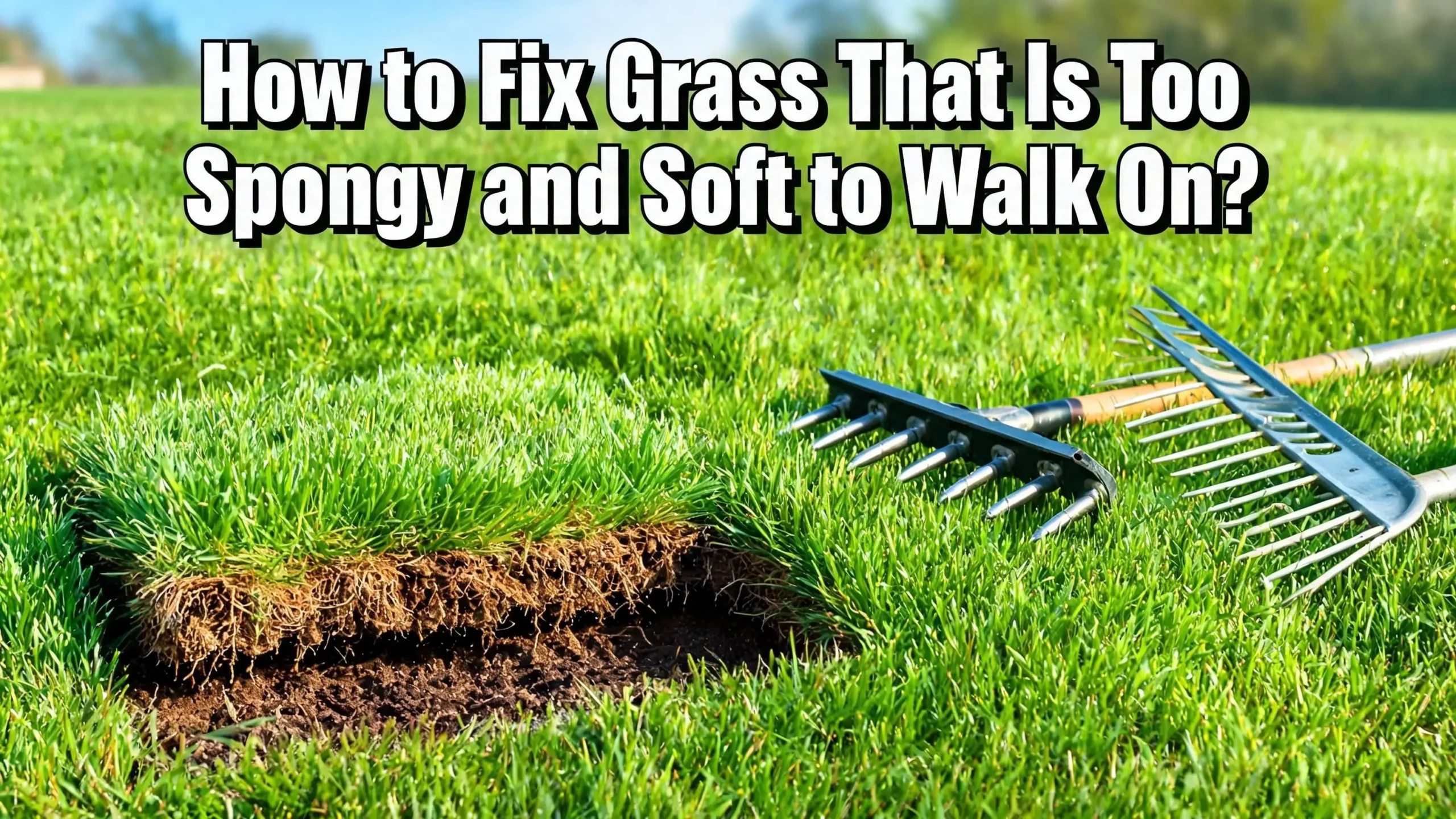
Grab a shovel or a sharp spade. Push it into your lawn at a slight angle and cut out a small wedge of turf about four to six inches deep. Pull this section out and examine it from the side. You will see three distinct layers: green grass on top, brown spongy material in the middle, and soil at the bottom.
The brown middle layer is thatch. Measure it with a ruler. If this layer is less than half an inch thick, your sponginess is likely caused by something other than thatch. If the thatch layer is one inch or thicker, you have found your problem. At this thickness, thatch acts like a sponge that absorbs water and prevents it from reaching the soil below.
Test multiple spots across your lawn. Thatch often builds up unevenly. Areas with heavy foot traffic may have more compaction than thatch. Shaded areas may hold more moisture. Sunny spots with aggressive grass growth may have the thickest thatch.
Write down your measurements for each area. This information will help you decide whether you need light maintenance or a full renovation. A lawn with two or more inches of thatch will need aggressive treatment, while one inch can often be managed with a standard dethatching session.
Poor Drainage and Soil Compaction as Hidden Causes
Thatch is not always the villain. Sometimes a spongy lawn results from what is happening below the surface. Compacted soil and poor drainage can make grass feel soft and mushy even when thatch levels are normal.
Soil compaction happens when soil particles get pressed tightly together. This squeezes out the tiny air pockets that normally exist between particles. Without those pockets, water cannot drain downward. Instead, it sits near the surface and saturates the top layer of soil and grass roots.
Clay soils are the worst offenders. Clay particles are extremely small and pack together densely. A yard with clay heavy soil will often feel spongy during wet periods because water simply has nowhere to go. You can test your soil type by grabbing a handful of damp soil and squeezing it. If it forms a tight, sticky ball that holds its shape, you have significant clay content.
High traffic areas suffer the most from compaction. Paths where kids play, areas near doorways, and spots where pets run regularly will compact faster than the rest of your lawn. These areas may feel soft and squishy while other parts of the yard remain firm.
Downspouts that dump water too close to the lawn, low spots that collect runoff, and flat yards without proper grading also contribute to soggy conditions. Fixing drainage issues is just as important as managing thatch if you want a firm lawn that stays that way year round.
How Overwatering Creates Soft, Mushy Grass
Watering your lawn too much is one of the easiest mistakes to make. Many homeowners water daily with short sessions, thinking this keeps grass healthy. In reality, frequent shallow watering is one of the leading causes of spongy turf.
Short watering sessions only wet the top inch or two of soil. Grass roots respond by staying near the surface where the moisture is. This creates a shallow root system that cannot anchor the turf firmly. The result is a surface that compresses easily under foot.
Overwatered lawns also stay perpetually damp. This excess moisture saturates the thatch layer and makes it act like a wet sponge. The combination of shallow roots and waterlogged thatch gives the lawn that distinctly mushy quality.
Signs of overwatering include yellowing grass blades, mushroom growth across the lawn, increased moss in shaded areas, and a constant squishing sound when you walk. If you notice water pooling on the surface after watering, your lawn is getting more than it can absorb.
The fix is straightforward. Water deeply but less often. Most lawns need about one inch of water per week. Deliver this in one or two deep sessions rather than daily sprinkles. Deep watering forces roots to grow downward in search of moisture, which creates a stronger and firmer turf structure. Early morning watering is best because it reduces evaporation and gives grass blades time to dry before evening.
Step by Step Guide to Dethatching Your Lawn
Dethatching removes the excess organic layer that causes sponginess. This is one of the most direct and effective solutions for a bouncy lawn. Here is how to do it properly.
Step 1: Choose the right time. Dethatch during the active growing season for your grass type. For cool season grasses like fescue and bluegrass, early fall is ideal. For warm season grasses like Bermuda and zoysia, late spring or early summer works best. The grass needs time to recover after this process.
Step 2: Mow your lawn short. Cut your grass to about half its normal height before dethatching. This makes the process easier and allows the dethatching tool to reach the thatch layer more effectively.
Step 3: Select your dethatching tool. For lawns under 1,000 square feet with moderate thatch, a dethatching rake with sharp tines works well. For larger lawns or thick thatch, rent a power dethatcher or vertical mower from your local equipment rental shop. Power dethatchers have rotating blades that slice through the thatch and pull it to the surface.
Step 4: Make multiple passes. Run the dethatcher across your lawn in one direction first. Then make a second pass at a right angle to the first. This cross pattern ensures thorough removal.
Step 5: Rake up the debris. You will be surprised by how much material comes up. Bag it and compost it or dispose of it. Step 6: Water and fertilize. Apply a balanced fertilizer and water your lawn deeply. This supports rapid recovery and new growth.
How Core Aeration Fixes Compacted Spongy Lawns
Core aeration is the best treatment for lawns that feel spongy due to soil compaction. This process removes small plugs of soil from the ground, creating channels for air, water, and nutrients to reach deep into the root zone.
A core aerator uses hollow tines that punch into the soil and extract plugs about two to three inches long. These plugs are deposited on the lawn surface where they break down naturally over a few weeks. The holes left behind reduce soil density and allow the ground to breathe.
Timing matters with aeration. For cool season grasses, aerate in early fall when the grass is growing actively. For warm season grasses, late spring through early summer is the best window. Never aerate a dormant lawn because the grass cannot recover from the stress.
Water your lawn thoroughly one to two days before aerating. The soil should be moist but not muddy. Dry, hard soil resists the tines and produces poor results. Waterlogged soil clogs the machine and creates a mess.
Make at least two passes over the entire lawn. Focus extra attention on high traffic areas and spots where water tends to pool. Leave the soil plugs on the surface. They contain beneficial microorganisms that help break down thatch as they decompose.
Combine aeration with dethatching for the best results. Dethatch first to remove the spongy organic layer, then aerate to address compaction beneath. This one two approach tackles both common causes of spongy lawns in a single renovation session. Follow up with overseeding and fertilizer to fill in any thin spots and promote dense, firm growth.
Topdressing Your Lawn for a Firmer Surface
Topdressing is the process of spreading a thin layer of material over your lawn to improve soil structure, level uneven areas, and create a firmer surface. It is especially effective after dethatching and aerating because the material fills the holes and channels you have created.
The best topdressing mix for spongy lawns is a blend of coarse sand and compost. A ratio of about 70 percent sand to 30 percent compost works well for most situations. Pure sand is not recommended because it can create a hard, concrete like layer when mixed with clay soil. The compost component adds organic matter that supports beneficial soil microbes.
Apply the topdressing in a thin layer, about a quarter to half an inch deep. Spread it evenly using a shovel and then work it into the grass with the back of a rake or a lawn leveling tool. The goal is to fill low spots and coat the soil surface without burying the grass blades completely.
For lawns with significant unevenness, you may need to repeat the topdressing process two or three times over the course of a growing season. Do not apply more than half an inch at a time. Thick layers smother grass and cause more harm than good.
After topdressing, water the lawn lightly to help the material settle into the aeration holes and thatch openings. Over the following weeks, the sand and compost blend will integrate into the existing soil and create a denser, firmer base for your grass to grow on.
Fixing Drainage Problems That Cause Soft Lawns
Sometimes the sponginess in your lawn comes from water that has no place to go. Fixing drainage is essential if your yard stays soft and mushy for days after rain.
Start by observing your yard during and after rainfall. Note where water pools, how long it takes to drain, and whether the water seems to come from your roof, your neighbor’s property, or simply from the ground staying saturated. This observation will guide your solution.
Redirect downspouts first. This is the simplest fix. Your gutter downspouts should discharge water at least five feet away from your foundation and lawn. Extend them with flexible piping if needed. Downspouts that dump water right next to the house create saturated zones that stay spongy for days.
Fill in low spots that collect water. Use a mix of topsoil and compost. Compact gently and reseed. For persistent low areas, you may need to add material gradually over several applications to avoid smothering existing grass.
For lawns with clay soil that refuses to drain, consider applying gypsum. Gypsum helps break up clay particles and improves the soil structure without changing the pH. Spread it according to package directions and water it in.
In severe cases, a French drain may be necessary. This underground system uses a gravel filled trench and perforated pipe to collect excess water and redirect it away from problem areas. French drain installation is a bigger project but provides a permanent solution for chronically soggy lawns.
The Role of Proper Mowing in Preventing Spongy Grass
Your mowing habits play a bigger role in lawn firmness than most people realize. Improper mowing is a direct contributor to thatch buildup and the spongy conditions that follow.
The most common mowing mistake is cutting grass too short. Scalping the lawn weakens the grass plant and forces it to redirect energy into blade regrowth instead of root development. Short grass has shallow roots. Shallow roots mean a weaker turf structure and a softer surface underfoot.
Follow the one third rule. Never remove more than one third of the grass blade length in a single mowing. If your target height is three inches, mow when the grass reaches four and a half inches. This keeps the plant healthy and promotes deep root growth.
Keep your mower blades sharp. Dull blades tear grass rather than cutting it cleanly. Torn grass tips turn brown, decompose slowly, and contribute to thatch accumulation. Sharp blades produce clean cuts that heal quickly and reduce the organic debris that builds up in the thatch layer.
Vary your mowing pattern each time you cut. Mowing in the same direction every week pushes grass down in one direction and can compact the soil along your wheel tracks. Alternating between horizontal, vertical, and diagonal patterns distributes the pressure evenly and promotes upright grass growth.
Mulching your clippings is fine. Despite common belief, grass clippings do not cause thatch. They break down within one to two weeks and actually return valuable nitrogen to the soil. Only bag clippings if the grass has grown excessively tall between mowings.
Choosing the Right Fertilizer to Prevent Future Sponginess
Fertilizer affects your lawn’s density, growth rate, and thatch production. Using the wrong type or amount of fertilizer can make a spongy lawn worse rather than better.
Excess nitrogen is the biggest fertilizer related cause of thatch buildup. Nitrogen drives rapid top growth, which produces more stems, runners, and organic material than soil microbes can decompose. This surplus material accumulates as thatch. The fast growing, lush looking lawn that heavy nitrogen feeding creates often hides a spongy problem underneath.
Use slow release fertilizers instead of quick release formulas. Slow release products feed the grass gradually over several weeks. This produces steady, moderate growth rather than sudden growth spurts. The result is less organic debris and slower thatch accumulation.
Get a soil test before you fertilize. A basic soil test from your local cooperative extension office costs very little and tells you exactly what nutrients your lawn needs. You may discover that your soil already has adequate nitrogen but lacks potassium or phosphorus. Applying the right nutrients in the right amounts avoids waste and prevents overgrowth.
Apply fertilizer during active growing periods. For cool season grasses, fall is the best time. For warm season grasses, late spring through summer is ideal. Avoid fertilizing dormant grass because the nutrients will not be absorbed and can contribute to runoff and environmental issues.
Organic fertilizers like composted manure and bone meal release nutrients slowly and also feed the soil microbes that break down thatch naturally. They are an excellent choice for lawns with a history of sponginess.
When to Call a Professional for Spongy Lawn Repair
Most spongy lawn problems can be solved with DIY methods. But some situations call for professional help. Knowing when to hire an expert saves you time, money, and frustration.
Call a professional if your lawn has more than two inches of thatch. At this thickness, the grass root system is almost entirely embedded in the thatch layer rather than the soil. Aggressive dethatching at this level can destroy the lawn. A professional can evaluate whether renovation or complete lawn replacement is the better option.
Severe drainage problems often require professional assessment. If water pools near your foundation, enters your basement, or remains standing for more than 48 hours after rain, the issue likely involves grading, underground drainage infrastructure, or soil engineering that goes beyond basic lawn care.
Large properties with extensive sponginess benefit from commercial grade equipment. Professional dethatching machines and core aerators cover ground faster and more evenly than consumer rental units. A lawn care company can complete in one day what might take a homeowner an entire weekend.
If you have already tried dethatching, aerating, and adjusting your watering habits without improvement, a soil analysis by a turf professional can reveal hidden issues. Subsurface problems like buried construction debris, layered soil profiles from poor grading, or compacted fill dirt can all cause persistent sponginess that surface treatments cannot fix.
Professional help is also worthwhile for expensive established lawns where mistakes could be costly. An expert assessment minimizes the risk of damaging mature turf during renovation.
Long Term Maintenance Plan to Keep Your Lawn Firm
Fixing a spongy lawn is only half the battle. Keeping it firm requires consistent maintenance habits throughout the year.
Aerate your lawn once per year. Annual aeration prevents compaction from building up again and keeps the soil structure open for water and air movement. Mark your calendar for early fall if you have cool season grass or late spring for warm season varieties.
Dethatch as needed rather than on a fixed schedule. Check your thatch layer annually using the shovel test described earlier. If the thatch stays under half an inch, you can skip dethatching that year. If it reaches three quarters of an inch or more, plan a dethatching session during the next active growing period.
Stick to deep, infrequent watering. Set your irrigation system to deliver about one inch of water per week in one or two sessions. Use a rain gauge or a small container on the lawn to measure output. Adjust for natural rainfall so you do not overwater.
Mow regularly at the correct height for your grass type. Most cool season grasses thrive at three to four inches. Warm season grasses prefer one to two inches. Never remove more than one third of the blade in a single cut.
Apply slow release fertilizer two to four times per year based on your soil test results. Avoid heavy nitrogen applications that promote rapid growth and thatch accumulation.
Monitor your lawn throughout the seasons. Walk it regularly and pay attention to how the surface feels. Catching a spongy area early makes the fix simple. Ignoring it allows the problem to spread and become more difficult to correct. A few minutes of observation each week is the easiest preventive measure you can take.
Frequently Asked Questions
Why does my lawn feel spongy even when it has not rained?
Dry sponginess is almost always caused by thatch buildup. A thick thatch layer feels bouncy and cushion like regardless of moisture levels. Test your thatch depth with a shovel. If it exceeds one inch, dethatching will solve the problem. Compacted soil with a layer of shallow roots on top can also create a soft feeling in dry conditions.
Can I fix a spongy lawn without renting equipment?
Yes, for mild cases. A sturdy dethatching rake can remove moderate thatch from small to medium lawns. Manual core aerating tools that you push into the ground with your foot also work for small areas. However, power equipment is significantly faster and more effective for lawns larger than 1,000 square feet or with heavy thatch.
How long does it take for a lawn to recover after dethatching and aeration?
Most lawns show visible improvement within two to three weeks. Full recovery typically takes six to twelve weeks depending on your grass type, the season, and growing conditions. Water consistently and apply fertilizer after treatment to support fast recovery. Avoid heavy foot traffic on treated areas for at least two to three weeks.
Will adding sand to my lawn make it firmer?
Sand alone is not recommended, especially on clay soils. Pure sand mixed with clay can create a dense, hard layer that worsens drainage. Instead, use a blend of 70 percent sand and 30 percent compost for topdressing. This mix improves soil structure without creating the problems that pure sand causes.
How often should I dethatch my lawn?
This depends on your grass type and growth rate. Check your thatch layer annually. Most lawns with aggressive grasses like Bermuda or Kentucky bluegrass need dethatching every one to two years. Lawns with slower growing grasses like tall fescue or perennial ryegrass may only need dethatching every three to four years. Let the thatch measurement guide your schedule rather than using a fixed timeline.
Does mowing more often help prevent a spongy lawn?
Frequent mowing at the correct height does help. It keeps grass growth in check and reduces the amount of organic material that builds up in the thatch layer. The key is to mow often enough that you never remove more than one third of the blade at a time. This promotes steady, healthy growth instead of the excessive top growth that leads to thatch accumulation.

Hi, I’m Jane! As a passionate gardener and product enthusiast, I spend my days testing garden tools, comparing products, and writing honest reviews so you don’t have to learn the hard way. Got a question? Feel free to reach out — I’d love to hear from you!