How to Identify and Treat Pythium Blight in Ryegrass?
If you’ve ever walked out to your ryegrass lawn on a hot summer morning and found patches of slimy, matted, dead-looking grass, you’ve likely encountered one of the most aggressive turf diseases known to lawn owners: Pythium blight. This disease doesn’t wait around. It can destroy a healthy stand of perennial ryegrass in as little as 24 to 48 hours under the right conditions.
The good news? You can identify it, stop it, and prevent it from coming back — but you need to act fast and follow a clear plan.
This guide walks you through everything you need to know about Pythium blight in ryegrass. From spotting the first signs to applying the right treatments and making long-term changes that protect your lawn, every section is written to give you real, actionable steps you can start today.
In a Nutshell
- Pythium blight is a water mold disease, not a true fungus, caused by Pythium species such as Pythium aphanidermatum and P. graminicola. It thrives in hot, humid conditions and can kill ryegrass within 24 to 48 hours.
- Perennial ryegrass is the most vulnerable turfgrass to this disease. Annual bluegrass and creeping bentgrass are also highly susceptible. If your lawn is primarily ryegrass, you need to be especially vigilant during summer months.
- Early identification is everything. The key signs include greasy, water-soaked patches, cottony white mycelium visible in the morning, a fishy or rotting odor, and reddish-brown circular spots that appear and expand rapidly.
- Cultural management is your first line of defense. Adjusting your watering schedule, reducing nitrogen applications during peak heat, improving soil drainage, and mowing only dry grass are all steps that significantly reduce disease pressure.
- Fungicides are necessary for active outbreaks and high-value turf areas. Active ingredients like mefenoxam, cyazofamid, and propamocarb are among the most effective. Rotating fungicide classes prevents resistance buildup.
- Recovery and prevention go hand in hand. Once you treat an outbreak, reseeding damaged areas with more resistant grass varieties and establishing a preventive spray program before summer conditions peak will keep Pythium blight from repeating every season.
What Is Pythium Blight and Why Does It Target Ryegrass?
Pythium blight goes by several names in the turf world. You may hear it called “grease spot,” “cottony blight,” or “damping off.” All of these names describe the same disease caused by water mold organisms in the genus Pythium. The most common species responsible for foliar blight in ryegrass are Pythium aphanidermatum and Pythium graminicola, though several other Pythium species can also cause damage.
Pythium is technically classified as an oomycete, or water mold, rather than a true fungal pathogen. This distinction matters because it affects how treatments work. Many standard turf fungicides that target true fungi have limited to no effect on Pythium species, which is why using the wrong product is a common mistake lawn owners make.
Perennial ryegrass is especially vulnerable to this pathogen. Compared to Kentucky bluegrass or tall fescue, ryegrass has finer leaf blades, grows more densely, and retains surface moisture longer. These characteristics create ideal conditions for Pythium to establish and move quickly through the turf canopy.
The disease is most active from late June through August in cool-season turfgrass growing regions, with peak activity occurring during nights above 65°F and daytime temperatures above 85°F.
The speed of this disease is what makes it so alarming. A lawn that looks perfectly healthy in the evening can show widespread dead patches by the following morning. This is not an exaggeration.
Pythium blight can spread across a lawn in streaks that follow mowing patterns, foot traffic paths, and water drainage routes. Once you understand what makes ryegrass so susceptible, you can start building a proper defense.
Understanding the Conditions That Cause Pythium Blight
Pythium blight doesn’t appear randomly. It follows a specific set of environmental conditions, and understanding these conditions helps you predict and prevent outbreaks before they start.
The disease becomes active when nighttime temperatures stay above 65°F and leaves remain wet for 12 to 14 consecutive hours. This combination typically occurs after late afternoon or evening thunderstorms during the summer. The storm creates warmth, high humidity, and prolonged leaf wetness, which together give Pythium everything it needs to launch an infection.
Excessive soil moisture plays a large role. Low-lying areas where water collects, lawns with poor drainage, and turf planted near irrigation heads that create standing water are all hotspots for Pythium blight. The pathogen thrives in saturated soil and wet foliage simultaneously. Outbreaks frequently begin in swales, depressions, and low spots and then spread outward.
High nitrogen fertility is another major contributing factor. Lush, succulent grass growth from excessive nitrogen feeding creates soft leaf tissue that Pythium can penetrate much more easily than healthy, firm grass. Turf that has been pushed with heavy nitrogen applications during summer is significantly more vulnerable to rapid, widespread infection.
Poor air circulation compounds all of these issues. Lawns surrounded by dense plantings, fencing, walls, or other physical barriers that block airflow tend to stay wetter longer after rain or irrigation. Pythium spores and mycelium spread through water movement, whether from rain, irrigation, surface runoff, or equipment movement. Recognizing these conditions in your specific lawn environment is the first step toward taking control.
How to Identify Pythium Blight in Ryegrass: The Early Signs
Fast identification is the most important skill you can develop when managing Pythium blight. The disease moves so quickly that a 24-hour delay in response can mean the difference between a small treatable patch and a lawn-wide emergency.
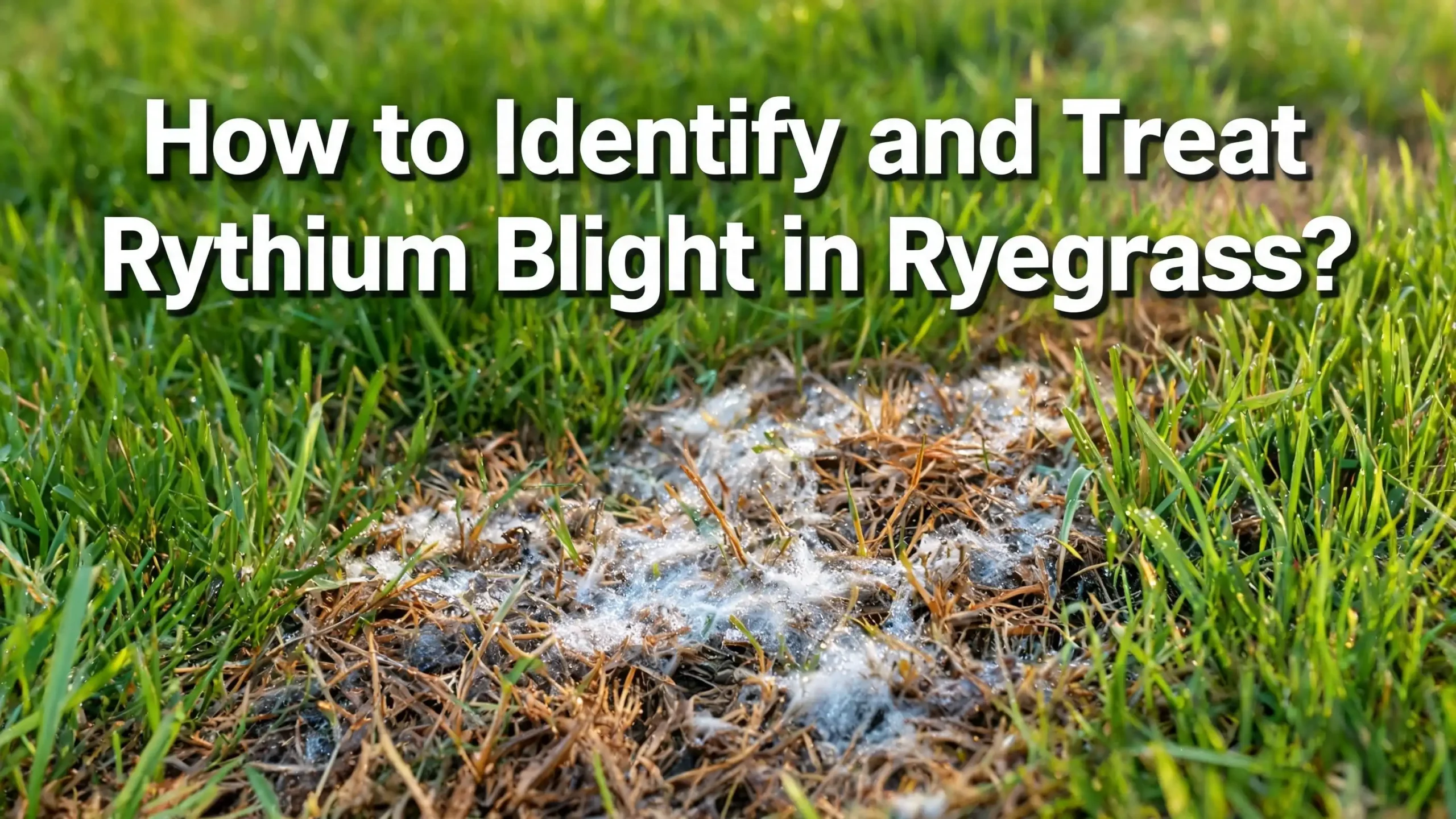
The earliest visible symptom is the appearance of small, circular, sunken patches of grass that look water-soaked or greasy. These patches are typically 1 to 6 inches in diameter at first and appear dark green, almost as if the grass was doused in oil. The leaves feel slimy to the touch. This is often described as the “grease spot” appearance, and it’s the most reliable early warning sign.
Within hours, those water-soaked patches begin to turn orange, tan, or reddish-brown. The grass collapses and mats together. The infected blades look shriveled and dead, and the circular patches start to expand and merge with neighboring patches as the disease spreads through the turf canopy.
One of the most distinctive signs of Pythium blight is the cottony white mycelium visible during early morning when dew is still present on the grass. This white, fluffy growth looks similar to spider webs or tufts of cotton and appears at the margins of infected areas. It disappears as the day warms and the dew evaporates, so you must check your lawn early in the morning to see it.
Another useful identification tool is smell. Infected turf often gives off a distinctive fishy or foul odor. If you collect a sample of infected grass and seal it in a bag overnight, the smell becomes very strong and is a reliable confirmation of Pythium activity. You can also rub a handful of infected grass between your fingers. The greasy, slick sensation is a strong indicator of Pythium blight. These identification techniques let you confirm the disease quickly without waiting for lab results.
Distinguishing Pythium Blight from Other Ryegrass Diseases
Several common turf diseases can look similar to Pythium blight at first glance, and treating the wrong disease wastes time and money. Knowing the key differences helps you act with confidence.
Brown patch, caused by Rhizoctonia solani, is one of the most commonly confused diseases. Brown patch also creates circular patches on cool-season turf and appears during hot, humid weather. However, brown patch patches typically have a lighter, tan or straw-colored center with a darker border that forms a visible smoke ring. Brown patch does not produce cottony mycelium in the same way, and the grass in affected areas, while damaged, is not as greasy or matted as with Pythium blight. Brown patch also does not spread as rapidly as Pythium under ideal conditions.
Dollar spot creates much smaller patches, usually the size of a silver dollar, and produces a white mycelium that looks cottony but appears in cooler temperatures. Dollar spot also leaves characteristic hourglass lesions on individual grass blades with a light tan center and darker margins. Pythium blight does not leave this type of individual leaf marking.
Gray leaf spot creates lesions on individual blades but does not produce the same circular greasy patches across the turf stand. It also tends to be more active during periods of high nighttime humidity rather than the extreme heat conditions that favor Pythium.
The key distinguishing features of Pythium blight remain consistent: the greasy texture, the cottony mycelium in morning dew, the fishy odor, the extremely rapid spread, and the association with very hot, humid nights following summer storms. If you see patches expanding by the hour rather than the day, Pythium blight should be your first suspicion.
Step-by-Step: How to Confirm a Pythium Blight Diagnosis
Before applying treatments, confirming your diagnosis is important. Here is a clear step-by-step process to verify that you are dealing with Pythium blight and not another disease.
The first step is to inspect your lawn in the early morning, before sunrise or shortly after, while dew is still present. Walk the perimeter of any suspicious patches and look for white cottony mycelium at the edges. Take photos to document the appearance.
The second step is to check patch size and shape. Pythium blight patches are typically circular to irregular and range from a few inches to several feet in diameter. They often appear to follow water flow patterns or mowing lines, which indicates the pathogen traveled through surface moisture or equipment.
The third step is to touch and smell the affected grass. Pick up a handful of blighted blades and rub them between your fingers. Pythium-infected grass feels greasy and slimy. Seal a small sample in a plastic bag and check it after several hours. A strong fishy odor is a reliable sign of Pythium activity.
The fourth step is to check environmental conditions. Review the weather from the past 24 to 48 hours. If temperatures exceeded 85°F during the day and stayed above 65°F overnight, with high relative humidity or rainfall, conditions were highly favorable for Pythium blight.
The fifth step is to evaluate the spread pattern. If new patches appeared rapidly overnight and the affected areas are spreading, Pythium blight is very likely. If patches are growing slowly over several days, another disease may be responsible. Combining these observations gives you a confident diagnosis before you reach for any treatment.
Immediate Steps to Take When You Discover Pythium Blight
Time matters with Pythium blight. When you find an active outbreak, your first goal is to stop the spread while you prepare your treatment plan. Here are the immediate actions to take.
Stop all irrigation immediately. Do not water your lawn when Pythium mycelium is visible or when you have just identified an outbreak. Adding moisture to the turf surface creates ideal conditions for the pathogen to spread further. If you have an automatic irrigation system, disable it until conditions dry out.
Do not mow the infected areas. Mowing wet, infected grass is one of the fastest ways to spread Pythium blight across your entire lawn. The mower blades pick up mycelium and spores and deposit them across every surface they touch. If you must mow, always mow uninfected areas first and infected areas last. After mowing any infected turf, thoroughly clean and disinfect the mower deck, blades, and wheels before moving to a healthy section of your property.
Avoid foot traffic on infected patches. Walking through blighted areas transfers mycelium and spores to your shoes, which then carry the pathogen to healthy turf. Mark the affected areas with flags or stakes and route foot traffic around them until the outbreak is contained.
Collect and dispose of clippings from infected areas if you must mow. Bag all clippings separately and dispose of them rather than composting. Composting infected material keeps the pathogen active and risks reintroducing it to your soil.
These immediate steps don’t cure the disease, but they prevent it from expanding while you organize your treatment response. Controlling spread is just as important as treating the active infection.
Cultural Practices That Control and Prevent Pythium Blight
Cultural management is the backbone of any long-term Pythium blight control strategy. Changing how you manage your ryegrass lawn reduces the conditions that allow the disease to thrive.
Irrigation timing is one of the most impactful changes you can make. Water your lawn in the early morning hours, ideally before sunrise. This allows the grass blades to dry out completely before nightfall. Late afternoon or evening irrigation is one of the biggest risk factors for Pythium blight because it leaves leaves wet through the warm night. If you irrigate at night during summer, you are essentially creating ideal Pythium conditions with your own hose.
Reduce nitrogen applications during summer heat. High nitrogen rates promote lush, soft foliar growth that is highly susceptible to infection. During periods of hot, humid weather that favor Pythium blight, do not apply more than 0.25 pounds of nitrogen per 1,000 square feet. Use slow-release nitrogen sources whenever possible, and avoid quick-release, high-nitrogen fertilizers from June through August. A balanced fertilizer program that meets nutritional needs without stimulating excessive growth is the goal.
Improve soil drainage throughout your lawn. Fill any low spots or depressions where water collects after rain or irrigation. Consider installing subsurface drainage if you have persistent wet areas. Well-drained soil dries out faster and reduces the prolonged moisture that Pythium requires to establish and spread.
Thin dense plantings and remove physical barriers that block airflow across your lawn. Improved air circulation helps the turf dry out more quickly after rain and irrigation, reducing the window of leaf wetness that enables Pythium infections.
Aerate your lawn regularly to reduce soil compaction and thatch accumulation. Core aeration opens the soil, improves drainage, and enhances airflow around the root zone. Annual aeration is sufficient for most home lawns, but high-traffic areas may benefit from aeration twice per year. Thatch provides a reservoir for Pythium spores and mycelium, so keeping thatch below half an inch through aeration and topdressing reduces the pathogen load in your turf.
How to Use Fungicides to Treat Pythium Blight
When cultural practices alone cannot stop an active outbreak, fungicides become essential. Because Pythium is an oomycete rather than a true fungus, you must select fungicides specifically labeled for Pythium control. Many broad-spectrum turf fungicides are ineffective against this pathogen.
The most effective active ingredients for Pythium blight control include mefenoxam, metalaxyl, cyazofamid, propamocarb, and fosetyl-Al. Mefenoxam and metalaxyl belong to the phenylamide class and work systemically within the plant. Cyazofamid consistently shows excellent efficacy ratings in research trials, particularly under high disease pressure. Propamocarb is a strong curative option with a different mode of action, making it valuable in a rotation program.
For active outbreaks, curative applications using contact fungicides at short intervals of 7 days may be needed. Research from Penn State’s Turfgrass Pest Diagnostic Lab indicates that cyazofamid, mefenoxam, and propamocarb are the most effective curative options. Tank-mixing mancozeb with systemic fungicides is also recommended because it reduces resistance pressure while broadening the spectrum of control.
Fungicide resistance is a serious concern with Pythium management. Mefenoxam resistance has been documented in Pythium populations where this chemistry has been used repeatedly without rotation. To prevent resistance, rotate between fungicide classes after every application. Never apply the same active ingredient back-to-back. Using tank mixes of products from different FRAC (Fungicide Resistance Action Committee) codes helps delay resistance development.
Apply fungicides as a spray solution in 2 to 5 gallons of water per 1,000 square feet, following the specific product label directions. Ensure good coverage of the turf canopy. Apply in the early morning or early evening when conditions favor uptake and when leaf surfaces are not already saturated. Always read and follow all label directions for rates, intervals, and safety precautions.
Building a Preventive Fungicide Program for Ryegrass
If Pythium blight has affected your ryegrass in previous summers, or if you grow perennial ryegrass in a climate with hot, humid summers, a preventive fungicide program is the most reliable way to protect your turf before damage occurs.
The preventive program begins in mid-June, or earlier if extended periods of warm, humid weather are forecast. The first application should be timed when the 24-hour weather forecast shows daytime temperatures above 85°F to 90°F, nighttime temperatures above 65°F, and relative humidity at or above 80 percent. These conditions define the disease-favorable window.
The recommended spray schedule follows a structured rotation. Make the first application using a systemic fungicide such as mefenoxam or cyazofamid. Two weeks later, make a second application using a different systemic fungicide from a different chemical class. Two weeks after that, switch to a contact fungicide such as mancozeb. Continue this rotation throughout the summer on 14 to 21-day intervals, depending on disease pressure and label directions.
Spot treatments are appropriate for areas that consistently show Pythium blight year after year, such as low spots, areas with restricted airflow, or sections near irrigation heads. Applying preventive fungicides to these known hotspots, even when the rest of the lawn appears healthy, provides targeted protection where the disease is most likely to begin.
The key benefit of a preventive approach is that you are applying chemistry before the infection establishes, when far less active ingredient is needed and when the effectiveness is significantly higher than after visible symptoms appear. Curative applications are harder, more expensive, and less reliable than prevention.
Watering and Irrigation Management During Disease Risk
Your watering habits directly influence Pythium blight risk, and making changes to your irrigation routine is one of the most practical and cost-free steps you can take. The goal is to deliver the water your ryegrass needs while keeping the leaf surface dry for as many hours as possible each day.
Water deeply and infrequently rather than applying light, frequent irrigation. Deep watering encourages roots to grow downward, reduces surface moisture stress, and allows the soil to dry between cycles. Light, frequent watering keeps the surface perpetually moist and creates favorable conditions for Pythium.
The best time to irrigate is between 4 a.m. and 8 a.m. This timing takes advantage of the natural dew that already occurs overnight. By watering early in the morning, you consolidate the period of leaf wetness into a window that ends as temperatures rise and sunlight drives evaporation. Nighttime watering extends leaf wetness through the warmest, most Pythium-favorable hours and should be completely avoided from June through August.
Monitor rainfall and skip irrigation after significant rain events. Many homeowners run automatic irrigation systems on fixed schedules regardless of rainfall. Installing a rain sensor or soil moisture sensor allows your system to skip unnecessary watering cycles that add to disease risk. A sensor that pauses irrigation when soil moisture is adequate pays for itself through both disease prevention and water savings.
Avoid over-irrigating newly seeded areas. Pythium blight is particularly destructive to new seedings of perennial ryegrass. During germination and establishment, the soil must remain moist to support seedling development, but saturating the soil creates high disease risk. Keep the soil consistently moist without allowing water to pond on the surface. Remove any mulch covering as soon as seedlings emerge to improve surface drying.
Repairing Lawn Damage After a Pythium Blight Outbreak
After you have controlled an active Pythium blight outbreak, the affected areas of your ryegrass lawn will need repair. Dead patches don’t recover on their own, and bare soil left exposed invites weed invasion.
Wait until conditions are favorable for germination before reseeding. Attempting to overseed during hot, humid summer conditions that favored the original outbreak creates high risk of a repeated infection on the new seedlings. The ideal time to reseed is in early fall, when temperatures cool down, humidity decreases, and Pythium activity slows. In most cool-season turfgrass regions, late August through October provides the best window for ryegrass establishment.
Prepare the damaged area by raking out dead grass and thatch. Loosen the top quarter to half inch of soil with a rake or dethatching tool to create a seedbed. Smooth the surface and fill any depressions with topsoil before seeding. Level spots where water tends to pool, since these areas are your highest-risk zones for future Pythium blight outbreaks.
Apply a starter fertilizer at seeding to support root development without promoting excessive foliar growth. Avoid high-nitrogen formulations. A balanced phosphorus-rich starter formula encourages strong root establishment, which makes new seedlings more stress-tolerant and slightly less vulnerable to Pythium infection during the critical germination period.
Consider blending resistant varieties into your reseeding mix. While perennial ryegrass will always carry some susceptibility to Pythium blight, selecting newer turf-type varieties that have been bred for improved disease resistance helps reduce future outbreak severity. Kentucky bluegrass and tall fescue blended into a predominantly ryegrass stand add a buffer of more resistant grass species. If Pythium blight has been a recurring problem, a mixture reduces the risk of widespread loss in future seasons.
Monitor new seedlings closely during their first several weeks of establishment. Apply a preventive fungicide application at seeding if temperatures are still warm enough to favor Pythium activity, following label directions for seeding applications.
Improving Soil Drainage and Aeration to Reduce Disease Risk
Long-term Pythium blight management requires addressing the soil and landscape conditions that create persistent disease pressure. Improving drainage and aeration are permanent solutions that reduce risk season after season.
Core aeration removes plugs of soil from the turf and opens channels that improve water infiltration, reduce compaction, and enhance air movement around the root zone. For most home lawns, annual core aeration in fall is sufficient. For lawns with heavy clay soils, high traffic, or a history of Pythium blight, aeration twice per year in spring and fall provides better results.
Thatch is a critical factor in Pythium blight severity. A thatch layer greater than half an inch creates a warm, moist, organic layer that serves as a habitat and food source for Pythium spores. Dethatching, combined with core aeration and topdressing with sand or compost, reduces thatch accumulation over time. For golf course putting greens and high-value turf areas, regular topdressing keeps thatch minimal and surfaces drier.
Addressing grade and drainage issues in your lawn reduces the low-lying wet spots where Pythium blight consistently initiates. If you have a specific area of your lawn that stays wet after rain, consider regrading the area to direct water flow away from the lawn, filling the depression with topsoil, or installing a French drain or subsurface drainage system. These improvements eliminate the moisture hotspots that serve as the starting point for most summer outbreaks.
Reduce shading in areas where possible. Shaded areas of the lawn dry out more slowly after rain and irrigation, stay cooler at night, and maintain higher relative humidity near the turf surface. Pruning tree canopies to allow more sunlight and airflow, or relocating dense plantings that block air movement, meaningfully reduces the favorable conditions for Pythium blight development.
Choosing the Right Grass Varieties to Reduce Pythium Blight Susceptibility
The grass varieties you grow in your lawn have a direct impact on how severely Pythium blight affects you. While no cool-season grass is completely immune, significant differences exist in susceptibility between species and varieties.
Perennial ryegrass is the most susceptible species to Pythium blight, which is why this guide focuses specifically on ryegrass lawns. The fine texture, dense growth habit, and rapid succulence of ryegrass leaves make it the preferred host for Pythium aphanidermatum and related species.
Kentucky bluegrass and tall fescue show significantly better resistance. These species are less likely to suffer severe, rapid damage from Pythium blight. If your lawn is currently a pure stand of perennial ryegrass and you experience Pythium blight every summer, consider transitioning to a mixed-species lawn or overseeding with tall fescue or Kentucky bluegrass varieties to dilute the susceptibility of your turf stand.
Within perennial ryegrass itself, improved turf-type varieties bred for disease resistance are available. Research from university turfgrass programs regularly evaluates variety performance across a range of diseases. Selecting ryegrass varieties with documented Pythium blight resistance ratings can reduce outbreak severity even when you are unable to eliminate all environmental risk factors.
During overseeding projects on warm-season turf in Florida and other southern states, all cool-season species used for overseeding carry some Pythium risk. Applying a preventive fungicide at the time of seeding, selecting disease-resistant variety blends, and managing irrigation carefully during establishment all reduce the risk of damping off and foliar blight on newly seeded turf.
Monitoring Your Lawn for Pythium Blight Throughout the Season
Consistent monitoring throughout the summer season allows you to catch Pythium blight at its earliest stage and respond before the disease becomes severe. Building a simple monitoring routine takes only a few minutes each day.
Walk your lawn every morning during high-risk weather periods. The best time to look for Pythium blight is early morning while dew is still on the grass. This is when cottony mycelium is visible and when greasy patches are most distinguishable from healthy turf. Pay special attention to low spots, areas near irrigation heads, shaded sections, and locations where outbreaks have occurred in previous years.
Keep a lawn disease log. Record dates, locations, weather conditions, and any symptoms you observe. After two or three seasons, patterns will emerge that help you predict when and where Pythium blight is most likely to appear. This information makes your preventive fungicide timing more precise and your cultural management decisions more targeted.
Monitor nighttime temperature forecasts. A consistent pattern of nighttime temperatures above 65°F combined with daytime highs above 85°F and forecast humidity above 80 percent creates your high-alert window for Pythium blight. During these periods, increase your monitoring frequency and confirm that your preventive fungicide program is on schedule.
Check irrigation coverage regularly. Uneven irrigation that creates perpetually wet zones while leaving other areas dry produces microenvironments where Pythium blight initiates. Test your sprinkler system coverage by placing cans in a grid pattern and measuring water distribution. Adjust heads that produce uneven coverage to reduce wet spots and ensure uniform application across the entire lawn area.
When to Call a Professional for Pythium Blight Treatment
Most homeowners can manage mild to moderate Pythium blight outbreaks using the cultural and chemical practices described in this guide. However, certain situations warrant calling a licensed lawn care professional or turf pathologist.
If your lawn has experienced severe annual outbreaks for two or more consecutive years despite implementing cultural improvements and fungicide applications, a professional assessment can identify underlying issues you may have missed. Poor soil structure, drainage problems, irrigation system faults, or resistance to fungicides you have been using all require expert evaluation.
Fungicide resistance is a serious possibility if you have been applying the same chemistry for multiple seasons without rotation. A turf pathologist can take a sample, identify the specific Pythium species present, and test for resistance to commonly used active ingredients. This information guides the selection of effective alternatives and prevents continued wasted investment in treatments that are no longer working.
Large-scale commercial turf areas, such as sports fields, golf courses, and parks, almost always benefit from professional turf management due to the complexity of managing disease across large areas, the cost of losing large sections of maintained turf, and the need for commercial-grade products that require a pesticide applicator license.
A professional can also help you design an integrated pest management plan that combines cultural, biological, and chemical controls in a way that is tailored to your specific site, grass species, soil type, and climate. The investment in professional consultation after repeated Pythium blight problems often saves significant time, money, and frustration compared to continued trial and error.
Long-Term Strategies to Keep Pythium Blight Away for Good
Managing Pythium blight is not a one-season project. The most successful lawn owners take a long-term view, building a management system that consistently reduces disease pressure year after year.
Combine cultural, biological, and chemical approaches into a unified strategy. No single tactic controls Pythium blight completely on its own. Cultural practices that improve drainage, reduce nitrogen, and adjust irrigation timing reduce disease pressure. Preventive fungicide programs protect the turf during high-risk periods. And choosing resistant grass varieties reduces the inherent susceptibility of your lawn. Together, these approaches create multiple layers of protection.
Biological control options are emerging as part of integrated turfgrass management. Products containing the bacterium Pseudomonas chlororaphis strain AFS009 (commercially available as Zio) have received efficacy ratings as a component of disease management programs. While biological controls alone are not sufficient under high disease pressure, they can play a supporting role in a diversified management program, particularly for homeowners interested in reducing synthetic fungicide use.
Review and adjust your program annually. What worked last season may need adjustment based on changes in weather patterns, new disease pressure, changes in your lawn composition, or new product options. Assess your Pythium blight outcomes at the end of each summer season, identify what worked, and update your approach before the next year’s high-risk period arrives.
Invest in soil health over time. Healthy, well-structured soil with good drainage, appropriate pH, and active microbial communities supports stronger, more stress-tolerant turfgrass. A soil test every two to three years helps you maintain proper pH (slightly acidic to neutral) and ensures that fertility levels are supporting plant health without creating excessive succulence. Strong, healthy ryegrass is less vulnerable to Pythium infection and recovers more quickly from any damage that does occur.
Frequently Asked Questions
What does Pythium blight look like on ryegrass?
Pythium blight appears as small, circular patches of water-soaked, greasy-looking grass that rapidly turn orange, tan, or reddish-brown. Infected areas feel slimy to the touch, and you may see white cottony mycelium at the patch edges during early morning when dew is present. The disease spreads fast and infected turf often emits a foul, fishy odor.
How fast does Pythium blight spread?
Pythium blight can kill ryegrass and spread across large areas within 24 to 48 hours under ideal conditions. Warm nights above 65°F with high humidity and wet foliage are the triggers. The pathogen spreads through water movement, foot traffic, and mowing equipment, which is why it often appears in streaks that follow mowing patterns or drainage paths.
Can I use a regular lawn fungicide for Pythium blight?
No. Pythium is an oomycete, not a true fungus, so many standard lawn fungicides are ineffective against it. You must use fungicides specifically labeled for Pythium control, with active ingredients such as mefenoxam, metalaxyl, cyazofamid, propamocarb, or fosetyl-Al. Always check the fungicide label to confirm Pythium is listed as a target pathogen.
How do I stop Pythium blight from coming back every year?
Preventing repeat outbreaks requires a combination of strategies. Adjust irrigation timing to early morning, reduce nitrogen applications during summer, improve soil drainage, aerate regularly to reduce thatch, and implement a preventive fungicide program that begins before high-risk weather conditions arrive. Blending more resistant grass varieties such as tall fescue or Kentucky bluegrass into your lawn also reduces overall susceptibility.
Is Pythium blight dangerous to pets or children?
The disease itself does not pose a health risk to humans or animals. However, fungicides used to treat Pythium blight should be applied according to label directions, with appropriate re-entry intervals observed before allowing children, pets, or other people onto the treated area. Always follow product label safety instructions.
When is the best time to apply a preventive fungicide for Pythium blight?
The best time to begin preventive applications is in mid-June, or earlier if hot, humid conditions arrive ahead of schedule. Apply the first treatment when a 24-hour weather forecast shows daytime temperatures above 85°F to 90°F, nighttime temperatures above 65°F, and relative humidity at or above 80 percent. Continue applications on a 14 to 21-day rotation throughout summer, alternating between fungicide classes to prevent resistance.
Can Pythium blight affect newly seeded ryegrass?
Yes, newly seeded ryegrass is extremely vulnerable to Pythium blight, particularly the damping-off phase that kills seedlings before or shortly after emergence. If seeding during warm conditions, apply a preventive fungicide at seeding and avoid overwatering. Early fall seeding, when temperatures have cooled, significantly reduces Pythium risk during establishment.
What is the fishy smell coming from my lawn?
A fishy or foul odor coming from your lawn is a strong indicator of Pythium blight activity. The odor is produced by the Pythium pathogen and its interaction with infected plant tissue. If you seal a sample of affected grass in a plastic bag overnight and the smell intensifies, Pythium blight is very likely the cause.

Hi, I’m Jane! As a passionate gardener and product enthusiast, I spend my days testing garden tools, comparing products, and writing honest reviews so you don’t have to learn the hard way. Got a question? Feel free to reach out — I’d love to hear from you!