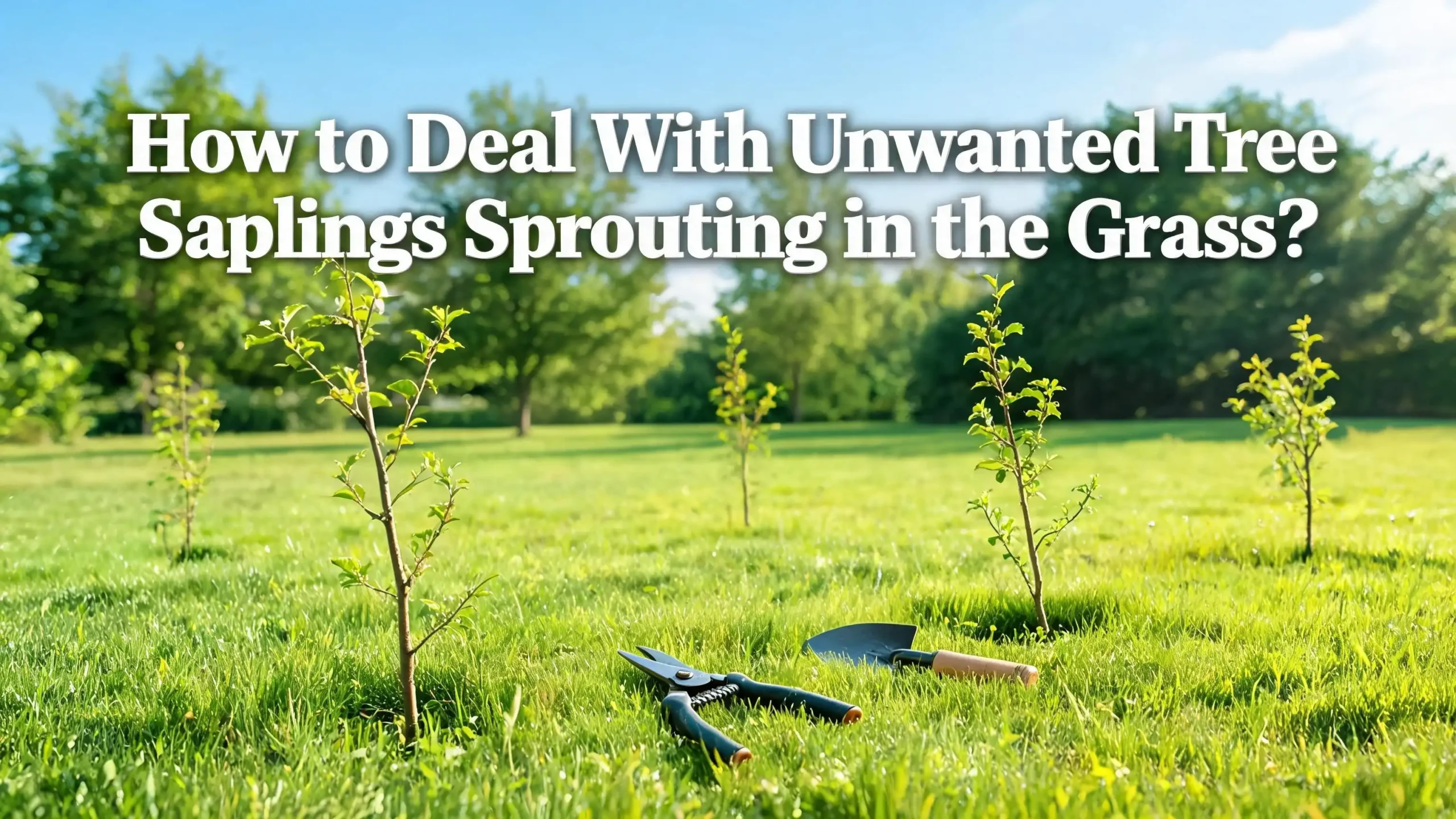
How to Deal With Unwanted Tree Saplings Sprouting in Your Grass?
You step outside one morning, coffee in hand, and notice something odd. Tiny green shoots are poking up all over your lawn. At first glance, they look like weeds. But a closer look reveals they are baby trees. Tree saplings have a sneaky habit of appearing where you least want them. They can pop up by the dozens, turning a clean lawn into a miniature forest almost overnight.
This is one of the most common and frustrating lawn care problems homeowners face. Left alone, those small sprouts grow fast. They develop deep roots. They steal water and nutrients from your grass. They can even crack sidewalks, invade garden beds, and crowd out the plants you actually want. The good news? You can solve this problem with the right approach and a bit of consistency.
This guide gives you clear, step by step solutions to remove unwanted tree saplings from your lawn and stop them from coming back. Every method covered is safe for your lawn, easy to follow, and proven to work.
Key Takeaways
- Tree saplings sprout in lawns for specific reasons. Seeds arrive through wind, birds, and squirrels. Root suckers grow from stressed or damaged trees. Understanding the source helps you pick the right removal method.
- Early action saves you time and effort. Small seedlings are easy to pull or mow over. Once they grow into established saplings with deep roots, removal becomes much harder and may require tools or professional help.
- Regular mowing is your simplest weapon. Mowing at least once a week cuts off the tops of young seedlings. This starves them of energy over time and kills most of them without any extra effort.
- Hand pulling works best on wet soil. Water the area first, then pull each seedling out by its base. Removing the entire root system prevents regrowth and gives you immediate results.
- Herbicides should be your last resort, not your first. Chemical treatments can damage your grass and nearby trees if used incorrectly. Selective broadleaf herbicides are safer than general purpose ones, but always read the label first.
- Prevention is just as important as removal. A thick, healthy lawn with proper mowing height, good fertilization, and a layer of mulch in garden beds can stop most tree seeds from ever taking root.
Why Tree Saplings Sprout in Your Lawn
Tree saplings appear in your grass for two main reasons: seed dispersal and root suckering. Many tree species produce large amounts of seeds each year. Wind carries maple keys and ash seeds across entire neighborhoods. Birds eat berries from holly, cherry, and mulberry trees and deposit the seeds in their droppings. Squirrels bury acorns and nuts and forget where they put them.
The second cause is root suckers. These are shoots that grow directly from the root system of an existing tree. Species like honey locust, poplar, cottonwood, black locust, and crabapple are especially prone to this behavior. The tree sends up new growth from latent buds beneath its bark, often in response to stress. Storm damage, root injury from mowing, disease, and poor nutrition can all trigger suckering.
Your lawn provides the perfect environment for seeds to germinate. The soil stays moist from regular watering. Grass offers some shade to protect tender seedlings. If your lawn has thin spots or bare patches, seeds face even less competition. Understanding which type of sapling you are dealing with helps you choose the best removal strategy. Seedlings from dropped seeds are usually easier to remove. Root suckers are tougher because they stay connected to a large, established root system underground.
Which Tree Species Cause the Most Problems
Some trees are far more aggressive than others. Knowing which species are responsible helps you plan your approach. Silver maples are among the worst offenders. They produce thousands of winged seeds each spring that can travel hundreds of feet on the wind. A single silver maple can scatter enough seeds to produce hundreds of seedlings in one season.
Elm trees are another common source. They produce small, papery seeds in large quantities. Ash trees also spread seeds generously, and stressed ash trees infested with emerald ash borer often send up root suckers as a survival response. Poplar and cottonwood trees are infamous for their aggressive root systems. They send suckers up through lawns, gardens, sidewalks, and even into neighboring yards.
Fruit trees pose their own challenges. Cherry, plum, and crabapple trees sucker freely, especially grafted varieties where the rootstock is more vigorous than the upper portion. Oak trees spread through acorns buried by squirrels and jays. In warmer climates, live oaks and palm trees can produce stubborn saplings that grow quickly.
If you live near any of these species, regular monitoring of your lawn is essential. Check your yard every few weeks during spring and early summer, which is peak sprouting season. Catching seedlings early makes removal dramatically easier.
The Importance of Acting Quickly
Timing matters more than most people realize. A tree seedling that sprouted last week is easy to pull out with your fingers. That same seedling left alone for a few months develops a woody stem and a root system that may extend 12 inches or more into the soil.
Every week you wait makes the job harder. Young seedlings have soft stems and shallow roots. You can remove dozens of them in minutes. Once a sapling reaches 6 inches or taller, you may need tools to dig it out. At one foot tall, some species develop taproots that resist pulling. At two feet or more, you might need a shovel, mattock, or even a saw.
Root suckers grow especially fast because they draw energy from the parent tree’s root system. A sucker can grow several inches in a single week during peak season. They also regrow quickly if you do not remove them properly. Cutting a sucker at ground level often causes the stub to resprout with multiple new shoots, making the problem worse than before.
Make it a habit to scan your lawn during your regular mowing routine. Pull or cut any new sprouts you see immediately. This small investment of time each week prevents a much larger problem later in the season.
How Regular Mowing Kills Tree Seedlings
Your lawn mower is your most powerful tool against tree seedlings. Regular mowing at the right height destroys young seedlings before they can establish themselves. Most tree seedlings cannot survive repeated cutting because they depend on their leaves to produce energy through photosynthesis.
Mow your lawn at least once a week during the growing season. Set your mower blade to a height of 3 to 3.5 inches. This height does two important things. First, it cuts the tops off any emerging seedlings. Second, it keeps your grass tall enough to shade the soil surface, which prevents new seeds from getting the sunlight they need to germinate.
Consistency is the key. A single mowing session will not kill established seedlings. But repeated mowing over several weeks exhausts their energy reserves. Without leaves to produce food, the seedlings slowly starve and die. Most homeowners find that four to six weeks of consistent weekly mowing eliminates the majority of new tree seedlings.
This method works best on fresh seedlings that are still soft and green. It is less effective on woody saplings that have already developed a firm stem. For those, you will need a more direct approach like hand pulling or cutting with pruners.
How to Hand Pull Tree Saplings Effectively
Hand pulling is the most thorough method for removing individual tree saplings from your lawn. The goal is to remove the entire root system so the plant cannot regrow. Here is how to do it correctly.
Step 1: Water the area first. Moist soil releases roots much more easily than dry soil. Water the affected area deeply the day before you plan to pull, or work after a good rain. This single step makes the job dramatically easier.
Step 2: Grip the sapling at its base. Get your fingers as close to the soil line as possible. If the stem is too small to grip firmly, use a pair of pliers or a weeding tool for extra leverage.
Step 3: Pull slowly and steadily straight up. Do not yank or twist sharply. A slow, firm pull gives the roots time to release from the soil. You want to feel the entire root sliding out of the ground. If the root snaps, the remaining piece underground will likely resprout.
Step 4: Check what you pulled. Look at the bottom of the plant. You should see the full root attached. If the root looks broken or shortened, use a trowel to dig out the remaining piece.
For larger saplings, use a garden fork or dandelion weeder to loosen the soil around the base first. Rock the sapling gently back and forth to free the roots before pulling. This method takes more time than mowing, but it gives you complete removal in one session.
Using Pruners and Loppers for Larger Saplings
Some saplings grow too large to pull by hand. Their stems become woody. Their roots extend deep into the soil. For these, you need cutting tools and a slightly different strategy.
Use sharp hand pruners for saplings with stems up to half an inch thick. For thicker stems, switch to loppers or a small pruning saw. Cut the sapling as close to the ground as possible. The lower you cut, the less material remains to produce new growth.
Here is the critical detail most people miss: cutting alone does not kill the sapling. The root system stays alive underground and will send up new shoots within weeks. You have two options to prevent this. The first option is to dig out the root after cutting the top growth. Use a shovel or mattock to excavate around the stump and remove as much root material as you can.
The second option is to treat the fresh cut stump immediately. Some homeowners apply a concentrated broadleaf herbicide directly to the cut surface within minutes of cutting. This allows the chemical to travel down into the root system and kill it. If you choose this route, use a small paintbrush to apply the product only to the cut surface. This prevents the chemical from contacting your grass or other plants.
For root suckers from a nearby tree, cutting and removing the sucker is only a temporary fix. The parent tree’s root system will continue producing new suckers unless the underlying stress is addressed.
The Role of Herbicides in Sapling Control
Herbicides can help manage tree saplings, but they require caution. Using the wrong product or applying it incorrectly can kill your grass, harm nearby trees, or contaminate the soil.
Selective broadleaf herbicides containing triclopyr are the most effective option for tree seedlings in lawns. These products target broadleaf plants while leaving grass unharmed. They work best on young, actively growing seedlings with green leaves. Apply them directly to the foliage of the seedling according to the label instructions.
Never use glyphosate on tree seedlings in your lawn. Glyphosate is a non selective herbicide that kills everything it touches, including your grass. It is only appropriate for spot treatments in areas where you do not care about surrounding vegetation.
There is an important warning regarding root suckers: any herbicide applied to a sucker can travel through the root system back to the parent tree. This means spraying suckers from your maple or oak tree with herbicide could seriously injure or kill the parent tree. For root suckers, manual removal is always the safer choice.
If you decide to use herbicides, follow these guidelines. Read the entire product label before applying. Spray on calm days with no wind to prevent drift. Avoid spraying before rain, which can wash the product onto your grass. Apply the product only to the sapling’s leaves, not to surrounding vegetation. Consider spot treatments with a small spray bottle rather than broadcast applications.
How to Stop Root Suckers From Returning
Root suckers are the most persistent type of unwanted tree growth. They sprout from latent buds on a tree’s root system, and removing them does not stop new ones from appearing. Solving this problem requires a multi step approach.
First, identify and reduce the source of stress on the parent tree. Trees produce more suckers when they are struggling. Common stressors include drought, compacted soil, root damage from construction or mowing, disease, and insect infestations. A healthy tree produces far fewer suckers than a stressed one. Water your trees deeply during dry spells. Avoid hitting surface roots with your mower. Keep mulch around the base of the tree but away from the trunk.
Second, remove suckers correctly. The Royal Horticultural Society recommends tearing suckers away from the root rather than cutting them. Scrape away soil to expose the base of the sucker where it connects to the root. Grip it firmly and pull it away with a twisting motion. This removes the dormant buds at the base that would otherwise produce new shoots. Cutting a sucker with pruners leaves those buds intact, and they will sprout multiple new shoots.
Third, consider installing a root barrier along property lines or garden borders if suckers are coming from a neighbor’s tree. Root barriers are sheets of heavy plastic or composite material buried vertically in the soil to block root growth in specific directions. They are a long term investment that can save years of repeated sucker removal.
Preventing Tree Seeds From Germinating in Your Lawn
Prevention is always easier than cure. Several strategies can reduce the number of tree seedlings that appear in your lawn each year.
Maintain a thick, healthy lawn. Dense grass acts as a natural barrier against seed germination. Tree seeds need direct contact with soil and adequate sunlight to sprout. A thick lawn blocks both. Keep your grass well fertilized, properly watered, and mowed at the correct height for your grass type. Overseeding thin or bare spots in fall fills in gaps where tree seeds would otherwise find an opening.
Apply a pre emergent herbicide in early spring. Pre emergent products stop seeds from germinating without harming existing plants. They work by creating a chemical barrier in the top layer of soil. This is especially useful if you live near maples, elms, or other heavy seed producers. Timing is critical. You must apply the product before seeds begin to germinate, which typically happens in early to mid spring depending on your region.
Clean up seeds and seed pods promptly. If you have trees in your yard that produce large amounts of seeds, rake or blow them up before they settle into the lawn. Maple keys, elm samaras, and acorns are all easier to remove before they germinate than after.
Use mulch in garden beds and around trees. A layer of organic mulch 3 to 4 inches deep suppresses seed germination by blocking sunlight. Rake or disturb the mulch surface periodically to uproot any seedlings that manage to sprout.
What to Do After Removing a Tree Stump
Many homeowners experience a surge of new saplings after cutting down a tree. The stump and root system remain alive underground, and the tree responds by sending up dozens of suckers across the lawn. This can continue for years if the stump is not properly dealt with.
Stump grinding is the most common solution. A professional stump grinder reduces the stump to wood chips several inches below the soil surface. This removes the main growth point, but it does not kill the entire root system. You may still see some suckers for a season or two after grinding, but they will diminish as the roots decay.
Drilling and treating the stump is another option. Drill several holes into the top of the stump, each about one inch in diameter and several inches deep. Fill the holes with a stump removal product containing potassium nitrate, which speeds up decomposition. Some homeowners use concentrated Epsom salt as a natural alternative. Cover the stump with a tarp to retain moisture and check it every few months.
Cutting and applying herbicide to the fresh stump surface immediately after felling the tree can prevent suckering. The cut surface absorbs the herbicide and moves it into the root system. This method works best within 30 minutes of cutting the tree. The longer you wait, the less effective it becomes because the cut surface begins to seal itself.
Whatever method you choose, monitor the surrounding lawn for new sprouts throughout the growing season. Pull or mow any suckers that appear until the root system fully dies.
Natural and Organic Approaches to Sapling Control
Not everyone wants to use chemical herbicides. Several natural methods can help manage tree saplings without synthetic products.
Boiling water poured directly on small seedlings can kill them by destroying their cell structure. This works best on very young, tender sprouts in isolated spots. Be careful not to pour boiling water on your grass, as it will kill that too. Target only the seedling.
White vinegar sprayed on seedling leaves acts as a contact herbicide. Household vinegar (5% acetic acid) can burn the leaves of small seedlings. Horticultural vinegar (20% acetic acid) is more effective but must be handled with care. Vinegar does not kill the roots, so repeat applications may be needed, and this method works poorly on established saplings.
Smothering with mulch or cover material blocks sunlight and kills seedlings over time. Some homeowners place an upside down tin can or bucket over individual sprouts and leave it in place for several weeks. Without sunlight, the plant exhausts its energy and dies. This is slow but effective for isolated saplings in garden beds.
Manual removal remains the gold standard for organic lawn care. Consistent hand pulling and mowing eliminate the vast majority of tree seedlings without any products at all. Pair this with a thick, well maintained lawn, and you create conditions that resist new seedling establishment naturally.
For large scale problems with root suckers, organic options are limited. Persistent manual removal combined with improving the parent tree’s health is the most effective chemical free approach.
Seasonal Timing for Sapling Removal
The time of year you tackle tree saplings affects your success rate. Each season offers different advantages and challenges.
Spring is the most important season for sapling control. This is when most tree seeds germinate and root suckers grow most aggressively. Begin monitoring your lawn in early spring as soil temperatures rise. Remove any seedlings you find while they are still small. Apply pre emergent herbicide before germination begins if you had a heavy seedling problem the previous year.
Summer is when missed seedlings become established. Saplings that survived spring mowing develop woody stems and deeper roots. Check your lawn carefully in early summer and remove any surviving saplings before they become too large. Hot, dry conditions in mid summer slow sucker growth, so this can be a good time to catch up on removal.
Fall offers an excellent opportunity for prevention. Overseed your lawn to fill in thin spots. Rake up fallen seeds and pods from nearby trees. Apply a fall fertilizer to strengthen your grass going into winter. A dense, healthy lawn entering spring is your best defense against next year’s crop of seedlings.
Winter is the ideal time to address tree stumps and plan root barrier installations. The ground is dormant, and you can see root sucker locations clearly without foliage in the way. Schedule stump grinding or removal during this season so the area is ready for spring planting.
When to Call a Professional
Most tree sapling problems can be handled with basic tools and consistent effort. But some situations call for professional help.
Contact an arborist if suckers are coming from a large, valuable tree. The suckering may indicate a serious health problem like disease, root damage, or insect infestation. A certified arborist can diagnose the issue and recommend treatments that reduce suckering while preserving the tree.
Call a professional for stump removal. Stump grinders are heavy, powerful machines that require experience to operate safely. Renting one yourself is an option, but hiring a professional is often more cost effective and much safer.
Seek help if saplings are growing from a neighbor’s tree roots. This situation can involve property line issues and may require a root barrier installation. A professional landscaper can install barriers correctly and advise on the best placement.
Consider professional herbicide application if you have a large property with widespread seedling problems. Licensed applicators have access to more effective products and the training to use them safely. They can target tree seedlings without damaging your lawn or nearby desirable plants.
For most homeowners, a combination of regular mowing, hand pulling, and basic prevention strategies is enough to keep tree saplings under control. The key is consistency. Check your lawn regularly, act quickly on new growth, and maintain healthy grass that resists invasion.
Frequently Asked Questions
Will mowing alone kill tree saplings in my lawn?
Yes, regular mowing kills most young tree seedlings over time. Mowing once a week cuts off the leaves that seedlings need to produce energy. After four to six weeks of consistent mowing, most seedlings die from energy depletion. This method works best on soft, green seedlings that have not yet developed woody stems. Older saplings with thick stems may survive mowing and require hand pulling or cutting with pruners.
Why do tree saplings keep coming back after I remove them?
Saplings return for two main reasons. If you are dealing with root suckers, the parent tree’s root system continues sending up new shoots even after you remove existing ones. The only way to stop this is to address the tree’s health, remove the stump, or install a root barrier. If the saplings grow from seeds, new seeds arrive each year through wind, birds, and animals. Consistent prevention through thick lawn maintenance and seed cleanup reduces recurrence.
Can I use salt or bleach to kill tree saplings?
Salt and bleach can kill tree saplings, but they also damage your soil and grass. Salt raises the sodium level in soil, which prevents grass and other plants from absorbing water. Bleach changes soil pH and kills beneficial microorganisms. Both substances can persist in the soil for months. These methods are not recommended for use in lawns or garden beds where you want other plants to thrive.
What is the difference between a tree seedling and a root sucker?
A tree seedling grows from a seed that germinated in the soil. It has its own independent root system and is not connected to any other tree. A root sucker grows directly from the root system of an existing tree. It stays connected to the parent tree and draws energy from it. You can tell the difference by gently digging around the base. If you find a root leading away to a nearby tree, it is a sucker. If you find a single taproot going straight down, it is a seedling.
Is it okay to leave small tree saplings growing in my lawn?
Leaving tree saplings in your lawn is not recommended. Even small saplings develop roots quickly. Within a single growing season, a small seedling can grow a root system that competes with your grass for water and nutrients. If left for multiple seasons, the sapling develops a trunk, spreads its canopy, and shades out the grass beneath it. Removing saplings early saves you significant effort compared to removing an established tree later.
Do pre emergent herbicides stop tree seeds from sprouting?
Pre emergent herbicides can reduce the number of tree seedlings that germinate in your lawn. These products create a chemical barrier in the top layer of soil that prevents seed germination. They are most effective against small seeds from species like elm and maple. They are less effective against large seeds like acorns, which have enough stored energy to push through the barrier. Apply pre emergent products in early spring before soil temperatures reach the germination threshold for your area’s most common tree species.

Hi, I’m Jane! As a passionate gardener and product enthusiast, I spend my days testing garden tools, comparing products, and writing honest reviews so you don’t have to learn the hard way. Got a question? Feel free to reach out — I’d love to hear from you!