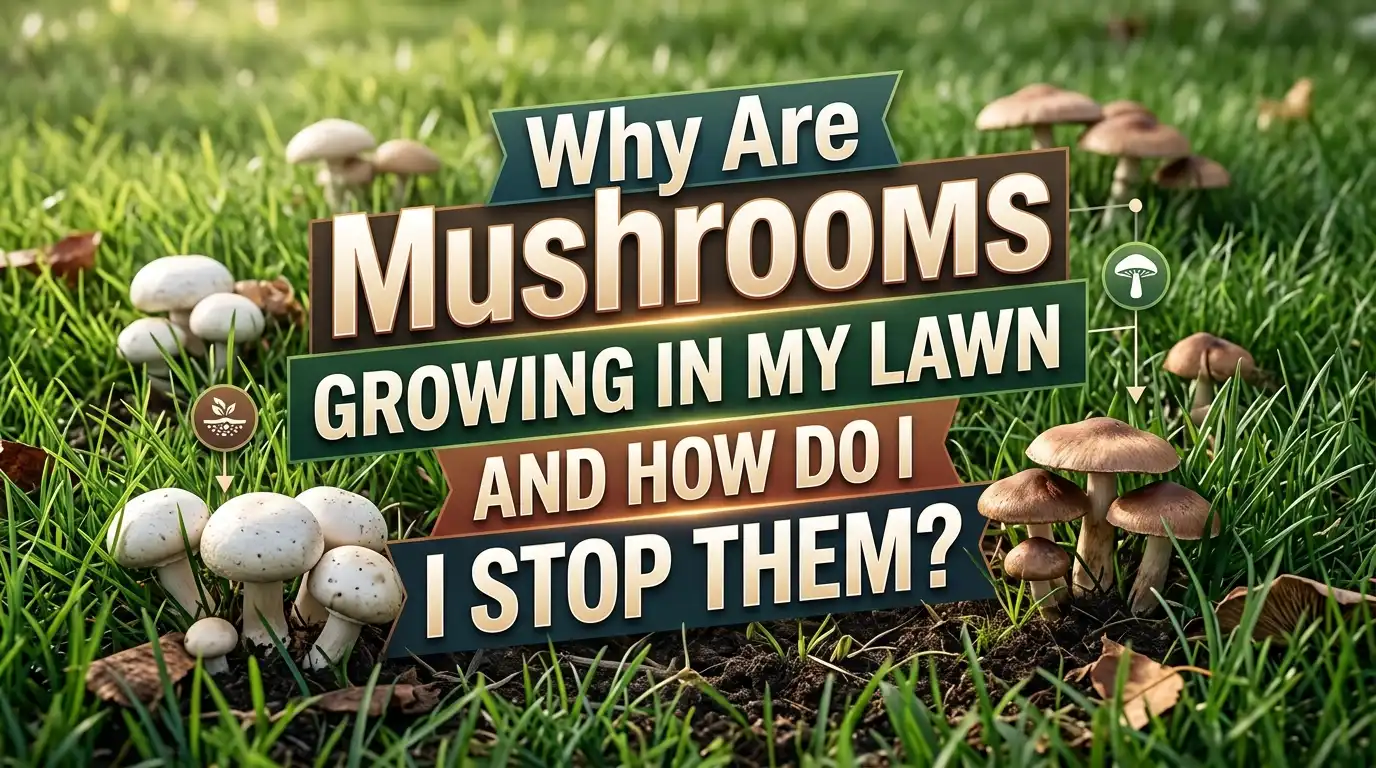
Why Are Mushrooms Growing in My Lawn and How Do I Stop Them?
You walk outside on a beautiful morning. Your lawn looks great. Then you spot them. Mushrooms have popped up overnight like uninvited guests at a dinner party. Some sit right in the middle of your yard. Others cluster near the tree line or along shady patches.
You are not alone. Millions of homeowners deal with this exact problem every year, especially after rainy spells or during humid seasons. The good news? Mushrooms in your lawn are usually a sign of healthy soil. The not so good news? They can look terrible, and some varieties can pose a risk to pets and small children if eaten.
This guide breaks down exactly why mushrooms appear in your lawn and gives you clear, practical steps to stop them. You will learn what causes mushroom growth, how to remove them safely, and how to change the conditions in your yard so they stop coming back.
In a Nutshell
- Mushrooms signal healthy soil. The fungi underground break down organic matter and return nutrients to the soil. Their presence means your lawn has active, beneficial microbial life working below the surface.
- Excess moisture is the number one trigger. Heavy rain, overwatering, and poor drainage create the damp conditions mushrooms need to fruit. Fixing your watering habits and improving drainage are the fastest ways to reduce mushroom growth.
- Organic debris fuels the fungus. Buried tree roots, old stumps, thick thatch, pet waste, and decaying wood give fungi the food they need. Removing this material cuts off their food supply.
- Shade and compacted soil make things worse. Mushrooms prefer dark, damp areas with restricted airflow. Trimming tree branches and aerating your lawn helps dry out the soil and makes it less inviting for fungi.
- Most lawn mushrooms are harmless, but some are toxic if eaten. You should remove mushrooms promptly if you have pets or young children who might eat them. Always wear gloves when handling unknown mushrooms.
- There is no permanent fix, but consistent lawn care works. Regular mowing, aeration, dethatching, and smart watering will keep mushroom outbreaks to a minimum over time.
What Are Lawn Mushrooms Exactly?
Lawn mushrooms are the fruiting bodies of fungi that live underground in your soil. Think of them like apples on a tree. The apple is visible, but the tree itself is much larger. In the same way, the mushroom you see above ground is just a small part of a much bigger organism called mycelium that spreads through the soil beneath your grass.
Mycelium is a network of tiny, thread like structures. It can spread across large areas underground without you ever knowing it exists. The mushroom only appears when conditions are right for the fungus to reproduce. It pushes up through the soil, releases spores into the air, and then often disappears within a day or two.
Most lawn mushrooms belong to the saprophytic category. This means they feed on dead or decaying organic material in the soil. They break down things like old tree roots, buried wood, leaf litter, and grass clippings. This decomposition process is actually beneficial because it recycles nutrients back into the soil.
Common types you might see include fairy ring mushrooms, inky caps, puffballs, stinkhorns, and field mushrooms. Each looks different, but they all share the same basic biology. They all grow from underground fungi that feed on organic matter.
Understanding this basic biology matters because it explains why simply picking mushrooms does not solve the problem. The real organism lives underground. To stop mushrooms from appearing, you need to change the conditions that encourage the underground fungus to produce them.
Why Do Mushrooms Grow in Your Lawn?
Several conditions combine to trigger mushroom growth. The most important factors are moisture, organic matter, shade, and soil compaction. When these elements come together, mushrooms can appear almost overnight.
Moisture is the biggest factor. Fungi need water to grow and reproduce. Extended rainy periods, overwatering your lawn, and poor drainage all create the damp environment that fungi love. You will often notice mushrooms appearing a day or two after a heavy rain. This is because the sudden surge of moisture signals the underground fungi that conditions are right for fruiting.
Organic matter provides the food source. Fungi cannot produce their own food like plants do. They rely on breaking down dead material. Old tree stumps, buried roots, thick thatch layers, fallen leaves, wood chips, and even animal waste all serve as fuel. The more organic material in your soil, the more food fungi have available.
Shade plays a supporting role. Mushrooms prefer areas where sunlight cannot dry out the soil quickly. Under trees, beside fences, and in corners of the yard that stay shaded throughout the day are prime spots for mushroom growth.
Compacted soil traps moisture near the surface and limits airflow. This keeps the top layer of soil damp for longer, which encourages fungal activity. Lawns that receive heavy foot traffic or have clay heavy soil are especially prone to compaction.
Understanding these causes helps you target the right solutions. You do not need to fight the mushroom itself. You need to change the conditions that make your lawn a perfect home for fungi.
Are Lawn Mushrooms Dangerous?
This is one of the most common concerns homeowners have. The short answer is that most lawn mushrooms are harmless. They will not damage your grass, kill your plants, or hurt your soil. In fact, they are doing your soil a favor by breaking down organic matter.
However, safety concerns are real when it comes to pets and young children. Dogs are natural scavengers and may eat mushrooms they find in the yard. Small children might also be tempted to pick and taste them. While many lawn mushrooms cause nothing worse than a stomach ache, some species can be genuinely toxic.
The false parasol mushroom (Chlorophyllum molybdites), for example, is one of the most common lawn mushrooms and causes severe gastrointestinal distress if eaten. Deadly species like the destroying angel (Amanita bisporigera) are rare in lawns but not impossible.
The important thing to know is that no mushroom can harm you just by touching it. Mushroom poisoning only happens through ingestion. So if nobody eats them, they pose no direct threat.
If you have pets or small children, the safest approach is to remove mushrooms as soon as you spot them. Wear gloves, pull them out at the base, and dispose of them in a sealed bag. Do not leave pieces scattered on the lawn because curious pets might still find and eat them.
If you suspect a child or pet has eaten a wild mushroom, contact a poison control center or veterinarian immediately. Do not wait for symptoms to appear.
The Role of Excess Moisture in Mushroom Growth
Water is the single most important trigger for mushroom outbreaks. Fungi need consistent moisture to grow, and mushrooms only fruit when conditions are sufficiently damp. This is why you see them most often after several days of rain or during humid stretches of weather.
Overwatering your lawn is one of the most common mistakes homeowners make. Many people water too frequently and too lightly. This keeps the top layer of soil constantly damp, which is exactly what fungi prefer. A better approach is to water deeply but less often. This encourages grass roots to grow deeper while allowing the soil surface to dry out between waterings.
The best time to water is early in the morning, before 10 a.m. This gives the grass blades and soil surface time to dry during the day. Watering in the evening leaves your lawn damp overnight, which creates ideal conditions for both mushrooms and other fungal diseases like brown patch.
Using a simple rain gauge can help you track how much water your lawn actually receives each week. Most lawns need about one inch of water per week, including rainfall. If nature provides that amount, you can skip the sprinkler entirely.
Poor drainage compounds the moisture problem. If water pools in low spots or runs off hard surfaces onto your lawn, those areas will stay wet longer and produce more mushrooms. Fixing drainage issues is one of the most effective long term solutions for mushroom prevention.
How Organic Matter Feeds Mushroom Growth
Every lawn contains organic matter. Grass clippings, fallen leaves, tree roots, old mulch, and buried wood all decompose over time. This decaying material becomes food for the fungi living in your soil. The more food available, the more active the fungi become, and the more mushrooms you see above ground.
One of the most common hidden causes of mushroom outbreaks is buried debris. If a tree was removed from your yard years ago, the old stump and root system may still be decaying underground. This slow decomposition can fuel mushroom growth for years or even decades. You can check for buried debris by using a small shovel to dig under a cluster of mushrooms. If you find wood or roots, removing them can significantly reduce mushroom activity.
Thick thatch is another major food source. Thatch is the layer of dead grass stems, roots, and debris that builds up between the soil surface and the living grass blades. A thin thatch layer (under half an inch) is normal and even beneficial. But when thatch exceeds half an inch, it traps moisture and provides a feast for fungi.
Pet waste left on the lawn also contributes to the problem. Animal waste is rich in organic material that fungi can consume. Picking up after your pets regularly removes this food source and helps keep mushrooms at bay.
You cannot remove all organic matter from your soil, nor should you. But reducing excess debris and managing thatch gives fungi less fuel to work with, which means fewer mushrooms popping up on your lawn.
How to Remove Mushrooms Safely
Removing mushrooms from your lawn is simple, but doing it correctly prevents spores from spreading. Mushrooms release millions of microscopic spores into the air. These spores can travel on the wind and start new fungal colonies in other parts of your yard.
The best method is to pick mushrooms by hand as soon as you spot them. Wear gardening gloves and pull each mushroom out at the base, close to the soil. Place them directly into a plastic bag or bucket. Do not leave pulled mushrooms lying on the grass because they can still release spores as they dry out.
Seal the bag and dispose of it in the trash. Do not add mushrooms to your compost pile. Composting can preserve the spores and reintroduce them back into your garden later.
Mowing over mushrooms is another option, but it comes with a trade off. The mower blades can chop up the mushrooms and scatter spore laden pieces across your lawn. If you choose to mow them, attach a bag or catcher to your mower to collect the clippings. Dispose of these clippings in the trash rather than leaving them on the lawn.
Timing matters. Remove mushrooms early in the morning before they have fully opened and released their spores. Young mushrooms that have not yet expanded their caps contain most of their spores inside.
Remember that removing the visible mushroom does not kill the underground fungus. The mycelium will continue to live in the soil and may produce new mushrooms when conditions are right again. Removal is a short term fix. Long term prevention requires changing the conditions in your yard.
Improve Lawn Drainage to Prevent Mushrooms
Poor drainage is one of the biggest reasons mushrooms keep coming back. When water sits on or near the surface, it creates the perfect breeding ground for fungi. Fixing drainage issues can dramatically reduce mushroom outbreaks.
Start by identifying low spots in your yard where water collects after rain. These depressions trap water and keep the soil saturated for days. You can fix low spots by filling them with a mix of topsoil and sand, then reseeding with grass. For larger drainage problems, installing a French drain or a simple channel drain can redirect water away from problem areas.
Stormwater runoff from driveways, sidewalks, and rooftops often flows onto lawns and creates soggy patches. Redirecting downspouts away from your lawn and grading the soil so water flows toward a drainage area helps prevent this.
If your soil is heavy clay, water moves through it very slowly. Amending the soil with organic compost over time can improve its structure and drainage capacity. Core aeration also helps by creating channels for water to move through compacted layers.
Check your irrigation system for problems. Broken sprinkler heads, misaligned nozzles, and overlapping spray patterns can over water certain zones. Walk your lawn while the sprinklers run to spot any areas getting too much water.
The goal is to keep your soil moist enough for healthy grass but dry enough to discourage fungal fruiting. Deep, infrequent watering achieves this balance better than frequent, shallow watering.
Aerate and Dethatch Your Lawn
Aeration and dethatching are two of the most effective lawn care practices for reducing mushroom growth. Both improve soil conditions in ways that make your lawn less friendly to fungi.
Core aeration involves pulling small plugs of soil out of your lawn. This breaks up compacted soil, improves water drainage, and increases oxygen flow to the root zone. Compacted soil traps moisture near the surface, which encourages mushrooms. Aeration fixes this by creating pathways for water and air to move deeper into the ground.
Most lawns benefit from aeration once or twice per year. The best time to aerate cool season grasses is in early fall. For warm season grasses, late spring or early summer works best. You can rent an aerator from a local equipment rental shop or hire a lawn care service to do it for you.
Dethatching removes the layer of dead grass, stems, and debris that builds up at the soil surface. When thatch exceeds half an inch, it acts like a sponge that holds moisture and provides organic food for fungi. A dethatching rake works well for small lawns. For larger areas, a power dethatcher or vertical mower makes the job much easier.
After dethatching, rake up all the removed material and dispose of it. Leaving thatch debris on the lawn defeats the purpose because it continues to decompose and feed fungi.
Combining aeration and dethatching gives you the best results. Aerate first, then dethatch. This one two approach opens up the soil, removes excess organic buildup, and creates conditions that favor grass growth over mushroom growth.
Reduce Shade to Discourage Mushroom Growth
Mushrooms prefer shady, cool areas where the soil stays damp longer. Increasing sunlight exposure in problem areas can significantly reduce mushroom activity. Sunlight dries out the soil faster and creates conditions that are less favorable for fungal fruiting.
Start by trimming back overhanging tree branches and thinning out dense shrubs. You do not need to remove entire trees. Simply pruning lower branches and opening up the canopy allows more light and air to reach the lawn below. This small change can make a big difference in how quickly the soil dries after rain or watering.
If you have a section of your yard that stays permanently shaded, consider whether grass is even the best ground cover for that area. Shade loving ground covers like bugleweed, pachysandra, or bishop’s hat may be better options. These plants tolerate low light and help absorb excess moisture from the soil.
Fences, buildings, and other structures can also create persistent shade. While you cannot move a fence, you can improve airflow near these structures by keeping vegetation trimmed and avoiding heavy mulch buildup in shaded areas.
Good air circulation matters almost as much as sunlight. Stagnant air keeps moisture trapped near the soil surface. Pruning shrubs and removing dense plantings near mushroom prone areas helps air move freely and dry the soil faster.
Think of shade reduction as a long term strategy. It takes time for changes in light and airflow to shift soil conditions. But once the soil in your problem areas starts drying out more quickly, you should notice a gradual decline in mushroom appearances.
Use Natural Home Remedies for Mushroom Control
If you prefer to avoid chemical treatments, several natural remedies can help control mushroom outbreaks. These methods are safe for pets, children, and your lawn when used correctly.
Baking soda is one of the most popular home remedies. Mix two tablespoons of baking soda into one gallon of water. Pour or spray this solution directly onto the mushrooms and the surrounding soil. Baking soda raises the pH of the soil slightly, making the environment less favorable for fungal growth. Be careful not to overdo it. Using too much baking soda can alter your soil pH significantly and affect grass health.
White vinegar is another option. Mix one part white vinegar with four parts water and spray it directly on the mushrooms. The acetic acid in vinegar can kill mushrooms on contact. However, vinegar can also harm grass if applied too heavily. Use a targeted spray and avoid soaking the surrounding turf.
Dish soap and water can also work as a quick fix. Mix a few tablespoons of dish soap into a gallon of water and pour it over the mushroom area. The soap breaks down the mushroom tissue and can help dry out the surrounding soil.
It is important to understand that these remedies kill the visible mushrooms but do not eliminate the underground mycelium. The fungus will likely produce new mushrooms once conditions are right again. Natural remedies work best as part of a broader lawn care strategy that addresses moisture, drainage, organic matter, and shade.
Avoid using bleach or harsh chemicals on your lawn. These can kill grass, harm beneficial soil organisms, and create more problems than they solve.
Should You Use Fungicide on Lawn Mushrooms?
Many homeowners wonder if a commercial fungicide will solve their mushroom problem. The honest answer is that fungicides are generally not recommended for lawn mushrooms. Here is why.
Fungicides work by killing fungal organisms. But the fungi that produce lawn mushrooms also play a beneficial role in your soil ecosystem. They break down organic matter, recycle nutrients, and support overall soil health. Applying a broad spectrum fungicide kills not just the mushroom producing fungi but also beneficial microorganisms that your lawn depends on.
The underground mycelium network is massive and deeply embedded in the soil. Most fungicides only affect organisms near the surface. The fungal network below can survive treatment and regrow once the chemical breaks down. This means you may spend money on fungicide only to see mushrooms return weeks later.
There are situations where fungicide makes sense, but these involve specific lawn diseases like brown patch, fusarium blight, or dollar spot rather than mushroom growth. If your lawn shows signs of disease like brown, dying patches of grass or unusual discoloration, a targeted fungicide may be appropriate. Consult your local cooperative extension office for guidance on the right product and application rate.
For mushroom control specifically, focus on cultural practices. Improving drainage, reducing shade, aerating the soil, managing thatch, and adjusting your watering schedule will do more to reduce mushrooms long term than any chemical treatment.
The best approach treats mushrooms as a cosmetic issue rather than a disease. Remove them when you see them, address the conditions that cause them, and accept that a few mushrooms here and there are a normal part of a healthy lawn ecosystem.
Understanding Fairy Rings in Your Lawn
Fairy rings are one of the most distinctive and frustrating mushroom patterns homeowners encounter. A fairy ring appears as a circle or arc of mushrooms growing in the lawn, sometimes accompanied by a ring of dark green grass or a band of dead, brown grass.
These rings form because the fungal mycelium grows outward from a central point underground. As the mycelium expands in all directions, it creates a circular pattern. The mushrooms appear at the outer edge of this expanding circle, which is why the ring grows larger over time. Some fairy rings can persist for years and expand several inches per year.
There are three types of fairy rings. Type 1 produces a ring of dead or dying grass. Type 2 causes a ring of dark green, fast growing grass. Type 3 simply produces a circle of mushrooms with no visible effect on the grass.
Type 1 fairy rings are the most damaging. The dense fungal mycelium in the soil becomes so thick that it repels water, creating a hydrophobic zone. Grass in this zone cannot access moisture and dies. Treating Type 1 rings requires aerating the affected area thoroughly and applying a wetting agent to help water penetrate the hydrophobic soil.
For Type 2 and Type 3 fairy rings, the best response is simply to remove the mushrooms and continue your regular lawn care routine. These types do not harm the grass and will often disappear on their own as soil conditions change.
Fairy rings can go away naturally due to changes in moisture levels or when the organic matter feeding the fungus is fully decomposed. Patience combined with good lawn care practices is the most effective treatment.
Long Term Prevention: A Maintenance Schedule
Preventing mushrooms requires consistent lawn care rather than a one time fix. Following a regular maintenance schedule keeps your lawn healthy and makes it less hospitable to mushroom growth throughout the year.
In spring, begin with a soil test to check nutrient levels and pH. Apply a balanced fertilizer based on the results. Rake up any debris that accumulated over winter, including fallen branches, leaves, and dead grass. Start your watering schedule with deep, infrequent applications.
In late spring or early summer, inspect your thatch layer. If it exceeds half an inch, plan to dethatch. Mow your lawn regularly at the recommended height for your grass type. Keep an eye on shaded areas and prune trees or shrubs as needed to increase sunlight and airflow.
In summer, monitor watering carefully. Adjust your schedule based on rainfall. Do not water if the soil is already moist. Pick up pet waste daily. Remove any mushrooms promptly when they appear.
In fall, aerate your lawn. This is also a good time to overseed thin areas, which creates a denser turf that helps crowd out mushrooms. Rake fallen leaves regularly so they do not form a thick layer of organic matter on the soil. Apply a high nitrogen fertilizer if your soil test recommends it. Nitrogen speeds up organic matter decomposition, leaving less food for fungi.
In winter, keep the lawn clear of debris. Remove fallen branches and leaves. Avoid walking on the lawn when the soil is wet and soft to prevent compaction.
This year round approach addresses every condition that encourages mushroom growth. Consistency is the key. No single action eliminates mushrooms forever, but steady maintenance keeps outbreaks rare and manageable.
When to Call a Professional
Most mushroom problems can be handled with the DIY methods described in this guide. But there are situations where professional help makes sense.
Call a lawn care professional if you have persistent drainage issues that you cannot fix on your own. Poor grading, underground water sources, or severe soil compaction may require specialized equipment and expertise. A professional can assess your property, recommend drainage solutions, and handle the installation.
If mushrooms keep returning despite your best efforts, a lawn care expert can perform a thorough soil analysis. They can identify specific nutrient imbalances, pH problems, or unusual organic matter accumulations that you might miss on your own.
Contact an arborist if mushrooms are growing at the base of a mature tree. Some fungi that fruit near trees are parasitic and can indicate internal decay. An arborist can inspect the tree for structural weakness and recommend treatment or removal if necessary. This is especially important for large trees near your home or areas where people spend time.
If you find mushrooms that you suspect might be toxic and you have children or pets, consider reaching out to your local cooperative extension office. Many extension offices offer mushroom identification services. They can tell you whether the species in your yard poses any real danger.
You do not need to call a professional for every mushroom outbreak. But when the problem persists, worsens, or involves potential safety risks, expert advice saves time and gives you peace of mind.
Frequently Asked Questions
Will mushrooms in my lawn go away on their own?
Yes, most lawn mushrooms disappear on their own within a few days. They typically fruit after rain or during humid conditions and shrink once the soil dries out and sunlight returns. Mushrooms are temporary structures that the underground fungus produces for reproduction. Once they release their spores, they wither. However, the underground mycelium remains alive, and new mushrooms will appear the next time conditions are right. Regular lawn maintenance reduces the frequency of these outbreaks.
Can I eat the mushrooms growing in my yard?
You should never eat wild mushrooms unless you are an experienced forager who can positively identify the species. Many lawn mushrooms have toxic look alikes that are extremely difficult to distinguish. The false parasol, one of the most common lawn mushrooms, causes severe gastrointestinal distress. Deadly species like the destroying angel are rare in lawns but not impossible. Always err on the side of caution and leave identification to experts.
Do mushrooms mean my lawn is unhealthy?
No, the opposite is usually true. Mushrooms are a sign of healthy, biologically active soil. The fungi that produce mushrooms break down organic matter and recycle nutrients, which benefits your grass and plants. A lawn with mushrooms has an active underground ecosystem. The only time mushrooms signal a problem is when they appear alongside dead or dying grass, which could indicate a Type 1 fairy ring or a specific lawn disease.
How often should I aerate my lawn to prevent mushrooms?
Aerate your lawn once or twice per year for the best results. Cool season grasses benefit most from fall aeration. Warm season grasses respond best to aeration in late spring or early summer. If your soil is heavily compacted or your lawn has persistent moisture problems, you may benefit from aerating twice in the same growing season. Aeration improves drainage, reduces compaction, and allows oxygen to reach the root zone, all of which make your lawn less friendly to mushrooms.
Is baking soda safe to use on my lawn for mushroom control?
Baking soda is generally safe when used in small amounts. Mix two tablespoons per gallon of water and apply it directly to mushroom clusters. This mild solution raises soil pH slightly, which discourages fungal growth. However, repeated or heavy application can alter your soil pH enough to stress your grass. Use this method sparingly and only in targeted areas. It works best as a supplement to good lawn care practices rather than as a standalone solution.
Why do mushrooms keep coming back in the same spot?
Mushrooms return to the same spot because the underground mycelium network is still alive and active in that area. The fungus has likely found a consistent food source, such as buried wood, an old tree root, or a thick thatch layer. Until that food source is removed or fully decomposed, the fungus will continue to produce mushrooms whenever moisture and temperature conditions are favorable. Digging up the area to check for buried debris can help you identify and remove the source.

Hi, I’m Jane! As a passionate gardener and product enthusiast, I spend my days testing garden tools, comparing products, and writing honest reviews so you don’t have to learn the hard way. Got a question? Feel free to reach out — I’d love to hear from you!