How to Treat Brown Patch Disease in St. Augustine Grass?
Have you noticed ugly, circular brown spots creeping across your beautiful St. Augustine lawn? You are not alone. Brown patch disease is one of the most common and destructive fungal infections that attacks St. Augustine grass. It can turn a lush green yard into a patchy, straw colored mess almost overnight.
The fungus responsible is called Rhizoctonia solani. It thrives during cooler, humid weather and can spread across large sections of your lawn if you do not act quickly. Many homeowners feel helpless watching their turf deteriorate, unsure whether the problem is insects, drought, or disease.
The good news? Brown patch disease is both treatable and preventable. With the right combination of cultural practices, proper watering habits, smart fertilization, and timely fungicide applications, you can stop the spread and help your lawn recover.
This guide will walk you through everything you need to know, from identifying the first symptoms to restoring your St. Augustine grass to full health.
Key Takeaways
- Brown patch disease is caused by the soil fungus Rhizoctonia solani, which becomes active when temperatures drop below 80°F and nighttime temperatures hover around 70°F. It is most common during fall, winter, and early spring in warm climate regions.
- Early identification is critical for successful treatment. Look for circular patches of yellow or brown grass ranging from a few inches to several feet in diameter. A black, rotted area at the base of the leaf blade where it meets the stem is the hallmark diagnostic sign.
- Cultural practices are your first line of defense. Reducing watering frequency, avoiding excess nitrogen fertilizer, improving soil drainage, and mowing at the correct height all create conditions that discourage fungal growth.
- Fungicide applications work best as a preventive measure. Active ingredients such as azoxystrobin, propiconazole, thiophanate methyl, and myclobutanil are commonly recommended. Apply fungicides before symptoms appear or at the very first signs of infection for the best results.
- Your lawn can recover with proper care. St. Augustine grass has strong regrowth potential. Once the fungus is controlled, damaged areas often fill back in during the warm growing season with consistent watering and light fertilization.
- Rotating fungicides prevents resistance. The brown patch fungus can develop resistance to a single chemical over time. Alternating between different active ingredients with each application keeps the treatment effective.
What Is Brown Patch Disease and Why Does It Attack St. Augustine Grass
Brown patch disease is a fungal infection caused by Rhizoctonia solani, a pathogen that lives naturally in most soils. It attacks the leaf blades and leaf sheaths of turfgrass, causing sections of the lawn to turn yellow, then brown, and eventually straw colored. St. Augustine grass is one of the most susceptible warm season grasses to this disease.
The fungus becomes active during cooler, moist periods. Unlike many lawn diseases that thrive in summer heat, brown patch prefers temperatures between 65°F and 80°F, with 73°F being the sweet spot for rapid infection. It shuts down once temperatures rise above 90°F. This is why most St. Augustine lawns show damage during fall, winter, and early spring.
St. Augustine grass is especially vulnerable because of its growth habits. It produces a thick canopy and tends to build up thatch. Thatch layers thicker than 0.75 inches create the perfect humid environment for the fungus to flourish. Overwatering, heavy nitrogen fertilization in the wrong season, and poor drainage add fuel to the fire.
The ‘Raleigh’ variety of St. Augustine grass, which is widely planted across the southern United States, is particularly prone to brown patch. Research from Texas A&M University notes that the ‘FloraT AM’ variety shows more resistance, but no St. Augustine cultivar is completely immune.
Understanding why this disease targets your lawn is the first step to fighting it. The fungus is already in your soil. It only needs the right temperature, moisture, and nutrient conditions to activate and start destroying your turf.
How to Identify Brown Patch Disease in Your Lawn
Correct identification is essential before you begin any treatment. Brown patches on a lawn can result from many causes, including chinch bugs, drought stress, nematodes, or herbicide damage. Treating the wrong problem wastes time and money while the real issue continues to spread.
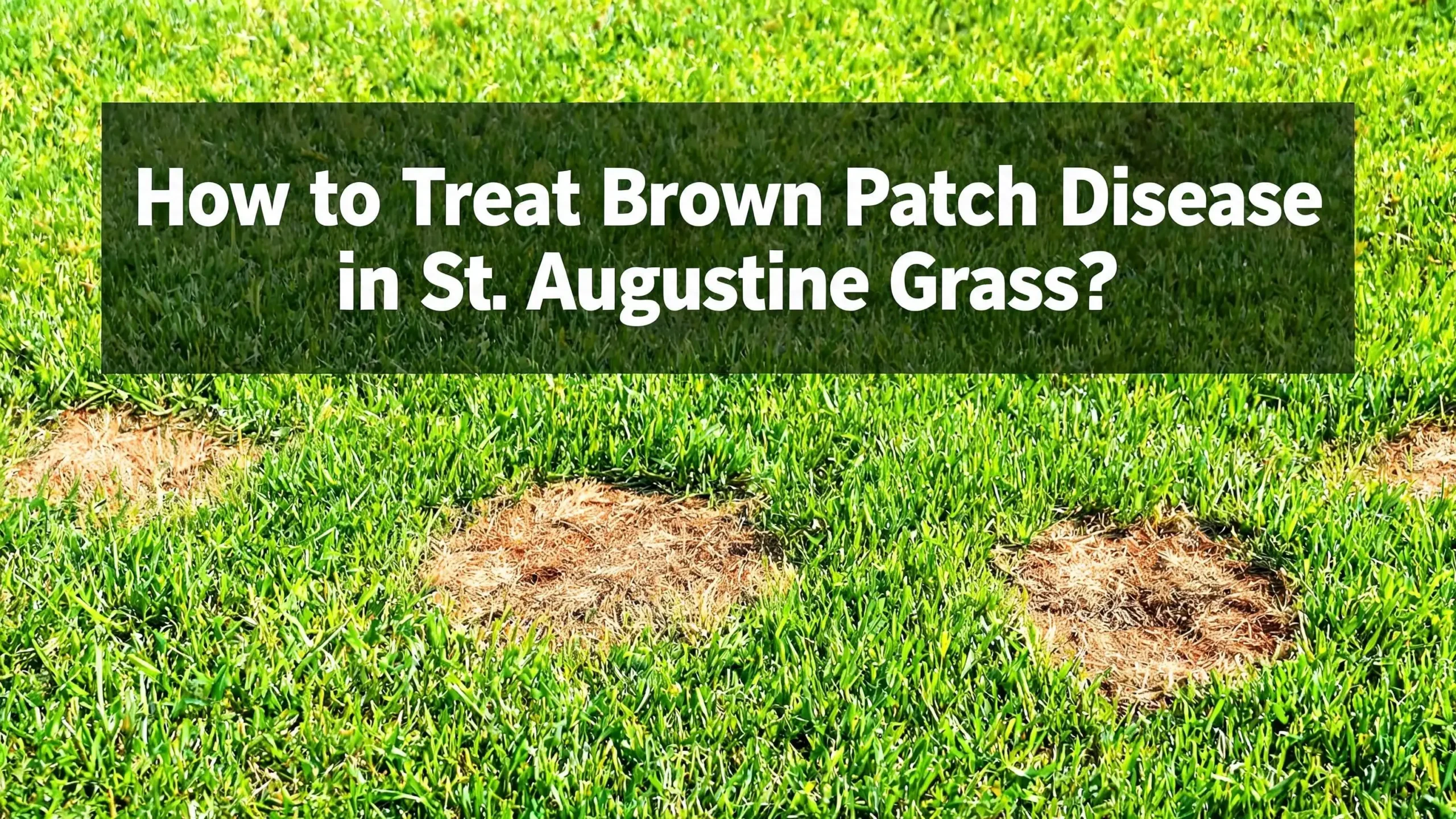
Brown patch disease starts as small, circular spots about 6 to 12 inches in diameter. The grass in these spots turns from green to yellow, then to a reddish brown, and finally to a straw or tan color. As the infection progresses, these small patches can merge and expand to several feet across.
One of the most recognizable features is the “smoke ring” or dark border around the edge of the patch. This ring appears as a darker, water soaked band of grass at the outer perimeter where the fungus is actively spreading. It is most visible in the early morning when dew is still on the grass.
Another common pattern is the “doughnut” shape, where the center of the patch begins to recover and turn green while the outer ring remains brown. This happens because the fungus moves outward from the original point of infection.
The most reliable diagnostic sign involves checking the leaf sheaths near the soil surface. Pull gently on the grass blades in the discolored border area. If the blades separate easily from the stem and you see a dark, rotted area at the base where the leaf meets the stem, brown patch disease is almost certainly the cause.
In shady, moist areas, the disease may not form neat circular patterns. Instead, large irregular sections of the lawn may thin out uniformly without obvious rings.
What Conditions Cause Brown Patch to Spread
Brown patch disease does not appear randomly. It needs specific environmental conditions to activate and spread. Understanding these triggers gives you the power to prevent outbreaks before they start.
Extended leaf wetness is the number one driver of brown patch disease. The fungus needs 48 hours or more of continuous moisture on the grass blades to infect the plant. Lawns that stay wet from evening watering, heavy dew, rain, or poor drainage create ideal conditions. Research from the University of Florida confirms that prolonged moisture combined with mild temperatures is the primary infection trigger.
Excess nitrogen fertilizer is the second major factor. Applying fast release nitrogen during fall or early spring pushes soft, lush growth that the fungus easily penetrates. High nitrogen rates above 1.1 pounds of actual nitrogen per 1,000 square feet put your lawn at significant risk during the active disease season.
Temperature plays a defining role. The fungus thrives between 65°F and 80°F and is most aggressive around 73°F. Cool nights combined with warm days create the perfect cycle for infection. The disease goes dormant once daytime temperatures consistently exceed 90°F.
Poor air circulation and shade compound the problem. Grass growing under trees or next to buildings stays wet longer and dries more slowly after rain or irrigation. These areas are often the first to show symptoms.
Soil compaction and heavy thatch also contribute. Compacted soil holds moisture at the surface, and thick thatch traps humidity right where the fungus attacks the leaf sheaths. Lawns with more than three quarters of an inch of thatch are at elevated risk.
How to Adjust Your Watering Schedule to Fight Brown Patch
Watering habits have a direct impact on brown patch disease. Changing how and when you irrigate is one of the most effective and free treatments available. Many homeowners unknowingly create perfect fungal conditions by watering too often or at the wrong time of day.
The most important rule is to water your lawn in the early morning, ideally between 4 AM and 8 AM. This allows the grass blades to dry quickly as the sun comes up and temperatures rise. Never water between 7 PM and 3 AM. Grass that stays wet through the night gives the fungus the extended moisture period it needs to infect.
During an active brown patch outbreak, reduce your watering frequency to once per week. Apply enough water to moisten the soil to a depth of 4 to 6 inches, which typically means about one inch of water per session. Deep, infrequent watering encourages deeper root growth while keeping the surface drier.
In shaded areas of your lawn, cut your watering time even further. Experts recommend reducing irrigation to 10 to 15 minutes per week in shady spots, because these areas lose moisture much more slowly through evaporation. Overwatering shaded zones is a common mistake that fuels fungal outbreaks.
If you are dealing with an active infection, some turf specialists recommend stopping irrigation for 10 to 14 days in the affected areas, unless the grass begins to show drought stress. This dry period starves the fungus of the moisture it depends on and can slow or halt the spread significantly.
Consider checking your sprinkler coverage as well. Overlapping zones that double water certain areas can create persistently wet patches, which often match the exact spots where brown patch appears.
Why Proper Fertilization Matters for Brown Patch Control
Fertilizer choices and timing play a huge role in how vulnerable your St. Augustine grass is to brown patch disease. The wrong fertilizer applied at the wrong time can actually make an outbreak worse by feeding the fungus exactly what it needs to spread.
The Rhizoctonia solani fungus thrives on lush, soft growth produced by fast release nitrogen. Applying heavy nitrogen during the cooler months of October through April is a recipe for disaster. The disease will attack this tender new growth aggressively.
Instead, use slow release nitrogen sources during the growing season. Slow release fertilizers feed the grass gradually over several weeks, producing steady, healthy growth without the soft flushes that attract fungal infection. Look for fertilizers where at least 50% of the nitrogen is in slow release form.
Potassium is your secret weapon against brown patch. Potassium strengthens cell walls and improves the overall stress tolerance of your turfgrass. Apply a balanced fertilizer that contains roughly equal parts nitrogen and potassium. Clemson University research shows that lawns with adequate potassium levels at the upper end of sufficiency on soil tests recover faster and resist disease more effectively.
Avoid all nitrogen applications during an active outbreak. Adding any nitrogen while the fungus is spreading will only accelerate the damage. Wait until the disease is under control and temperatures are consistently warm before resuming fertilization.
A soil test is your best guide for fertilizer decisions. Test your soil to determine pH, nutrient levels, and any deficiencies. St. Augustine grass performs best at a soil pH between 6.0 and 7.0. Disease severity increases when soil pH drops below 6.0, so adding lime based on soil test recommendations can help reduce vulnerability.
How to Mow Correctly During a Brown Patch Outbreak
Mowing seems like a simple task, but doing it incorrectly during a brown patch infection can spread the disease and slow recovery. A few adjustments to your mowing routine make a real difference.
Mow your lawn only after the morning dew has dried. Cutting wet grass spreads fungal spores across the lawn on mower blades, wheels, and clippings. Wait until the grass is completely dry before you start mowing.
During an active outbreak, mow the diseased areas last. Start with the healthy sections of your lawn and finish in the infected zones. This reduces the chance of carrying spores from sick areas into healthy turf. After mowing, clean your mower blades with a disinfectant or a diluted bleach solution to kill any lingering spores.
Remove grass clippings from infected areas during warm, moist conditions. Normally, leaving clippings on the lawn is fine because they return nutrients to the soil. But during an active brown patch outbreak, those clippings can contain fungal spores that restart infections elsewhere. Bag them and dispose of them away from the lawn.
Maintain the correct mowing height for St. Augustine grass, which is typically between 3 and 4 inches. Mowing too low stresses the grass and exposes the crown and leaf sheaths where the fungus attacks. Mowing too high creates a dense canopy that traps moisture and slows drying, which favors fungal growth.
Keep your mower blades sharp at all times. Dull blades tear the grass instead of cutting it cleanly. Torn leaf tips create open wounds that serve as easy entry points for the brown patch fungus. A clean, sharp cut heals faster and resists infection better.
How to Improve Soil Drainage and Reduce Thatch
Poor soil drainage and excessive thatch are two structural problems in your lawn that make brown patch worse. Fixing these issues creates an environment that is far less friendly to the Rhizoctonia solani fungus.
Thatch is the layer of dead grass stems, roots, and debris that builds up between the green leaf blades and the soil surface. St. Augustine grass is a heavy thatch producer because of its aggressive growth habit. When this layer exceeds three quarters of an inch, it holds moisture against the leaf sheaths and creates the perfect incubation chamber for fungal infections.
Dethatch your lawn using a vertical mower or power rake. The best time to dethatch St. Augustine grass is during late spring or early summer when the grass is actively growing and can recover quickly. Do not dethatch during fall or winter, as this adds stress at the exact time brown patch is most active.
Core aeration is another essential practice. Aerating involves pulling small plugs of soil from the lawn to reduce compaction and improve water infiltration. Compacted soil forces water to pool on the surface, keeping the thatch layer wet and feeding fungal growth. Aerate your lawn once or twice per year during the active growing season.
If your lawn sits in a low spot that collects standing water after rain, you may need to address grading issues. Regrading the soil or installing a French drain can redirect water away from problem areas. Standing water is an open invitation for brown patch and many other lawn diseases.
Top dressing your lawn with a thin layer of compost or sand can also improve surface drainage over time. Apply about a quarter to half inch per application and rake it into the grass. This gradually improves soil structure and helps water move through the thatch layer more efficiently.
When and How to Apply Fungicides for Brown Patch
Fungicides are an important tool for managing brown patch disease, especially during severe outbreaks. However, they work best when applied preventively or at the very first sign of infection rather than after the disease has already caused major damage.
For warm season grasses like St. Augustine, the critical treatment windows are fall and spring. A widely followed guideline from Texas A&M suggests starting fungicide applications when nighttime temperatures consistently reach 70°F. Stop treatments when nighttime lows stay below 70°F for five consecutive days.
The most commonly recommended active ingredients for brown patch control include azoxystrobin, propiconazole, thiophanate methyl, and myclobutanil. Azoxystrobin based products generally provide the longest control period at about 28 days per application. Propiconazole and myclobutanil typically need reapplication every 14 days.
You can choose between liquid spray formulations and granular products. Liquid sprays generally provide slightly better coverage and control than granular versions of the same active ingredient. However, granular products are easier for homeowners to apply using a standard broadcast spreader. If you use a granular fungicide, water it in with about a quarter inch of irrigation immediately after application.
Rotate your fungicide active ingredients with each application. The brown patch fungus can develop resistance to a single chemical when it is used repeatedly. Alternating between two different classes of fungicide keeps the treatment effective over multiple seasons.
Apply fungicides in the late afternoon or early evening for best results. This puts the product on the grass before the critical nighttime moisture period when the fungus is most active. Follow all label directions carefully for application rates and timing.
How to Help Your St. Augustine Grass Recover After Brown Patch
Once you have controlled the active infection, your lawn needs help bouncing back. The good news is that St. Augustine grass has excellent recovery potential because the brown patch fungus primarily damages the above ground leaf tissue rather than the roots and stolons.
Wait until daytime temperatures are consistently above 80°F and the fungus is no longer active before starting recovery efforts. Pushing growth while the disease is still present will only cause more damage.
Begin with a light application of slow release fertilizer once the grass is actively growing. A balanced fertilizer with equal nitrogen and potassium supports healthy regrowth without encouraging the soft, vulnerable tissue that the fungus targets. Apply at half the normal rate for the first application and increase gradually.
Water the recovering areas deeply but infrequently. Aim for one inch of water per week, applied in a single morning session. Deep watering encourages the roots to grow deeper into the soil, building a stronger, more resilient turf. Avoid frequent, shallow watering that keeps the surface constantly damp.
Mow the lawn at the higher end of the recommended range for St. Augustine grass during recovery. Taller grass blades capture more sunlight and produce more energy for the plant to repair damaged areas. Keep the mowing height at 3.5 to 4 inches until the bare spots have filled in.
Be patient. St. Augustine grass spreads through stolons, which are above ground runners that creep across bare soil and establish new plants. Thin or bare patches left by brown patch will gradually fill in during the warm growing season. Most lawns show significant improvement within 6 to 8 weeks of consistent care.
Common Mistakes That Make Brown Patch Disease Worse
Many homeowners accidentally worsen their brown patch problem through well intentioned but misguided lawn care habits. Avoiding these mistakes can save your lawn from repeated infections.
Overwatering is the most common mistake. Many people see brown grass and assume it needs more water. With brown patch disease, extra water feeds the fungus and accelerates the damage. If your grass is brown from disease rather than drought, adding water makes the situation significantly worse.
Applying fast release nitrogen at the wrong time is another frequent error. Fertilizing with quick release nitrogen in fall or early spring creates lush, soft growth that the Rhizoctonia solani fungus devours. Save your heavy nitrogen applications for the peak growing season in summer when temperatures are high enough to suppress the fungus.
Mowing wet grass spreads spores across the lawn efficiently. Every pass of the mower blade through an infected area picks up fungal material and deposits it on healthy grass. Always wait for the lawn to dry completely before mowing, and clean your equipment after each use during an outbreak.
Ignoring thatch buildup is a silent contributor to chronic brown patch problems. If you have never dethatched or aerated your St. Augustine lawn, years of accumulated organic matter may be creating a permanent moisture trap at the soil surface.
Applying fungicides too late is a missed opportunity. Many homeowners wait until the lawn is severely damaged before purchasing a fungicide. By that point, the product can only stop further spread. It cannot reverse the damage already done. Preventive applications before symptoms appear deliver much better results.
Finally, using the same fungicide active ingredient every time can lead to resistant fungal populations. Rotate your products to maintain their effectiveness.
How to Prevent Brown Patch Disease From Returning Next Season
Prevention is always easier and cheaper than treatment. By following a consistent lawn care routine, you can dramatically reduce the chance of brown patch returning to your St. Augustine lawn year after year.
Create a fall preparation plan. As temperatures begin cooling in September and October, reduce your nitrogen fertilization and cut back on watering frequency. These two simple steps remove the conditions the fungus depends on. Switch to a potassium rich fertilizer in early fall to strengthen the grass heading into the vulnerable season.
Consider applying a preventive fungicide before symptoms appear. If your lawn has a history of brown patch, you can predict where it will strike based on past outbreaks. Target those areas with a fungicide application in early fall when nighttime temperatures start reaching the 70°F range. A second application two to four weeks later extends protection through the most critical period.
Improve air circulation around problem areas. Trim low hanging tree branches, thin shrubs near the lawn edge, and remove any obstacles that block air movement. Better airflow helps grass blades dry faster after rain or dew, cutting down on the moisture hours the fungus needs.
Keep records of where brown patch appears in your lawn each year. The fungus lives in the soil, and the same spots tend to get reinfected season after season. Knowing your trouble spots lets you focus your preventive treatments where they matter most.
Overseed thin areas with the most disease resistant St. Augustine variety available to you. Research indicates that ‘FloraT AM’ shows strong resistance to brown patch compared to the commonly planted ‘Raleigh’ variety. Check with your local extension office for the best cultivar recommendations in your area.
The Role of Soil Testing in Long Term Brown Patch Management
Soil testing is an underused tool that can transform your approach to brown patch prevention. A simple test reveals critical information about your soil’s pH, nutrient levels, and overall health that directly affects disease susceptibility.
Soil pH has a direct connection to brown patch severity. Research from multiple university extension programs confirms that disease damage increases when soil pH drops below 6.0. St. Augustine grass prefers a pH between 6.0 and 7.0. If your soil is too acidic, applying lime according to test recommendations can raise the pH and reduce disease pressure.
Potassium and calcium levels are equally important. Lawns with potassium levels at the upper end of the sufficient range on soil tests show better resistance to fungal infection. Potassium strengthens cell walls, making it harder for the fungus to penetrate leaf tissue. If your soil test shows low potassium, apply a potassium sulfate supplement or a fertilizer with a higher K value.
Soil tests also reveal if you are over applying certain nutrients. Excess phosphorus, for example, can interfere with the uptake of other minerals. Balanced nutrition creates a healthier, more disease resistant lawn than dumping on a generic fertilizer and hoping for the best.
Contact your local cooperative extension office to get a soil test kit. Most states offer this service for a small fee, and the results come with specific fertilizer and amendment recommendations for your grass type. Test your soil every two to three years to track changes and adjust your program.
Using soil test data removes the guesswork from lawn care. Instead of buying random products off the shelf, you apply exactly what your soil needs. This targeted approach saves money, reduces environmental impact, and builds a lawn that naturally resists brown patch disease.
When to Call a Professional for Brown Patch Treatment
Most homeowners can manage brown patch disease successfully with the cultural practices and fungicide applications described in this guide. However, there are situations where professional help is the smarter choice.
If your brown patch keeps returning year after year despite following proper watering, fertilization, and fungicide practices, a lawn care professional can provide a more detailed diagnosis. The problem might not be brown patch at all. Other diseases like gray leaf spot, take all root rot, or even insect damage from chinch bugs can mimic brown patch symptoms.
Large lawns or severe outbreaks may require commercial grade fungicides and application equipment that homeowners do not have access to. Professional applicators can use products with active ingredients like flutolanil or fluoxastrobin that provide excellent control but are typically sold only to licensed operators.
A professional can also perform a comprehensive soil and turf analysis. They may collect samples for laboratory testing to confirm the presence of Rhizoctonia solani under a microscope. This removes all doubt about the diagnosis and ensures you are treating the correct problem.
If you have spent money on multiple fungicide treatments without seeing improvement, it is worth having an expert evaluate your lawn’s drainage, irrigation system, soil compaction, and thatch depth. Sometimes the root cause is a structural problem in the landscape that no amount of fungicide can fix.
Your local cooperative extension office is another excellent resource. Extension agents provide free or low cost advice based on university research specific to your region and grass type. They can recommend the best treatment plan for your particular situation.
Frequently Asked Questions
What does brown patch disease look like on St. Augustine grass?
Brown patch disease appears as circular or irregular patches of yellow to brown grass. These patches can range from a few inches to several feet in diameter. The outer edge of the patch often has a darker, water soaked border called a “smoke ring” that is most visible in the early morning. You can confirm the diagnosis by pulling gently on grass blades in the affected area. If they come away easily and you see dark, rotted tissue at the base where the blade meets the stem, brown patch disease is very likely the cause.
What is the best time to apply fungicide for brown patch on St. Augustine grass?
The best time for a preventive fungicide application is early fall, just as nighttime temperatures begin consistently reaching 70°F. For spring treatment, apply fungicides in March or April before the grass fully greens up. Preventive applications are far more effective than curative ones. If you are treating an active outbreak, apply the fungicide immediately and repeat every 14 to 28 days depending on the product’s active ingredient.
Will brown patch disease kill my St. Augustine grass permanently?
In most cases, no. Brown patch disease primarily damages the above ground leaf blades and leaf sheaths. The roots and stolons usually survive. Once the fungus becomes inactive during the hot summer months, St. Augustine grass can fill in damaged areas through stolon growth. However, repeated severe infections over multiple years can weaken the turf and lead to permanent thin spots that may need replanting.
Can I water my lawn if it has brown patch disease?
You should reduce watering significantly during an active brown patch outbreak. Water only once per week in the early morning, and apply enough to moisten the soil to a depth of 4 to 6 inches. Avoid all evening or nighttime watering. Some experts recommend stopping irrigation entirely for 10 to 14 days in the infected areas unless drought stress begins to appear. The goal is to deprive the fungus of the moisture it needs to spread.
Does mowing spread brown patch disease?
Yes, mowing can spread brown patch spores across your lawn. The mower blades pick up fungal material from infected areas and deposit it on healthy grass. To minimize this risk, always mow when the lawn is dry, mow diseased areas last, and clean your mower blades after each use with a disinfectant. Bag and dispose of clippings from infected areas rather than leaving them on the lawn.
How long does it take for St. Augustine grass to recover from brown patch?
Recovery time depends on the severity of the damage and growing conditions. Under favorable warm temperatures with proper watering and light fertilization, most St. Augustine lawns show significant improvement within 6 to 8 weeks. Small patches may fill in within a month. Larger damaged areas where the stolons were severely affected may take an entire growing season to fully recover. Consistent care during the summer growing period speeds up the process.

Hi, I’m Jane! As a passionate gardener and product enthusiast, I spend my days testing garden tools, comparing products, and writing honest reviews so you don’t have to learn the hard way. Got a question? Feel free to reach out — I’d love to hear from you!