How to Stop Voles From Eating Grass Roots During Winter?
Snow blanketed your yard for months. And when spring finally arrived, you discovered a nightmare. Winding brown trails crisscrossed your lawn. Patches of dead grass appeared everywhere. The roots had been chewed down to nothing. The culprit? Voles.
These small, stocky rodents thrive under winter snow cover. They tunnel freely across your yard for months, feeding on grass roots, stems, and bark with zero interruption. The damage often stays invisible until the snow melts.
By then, the destruction is done. But here is the good news. You can stop voles from destroying your lawn if you know what steps to take and when to take them.
This guide will walk you through practical, step by step solutions to protect your grass roots from voles during winter.
Key Takeaways
- Voles do most of their damage during winter while hidden under snow cover. They feed on grass roots, stems, and bark for months without being detected by predators or homeowners. The damage only becomes visible after the snow melts in spring.
- Mowing your lawn short in late fall is one of the simplest and most effective prevention methods. A final mow to about two inches removes the dense ground cover voles need for shelter. This single step can significantly reduce vole activity across your yard.
- Natural repellents like castor oil mixed with dish soap and water can drive voles away without harming pets, children, or wildlife. The key is to apply the solution in late fall before the ground freezes and to soak the soil thoroughly so the repellent reaches the tunnels below.
- Physical barriers such as hardware cloth and tree guards protect specific areas from vole damage. These work especially well around young trees, garden beds, and high value landscape features.
- Yard sanitation is critical. Removing leaf litter, woodpiles, tall weeds, and heavy mulch before winter eliminates the hiding spots voles rely on. A clean, open yard makes voles feel exposed and encourages them to go elsewhere.
- Snap traps placed along visible runways remain one of the most reliable control methods for small to medium sized vole populations. Bait them with peanut butter and cover them to protect pets and children.
What Are Voles and Why Do They Target Your Lawn
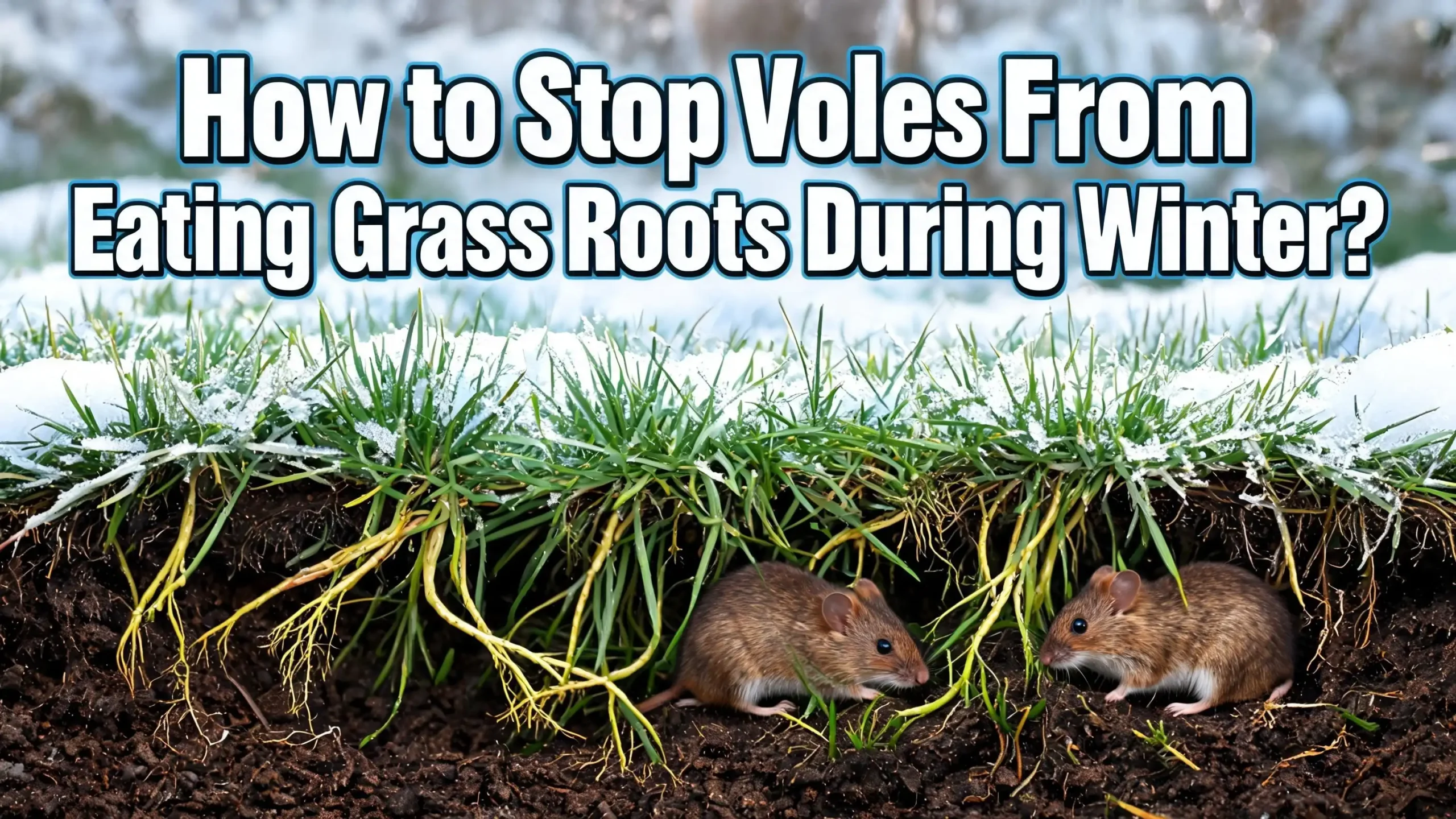
Voles are small brown rodents that look similar to mice. They have short tails, small ears, and stocky bodies. The most common species in North America is the meadow vole (Microtus pennsylvanicus). Unlike mice, voles prefer grass, roots, bark, and bulbs over household food scraps.
Voles are active year round. They do not hibernate during winter. Instead, they continue to feed and tunnel throughout the cold months. Snow cover gives them a perfect environment. It insulates them from freezing temperatures and hides them from predators like hawks, owls, foxes, and cats.
Your lawn is a prime food source for voles. The grass roots and crowns provide steady nutrition through winter. Voles create surface runway systems between the grass and the snow, chewing roots and stems as they go. A single female vole can produce five to ten litters per year, with three to five young per litter. This means populations can explode quickly, especially during mild winters with heavy snowfall.
How to Identify Vole Damage on Your Lawn
Recognizing vole damage early helps you take action before it spreads. The signs are distinct and easy to spot once you know what to look for. Most homeowners first notice the damage in early spring as snow begins to melt.
The most obvious sign is a network of surface runways. These are narrow trails, about one to two inches wide, that wind across the lawn in irregular, crisscrossing patterns. The grass along these trails is chewed down close to the soil. You may also see small piles of dead grass clippings and droppings along the runways.
Dead grass patches are another common indicator. These are larger, flattened areas where voles nested or stored food during the winter. The grass looks matted and brown. However, the underlying crown is often still alive and can recover with proper care.
Look for small burrow openings roughly one to one and a half inches in diameter. These appear along the edges of runways, near sidewalks, driveways, and garden beds. Unlike mole holes, vole burrow entrances are clean with no surrounding soil mounds.
Why Winter Snow Cover Makes Vole Damage Worse
Snow is the single biggest factor in how much vole damage your lawn sustains. A thick, lasting snow cover creates ideal conditions for voles to thrive. Understanding this relationship is key to effective prevention.
Under the snow, voles are completely hidden from predators. Hawks, owls, foxes, and coyotes cannot reach them. This allows voles to move freely across your entire yard for months at a time. They feed, nest, and breed without any interruption.
The snow also acts as insulation. It keeps the ground surface at a relatively stable temperature, even during severe cold snaps. This means voles stay active and continue eating grass roots throughout the winter instead of slowing down.
Winters with early, heavy, and prolonged snowfall produce the worst vole damage. The longer the snow stays on the ground, the longer voles have uninterrupted access to your lawn. Vole populations also follow a three to five year boom cycle. When a population peak aligns with a heavy snow year, the damage can be severe and widespread across entire neighborhoods.
Mow Your Lawn Short Before the First Freeze
One of the simplest and most effective ways to prevent winter vole damage is proper fall mowing. This costs nothing extra and takes very little time. Yet many homeowners skip it or do it wrong.
Your final mow of the season should bring the lawn down to about two inches in height. This removes the tall, dense grass that voles use for shelter and cover. Voles feel exposed and vulnerable in short grass. They are far less likely to set up tunnel networks across a closely mowed lawn.
Keep mowing through the fall until the first hard frost. Many people stop mowing too early, leaving weeks of growth that create a thick mat of grass before snow arrives. This mat becomes a perfect highway system for voles to travel and feed under the snow.
However, do not cut the grass shorter than two inches. Going too low can stress the grass and cause winter injury to the crowns and root system. The goal is to reduce vole habitat without damaging the lawn itself. Two inches is the sweet spot that balances vole prevention with turf health heading into the cold months.
Remove Ground Cover and Debris From Your Yard
Voles need cover to survive. They are small, slow, and vulnerable to predators. Anything that provides hiding spots on your property will attract them. Fall yard cleanup is one of the most important steps you can take to reduce vole activity.
Start by raking up all fallen leaves before the first snowfall. Thick leaf cover creates a protective layer that voles tunnel through with ease. Pay special attention to areas near garden beds, fence lines, and the edges of your yard where voles are most likely to enter.
Remove woodpiles, brush piles, and stacked debris from the ground. These serve as shelters and nesting sites for voles. If you need to store firewood, place it on a raised platform away from your lawn and garden areas.
Trim tall weeds and wild grasses along property borders. Voles commonly enter yards from adjacent fields, parks, and undeveloped land. A clean border of six to eight feet of bare soil between your lawn and these natural areas acts as a buffer zone. Voles are reluctant to cross open ground where they feel exposed.
Also, reduce heavy mulch layers around garden beds. Keep mulch depth under two inches. Deep mulch provides excellent cover for vole tunnels. Plastic weed barriers can actually encourage tunneling, so consider removing them if vole damage is a recurring problem.
Use Castor Oil Repellent to Drive Voles Away
Castor oil is a proven, natural repellent that makes your soil unpleasant for voles without harming them or the environment. This method has been used successfully by professional growers and home gardeners for years. The key is proper application and timing.
The basic recipe is simple. Mix one teaspoon of scented castor oil with one teaspoon of liquid dish soap in one gallon of water. The dish soap acts as a wetting agent that breaks the surface tension of the soil. This allows the solution to soak deep into the ground instead of sitting on top.
You must thoroughly soak the soil for this to work. A light surface spray will not be effective. The solution needs to penetrate at least two inches deep so that voles encounter the scent in their tunnels and feeding areas. Use a garden sprayer or watering can to apply the mixture generously.
Apply in late fall before the ground freezes. This gives the repellent time to soak into the soil and remain active throughout winter. If you apply it after the ground has frozen, it will simply sit on the surface and wash away. You can also apply in spring for ongoing growing season protection.
The scented castor oil is the critical ingredient. Regular, unscented castor oil does not produce the same results. The fragrance creates a strong odor in the soil that voles find extremely unpleasant. They will relocate to areas that have not been treated.
Install Physical Barriers to Protect Key Areas
Physical barriers provide reliable, long lasting protection against vole damage. They work especially well for young trees, garden beds, and other landscape features you want to protect. While barriers do not eliminate voles from your property, they block access to specific high value areas.
Hardware cloth cylinders are the most effective barrier for trees and shrubs. Use mesh with openings of one quarter inch or smaller. Form the mesh into a cylinder around the trunk and bury the bottom three to six inches below the soil surface. This prevents voles from burrowing underneath. The top of the cylinder should extend at least 18 inches above ground level to stay above the typical snow line.
For garden beds, consider laying hardware cloth beneath the soil before planting. This creates an underground barrier that blocks voles from accessing roots and bulbs from below. Raised beds with buried wire mesh at the bottom offer excellent protection for perennials and bulbs that voles love to eat.
Tree guards made of plastic spiral wraps also work well for young trees. They prevent voles from gnawing bark at ground level, which can girdle and kill a tree. Make sure any guard you use is tall enough to remain above the snow line throughout winter. Voles tunnel through snow, so a short guard offers no protection once the snow accumulates.
Set Snap Traps Along Vole Runways
Trapping is a direct, effective method for reducing vole populations in your yard. It works best for small to medium infestations and provides immediate results. Standard mouse snap traps are the tool of choice for this job.
Place traps directly in active vole runways. These are the narrow, worn paths you can see on the surface of your lawn. Position the trap perpendicular to the runway with the trigger facing the path of travel. This increases the chance that a vole will cross the trigger as it moves through the tunnel.
Peanut butter is the best bait for vole traps. Other effective options include oatmeal, sunflower seeds, and small pieces of apple. Apply a small amount directly to the trigger plate. You do not need a lot. A thin smear of peanut butter is enough to attract voles.
Always cover your traps to prevent pets, children, and non target wildlife from contacting them. You can place an overturned bucket, a small wooden box with entry holes on both sides, or a piece of board propped up over the trap. The cover also makes voles more likely to investigate because they feel safer in enclosed spaces.
Check traps daily and reset or relocate them as needed. Vole populations can be large, so persistence matters. In areas with heavy infestations, set multiple traps along different runways. Some homeowners report catching dozens of voles over a few weeks using this method.
Encourage Natural Predators in Your Yard
Nature provides some of the best vole control available. Predators like owls, hawks, foxes, snakes, and cats all feed on voles. Making your property welcoming to these animals adds a free, ongoing layer of protection that works around the clock.
Owl boxes are one of the most popular and effective options. A single barn owl family can consume thousands of rodents per year, including voles. Install a nesting box on a pole or high in a tree at the edge of your property. Face the opening away from prevailing winds. Barn owls and screech owls will use these boxes for nesting, and they hunt actively at night when voles are most exposed.
Hawks also prey heavily on voles during daylight hours. Providing tall perching spots, such as a dead tree or a tall post, gives hawks a clear vantage point to spot voles moving across your yard. Avoid disturbing raptor nests near your property.
Keep your yard open and visible from above. Short grass, clean borders, and minimal ground cover make it easier for aerial predators to spot and catch voles. This ties directly back to your fall mowing and cleanup efforts. A well maintained yard serves double duty by reducing vole habitat and increasing predator hunting success.
Outdoor cats are also effective vole hunters. Even the presence of a cat in the yard can deter voles from establishing tunnels. However, be mindful that outdoor cats also impact bird populations, so this approach comes with trade offs.
Apply Blood Meal as a Natural Deterrent
Blood meal is a dry, granular fertilizer made from dried animal blood. It serves a dual purpose in vole prevention. The strong scent triggers a predator response in voles and other small herbivores, and it also provides slow release nitrogen to your soil.
Voles associate the smell of blood with danger. When they encounter it around their feeding areas, they instinctively avoid the treated zone. This makes blood meal a simple, organic deterrent that requires no special equipment to apply.
Spread blood meal around perimeter beds, tree bases, and lawn edges in late fall before the first lasting snowfall. Focus on the areas where your yard borders fields, parks, or other natural habitats that voles use. A consistent ring of blood meal creates a scent barrier that discourages voles from entering your lawn.
The main drawback of blood meal is that it washes away with rainfall and snowmelt. You may need to reapply after heavy rain or during a winter thaw. It is also high in nitrogen, so avoid applying too much directly on the lawn, as it can burn the grass. Use it primarily in garden beds, around tree trunks, and along property borders.
Blood meal is widely available at garden centers and is affordable in bulk quantities. It is safe for use around pets, though dogs may be attracted to the smell and try to eat it. Keep that in mind when choosing where to apply it.
Create a Buffer Zone Between Your Lawn and Wild Areas
Voles rarely appear out of thin air. They migrate into your yard from nearby fields, meadows, parks, and undeveloped land. Understanding where they come from allows you to create effective entry barriers that stop them before they reach your lawn.
A bare soil strip of six to eight feet between your property edge and adjacent wild areas is highly effective. Voles are extremely reluctant to cross open, exposed ground. They feel vulnerable without overhead or ground cover to hide them from predators. This simple gap can dramatically reduce the number of voles that enter your yard.
If bare soil is not practical, keep the border area mowed as short as possible. Remove any tall grass, weeds, or brush that grows along fence lines, ditches, or property edges. This eliminates the transitional cover that voles use to move from wild areas into maintained lawns.
Gravel borders also work as a deterrent. A strip of coarse gravel between your lawn and adjacent fields provides no food, no cover, and an uncomfortable surface for voles to travel across. This is a permanent, low maintenance solution that works year after year.
Consider where bird feeders are located on your property. Fallen seed attracts voles and provides a supplemental food source. Move feeders away from the lawn or keep the ground beneath them clean. This removes a major draw that pulls voles deeper into your yard.
How to Repair Vole Damage in Spring
Despite your best prevention efforts, some vole damage may still occur during harsh winters. The good news is that most lawn damage from voles is not permanent. With proper spring care, your grass can recover fully within a few months.
Start by raking out all dead grass and debris from the vole runways as soon as the ground thaws and dries enough to walk on. Use a firm tined rake to remove the matted material and lightly scratch the soil surface. This allows sunlight and air to reach the grass crowns underneath.
After raking, gently tug on the brown grass in damaged areas. If it resists and you can feel a soft, living crown at the base, the grass is likely still alive. These areas will green up on their own as temperatures rise and the growing season begins. Do not reseed over living crowns, as the new seed will compete with the recovering grass.
For areas where the grass is completely dead and the roots are gone, reseed with a quality grass mix that matches your existing lawn. Loosen the bare soil lightly, apply seed at the recommended rate, and cover with a thin layer of topsoil or peat moss. Keep the top inch of soil consistently moist until the seeds germinate. A starter fertilizer applied at seeding time will improve establishment speed.
Check any young trees for bark girdling immediately. If voles have chewed bark in a complete ring around a trunk, the tree may not survive. Contact an arborist for advice on severely girdled trees. Partial damage can often heal on its own with proper watering and fertilization during the growing season.
Plan Your Vole Prevention Calendar for Year Round Protection
Effective vole control is not a one time event. It requires seasonal actions spread across the year. A simple calendar approach keeps your lawn protected every month without overwhelming effort.
In early spring, assess your yard for vole damage. Rake out dead material, reseed bare spots, and check trees for bark damage. Apply castor oil repellent to any active runway areas you still see.
During summer, maintain your lawn at a healthy height and keep garden beds clean. Monitor for new vole activity, especially near borders and under dense plantings. Set traps if you spot fresh runways or burrow openings.
Fall is the most critical season for prevention. This is when you implement your strongest measures. Mow the lawn to two inches before the first hard freeze. Remove all leaves, debris, and tall vegetation. Apply castor oil solution or blood meal to the soil before it freezes. Install or inspect tree guards and hardware cloth barriers. Set snap traps along known vole pathways.
In winter, there is less you can do actively. However, if snow cover is light and you can see vole activity, you can tamp down snow along runways to collapse tunnels. Clearing snow from the base of young trees also removes the protective cover voles need to gnaw bark undetected.
Consistency is the real secret. One year of strong prevention reduces the following year’s damage significantly. Vole populations drop when habitat quality declines, and they shift their activity to properties that offer easier food and shelter.
Common Mistakes That Make Vole Problems Worse
Many homeowners unknowingly create perfect conditions for voles. Avoiding these common mistakes can save your lawn from unnecessary damage each winter.
Leaving the lawn too tall in fall is the number one error. Long grass provides dense cover that voles use to build runway networks before and during winter. Always complete a final short mow before the first freeze.
Over mulching garden beds is another frequent mistake. Mulch layers deeper than two inches create ideal vole habitat. Deep mulch holds moisture, provides insulation, and gives voles easy tunneling material. Keep mulch thin and pull it back from tree trunks and plant stems.
Ignoring fallen bird seed attracts voles to your yard and provides them with a reliable food source throughout winter. Clean up under feeders regularly or relocate them to areas away from your lawn and garden.
Waiting until spring to act is perhaps the most costly mistake. By the time you see damage in spring, the voles have already spent months feeding on your grass roots under the snow. Prevention must happen in fall before the snow arrives. Spring repair is reactive. Fall preparation is proactive.
Using poison without bait stations is both dangerous and irresponsible. Loose poison baits can be consumed by pets, children, and non target wildlife such as birds and beneficial predators. If you choose to use any form of chemical control, always use enclosed bait stations and follow label directions carefully.
Frequently Asked Questions
Do voles eat grass roots or just the blades?
Voles eat both grass roots and blades. They chew grass stems down to the soil surface and also feed on the root system below ground. This is why vole damage often results in dead patches where the grass cannot recover on its own. The root destruction is most severe during winter when voles tunnel through the space between the grass and the snow cover for extended periods.
Will vole damage repair itself without reseeding?
In many cases, yes. If the grass crowns are still alive, the lawn will recover on its own as spring temperatures rise. Rake out the dead material to expose the crowns to sunlight and air. However, areas where voles have completely destroyed the roots and crowns will need reseeding. Test by gently tugging on the brown grass. If it pulls away easily with no resistance, the crown is dead and reseeding is necessary.
What time of year do voles cause the most damage?
Voles cause the most damage during winter, particularly in regions with heavy and prolonged snow cover. The snow hides them from predators and insulates their tunnel systems. They remain active all winter and feed continuously on grass roots, stems, and bark. The damage accumulates over months but only becomes visible after the spring thaw.
Is castor oil safe to use on lawns with pets and children?
Yes, castor oil based repellents are safe for lawns where pets and children play. The formula of castor oil, dish soap, and water is non toxic and does not harm animals, people, or the grass itself. It simply creates an unpleasant scent in the soil that drives voles away. Apply it thoroughly in late fall and allow it to soak into the ground before the first freeze.
How short should I mow my lawn before winter to prevent voles?
Mow your lawn to approximately two inches for the final cut of the season. This height removes the dense cover that voles rely on for shelter while still leaving enough grass length to protect the crowns from winter cold. Do not cut shorter than two inches, as this can stress the grass and lead to winter injury. Continue mowing through the fall until the first hard frost stops grass growth.
Can I use mothballs or dryer sheets to repel voles?
There is no scientific evidence that mothballs or dryer sheets effectively repel voles. Mothballs contain chemicals that are toxic to pets and children and should never be placed on lawns or in garden beds. Dryer sheets may produce a temporary scent, but it fades quickly and does not penetrate the soil where voles tunnel. Stick with proven methods like castor oil, blood meal, physical barriers, and trapping for reliable results.

Hi, I’m Jane! As a passionate gardener and product enthusiast, I spend my days testing garden tools, comparing products, and writing honest reviews so you don’t have to learn the hard way. Got a question? Feel free to reach out — I’d love to hear from you!