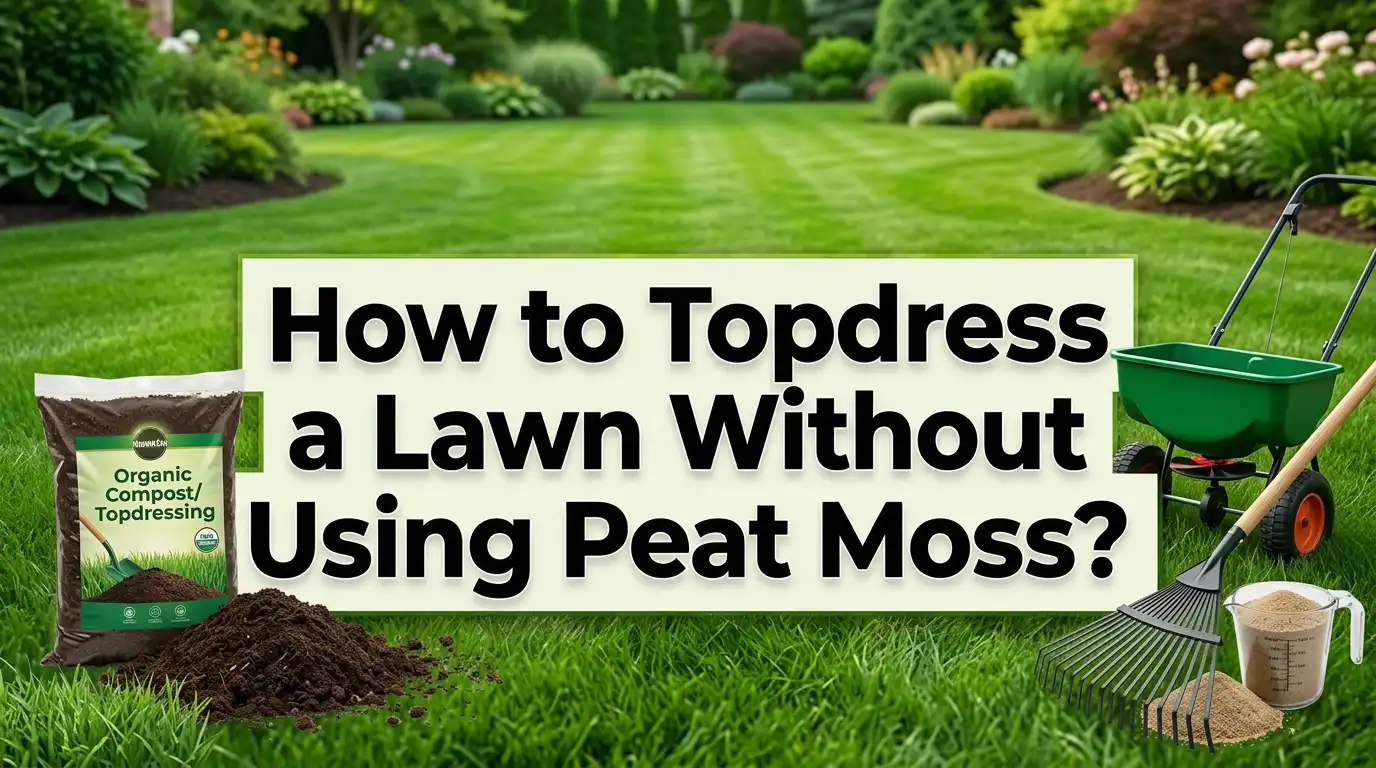
How to Topdress a Lawn Without Using Peat Moss?
Peat moss is a popular choice for topdressing lawns. But it is not the only option out there.
Many gardeners now look for better alternatives. Peat harvesting raises environmental concerns. It also dries out fast and can repel water once dry.
The good news? Your lawn does not need peat moss to thrive. Simple materials like compost, sand, and gypsum work just as well. They feed your soil and help grass grow strong.
This guide walks you through the full process. You will learn how to prepare your soil the right way. We cover the best peat free materials for different soil types.
By the end, you will know exactly how to topdress your lawn without peat moss. Your grass will get the nutrients it needs. Your soil will improve season after season.
In a Nutshell
- Skip the tilling. Use a power rake to loosen just the top 1 to 3 inches of soil. This keeps your lawn structure intact.
- Pick a peat moss alternative. Compost adds nutrients and holds moisture well. A mix of sand and gypsum works great for breaking up clay soil.
- Always use screened compost. This gives you an even spread without lumps or clumps sitting on your grass.
- Apply topdressing evenly over your prepared seedbed. Make sure every patch gets equal coverage for the best results.
- Wait before mowing. Give your lawn 1 to 2 weeks to settle after topdressing. Cutting too soon can disturb new growth.
- Water first if needed. If rain has been scarce, water your lawn before that first post-topdressing mow.
Why Topdress Your Lawn (and Why Skip Peat Moss)
Topdressing your lawn serves several important purposes. It fills low spots, improves soil structure, and gives grass seed a better chance to germinate and establish roots. When you add a quality layer on top of your existing soil, you create an ideal growing environment for new grass.
Many people reach for peat moss because it holds water and adds organic matter. However, peat moss has real drawbacks. It repels water when it dries out completely, which means you end up watering more often. Peat moss also depletes natural wetlands and raises environmental concerns for many homeowners.
The good news? Better alternatives exist that work just as well or better. Compost is your best option because it adds valuable nutrients to your soil while improving moisture retention. Unlike peat moss, compost won’t create a water repellent layer. It also encourages beneficial microorganisms that help grass thrive.
Another solid choice is a sand and gypsum combination, especially if you have heavy clay soil. Gypsum breaks up compacted clay while sand improves drainage. This two part approach addresses specific soil problems without the environmental impact of peat moss.
Screened compost deserves special mention. Regular compost sometimes contains lumps and debris that create an uneven surface. Screened versions spread smoothly and evenly across your lawn. This matters because lumpy topdressing sits on top of grass blades instead of settling into the soil where it does the most good.
Your lawn doesn’t need peat moss to succeed. By choosing compost or other natural alternatives, you improve your soil, support grass growth, and make an environmentally responsible choice. The results speak for themselves. Your grass will be thicker, healthier, and more resilient to stress.
Best Peat-Free Materials for Topdressing
Compost stands out as the top choice for peat moss free topdressing. It adds valuable nutrients to your soil while holding moisture effectively. Unlike peat moss, compost won’t repel water when it dries out, which means better water absorption for your grass roots.
The main advantage of compost is its organic matter content. This material breaks down over time and improves soil structure. Your lawn gets both immediate benefits and long term soil enhancement. One thing to watch: compost sometimes carries weed seeds. Using screened compost eliminates this problem entirely since screening removes debris and seeds.
Sand combined with gypsum works well for clay heavy lawns. This combination helps break up compacted soil and improves drainage. Gypsum loosens clay particles while sand creates air pockets. If your lawn stays soggy after rain, this option deserves serious consideration.
Screened compost deserves special attention because it spreads evenly across your lawn. Unscreened materials leave lumps and clumps sitting on top of your grass. These lumps block sunlight and create dead patches. Screening ensures uniform coverage that blends smoothly with your existing soil.
Coconut coir offers another peat free alternative. It holds moisture similar to peat moss but comes from sustainable sources. This material works well in sandy soils that drain too quickly.
The key is matching your material to your soil type. Clay soils benefit from sand and gypsum combinations. Sandy soils need moisture retaining options like compost or coconut coir. Loamy soils work well with any of these alternatives.
Always apply your chosen material evenly over the prepared seedbed. Aim for a quarter inch to half inch layer depending on your soil condition. This depth provides enough amendment without smothering your grass. Your lawn will respond quickly to quality peat free topdressing materials.
Preparing Your Lawn Before Topdressing
Before you spread any topdressing material, your lawn needs proper preparation. This step makes the difference between success and wasted effort.
Start by mowing your grass shorter than usual. Cut it down to about 1 to 1.5 inches. This allows your topdressing material to reach the soil and make contact with grass roots instead of sitting on top of tall blades.
Next, remove debris from your lawn. Rake out dead grass, leaves, and sticks. A power rake works well for this job. It loosens the top layer of soil without disturbing the deeper layers underneath. You only need to disturb the top 1 to 3 inches of soil. Avoid tilling your entire lawn, as this causes unnecessary damage and brings up unwanted seeds.
Check your soil condition. If you have compacted clay soil, you may want to aerate first. Aeration creates small holes that help water and nutrients penetrate deeper. This preparation step improves your topdressing results significantly.
Water your lawn a day or two before topdressing if the soil feels dry and hard. Moist soil accepts topdressing material better than bone dry earth. However, avoid waterlogged conditions. Your soil should feel damp, not soggy.
Test your lawn’s pH level if possible. Different soil types benefit from different amendments. Clay soils need different treatment than sandy soils. Understanding what you’re working with helps you choose the right topdressing alternative to peat moss.
Finally, plan your topdressing application for early fall or spring. These seasons offer ideal growing conditions for new grass. Cooler temperatures and natural moisture help seeds establish quickly.
Taking time to prepare your lawn properly sets you up for success. Your grass will respond better to topdressing, and you’ll see improvements in soil quality and lawn health much faster.
Step-by-Step: How to Topdress Without Peat Moss
Start by using a power rake instead of a tiller. A power rake disturbs only the top 1 to 3 inches of soil, which is exactly what you need. Tilling your entire lawn causes unnecessary damage and brings up unwanted seeds from deeper soil layers.
After raking, remove any debris, dead grass, and thatch from the surface. Your seedbed should be clean and ready to receive topdressing material.
Measure out your topdressing material before application. Most lawns need about 1/4 to 1/2 inch of material spread evenly across the prepared area. Use a spreader to apply it uniformly. Uneven application leads to patchy results and wasted material.
If you’re using compost, make sure it’s screened. Screened compost spreads smoothly without lumps that create bare spots. Sand and gypsum combinations also distribute evenly when applied with the right equipment.
Water your lawn lightly after topdressing. This helps settle the material and keeps seeds in contact with soil. Don’t overwater, or you’ll wash material away.
Here’s the critical part: wait 1 to 2 weeks before mowing. New seeds need time to germinate and establish. Mowing too soon damages seedlings and reduces your results.
If you haven’t had rain recently, water your lawn before that first mow. Moist grass is easier on young plants. Keep the mower blade set high for the first few cuts.
Continue regular watering for the next few weeks. Your topdressing material dries out faster than regular soil, so consistency matters. Water lightly but frequently until grass fills in completely.
This straightforward approach works without peat moss. Your lawn improves, seeds establish better, and your soil becomes healthier. The key is patience and even application throughout the process.
Aftercare: Watering and Mowing Post-Topdressing
After you spread your topdressing material, your lawn enters a critical recovery phase. Proper watering and mowing timing make the difference between a thriving lawn and wasted effort.
Water your lawn gently after topdressing application. Use a light spray that moistens the soil without creating puddles or washing away your material. The goal is to help the topdressing settle and make contact with the soil beneath.
For the next 1 to 2 weeks, keep the soil consistently moist but not waterlogged. New seeds need steady moisture to germinate successfully. If rain doesn’t fall, water every 2 to 3 days depending on your climate and soil type.
Wait at least 1 to 2 weeks before mowing. This waiting period allows seeds to sprout and develop roots. Mowing too soon can tear up young seedlings and disrupt establishment.
Before that first mow, check if your lawn has received recent rainfall. If not, water your lawn thoroughly a day before mowing. Moist soil helps protect tender new growth and prevents stress during cutting.
When you finally mow, set your blade higher than normal. Cutting too short damages new plants and exposes soil again. A higher cut protects seedlings while removing only the top portion of existing grass.
After mowing resumes, continue regular watering for several more weeks. Young plants need consistent moisture as they develop deeper root systems. Reduce watering frequency gradually as your lawn matures.
Avoid heavy foot traffic on your lawn during this establishment period. Walking across freshly seeded areas compacts soil and damages germinating seeds.
Think of this aftercare phase as an investment in your lawn’s future. The patience you show now determines how full and healthy your lawn becomes. Most lawns show significant improvement within 4 to 6 weeks of proper aftercare.
Common Mistakes to Avoid
Many people make preventable mistakes when topdressing their lawn without peat moss. Understanding these errors helps you get better results and saves time and money.
Tilling your entire lawn is a common mistake. Many homeowners think they need to dig deep into the soil. In reality, you only need to disturb the top 1 to 3 inches. A power rake does this job perfectly without excessive soil disruption. Deep tilling can damage soil structure and bring up weed seeds from below.
Another frequent error is mowing too soon after topdressing. Your new seeds need 1 to 2 weeks to germinate and develop roots. Mowing before this period cuts the young seedlings and ruins your work. Mark your calendar and stay patient during this critical window.
Using unscreened materials causes uneven coverage and lumpy patches. Lumps prevent good seed to soil contact, which slows germination. If you choose compost, always use screened versions. These spread smoothly and break down more evenly across your lawn.
Forgetting to water before the first mow is another mistake. If your area hasn’t received rain recently, water your lawn before you mow. Dry soil makes new seedlings weak and vulnerable to damage from the mower blade.
Some people also skip watering after topdressing. Your lawn needs consistent moisture during the establishment phase. Keep soil moist but not waterlogged for several weeks after application.
Finally, avoid heavy foot traffic on your freshly topdressed lawn. Walking and playing on the area compacts soil and damages emerging seedlings. Rope off the area if you have kids or pets.
These mistakes are easy to avoid once you know about them. Focus on proper timing, using quality materials, and maintaining consistent moisture. Your lawn will establish stronger and thicker when you skip these common pitfalls.
Troubleshooting Uneven Results or Poor Seed Germination
When your topdressing results look uneven or seeds fail to germinate properly, several factors are usually at work. The most common culprit is improper material preparation. If you use unscreened compost or sand, lumps create bare spots where seeds cannot make contact with soil. Always screen your materials before spreading them across your lawn.
Soil contact matters significantly for seed germination. Seeds need direct touch with moist soil to sprout. When topdressing sits too thick or unevenly, some areas stay too dry while others become waterlogged. Aim for a consistent 1/4 to 1/2 inch layer across your entire lawn. Use a spreader to ensure uniform coverage rather than hand application.
Watering schedules directly affect germination success. Seeds require consistent moisture during their first two weeks. If your lawn dries out between waterings, germination rates drop dramatically. Water gently and frequently enough to keep the soil moist but not soggy. Overwatering suffocates seeds and promotes fungal issues.
Timing problems also cause poor results. Mowing too soon after topdressing disrupts seed establishment. Seeds need 1 to 2 weeks minimum before you cut grass. If you mow early, you remove protective cover and damage tender seedlings.
Your material choice affects outcomes too. Compost adds nutrients and won’t repel water like peat moss does, but low quality compost contains weed seeds. Sand works well for clay soil when combined with gypsum, though it lacks nutrients. Screened compost spreads most evenly and produces the best results.
Check your seedbed preparation as well. Insufficient raking leaves thatch and debris that block seed contact with soil. Power rake gently to disturb only the top 1 to 3 inches rather than tilling deeply.
If results remain poor after adjusting these factors, test your soil. Poor drainage or extreme pH levels prevent seeds from germinating regardless of topdressing quality.
Final Thoughts
Topdressing your lawn without peat moss is simple and effective. You don’t need special products to get great results. Compost, sand, and gypsum work well as natural alternatives.
Each material offers unique benefits for your soil. Compost adds nutrients and helps your lawn grow stronger. Sand and gypsum improve clay soil structure over time.
Your success depends on proper technique, not fancy materials. Screen your topdressing material before applying it. This simple step prevents lumpy, uneven coverage.
Remember to disturb only the top few inches of soil. Full tilling isn’t necessary and can harm your lawn’s structure. A power rake works better for seedbed preparation.
Patience matters just as much as materials. Give your grass seeds time to establish strong roots. Rushing the process often leads to disappointing results.
Watch your lawn closely during the first few weeks. Soil moisture and proper care make the biggest difference in success. Small adjustments now prevent bigger problems later.
Many homeowners worry that skipping peat moss will hurt their results. This simply isn’t true. Natural alternatives often work just as well, sometimes better.
Your local soil conditions play a big role too. Clay soil needs different treatment than sandy soil. Test your soil if you’re unsure what it needs.
Topdressing isn’t complicated once you understand the basics. Choose your material based on your specific soil needs. Apply it correctly and care for your lawn afterward.
The results speak for themselves over time. Your grass will grow thicker and healthier. Bare patches will fill in naturally as seeds establish.
Skip the peat moss without worry. Nature offers plenty of good alternatives already. Your lawn will thank you for the extra care and attention.
Frequently Asked Questions
Can I use compost instead of peat moss for topdressing?
Yes, compost works well as a peat moss alternative. It adds valuable nutrients to your soil and won’t repel water when it dries out like peat moss can. The main drawback is that compost may contain weed seeds, so choose a source you trust. Screened compost spreads more evenly than regular compost, which helps you avoid lumpy patches on your lawn.
What should I do if I have clay soil?
Clay soil benefits from a combination approach. Mix sand with gypsum to improve drainage and break up compacted areas. This combination works better than using either material alone. Apply this mixture after power raking the top 1 to 3 inches of your soil. The gypsum helps clay particles separate, allowing water and roots to penetrate more easily.
How long should I wait before mowing after topdressing?
Wait at least 1 to 2 weeks after applying topdressing before you mow. This gives seeds time to make contact with soil and begin germinating. Mowing too soon disrupts this process and reduces your success rate. If your area hasn’t had recent rain, water your lawn before that first mow to help seeds settle.
Is topdressing really necessary for my lawn?
Topdressing is optional but highly beneficial. It improves poor soil conditions and helps new seeds establish faster. If your lawn struggles with thin patches or compacted soil, topdressing makes a real difference. For healthy lawns, it’s less critical but still helpful for overall soil quality.
What’s the biggest mistake people make?
Tilling the entire lawn is the most common error. Many homeowners think they need to dig deep, but you only need to disturb the top few inches with a power rake. Deep tilling causes unnecessary damage and disrupts existing grass roots.

Hi, I’m Jane! As a passionate gardener and product enthusiast, I spend my days testing garden tools, comparing products, and writing honest reviews so you don’t have to learn the hard way. Got a question? Feel free to reach out — I’d love to hear from you!