
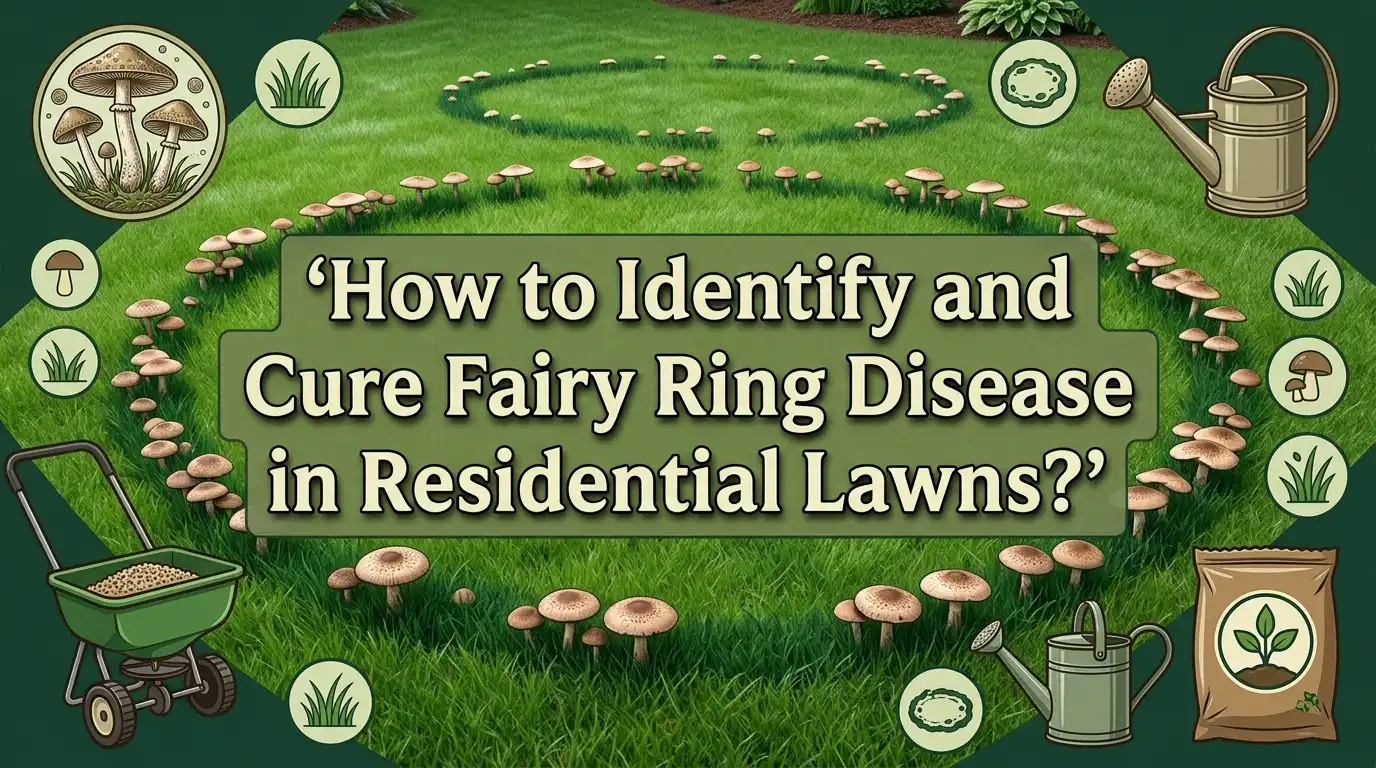
How to Identify and Cure Fairy Ring Disease in Residential Lawns?
Have you spotted odd green circles or mushrooms popping up on your lawn? You might be dealing with fairy ring disease. It looks strange, but it is a common lawn problem.
This fungal issue creates circular or arc shaped patterns in your grass. Sometimes you will see dark green rings. Other times, small toadstools appear at the edges.
The rings often start small, less than a foot wide. If left alone, they expand every year. Soils with high organic matter tend to attract this fungus the most.
The good news? You can treat fairy ring disease with the right steps. This guide will show you how to identify the signs early. We will also cover simple, effective treatment methods.
Ready to get your lawn looking healthy again? Let’s dig into the details of spotting and curing this tricky turf condition.
In a Nutshell
- Look for circles first. Watch for dark green rings, dead grass arcs, or mushrooms growing in a pattern. These signs show up before the problem gets bigger.
- Fungi cause this issue. A fungal disease triggers fairy rings. Experts still don’t fully understand how it spreads underground.
- Rich organic soil invites trouble. Lawns with high organic matter give fungi the perfect home. This is why old lawns often show fairy rings first.
- Piercing the soil works wonders. Use a garden fork to poke holes 12 to 24 inches deep around the ring. This lets water reach the fungal mat below.
- Watering takes patience. You need to water the area thoroughly for 4 to 6 weeks straight. Skipping days will slow down your progress.
- Prevention beats cure. Keep organic matter low and manage moisture in your soil. This simple habit stops fairy rings before they start.
What Is Fairy Ring Disease and What Causes It
Fairy ring disease happens when fungi grow in your lawn soil and create those distinctive circular patterns you see above ground. The fungus lives in the soil itself, not in the grass blades. It spreads outward year after year, making the ring bigger.
The exact fungus varies depending on your location and soil type. Different fungi can cause fairy rings, which is why the disease shows up differently in different yards. Scientists still don’t fully understand every detail of how the fungus works, but they know it thrives in certain soil conditions.
High organic matter is the main culprit. Soils packed with dead leaves, thatch, and decomposing plant material create the perfect home for these fungi. The fungi feed on this organic material and spread through the soil. If your lawn has lots of buildup, you’re more likely to see fairy rings pop up.
Moisture also plays a role. The fungus prefers soil that stays consistently moist but not waterlogged. Too much water or too little water can affect how the disease develops and spreads.
What you see above ground tells the story. The fungus creates a barrier in the soil that stops water from soaking in properly. This causes the dark green rings (where extra nitrogen gets released) or dead patches (where water can’t penetrate). Mushrooms or toadstools often appear right at the ring’s edge, which is where the fungus is actively growing and reproducing.
The disease spreads slowly but steadily. A ring that starts smaller than a foot wide can expand several inches outward each year. This gradual spread means early detection helps you stop it before it takes over your entire lawn.
Understanding these basics helps you spot the problem early and take action quickly.
Key Signs and Symptoms to Identify Fairy Rings on Your Lawn
Fairy rings show up in several ways on your lawn. The most obvious sign is a circular or arc shaped pattern of mushrooms or toadstools. These mushrooms often ring the affected area like a crown.
You might also notice dark green grass forming a circle or arc. This greener section marks where the fungus is most active. The grass looks unusually vibrant because the fungus breaks down organic matter and releases nutrients.
Dead or dying grass patches often appear inside or alongside the green rings. These brown or tan areas show where the fungal barrier blocks water from reaching grass roots. The contrast between healthy and dead grass makes the ring pattern very visible.
The rings typically start small, less than one foot across. Each year, they expand outward as the fungus spreads through your soil. You might see the pattern grow several inches wider annually. Some rings can reach 20 feet or larger if left untreated for years.
Pay attention to where the rings appear. They often show up in areas with heavy foot traffic or where water pools. Shaded spots and compacted soil are common locations too.
Timing matters for spotting fairy rings. They become most visible in spring and fall when moisture levels are right. Summer heat can make the rings less obvious, but the fungus still works underground.
Check your lawn every few weeks during growing season. Early detection makes treatment much easier. Small rings respond faster to treatment than large established ones.
Don’t ignore a single mushroom circle. What looks like a small problem now can spread significantly within a year or two. The sooner you identify and address fairy rings, the quicker your lawn recovers.
Why Fairy Rings Form: Soil and Environmental Conditions to Watch
Fairy rings form because fungi thrive in specific soil and environmental conditions. Understanding these conditions helps you prevent the disease before it takes hold.
High organic matter is the primary driver. Soils loaded with dead leaves, thatch, and decomposing plant material create an ideal food source for the fungi that cause fairy rings. If your lawn has thick thatch buildup or you’ve added lots of compost without proper management, you’re creating a buffet for these fungi.
Moisture levels directly influence fairy ring development. Fungi need consistent dampness to colonize soil effectively. However, once the fungal network establishes itself, it actually blocks water from penetrating the soil properly, which creates those dead patches you see.
Soil compaction makes things worse. Dense, compacted soil retains moisture unevenly and prevents air circulation. This creates pockets where fungi flourish. Conversely, well aerated soil with good drainage tends to resist fairy ring formation.
Temperature and humidity also matter. Fairy rings spread fastest during warm, humid periods. Spring and fall often see increased activity because moisture levels are higher and temperatures are mild.
Grass type plays a role too. Some turf varieties are more susceptible than others to fairy ring colonization. Certain fungi prefer specific grass species, so your lawn’s composition influences your risk level.
Nutrient imbalances can trigger problems. Soils lacking proper nitrogen or other essential nutrients sometimes become more vulnerable to fungal invasion. A balanced soil supports healthy grass that resists disease better.
The key takeaway: fairy rings form when fungi find the perfect combination of food, moisture, and weak turf conditions. By reducing organic matter accumulation, improving drainage, aerating your soil, and maintaining proper nutrients, you create an environment where fairy rings struggle to establish. Prevention focuses on making your soil and grass less attractive to the fungi that cause this disease.
Step-by-Step Guide to Treating Fairy Ring Disease
Treating fairy ring disease requires a systematic approach. Start by identifying the exact location and size of the ring on your lawn. Mark the boundaries with chalk or flags so you know exactly where to focus your efforts.
The first action step is aeration. Use a garden fork to pierce the affected area deeply. Push the fork into the soil at least 12 to 24 inches deep. Make multiple passes across the entire ring, spacing your punctures about 6 inches apart. This breaks up the fungal barrier that prevents water penetration.
Water is your next weapon. After aerating, water the treated area thoroughly and consistently. This step matters more than most people realize. You need to maintain proper moisture for 4 to 6 weeks straight. Water deeply enough that the moisture reaches down past the aeration holes. Shallow watering won’t work because the fungus lives deep in the soil.
Apply fungicides once you’ve started the watering cycle. Fungicides work best when soil moisture is already improving. Follow the application instructions carefully since timing affects results. Apply the treatment across the entire marked ring area, not just the edges.
Continue monitoring your lawn closely. Check the ring every week during treatment. Look for signs of recovery like new grass growth or reduced mushroom appearance. Don’t stop watering after just a few weeks. The full 4 to 6 week treatment period is essential for success.
Remove any mushrooms you see by hand. Don’t let them spread spores across your lawn. Dispose of them in a sealed bag rather than composting them.
Be patient with this process. Fairy ring disease doesn’t disappear overnight. Consistent effort over several weeks gives you the best chance of eliminating the fungus and restoring your lawn to normal.
Preventing Fairy Ring Recurrence Through Lawn Care Practices
Preventing fairy ring recurrence starts with understanding what feeds the fungus in your soil. The key is reducing organic matter buildup. Dead leaves, thatch, and decomposing plant material create the perfect environment for these fungi to thrive and spread.
Start by removing excess thatch from your lawn each year. Use a dethatcher or rake vigorously to pull up dead grass and debris. This simple step cuts off one major food source the fungus needs to survive and expand.
Next, manage your soil moisture carefully. Fairy rings love inconsistent watering patterns. Water your lawn evenly and regularly rather than in sporadic heavy doses. Aim for deep, steady moisture that reaches the root zone without creating soggy spots.
Aeration becomes your regular maintenance tool. Pierce your lawn deeply at least once yearly, ideally in spring or fall. This breaks up compacted soil and improves air circulation, making conditions less favorable for fungal growth.
Adjust your fertilizing schedule to maintain balanced soil nutrition. Nutrient imbalances sometimes trigger fairy ring problems, so test your soil regularly. Apply nitrogen and other essential nutrients according to soil test results, not guesswork.
Keep your grass healthy and thick through proper mowing practices. Mow at the correct height for your grass type and never remove more than one third of the blade in a single cutting. Healthy, dense turf crowds out weak spots where fungi can establish.
Clean up fallen leaves promptly during autumn. Don’t let them pile up on your lawn surface. Rake and remove debris regularly to prevent organic matter from accumulating.
Finally, monitor your lawn consistently throughout the growing season. Catch any new mushroom circles early before they expand. Early detection means faster treatment and prevents the problem from spreading to new areas of your yard.
Common Mistakes That Worsen Fairy Ring Problems
Many homeowners accidentally make fairy ring problems worse without realizing it. Understanding these mistakes helps you avoid them and protect your lawn.
Ignoring early signs is the biggest error. When you spot the first small mushroom circle, it feels harmless. You might think it will disappear on its own. This delay costs you months of extra treatment time later. A ring that starts at less than one foot wide expands yearly. Catching it early means easier control.
Watering too briefly during treatment fails most people. You need to water for four to six weeks consistently. Many folks water for a week or two, see no immediate results, and stop. The fungus lives deep in your soil, sometimes 12 to 24 inches down. Shallow watering never reaches these depths. Your water must soak thoroughly and stay consistent throughout the entire treatment window.
Shallow aeration creates another common problem. Using a standard lawn aerator might not go deep enough. You need to pierce the ring area to at least 12 to 24 inches depth. Surface aeration leaves the fungal network intact below. The fungus simply continues spreading underneath your efforts.
Over watering between treatments also backfires. While you need consistent moisture during the four to six week treatment phase, excessive watering outside this period feeds the fungus. These fungi thrive in overly wet conditions. Balance matters here. Your goal is proper moisture, not swampy soil.
Skipping fungicide application after aeration wastes your effort. Once you’ve opened up the soil and started your watering routine, fungicides work much better. Applying them before aeration means they sit on the surface. Timing your fungicide application to follow your aeration and watering steps makes a real difference in success rates.
Troubleshooting Persistent or Recurring Fairy Rings
When fairy rings return after you thought you’d eliminated them, frustration sets in. Understanding why this happens helps you stop the cycle permanently.
Recurring fairy rings often mean the fungus survived deeper in your soil than your initial treatment reached. Fungal threads can hide below 24 inches, especially in compacted earth. If you only aerated to 12 inches the first time, the disease persisted underground and expanded again.
The second reason involves incomplete moisture management. You may have watered for four weeks, but the fungus needs consistent dampness for the full six week period. Even one week of dry conditions lets the fungus regain strength. Check your soil moisture daily during treatment. It should feel like a wrung out sponge, not soggy and not dry.
Your lawn’s organic matter level also plays a role in recurrence. If you didn’t reduce thatch and leaf buildup after your first treatment, the fungus has plenty of food to restart. Remove fallen leaves immediately each autumn. Dethatch your lawn annually using a power rake or similar tool.
Soil compaction causes another comeback problem. Hard, dense soil prevents water and fungicide from reaching deep enough. After your initial treatment succeeds, maintain regular aeration twice yearly to keep soil loose and penetrable.
Finally, monitor your lawn during the vulnerable seasons. Fairy rings often return in spring or after heavy rainfall when moisture increases. Watch for small mushroom circles appearing in the same location. Catch them early before they expand.
If your ring returns in the exact same spot after proper treatment, consider that multiple fungal species might be present. Different fungi require different approaches. Consulting local soil experts can identify which specific fungus you’re battling, allowing you to adjust your treatment method accordingly.
Final Thoughts
Fairy ring disease feels tricky, but it is not impossible to manage. The key is patience and consistency.
Spotting circular mushroom patterns early gives you the best chance at control. Do not wait for the ring to expand across your yard.
Piercing the soil deeply and watering consistently for four to six weeks forms the backbone of any real treatment plan. Skip either step, and the fungus often survives.
Remember that fungi live deep in organic matter. Surface treatments alone rarely solve the problem completely.
Your lawn care habits matter just as much as active treatment. Regular aeration, proper mowing, and balanced fertilizing keep grass strong and less inviting to fungal growth.
Think of prevention as ongoing work, not a one time fix. Healthy soil with good drainage naturally resists fairy ring formation over time.
If mushrooms return despite your efforts, do not panic. Some soil types hold onto fungal spores stubbornly, requiring repeated seasons of treatment.
Every lawn is different. What works quickly for one yard might take longer in another, depending on soil composition and moisture patterns.
Stay observant during spring and fall when conditions favor fungal activity. Catching new rings early always beats fighting an established infestation.
Combine physical aeration, deep watering, and smart fungicide use for the strongest results. These three steps work together, not alone.
Most importantly, avoid the common mistakes that make fairy rings worse. Shallow treatment, brief watering, and ignored early signs all lead to frustrating recurrence.
With steady care and the right approach, your lawn can recover fully. Green, even turf is achievable even after a fairy ring battle.
Treat your soil well, watch for warning signs, and act quickly when you see them. This simple mindset keeps fairy ring disease from becoming a permanent lawn problem.
Frequently Asked Questions
Can fairy ring disease kill my entire lawn?
Fairy ring disease rarely kills your whole lawn. The fungus creates dead patches or dark green rings, but it spreads slowly over years. Most homeowners notice it as a cosmetic problem first. However, severe cases can weaken grass in affected areas if left untreated for many seasons.
How long does treatment actually take?
Treatment requires commitment over four to six weeks. You pierce the soil deeply with a garden fork, then water consistently throughout this period. Many people fail because they stop watering too early. The fungus lives deep in organic matter, so sustained moisture helps fungicides reach infected areas.
What’s the difference between fairy rings and regular mushroom circles?
Fairy rings show specific patterns: dark green rings, dead arcs, or toadstools at the edges. Regular mushroom circles appear randomly without the distinctive growth pattern. Fairy rings start small (less than one foot) and expand outward each year in a predictable circle or arc shape. If you see this expanding pattern, you likely have fairy ring disease.
Why does my fairy ring keep coming back?
Recurrence happens for several reasons. The fungus may survive deeper in your soil than your initial treatment reached. Incomplete watering during the four to six week period leaves fungi alive. Your lawn’s high organic matter content also supports regrowth. Soil compaction can trap moisture and fungi. Finally, multiple fungal species might be present, requiring different approaches.
Should I remove the mushrooms myself?
Removing visible mushrooms does not stop the disease. The fungus grows underground in the soil. Picking toadstools only removes the fruiting bodies. Focus instead on soil treatment: aeration, consistent watering, and fungicide application work beneath the surface where the real problem exists.

Hi, I’m Jane! As a passionate gardener and product enthusiast, I spend my days testing garden tools, comparing products, and writing honest reviews so you don’t have to learn the hard way. Got a question? Feel free to reach out — I’d love to hear from you!