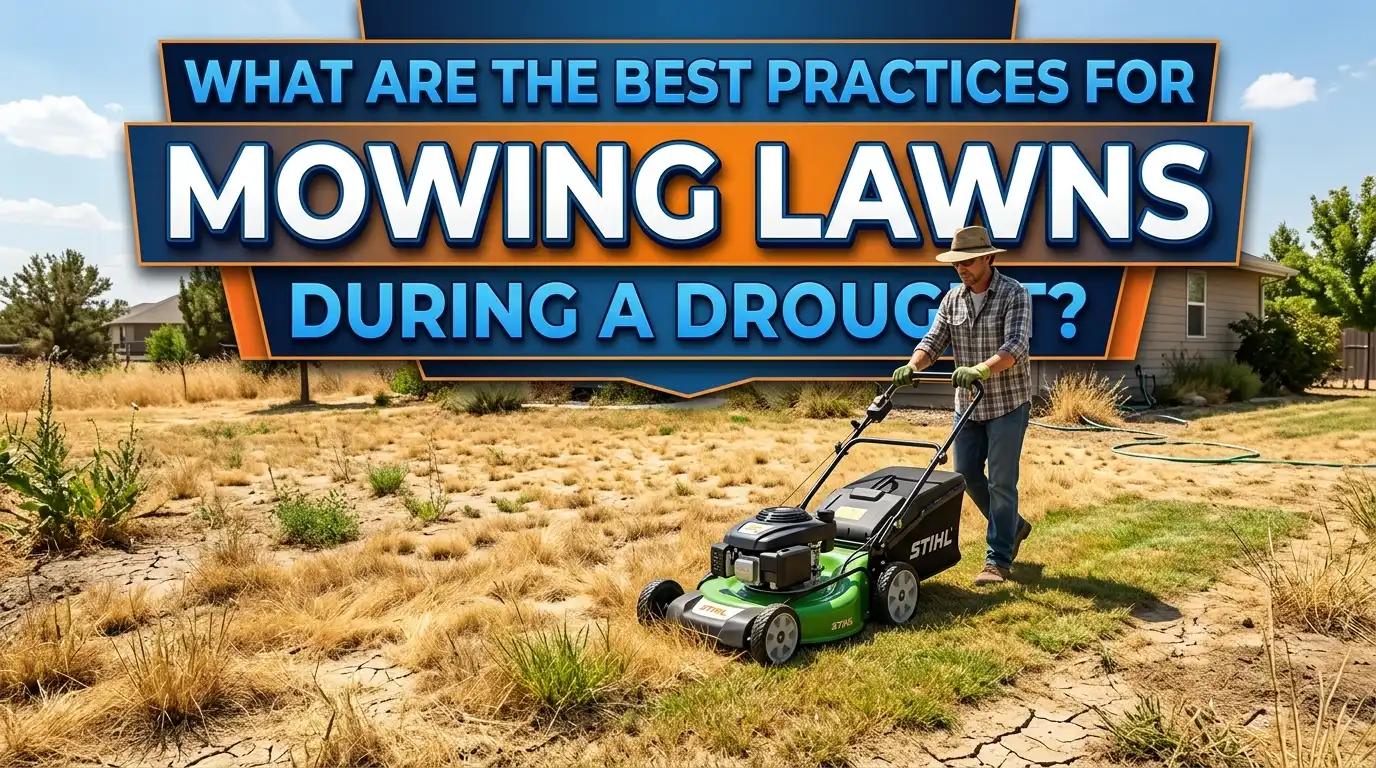
What Are the Best Practices for Mowing Lawns During a Drought?
Drought can turn a lush, green lawn into a brown, brittle mess. You watch the forecast every day, hoping for rain that never comes. Meanwhile, your grass looks worse with every passing week, and you are not sure if mowing will help or cause more damage.
Here is the truth. Most lawn damage during a drought does not come from the lack of water alone. It comes from the wrong mowing and care habits that add extra stress to grass that is already struggling. Cutting too short, mowing at the wrong time, and skipping basic maintenance steps can push your lawn past the point of recovery.
The good news? You can keep your lawn alive and even looking decent during dry spells. You just need the right strategy. This guide walks you through every step of mowing and caring for your grass during a drought.
Key Takeaways
- Raise your mowing height to the maximum setting for your grass type. Taller grass develops deeper roots, shades the soil, and retains moisture more effectively during dry periods.
- Never remove more than one third of the grass blade in a single mowing session. Cutting too much at once causes severe stress to already struggling turf and can slow recovery dramatically.
- Mow less often during drought conditions. Grass growth slows down when water is scarce, so you may only need to mow every two to three weeks instead of weekly.
- Keep your mower blades sharp at all times. Dull blades tear grass instead of cutting it cleanly, which leads to increased moisture loss and a higher risk of disease.
- Leave grass clippings on the lawn after mowing. They act as a natural mulch that returns moisture and nutrients to the soil without any extra cost or effort.
- Skip fertilizer and herbicide applications until the drought ends. Both products can burn stressed grass and do more harm than good during periods of water scarcity.
Why Drought Makes Mowing So Important
Mowing your lawn during a drought is not just about keeping things tidy. It is a survival strategy for your grass. The way you mow directly affects how well your turf handles water stress.
Grass relies on its leaf blades to photosynthesize and produce the energy it needs to survive. During a drought, every blade of grass matters more than usual. Removing too much leaf tissue forces the plant to redirect energy from its roots to regrow what it lost. This weakens the root system at the exact time your grass needs strong roots to reach deep soil moisture.
Proper mowing during drought conditions helps your grass conserve water, maintain deeper roots, and resist disease. On the other hand, poor mowing habits can cause your lawn to go dormant faster, develop brown patches, or die entirely in the worst cases.
Think of your lawn as a patient recovering from illness. You would not ask a sick person to run a marathon. The same logic applies here. Every mowing decision either helps your grass heal or pushes it closer to the edge. Understanding this relationship is the first step toward keeping your lawn alive through dry spells.
Raise Your Mowing Height to the Maximum
This is the single most important change you can make during a drought. Set your mower to the highest recommended cutting height for your specific grass type. For most cool season grasses like Kentucky bluegrass and tall fescue, this means 3.5 to 4 inches. For warm season grasses like Bermuda and Zoysia, aim for the upper range of their recommended height.
Taller grass provides several drought survival benefits. First, longer blades shade the soil surface and reduce water evaporation. This natural shade can significantly lower soil temperatures on hot days, keeping the root zone cooler and more hospitable for grass roots.
Second, taller grass develops deeper root systems. Research from multiple university extension programs confirms that mowing height directly correlates with root depth. Deeper roots can access moisture that sits further below the surface, giving your lawn a hidden water supply that short grass cannot reach.
One important note: experts at Purdue University recommend setting your mowing height at the start of the season and keeping it consistent. Suddenly raising the height during a drought can create its own set of problems. The best approach is to mow at the highest acceptable height year round.
Follow the One Third Rule Strictly
The one third rule states that you should never cut more than one third of the total grass blade height in a single mowing. This rule is always important, but it becomes critical during a drought.
Cutting more than one third of the blade shocks the plant. It loses a large portion of its food producing surface area all at once. During normal conditions, grass can recover from this shock relatively quickly. During a drought, recovery takes much longer because the plant has less water available to fuel new growth.
Here is a practical example. If your grass is 4.5 inches tall, you should cut no more than 1.5 inches, leaving it at 3 inches. If your grass has grown taller than expected between mowings, you may need to mow twice over several days to bring it down gradually without breaking the one third rule.
This approach requires more frequent attention, but it pays off. Your grass stays healthier, retains more moisture, and recovers faster when rain finally arrives. Skipping a mowing session and then cutting a large amount at once is one of the worst things you can do to drought stressed turf.
Mow Less Frequently During Dry Spells
Grass naturally slows its growth when water becomes scarce. You should match your mowing schedule to this slower growth rate rather than sticking to a rigid weekly routine.
During active drought conditions, your lawn may only need mowing every 10 to 21 days, depending on your grass type and local conditions. Some lawns may barely grow at all during severe drought, and in those cases, you can skip mowing entirely until growth resumes.
Mowing a lawn that has not grown adds unnecessary stress without any benefit. The weight of the mower, the vibration, and the tire tracks all compact the soil and damage grass crowns. Even if the mower blade does not touch the grass, running equipment over drought stressed turf causes harm.
Watch your lawn for signs of growth before you mow. If the grass has not grown noticeably since your last cut, leave it alone. Your lawn will thank you for the break. Ohio State University turf specialists specifically recommend avoiding mowing on dormant or severely stressed lawns because the physical process of mowing itself counts as a stressor.
Keep Your Mower Blades Razor Sharp
A dull mower blade tears grass instead of cutting it. This tearing creates jagged edges on each blade of grass that lose moisture far faster than clean cuts. During a drought, this extra moisture loss can be the difference between grass that survives and grass that dies.
Sharp blades make a clean, precise cut that heals quickly. The wound closes faster, which reduces the window for moisture to escape and for disease organisms to enter the plant. You should sharpen your mower blades at least every 20 to 25 hours of mowing time, and more often if you mow over sandy soil.
A simple way to check blade sharpness is to inspect your grass a day after mowing. Cleanly cut grass tips remain green. Torn grass tips turn white or brown at the edges. If you see ragged, discolored tips across your lawn, your blades need sharpening immediately.
You can sharpen blades yourself with a bench grinder or file, or you can take them to a local hardware store. Many lawn equipment shops offer this service for a small fee. Keeping a spare set of blades on hand allows you to rotate them and always have a sharp set ready.
Mow at the Right Time of Day
The best time to mow during a drought is in the late afternoon or early evening, after the peak heat of the day has passed. This gives your grass the entire night to recover before the next day’s heat arrives.
Mowing in the middle of the day during drought conditions exposes freshly cut grass to intense heat and direct sun. The open wounds on the grass blades lose moisture rapidly in these conditions. This combination of cutting stress and heat stress can overwhelm grass that is already struggling for water.
Avoid mowing early in the morning if your grass is still wet from dew. Wet grass clumps together and does not cut evenly. It also sticks to the mower deck and blades, which produces a messier cut. UF/IFAS Extension specifically recommends mowing when grass is dry to ensure the cleanest possible cut.
If you must mow during warmer hours, try to do it on a cloudy day or when temperatures are slightly lower than usual. The goal is to reduce the total amount of stress your lawn experiences during each mowing session.
Leave Grass Clippings on the Lawn
Bagging your grass clippings during a drought wastes a free source of moisture and nutrients. Leave the clippings on the lawn after every mowing session. This practice is called grasscycling, and it provides multiple benefits during dry conditions.
Grass clippings are about 80% water. When you leave them on the lawn, that moisture returns to the soil as the clippings break down. They also act as a thin mulch layer that shades the soil surface and reduces evaporation. Research from Oregon State University has shown that returning clippings can reduce fertilizer needs by almost half because the clippings release nitrogen and other nutrients as they decompose.
For best results, use a mulching blade on your mower. Mulching blades chop clippings into finer pieces that settle down into the turf canopy quickly. These small pieces decompose faster and are less likely to clump on the surface.
If you follow the one third rule, the clippings will be short enough to break down easily. Long, heavy clippings from infrequent mowing can smother the grass underneath, so maintaining a regular mowing schedule helps this system work properly. Grasscycling costs nothing, requires no extra effort, and delivers real benefits to your drought stressed lawn.
Avoid Fertilizing During Active Drought
Do not apply fertilizer to your lawn during drought conditions. This advice comes from nearly every university extension program and turf science expert. Fertilizer encourages new growth, and new growth demands water your lawn does not have.
Many fertilizers also contain high salt concentrations. When applied to dry soil, these salts can burn grass roots and leaf tissue. This condition, called fertilizer burn, creates brown or yellow patches that can take weeks or months to recover, even after the drought ends.
Ohio State University recommends pausing all fertilization until your grass shows signs of active recovery from drought stress. If drought conditions extend into fall for cool season grasses, you may need to skip the fall fertilizer application entirely and resume in the following season.
The same caution applies to herbicide treatments. Herbicides stress healthy lawns under normal conditions. Applying them during drought can damage your turf and reduce its ability to compete with weeds. Most herbicide labels also state that the product works best on actively growing weeds, which are less common during severe drought. Wait until conditions improve before resuming your weed control program.
Water Wisely If You Can Water at All
Many areas impose watering restrictions during drought, but if you are allowed to irrigate, do it in the most efficient way possible. Deep, infrequent watering produces much better results than frequent, shallow sprinkles.
Apply about half an inch to three quarters of an inch of water per session. This amount encourages roots to grow downward in search of moisture. Frequent light watering keeps roots shallow, which makes your grass more dependent on surface moisture that evaporates quickly in hot weather.
Water between 4 a.m. and 8 a.m. for the best results. Morning watering allows the grass to absorb moisture before the midday sun causes evaporation. It also gives the leaf blades time to dry during the day, which reduces the risk of fungal diseases. Watering in the evening leaves grass wet overnight and creates ideal conditions for disease.
Watch for signs that your grass needs water. These signs include leaf blades folding in half lengthwise, a blue gray tint to the lawn, and footprints that remain visible long after you walk on the grass. Water only when you see these signs rather than on a fixed schedule. This approach ensures you use every drop of water effectively.
Reduce Foot Traffic on Your Lawn
Keep people, pets, and equipment off your lawn as much as possible during a drought. Foot traffic compacts the soil, damages grass crowns, and creates wear patterns that struggle to recover without adequate water.
Compacted soil makes drought conditions worse because water cannot penetrate the surface effectively. When rain finally does arrive, compacted areas shed water instead of absorbing it. This means the grass in those areas stays dry even during rainfall events.
Create clear pathways through your yard using stepping stones or mulch paths to reduce concentrated foot traffic. If you have children who play on the lawn, consider designating a smaller area for activities and letting the rest of the lawn rest.
When you do need to mow, vary your mowing pattern each time. Driving the same path repeatedly causes deeper soil compaction in those tracks. Changing direction spreads the impact and gives previously compacted areas time to recover. Light core aeration before a drought can help reduce compaction, but avoid aerating during active drought because it opens the soil to additional moisture loss.
Understand When Your Lawn Goes Dormant
Brown grass during a drought does not always mean dead grass. Many grass species enter a natural dormancy state to survive extended dry periods. The grass stops growing, turns brown, and appears lifeless, but the crowns and roots remain alive below the surface.
Cool season grasses like Kentucky bluegrass and tall fescue commonly go dormant during summer drought. Warm season grasses like Bermuda and Zoysia are more drought tolerant but can also enter dormancy during severe conditions. Dormancy is actually a survival mechanism, not a sign of failure on your part.
The key is to leave dormant grass alone. Do not mow it. Do not fertilize it. Do not apply chemicals to it. Just let it rest. Most healthy lawns can survive four to six weeks of dormancy without permanent damage. Beyond that window, some grass plants may begin to die.
If you choose to water a dormant lawn, commit to a consistent schedule. Watering once and then stopping can break dormancy and then force the grass back into stress, which is worse than leaving it dormant in the first place. Either keep it dormant or keep it watered, but do not switch back and forth.
Choose Drought Tolerant Grass for the Future
If your lawn struggles every time a dry spell hits, consider replacing some or all of your turf with a more drought tolerant grass species during the next suitable planting season.
Tall fescue is one of the most drought resistant cool season grasses. Its deep root system can reach moisture that other grasses cannot access. Bermudagrass and Buffalograss are excellent warm season options that require significantly less water than many popular alternatives. Bahiagrass and Zoysiagrass also perform well under low water conditions.
Organizations like the Turfgrass Water Conservation Alliance test and certify grass cultivars that demonstrate superior performance under reduced water conditions. Look for certified varieties when purchasing seed. These cultivars have been proven through scientific testing to survive and maintain quality with less irrigation.
The best time to plant or overseed with drought tolerant varieties depends on your region. Cool season grasses do best when planted in fall. Warm season grasses establish more successfully in late spring. Planning this transition between drought events gives the new grass time to establish a strong root system before the next dry period arrives.
Common Mistakes That Kill Lawns During Drought
Several common errors push lawns beyond the point of recovery during dry conditions. Avoiding these mistakes is just as important as following best practices.
The first and most frequent mistake is scalping the lawn. Homeowners who mow infrequently sometimes cut their grass extremely short to extend the time between mowings. This removes the majority of the leaf tissue and eliminates the grass’s ability to shade its own roots. Scalped lawns dry out faster and recover slower than properly maintained ones.
The second mistake is applying fertilizer or weed killer during peak drought stress. As discussed earlier, these products cause chemical burns on dry, stressed turf. The third mistake is watering inconsistently, which forces grass in and out of dormancy and exhausts its energy reserves.
The fourth mistake is ignoring mower maintenance. Dull blades, uneven tire pressure, and a clogged mower deck all reduce cut quality and increase stress on the grass. The fifth mistake is heavy foot traffic and parking vehicles on the lawn, which compacts soil and crushes weakened grass crowns. Avoiding these five errors gives your lawn a significantly better chance of surviving drought intact.
How to Help Your Lawn Recover After a Drought
Once rain returns or watering restrictions are lifted, your lawn needs a careful recovery plan rather than an aggressive one. Rushing the process can cause new problems.
Start by watering slowly and deeply. Dry soil often develops a hydrophobic layer that repels water. You may need to water in short intervals with breaks in between to allow the moisture to soak in gradually. Running your sprinklers for 10 minutes, waiting 30 minutes, and then running them again for 10 minutes can be more effective than a single 20 minute session on very dry soil.
Resume mowing only after you see active new growth. Begin at a higher setting and gradually lower it to your normal height over several weeks. Apply a light fertilizer application about two to three weeks after consistent growth returns. Choose a slow release formula to avoid overwhelming the recovering turf.
Fall is the ideal time to overseed thin or bare areas for cool season lawns. Core aeration before overseeding improves seed to soil contact and helps break up any compaction that occurred during the drought. Be patient with recovery. A lawn that went dormant for several weeks may take a full growing season to return to its pre drought condition.
Frequently Asked Questions
Should I stop mowing completely during a drought?
You should reduce your mowing frequency, but stopping completely is only necessary if your grass has gone fully dormant. If the grass is still green and growing, continue mowing at a higher height and follow the one third rule. Dormant brown grass should not be mowed at all, as the physical act of mowing adds stress to an already struggling plant. Resume mowing once you see new growth returning.
How high should I set my mower during a drought?
Set your mower to the highest recommended height for your grass species. For most cool season grasses, this is 3.5 to 4 inches. For warm season grasses, aim for the top of the recommended range, which varies by species. Taller grass shades the soil, reduces evaporation, and encourages deeper root growth. All of these factors help your lawn survive with less water.
Will mowing my lawn during a drought kill the grass?
Mowing will not kill your grass if you do it correctly. The key is to mow high, mow with sharp blades, and never remove more than one third of the blade at a time. Mowing incorrectly, such as cutting too short or using dull blades, can push stressed grass beyond its ability to recover. Follow the best practices in this guide, and your mowing sessions will support your lawn rather than harm it.
Is it better to bag or mulch grass clippings during a drought?
Mulching is better during a drought. Grass clippings are rich in water and nutrients. Leaving them on the lawn returns moisture to the soil and provides a thin mulch layer that reduces evaporation. Use a mulching blade for the best results. Only bag clippings if your grass is diseased, as the clippings could spread the problem across the lawn.
How do I know if my lawn is dormant or dead?
Pull on a small section of brown grass. If it resists and stays rooted, it is likely dormant and can recover with water. If it pulls out easily with no resistance, the grass in that area is dead. You can also check the crown of the plant at the base where the blades meet the root. A firm, white or green crown indicates a living plant. A soft, brown crown indicates the plant has died. Most healthy lawns can survive up to six weeks of dormancy.
Can I aerate my lawn during a drought?
Aeration is best performed before or after a drought, not during one. Aerating during active drought opens the soil and exposes it to additional moisture loss, which can make conditions worse. If you know a dry summer is coming, aerate in the spring when the soil is moist. If drought has already ended, aerate in early fall when conditions have stabilized. Pair aeration with overseeding for the best lawn recovery results.

Hi, I’m Jane! As a passionate gardener and product enthusiast, I spend my days testing garden tools, comparing products, and writing honest reviews so you don’t have to learn the hard way. Got a question? Feel free to reach out — I’d love to hear from you!