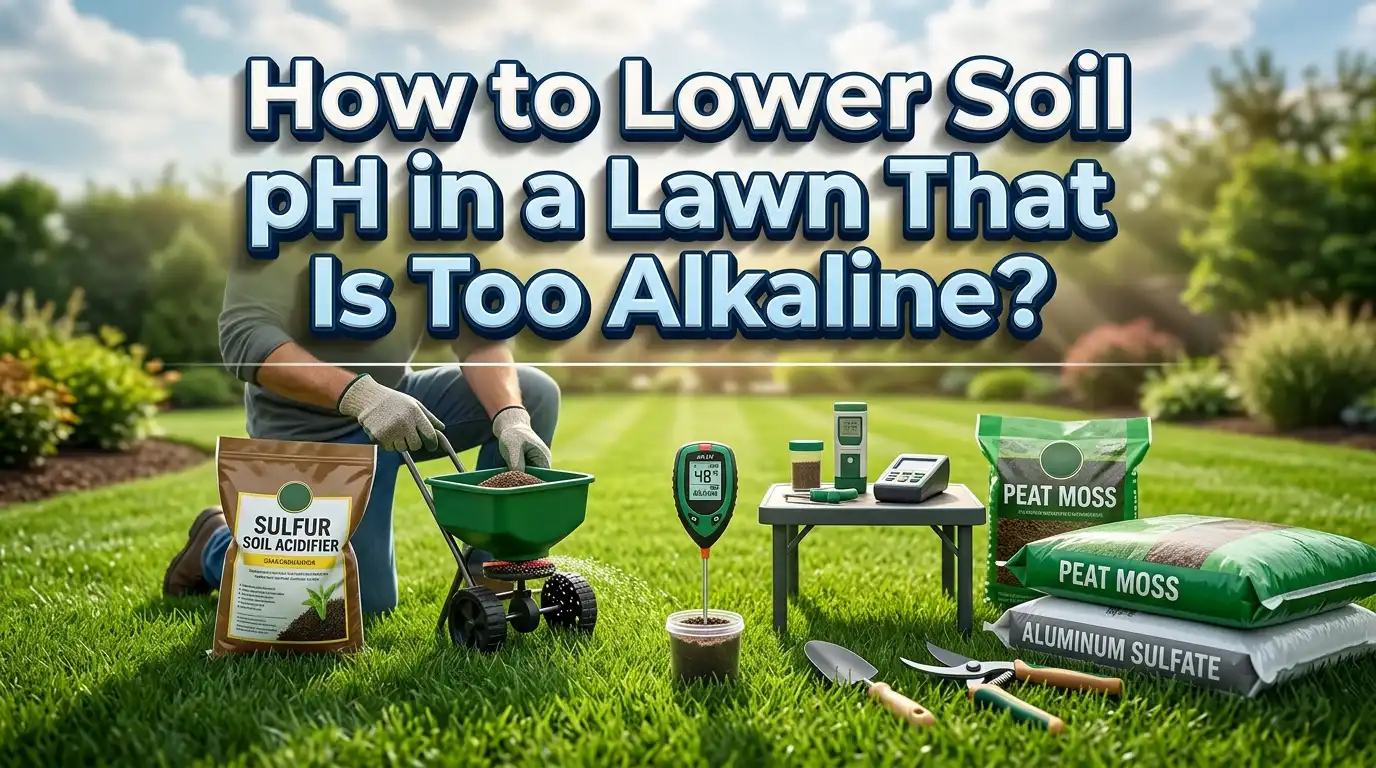
How to Lower Soil pH in a Lawn That Is Too Alkaline?
You water your lawn, you fertilize it, and you even mow at the right height. But your grass still looks yellow, patchy, and weak. What gives? The answer might be hiding right under your feet. Your soil could be too alkaline.
Alkaline soil locks away essential nutrients like iron, manganese, and phosphorus. Your grass roots sit in soil full of food they cannot access. The result is a lawn that looks starved no matter how much fertilizer you apply. This is a common problem in regions with limestone bedrock, hard tap water, or heavy use of lime.
The good news is you can fix this. Lowering soil pH is a straightforward process once you understand your soil, pick the right amendment, and apply it correctly. This guide walks you through every step.
Key Takeaways
- Most lawn grasses grow best in soil with a pH between 6.0 and 7.0. Anything above 7.5 starts to cause visible problems like yellowing, slow growth, and weak root systems. Testing your soil is the first and most important step before you make any changes.
- Elemental sulfur is the most widely recommended amendment for lowering soil pH. Soil microbes convert it into sulfuric acid over time. The process is slow but effective, and results can take three to six months to appear.
- Ammonium sulfate fertilizer serves double duty. It feeds your lawn with nitrogen while also lowering soil pH. It is two to three times more acidifying per pound of nitrogen than other common fertilizers.
- Iron sulfate works faster than elemental sulfur but requires careful application. Overapplication can cause iron toxicity and burn your turf, so always follow recommended rates.
- Organic methods like adding compost and mulching grass clippings help lower pH gradually. They also improve soil structure, boost microbial activity, and increase nutrient availability over the long term.
- Regular soil testing every one to two years keeps you on track and prevents overcorrection. Lowering pH too far creates a new set of problems that require lime to fix.
What Is Soil pH and Why Does It Matter for Your Lawn
Soil pH measures how acidic or alkaline your soil is on a scale of 0 to 14. A reading of 7.0 is neutral. Numbers below 7.0 indicate acidic soil. Numbers above 7.0 indicate alkaline soil. Most lawn grasses prefer a slightly acidic to neutral range between 6.0 and 7.0.
This number matters because it controls nutrient availability. Nitrogen, phosphorus, potassium, iron, and manganese all become less accessible to grass roots as pH rises above 7.0. Your soil might contain plenty of these nutrients, but your grass cannot absorb them in alkaline conditions. This is called nutrient lockout.
The pH scale is also logarithmic. This means a soil with a pH of 8.0 is not slightly more alkaline than 7.0. It is ten times more alkaline. A pH of 9.0 is one hundred times more alkaline than 7.0. Small numbers on the scale represent big changes in actual soil chemistry.
Soil pH also affects the microorganisms that keep your lawn healthy. Beneficial bacteria and fungi break down organic matter, fight disease, and support root growth. These organisms work best in slightly acidic conditions. When pH climbs too high, microbial activity drops, thatch builds up, and your lawn becomes more vulnerable to stress.
What Causes Soil pH to Become Too High
Several factors push lawn soil into alkaline territory. Understanding the cause helps you choose the right fix and prevent the problem from returning.
Limestone bedrock is one of the most common causes. If your region sits on limestone or chalk, your soil naturally contains calcium carbonate. This mineral dissolves slowly over time and raises pH. Soils in the western United States, parts of the Midwest, and areas with chalky geology often test above 7.5.
Hard water from municipal systems or wells can also raise pH. Water with high levels of calcium and magnesium carbonate adds alkalinity to your soil every time you irrigate. Over months and years, this steady input pushes pH upward.
Over application of lime is another frequent cause. Homeowners sometimes add lime without testing their soil first. Lime raises pH, and too much of it creates the exact opposite problem of what many lawns need.
Concrete and construction debris near homes can leach calcium into surrounding soil. New construction sites often have higher pH levels because of mortar, cement dust, and drywall scraps mixed into the topsoil.
Even certain fertilizers can contribute. Products containing calcium nitrate or potassium carbonate have an alkalizing effect. Always check the label to understand how a fertilizer will affect your soil chemistry.
Signs Your Lawn Soil Is Too Alkaline
Your lawn will tell you something is wrong before you ever pick up a test kit. Learning to read these signs helps you act sooner.
Yellowing grass blades are one of the earliest symptoms. This condition is called chlorosis. It happens because iron and manganese become unavailable in alkaline soil. Without these micronutrients, grass cannot produce enough chlorophyll. You will notice pale yellow or lime green patches that do not respond to regular fertilizer applications.
Slow or stunted growth is another clear signal. Grass in alkaline soil grows shorter and thinner than it should. New growth appears weak, and the lawn fills in slowly after damage or bare spots.
Persistent weed problems often accompany high pH. Certain weeds like chickweed, clover, and dandelions tolerate alkaline conditions better than many turf grasses. If these weeds keep returning despite your control efforts, high pH may be giving them an advantage.
Hard, crusty, or compacted soil can also indicate alkalinity. Alkaline soil often has poor structure. It resists water penetration and makes it difficult for roots to spread. You might notice water pooling on the surface instead of soaking in.
Finally, repeated fertilizer failure is a strong clue. If you apply fertilizer and see little improvement, the nutrients may be locked up in the soil. A pH test will confirm if alkalinity is the real problem behind your lawn’s poor performance.
How to Test Your Soil pH Accurately
Testing your soil is the foundation of any pH correction plan. Guessing can lead to overcorrection, wasted money, and new problems. You have three main options.
Home test kits are the quickest and most affordable choice. You collect small soil samples from several spots in your lawn, mix them together, and follow the kit instructions. Most kits use a color changing solution or indicator strips. They give you a general reading that tells you if your soil is acidic, neutral, or alkaline. These kits cost very little and provide enough accuracy for most homeowners.
Digital pH meters offer more precise readings. You insert a probe directly into moist soil and read the number on a display. These meters work well for checking multiple spots across your lawn. Make sure to calibrate your meter before each use for the most reliable results.
Professional lab testing delivers the most detailed and accurate information. You send soil samples to a university extension service or private lab. They return a full report with pH, nutrient levels, organic matter content, and specific amendment recommendations. Many state cooperative extension offices offer this service for a small fee.
Regardless of the method you choose, collect samples from at least four to six spots across your lawn. Take each sample from four to six inches below the surface. Mix them together in a clean bucket to create a representative sample. Avoid areas near sidewalks, driveways, or compost piles, as these spots may give skewed readings.
Understanding the Ideal pH Range for Different Grass Types
Not all grasses prefer the same pH. Knowing your grass type helps you set the right target.
Cool season grasses like Kentucky bluegrass, perennial ryegrass, and tall fescue grow best in soil with a pH between 6.0 and 7.0. Kentucky bluegrass, the most popular lawn grass in northern states, performs best around 6.5. When pH rises above 7.0, these grasses start to show nutrient deficiency symptoms.
Warm season grasses like Bermudagrass, Zoysiagrass, and St. Augustinegrass tolerate a slightly wider range. Bermudagrass can handle pH levels up to 7.5, but it still performs best between 6.0 and 7.0. Zoysiagrass prefers a range of 6.0 to 6.5. Centipedegrass has one of the lowest ideal ranges at 5.0 to 6.0 and is especially sensitive to alkaline conditions.
Buffalograss is one of the few lawn grasses that naturally tolerates higher pH levels. It can grow in soil up to 8.0, making it a good option for naturally alkaline regions where amending the entire lawn may be impractical.
When you set your target pH, aim for the middle of your grass type’s ideal range. This gives you a buffer. If pH drifts slightly in either direction, your grass will still perform well. For most lawns, a target of 6.5 is a safe and effective goal.
Knowing your target also prevents overcorrection. Dropping pH too low creates acidic conditions that bring their own set of nutrient problems and may require lime to fix.
Using Elemental Sulfur to Lower Soil pH
Elemental sulfur is the most common and widely recommended amendment for lowering soil pH. It is natural, affordable, and effective for long term pH adjustment.
Here is how it works. Soil bacteria convert elemental sulfur into sulfuric acid. This acid releases hydrogen ions into the soil solution, and those hydrogen ions lower the pH. The process depends on microbial activity, so it works best when soil is warm and moist. Expect results in three to six months after application.
Application rates depend on your current pH, your target pH, and your soil type. Sandy soils need less sulfur than clay soils because clay has a higher buffering capacity. As a general guide, lowering pH by one full point in a silt loam soil requires about 15 to 20 pounds of elemental sulfur per 1,000 square feet incorporated to a depth of six inches. Sandy soils may need half that amount. Clay soils may need double.
Do not apply more than 5 pounds of elemental sulfur per 1,000 square feet in a single application on an established lawn. Higher rates can burn turf grass. If you need a large amount, split it into multiple applications spread three to four months apart.
Apply sulfur on a cool day and water it in lightly. Avoid applying during hot summer months, as the combination of sulfur and heat can damage grass. Fall is often the best time to apply, giving the sulfur several months to react before the growing season starts.
Applying Ammonium Sulfate as an Acidifying Fertilizer
Ammonium sulfate is a fertilizer that does two jobs at once. It supplies nitrogen for grass growth, and its ammonium content acidifies the soil as microbes convert it to nitrate.
This fertilizer contains 21% nitrogen and 24% sulfur. The acidifying effect comes primarily from the nitrification process. Soil bacteria convert ammonium to nitrate, and this reaction releases hydrogen ions that lower pH. Ammonium sulfate is two to three times more acidifying per pound of nitrogen than urea or other common nitrogen sources.
For lawn use, apply ammonium sulfate at a rate that delivers 0.5 to 1.0 pound of actual nitrogen per 1,000 square feet per application. That translates to roughly 2.5 to 5 pounds of product per 1,000 square feet. You can apply it up to four times per year during the growing season.
Water it in immediately after application to prevent leaf burn. Ammonium sulfate is a salt based fertilizer, and the granules can scorch grass blades if they sit dry on the turf.
The pH lowering effect is gradual. Each application makes a small shift. Over a full growing season of regular use, you can expect a measurable drop in soil pH. Combine ammonium sulfate applications with annual soil testing to track your progress and adjust rates as needed.
One important note: do not rely solely on ammonium sulfate to make large pH changes. If your soil tests above 8.0, you will need elemental sulfur in addition to acidifying fertilizers. Ammonium sulfate works best for maintaining a slightly lower pH or making small corrections.
Using Iron Sulfate for Faster Results
Iron sulfate (also called ferrous sulfate) lowers soil pH faster than elemental sulfur because it does not require microbial conversion. It reacts directly with the soil through a chemical process.
Iron sulfate delivers two benefits. It acidifies the soil, and it provides iron, which helps grass produce chlorophyll. If your lawn shows iron chlorosis with yellow blades and green veins, iron sulfate addresses both the symptom and the underlying cause.
Apply iron sulfate at a rate of 5 to 10 pounds per 1,000 square feet. You can dissolve it in water for spray application or spread it as granules. Dissolving in water provides more even coverage and faster uptake.
Be careful with this product. Iron sulfate can stain concrete, pavers, and clothing. Keep it off hard surfaces and wash any spills immediately. Overapplication can cause iron toxicity, which turns grass dark and can kill it in severe cases.
Iron sulfate also requires more product per unit of pH change compared to elemental sulfur. According to university extension data, you need roughly six to eight times more iron sulfate by weight than elemental sulfur to achieve the same pH reduction. This makes it more expensive for large pH corrections. It is best used for quick fixes or small adjustments rather than major pH overhauls.
Apply iron sulfate during cooler parts of the day. Water it in promptly. Do not mix it with phosphorus based fertilizers, as iron and phosphorus can bind together and become unavailable to your grass.
Organic Methods to Gradually Lower Soil pH
If you prefer a slower, more natural approach, several organic methods can bring your lawn’s pH down over time.
Compost is one of the most effective organic amendments. Well decomposed compost is slightly acidic and introduces organic acids into the soil. Spreading a quarter to half inch layer of quality compost over your lawn once or twice a year gradually lowers pH while improving soil structure, water retention, and microbial diversity.
Mulching grass clippings back into the lawn is another simple strategy. As clippings decompose, they release organic acids and add nitrogen to the soil. This small but steady contribution helps shift pH downward over months and years. It also saves you time bagging clippings.
Composted pine bark and pine needle mulch are naturally acidic materials. While they are more practical for garden beds than lawns, you can incorporate composted pine bark into bare spots when overseeding. These materials break down slowly and provide a mild acidifying effect.
Sulfur coated organic fertilizers combine the pH lowering power of sulfur with organic nutrient sources. Look for products that list sulfur as an active ingredient alongside organic matter. These fertilizers work more slowly than synthetic options but support long term soil health.
Keep in mind that organic methods alone may not be enough if your soil pH is very high. A pH above 8.0 will likely need sulfur or acidifying fertilizer in addition to organic inputs. Use organic methods as a complement to faster acting amendments, or as a maintenance strategy once you have reached your target pH.
How Long Does It Take to Lower Soil pH
Patience is essential. Lowering soil pH is not an overnight process, and the timeline depends on several factors.
Elemental sulfur takes the longest to work. Soil microbes must convert it before any pH change occurs. In warm, moist soil with good microbial activity, expect to see results in three to six months. In cooler climates or compacted soils, the process can take up to a year or longer.
Iron sulfate and aluminum sulfate work faster because they react chemically without waiting for biological conversion. You may see pH changes within a few weeks to a couple of months. However, the change may not be as long lasting as sulfur based corrections.
Ammonium sulfate produces a gradual acidifying effect over the course of a full growing season. Each application makes a small contribution. Consistent use over two to three seasons produces meaningful results.
Organic amendments like compost and mulched clippings work on the slowest timeline. They may take one to three years of regular application to produce a noticeable pH shift. Their real value lies in sustained soil improvement rather than quick correction.
Soil texture also affects the timeline. Sandy soils respond faster because they have lower buffering capacity. Clay soils resist change because they hold more cations and have a higher capacity to neutralize acids. Expect clay soils to need more product and more time.
Test your soil every three to six months during active treatment. This lets you track progress and decide if you need additional applications or if you are approaching your target.
Common Mistakes to Avoid When Lowering Soil pH
Many homeowners make errors that slow down progress or create new problems. Here are the most common pitfalls.
Skipping the soil test is the biggest mistake. Without knowing your starting pH and soil type, you are guessing at application rates. Too little sulfur wastes time. Too much sulfur burns your lawn. Always test first.
Applying too much amendment at once can damage turf and shock soil biology. Elemental sulfur should not exceed 5 pounds per 1,000 square feet per application on an established lawn. Splitting large amounts into multiple applications is always safer.
Ignoring soil type leads to incorrect rates. Clay soils require significantly more sulfur than sandy soils to achieve the same pH change. A rate that works perfectly on sand may barely register in heavy clay.
Expecting instant results causes frustration. Some homeowners apply sulfur, see no change in two weeks, and add more. This leads to overcorrection. Give each application at least three months before retesting.
Forgetting about water pH undoes your hard work. If your irrigation water has a pH of 8.0 or higher, it adds alkalinity to your soil with every watering. Consider testing your water and using a water treatment system if the pH is consistently high.
Neglecting ongoing maintenance lets pH drift back up. Alkaline soils have a natural tendency to return to their baseline pH. Annual soil tests and periodic sulfur applications keep your lawn in the right range.
How to Maintain the Right Soil pH Over Time
Lowering your soil pH is only half the job. Keeping it in the right range requires a consistent maintenance plan.
Test your soil at least once a year. Spring is a great time to test because it gives you the full growing season to make adjustments. If you recently applied a large amount of sulfur, test every three to six months until the pH stabilizes at your target.
Use acidifying fertilizers as your regular nitrogen source. Ammonium sulfate or sulfur coated urea feed your lawn while providing a mild acidifying effect with every application. This ongoing input helps counteract the natural tendency of alkaline soils to creep back up.
Continue adding organic matter. Top dress with compost once or twice a year. Mulch grass clippings back into the lawn. These practices maintain microbial activity and contribute organic acids that support a slightly acidic environment.
Monitor your water source. If your tap water is alkaline, the cumulative effect of irrigation can raise soil pH over time. Collecting rainwater for lawn use is one option. Rainwater typically has a pH between 5.0 and 5.6, which naturally helps keep soil on the acidic side.
Avoid unnecessary lime applications. Only apply lime if a soil test specifically shows your pH has dropped too low. Many homeowners apply lime out of habit without testing first, which undoes months of careful pH adjustment.
Consistency matters more than intensity. Small, regular actions produce better long term results than large, infrequent corrections.
What to Do If You Overcorrect and Make Soil Too Acidic
Overcorrection happens, especially if you apply too much sulfur or use acidifying products too aggressively. Soil that drops below 5.5 creates its own set of problems. Aluminum and manganese can reach toxic levels. Beneficial bacteria populations decline. Grass roots suffer.
The fix is agricultural lime (calcium carbonate) or dolomitic lime (which also adds magnesium). Lime raises soil pH by neutralizing excess acidity. Apply it based on a soil test recommendation, not a guess.
For most lawns, apply 25 to 50 pounds of ground limestone per 1,000 square feet to raise pH by about half a point. Work with your soil test results and follow the lab’s specific recommendation for the most accurate rate.
Lime works best when watered in and given time to react. Expect pH changes in four to eight weeks with finely ground limestone. Coarser grades take longer.
After applying lime, wait at least two months before retesting. If the pH is still too low, apply another round at a reduced rate. Small corrections are safer than large ones.
The best way to avoid overcorrection is to apply sulfur in conservative amounts and test frequently during the adjustment period. Think of it as making gradual turns rather than sharp ones.
Frequently Asked Questions
What is the fastest way to lower soil pH in a lawn?
Iron sulfate works faster than elemental sulfur because it reacts chemically rather than biologically. You can see results within a few weeks. However, it requires more product by weight and costs more than elemental sulfur for large areas. For a significant pH drop, combine iron sulfate for quick results with elemental sulfur for long term correction.
Can vinegar lower soil pH for a lawn?
Vinegar can temporarily lower pH in a very small area, but it is not practical for lawn use. The acetic acid in vinegar breaks down quickly and does not produce lasting changes. It can also damage grass and soil organisms at higher concentrations. Stick with proven amendments like elemental sulfur or ammonium sulfate for reliable, lasting results.
How often should I test my soil pH?
Test your soil at least once a year for general maintenance. If you are actively trying to lower pH, test every three to six months to track your progress. Always test before applying any amendment so you know your starting point and can calculate the correct application rate.
Will coffee grounds help lower my lawn’s pH?
Fresh coffee grounds are slightly acidic, but they have very little effect on soil pH in practical terms. The amount you would need to meaningfully change the pH of an entire lawn is enormous. Coffee grounds are better used as a compost ingredient. For real pH changes, use sulfur based amendments.
Can I lower soil pH and fertilize my lawn at the same time?
Yes. Ammonium sulfate is both a nitrogen fertilizer and a soil acidifier. It supplies 21% nitrogen for grass growth while gradually lowering soil pH. This makes it an efficient choice for homeowners dealing with alkaline soil. Apply it at standard fertilizer rates and water it in immediately to prevent leaf burn.
How do I know if my soil has too much lime?
A soil test is the only reliable way to confirm excess lime. Symptoms like yellowing grass, poor fertilizer response, and hard or crusty soil surface can suggest high pH, but they can also indicate other problems. Send a soil sample to your local extension service for a definitive answer and specific amendment recommendations.

Hi, I’m Jane! As a passionate gardener and product enthusiast, I spend my days testing garden tools, comparing products, and writing honest reviews so you don’t have to learn the hard way. Got a question? Feel free to reach out — I’d love to hear from you!