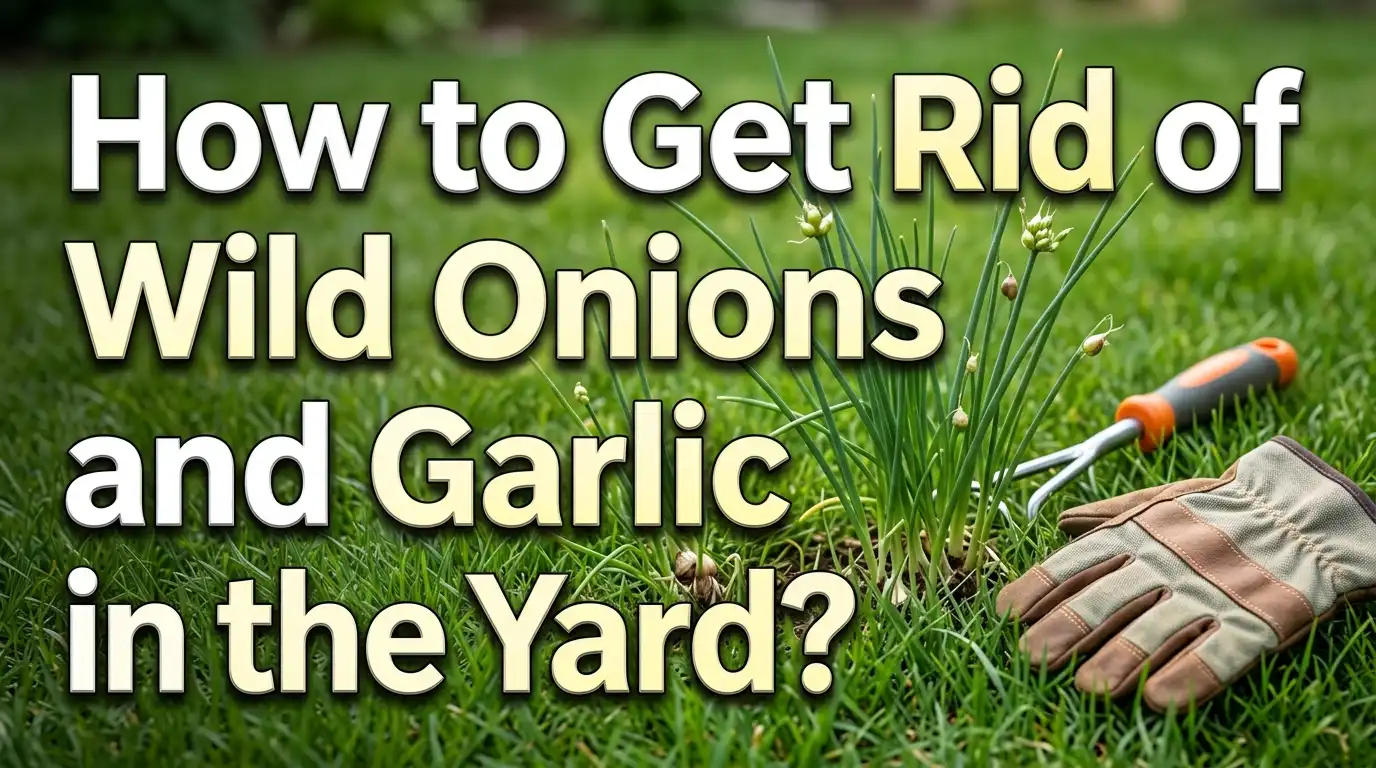
How to Get Rid of Wild Onions and Garlic in the Yard?
You step outside in early spring, and you notice something strange growing in your lawn. It looks like grass, but it smells unmistakably like onion or garlic. You are dealing with wild onions and wild garlic, two of the most stubborn and persistent weeds a homeowner can face.
These weeds spread from underground bulbs, regrow after mowing, and can survive in your soil for several years. Most people make the mistake of just pulling the tops off, which only makes the problem worse.
The good news is that with the right knowledge, the right tools, and a little patience, you can completely clear your yard of these smelly invaders.
This guide walks you through every step of the process, from identifying the weeds correctly to preventing them from coming back.
Key Takeaways
- Wild onions (Allium canadense) have flat, solid leaves, while wild garlic (Allium vineale) has round, hollow leaves. Both are identified by a strong onion or garlic smell when the leaves are crushed. Knowing which one you have helps you choose the most effective removal method.
- These weeds are cool-season perennials that emerge in late fall, grow through winter and spring, then go dormant in early summer. However, their underground bulbs stay alive in the soil for multiple years, which is why they keep coming back.
- Hand-digging is the most effective method for small infestations, but you must remove the entire bulb cluster, including all tiny bulblets. Leaving even one bulblet behind allows the weed to regrow fully.
- No pre-emergent herbicide will stop wild onions or garlic. You must use post-emergent herbicides, and the best results come from applying them in fall after shoots emerge, then again in early spring, for two or more consecutive seasons.
- Mowing alone will not kill these weeds, but consistent mowing before they form bulblets at their tips can weaken the plants over time and slow their spread across your lawn.
- The best long-term defense is a thick, healthy lawn. Dense turf leaves little room for weeds to establish themselves. Overseeding thin lawn areas and using proper fertilization practices are powerful prevention strategies.
Understanding Wild Onions and Wild Garlic: What Are They?
Before you can fix a problem, you need to understand exactly what you are dealing with. Wild onions (Allium canadense) and wild garlic (Allium vineale) are two closely related but distinct perennial weeds. They belong to the same plant family as the onions and garlic you grow in a vegetable garden, which explains why they look and smell so familiar.
Both plants are cool-season perennial weeds, which means they grow actively during fall, winter, and spring. They go dormant and seem to disappear in early summer, which can trick you into thinking your removal efforts worked. In reality, the underground bulbs are simply waiting for cooler weather to return.
Wild garlic is the more common of the two in most regions of the United States, particularly in the South. It produces three different types of underground structures: soft bulbs, hard bulbs, and aerial bulblets that form on the tips of the plant. Wild onion, on the other hand, tends to produce more straightforward bulb clusters underground without as many aerial bulblets.
Both plants grow from small underground bulbs that multiply over time. A single plant can generate an entire cluster of daughter bulbs within one season. This is why one or two plants you spot in early spring can become a large, patchy infestation by the following year if left untreated.
How to Tell the Difference Between Wild Onions and Wild Garlic
Telling these two weeds apart is simpler than most people think. The easiest and most reliable method is to look closely at the leaves. Wild garlic has round, hollow leaves that look similar to a green onion shoot. Wild onion, in contrast, has flat, solid leaves that look more like a blade of chive.
If you are not sure from appearance alone, simply crush a leaf between your fingers. Wild garlic will produce a strong garlic scent. Wild onion will produce a strong onion scent. This smell test is one of the most reliable identification methods available to homeowners.
Both plants can reach between 12 and 18 inches tall if left unmowed. They grow in clumps rather than spreading as individual plants throughout a lawn. The clumping habit makes hand removal more practical for small infestations, because you can target and remove entire clusters at one time.
Both species also produce an onion-family flower structure at the top if left to mature. Wild garlic produces a globe-like cluster of small flowers and aerial bulblets. Wild onion produces a looser cluster of pink or white flowers. Identifying and removing them before this stage is critical because aerial bulblets drop into the soil and start new plants in the fall.
Why Wild Onions and Garlic Are So Hard to Remove
The reason wild onions and garlic are so persistent comes down to their unique biology. Understanding this is key to choosing the right removal strategy rather than wasting time and effort on methods that will not work.
First, the underground bulb system is their greatest survival weapon. Each main bulb is surrounded by clusters of smaller bulblets. When you pull a plant out of the ground, these tiny bulblets easily detach and stay behind in the soil. Each one of those bulblets is capable of growing into a full new plant the following season.
Second, the waxy, thin cuticle on the outside of the leaves prevents most herbicides from sticking to and penetrating the plant tissue. This is why standard weed killers often seem ineffective against these plants. The chemicals simply slide off the slick leaf surface without absorbing into the plant.
Third, the underground bulbs can remain dormant in the soil for several years. Even if you successfully kill every visible shoot above ground, surviving bulbs in the soil will resprout when conditions become favorable again. This is why complete eradication often requires two to three seasons of consistent treatment, not just one application of herbicide or one round of digging.
Finally, these plants spread both by underground bulb multiplication and by aerial bulblets dropping to the ground in late spring. If you allow them to reach the aerial bulblet stage before mowing or removing them, you are essentially planting seeds for next year’s infestation.
The Best Time to Treat Wild Onions and Garlic
Timing your treatment correctly is one of the most important factors in successfully removing wild onions and garlic. Treating at the wrong time can waste effort, fail to control the weeds, or even damage your lawn grass.
The two best windows for treatment are fall and early spring. In the fall, new shoots emerge from the underground bulbs after temperatures cool. This is an ideal time to apply herbicides because the plants are actively growing and absorbing nutrients from their leaves down into the bulbs.
According to research from Clemson University’s Home and Garden Information Center, you should treat in the fall after new shoots have emerged, then treat again in early spring, specifically in February or early March, before the plants can produce the next generation of bulbs. This two-stage approach over consecutive seasons provides the most consistent results.
For warm-season grasses such as bermudagrass, St. Augustinegrass, and centipedegrass, fall application is especially important. These grasses are more susceptible to broadleaf herbicides during their spring green-up phase, so applying in fall avoids unintentional grass damage.
Avoid treating in late spring when warm-season turf is resuming growth after winter dormancy. This is the period when warm-season grasses are most vulnerable to herbicide injury. For cool-season grasses such as tall fescue or Kentucky bluegrass, herbicide applications are most effective immediately after the wild garlic or onion plants have been mowed.
How to Hand-Dig Wild Onions and Garlic
Hand-digging is the best approach for small infestations and garden beds where you want to avoid using any chemicals. It requires patience and the right technique, but done correctly it can completely remove entire clumps.
Start by waiting until the soil is moist, either after rain or after you have watered the lawn. Moist soil holds the bulb cluster together better and allows you to remove more bulblets in one dig.
Do not simply grab the green shoots and pull. This is the biggest mistake homeowners make with these weeds. Pulling from the top causes the small bulblets to detach from the main bulb and stay behind in the soil, where they will each grow into a new plant.
Instead, use a thin trowel, a narrow weeding tool, or even a sturdy screwdriver. Push the tool deep into the soil beside the clump, at least four to six inches deep. Loosen the soil around the entire root zone before lifting the clump out. Work your way around the clump from multiple angles, loosening as you go, then lift the whole cluster out as one unit.
Once you have removed the clump, place it directly into a plastic bag or bucket. Do not shake off the soil over your lawn. Bulblets trapped in the dirt around the roots will fall back into the lawn and re-establish. Do not add these plants to a compost pile either, as bulbs can survive the composting process and spread when you use the compost later.
Inspect the hole you have created and remove any remaining bulblets you can see in the soil. Refill the hole with soil and, if needed, overseed the area to help grass fill in quickly before new weeds can establish.
How to Use Herbicides Effectively on Wild Onions and Garlic
For larger infestations, chemical control is often the most practical path. However, as mentioned earlier, the waxy leaf surface makes these plants particularly resistant to herbicides, so using the right product at the right time with the right technique matters a great deal.
There are no pre-emergent herbicides that work on wild onions or wild garlic. Pre-emergent products work by preventing seeds from germinating, but these weeds grow from bulbs, not seeds. You must use post-emergent herbicides that are applied directly to actively growing plants.
One helpful technique is to mow the plants shortly before spraying. This is unusual advice, since most weeds should not be mowed before applying herbicide. However, the Clemson University Extension office specifically notes that mowing wild garlic or wild onion before applying herbicide can improve uptake by exposing fresh plant tissue that has not yet developed a full waxy coating. After application, do not mow for at least two weeks so the herbicide has time to travel from the leaves down into the bulbs.
Adding a non-ionic surfactant to your herbicide mixture is highly recommended. Surfactants reduce the surface tension of the spray, helping it adhere to the waxy leaf surface and penetrate more effectively. They are inexpensive and widely available at garden centers. However, note that they can cause temporary yellowing of your turf grass.
For most home lawns, three-way broadleaf herbicides containing 2,4-D, dicamba, and mecoprop (MCPP) provide solid control with repeated applications. These products are labeled for use on most common turfgrasses. Always check the product label to confirm it is safe for your specific grass type before applying.
Metsulfuron-based herbicides are another effective option, particularly for warm-season lawns. Imazaquin-based products labeled for nutsedge control also work on wild garlic and wild onion in bermudagrass, zoysiagrass, and centipedegrass lawns.
Herbicide Application Step-by-Step
Following the correct application procedure dramatically improves your chances of success. A careful, methodical approach protects your lawn while maximizing the kill rate of the weeds.
Step one is to read the entire product label before you do anything else. Confirm the product is safe for your grass type, note the recommended rate, and look for any restrictions on timing or temperature.
Step two is to choose the right day. Apply herbicide on a calm, dry day with temperatures between 60°F and 85°F. Avoid windy days that can carry the spray onto desirable plants. Do not apply if rain is expected within 24 to 48 hours, as rain will wash the herbicide off the plant before it has time to absorb.
Step three is to mix the herbicide with water at the label rate and add a non-ionic surfactant if the label permits. Apply the mixture as a fine spray that coats the leaves without causing heavy runoff.
Step four is to be patient. Unlike fast-acting contact herbicides that kill on contact, systemic herbicides need time to travel from the leaf tissue into the underground bulbs. You should see wilting and dieback within one to two weeks, but full results may take longer.
Step five is to plan a follow-up application. Most experts recommend treating in the fall and repeating in early spring. Then evaluate results the following fall and spring, and treat again if regrowth is visible. Expect to need treatment for two to three consecutive years to achieve full control.
Organic and Natural Methods for Removal
Not everyone wants to use chemical herbicides in their yard, especially in areas used by children or pets. Several organic and natural approaches can help reduce wild onion and garlic populations, though they generally require more effort and time than chemical treatments.
Hand-digging, as described earlier, is the most effective natural method. Consistent digging over two or three growing seasons can fully eliminate a wild onion or garlic problem without any chemicals at all. The key is to be thorough and to target the plants as soon as they emerge in fall while the soil is still workable.
A mixture of white vinegar and dish soap applied directly to the leaves acts as a contact killer for the above-ground foliage. This approach does not kill the underground bulbs, so you will need to repeat it frequently and combine it with digging for meaningful results. Apply the mixture on a sunny day so it dries on the leaves quickly for maximum effectiveness.
Solarization is another organic approach that works well for heavily infested areas you are willing to temporarily take out of use. Lay clear plastic sheeting over the infested area in the hottest part of summer and leave it in place for four to six weeks. The heat trapped under the plastic can reach temperatures that kill dormant bulbs in the soil. This method works best when daytime temperatures are consistently above 90°F.
Thick mulch layers of two to three inches in garden beds can also suppress sprouting of wild garlic and onion bulbs. While mulch alone will not eliminate an existing infestation, it significantly slows new growth and makes any plants that do emerge easier to spot and remove before they multiply.
Mowing Strategies That Weaken Wild Onions and Garlic
Mowing alone will not kill wild onions or garlic, but a smart mowing strategy can weaken these plants significantly over time and prevent them from spreading further. This makes mowing an important supporting tool in your overall removal plan.
The most important thing regular mowing does is prevent the plants from forming aerial bulblets at the tips of their shoots. These aerial bulblets are responsible for spreading the infestation to new areas of your lawn. Each bulblet that drops to the ground can establish a new plant the following fall. By mowing regularly before the plants reach the bulblet-forming stage in late spring, you break this reproductive cycle.
Consistent mowing also gradually weakens the underground bulbs by forcing the plants to use stored energy to produce new shoot growth repeatedly. Over multiple seasons, this repeated energy drain can reduce the vigor of the bulbs and slow new growth. It will not eliminate the weeds on its own, but it is a meaningful way to reduce the population over time.
Set your mower height appropriately for your grass type rather than cutting too short, which can stress your lawn and create bare spots where new weeds can move in. A healthy, dense lawn suppresses weed germination naturally.
One important exception to the usual herbicide advice: mow these weeds shortly before applying a post-emergent herbicide to improve the chemical’s effectiveness. The fresh cut ends allow better absorption of the herbicide into the plant tissue. Just make sure to wait at least two weeks after spraying before mowing again.
How to Prevent Wild Onions and Garlic From Coming Back
Removal is only half the battle. Prevention is what keeps your yard clean year after year. A multi-pronged prevention strategy is far more effective than relying on any single approach.
The single most powerful prevention strategy is maintaining a thick, healthy lawn. Dense turf growth physically blocks sunlight from reaching the soil surface and leaves no room for weeds to establish new plants. Thin, patchy lawns are an open invitation for wild onions, garlic, and dozens of other weed species.
Overseed your lawn in early fall or early spring to fill in thin areas. Choose a grass seed that matches your existing lawn type for the best results. After overseeding, keep the soil consistently moist until the new seedlings are established. Once your lawn is thick and lush, weeds struggle to find enough light and space to take hold.
Fertilize your lawn on a schedule appropriate for your grass type. Proper fertilization supports strong root systems and dense top growth, both of which make your lawn more competitive against weeds. Avoid over-fertilizing, however, as this can create other problems including excessive thatch and disease susceptibility.
In garden beds, a two to three inch layer of fresh mulch applied in fall suppresses bulb sprouting significantly. Refresh the mulch layer each season, as it breaks down over time and loses its effectiveness. Combine mulching with hand removal of any plants that do emerge to keep garden beds clean.
Finally, do not let existing wild onion or garlic plants reach the aerial bulblet stage. The moment you see the tip clusters forming in late spring, remove the plants before those bulblets drop to the ground. This single action, done consistently each year, can prevent the spread of an infestation even if you have not fully eliminated the underground bulbs yet.
Treating Wild Onions and Garlic in Flower Beds and Garden Areas
Wild onions and garlic in flower beds and vegetable gardens require a slightly different approach than lawn infestations because you cannot use the same herbicides without risking damage to your desirable plants.
Hand-digging is the safest and most effective option in planted garden areas. Use a narrow trowel or a soil knife and dig carefully around the base of each clump, making sure to extract the entire bulb cluster. Work slowly to avoid disturbing the roots of nearby plants. When the soil is moist, the bulbs come out more cleanly and with fewer bulblets left behind.
For areas where the wild onions or garlic are growing close to desired ornamental plants, a technique sometimes called the “glove method” can be helpful. Wear a rubber glove on one hand, then wear a fabric glove over it. Dip the fabric-gloved hand into a diluted glyphosate solution and use your fingers to wipe the solution directly onto the onion or garlic leaves. This allows precise, targeted application without risk of spray drift to nearby flowers or shrubs. Glyphosate is non-selective, meaning it will kill any plant it contacts, so this technique requires a steady hand.
In vegetable gardens, stick to physical removal methods entirely during the growing season. You can perform fall tillage of vegetable garden beds to disturb and expose underground bulbs, then remove them by hand before they re-establish.
In areas completely free of desirable plants, such as along fences or in uncultivated sections of the yard, glyphosate can be applied more broadly and will effectively kill both the shoots and the underground bulbs when used with proper timing and coverage.
Dealing With Large-Scale Infestations
If your lawn has a widespread, heavy infestation of wild onions or garlic, a more systematic and aggressive approach will be necessary. Large-scale control requires patience, consistency, and a clear plan that spans more than one season.
Start by mapping out the worst-affected areas in your lawn. Treat the heaviest infestations first using post-emergent herbicide with a surfactant added to the mix. Apply in fall when shoots are actively growing and again in early spring. Keep records of where you treated and when, so you can track progress accurately over time.
For extremely heavy infestations in areas of the lawn that have been largely taken over by these weeds, you may want to consider a full lawn renovation in the affected section. This involves killing the entire section of lawn with a non-selective herbicide, waiting the appropriate period, then regrading, reseeding, or laying new sod. While this is a significant undertaking, it can be a faster path to a clean lawn than years of repeated herbicide treatment.
As you bring an infestation under control, work on improving overall lawn health in those areas. Fill in bare spots with fresh seed, fertilize appropriately, and water properly. A recovering lawn that grows thick and dense will resist reinfestation far more effectively than one left thin and sparse. Expect a full two to three season timeline for complete eradication of a large infestation even with consistent treatment.
When to Call a Professional
Most wild onion and garlic infestations can be handled successfully by a determined homeowner. However, there are certain situations where calling a professional lawn care company is the smarter choice.
If your infestation covers a very large portion of your lawn and has persisted despite multiple seasons of treatment, a professional can assess the situation and apply commercial-grade herbicides at precise rates that are difficult to replicate with consumer products. Commercial applicators also have access to products not available to homeowners that may be more effective for stubborn infestations.
If you have a lawn type that is sensitive to many common herbicides, such as St. Augustinegrass or centipedegrass, getting professional advice before applying anything is worthwhile. Misapplied herbicides can damage or kill sensitive grass types, creating far more work than the original weed problem.
If you have tried multiple seasons of treatment without success and the problem continues to grow, a professional can evaluate whether your application technique, timing, or product selection needs to be adjusted. They may also identify other contributing factors, such as poor soil drainage or thin turf coverage, that are making your lawn more susceptible to these weeds.
A lawn care professional can also set you up with a long-term maintenance plan that combines proper fertilization, overseeding, and strategic herbicide applications to both eliminate current weeds and prevent future infestations more efficiently.
FAQs
Will pulling wild onions and garlic by hand really work?
Hand-pulling can work, but only if done correctly. Never pull the plants by their tops, as this leaves the tiny underground bulblets behind in the soil. You must use a trowel or weeding tool to loosen the entire bulb cluster first, then lift it out whole. This method works best on small infestations when the soil is moist. For large infestations, herbicide treatment is more practical.
How many years does it take to get rid of wild onions and garlic completely?
Most experts agree that complete eradication takes two to three seasons of consistent treatment. This is because underground bulbs can remain dormant in the soil for several years, and it takes multiple rounds of herbicide application or digging to reduce the bulb population to zero. Be patient and treat every fall and spring for the best results.
Can I use vinegar to kill wild garlic and wild onions?
Vinegar, especially horticultural vinegar with higher acidity, can burn and kill the above-ground foliage. However, it does not penetrate the soil to kill the underground bulbs. This means the plants will likely regrow from the surviving bulbs after a vinegar treatment. Vinegar is most useful as a supplemental organic tool when combined with consistent hand-digging over multiple seasons.
Is wild garlic or wild onion edible?
Yes, both plants are edible and belong to the same genus as cultivated garlic and onions. The leaves, bulbs, and flowers are all usable in cooking. However, before eating anything you forage from your yard, make sure you have a confident, accurate identification, and ensure no herbicides or pesticides have been applied to the plants or surrounding soil.
Why do my wild onions keep coming back every year despite treatment?
The most common reasons for continued regrowth are incomplete bulb removal during digging, herbicide treatments that kill the leaves but not the underground bulbs, or timing issues where herbicide is applied too late in the season. The waxy leaf surface also causes many herbicides to be less effective than expected. Adding a non-ionic surfactant to your herbicide, improving your timing, and treating over multiple consecutive seasons should produce noticeably better results.
Can wild onions and garlic spread from my neighbor’s yard?
Yes, they can spread from nearby properties through wind-carried aerial bulblets or through soil movement. If you have successfully cleared your lawn but keep seeing new plants, the source may be adjacent properties. The most effective defense in this case is maintaining a thick, healthy lawn through proper fertilization and overseeding, which prevents new plants from establishing in your turf even if bulblets do land in your yard.
Does mowing spread wild garlic and wild onions?
Mowing can spread them if the plants have already formed aerial bulblets at their tips. The mower can chop and scatter these bulblets across your lawn, planting them in new locations. This is why it is important to mow regularly throughout the season before the plants reach the bulblet-forming stage in late spring. If you do mow plants that have already formed bulblets, bag your clippings rather than leaving them on the lawn.

Hi, I’m Jane! As a passionate gardener and product enthusiast, I spend my days testing garden tools, comparing products, and writing honest reviews so you don’t have to learn the hard way. Got a question? Feel free to reach out — I’d love to hear from you!