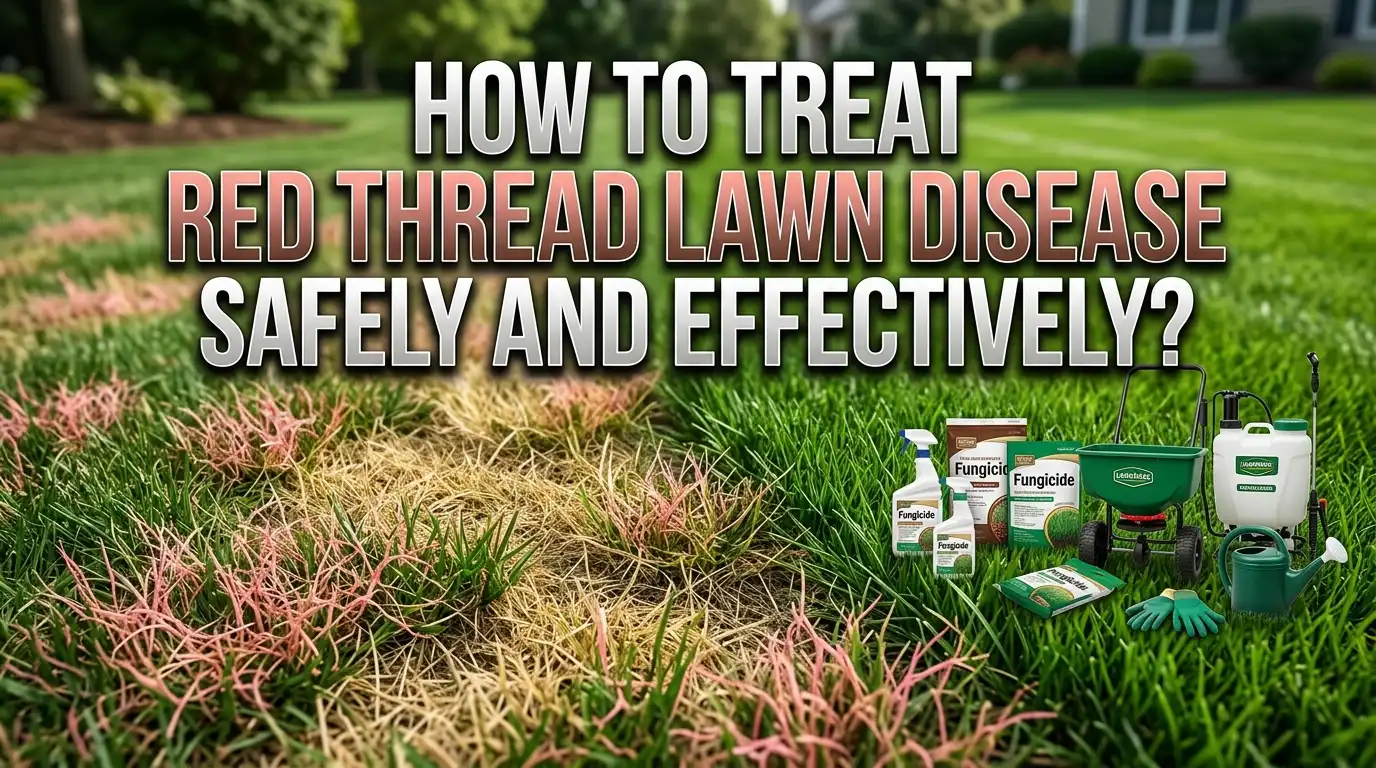
How to Treat Red Thread Lawn Disease Safely and Effectively?
Have you ever walked outside and noticed strange reddish-pink patches spreading across your lawn? Your grass looks bleached, the color is off, and something just does not look right. You are likely dealing with red thread lawn disease, one of the most common fungal problems homeowners face every spring and fall.
The good news is that red thread is not a death sentence for your lawn. With the right steps, you can treat it safely, stop it from spreading, and prevent it from coming back.
This guide breaks everything down in a simple, actionable way so you can get your lawn looking lush and green again as fast as possible.
In a Nutshell
- Red thread lawn disease is caused by the fungus Laetisaria fuciformis and thrives in cool, wet, and humid conditions, most often in spring and early fall.
- The primary fix is nitrogen fertilization. Lawns low in nitrogen are the most vulnerable, and feeding your lawn correctly stops the disease from spreading fast.
- Cultural controls like proper mowing, watering schedules, and aeration go a long way in treating and preventing the disease without relying on chemicals.
- Fungicides are available for severe cases, but they are usually not necessary for most home lawns. Propiconazole and azoxystrobin are two effective active ingredients to look for if you do need one.
- The disease rarely kills grass permanently. Even untreated lawns tend to recover on their own, though proper treatment speeds up recovery and prevents recurring outbreaks.
- Grass type matters. Perennial ryegrass and fine fescues are the most susceptible. Choosing disease-resistant grass varieties during overseeding significantly reduces future risk.
What Is Red Thread Lawn Disease?
Red thread lawn disease is a fungal infection that attacks the leaves and stems of grass. It is caused by the fungus Laetisaria fuciformis, a pathogen that lives in cool and humid environments. The fungus does not typically kill grass roots, but it damages the visible parts of the plant badly enough to create large, dead-looking patches.
The disease gets its name from the thin, bright red or pink thread-like strands of fungal growth that appear on the tips of infected grass blades. These strands, called stromata, are distinctive and easy to spot once you know what you are looking for. They can survive in leaf blades, thatch, and soil for months or even years, making the disease one that can return season after season if you do not address the underlying causes.
Red thread is one of the most widespread lawn diseases in North America and the United Kingdom, affecting home lawns, parks, athletic fields, and golf course roughs. It spreads through contaminated mowing equipment, water runoff, foot traffic, and wind. Understanding what you are dealing with is the first step toward treating it effectively.
The fungus tends to be most active when air temperatures sit between 65°F and 75°F, especially during periods of extended rainfall or high humidity. It overwinters as dormant mycelium on dead plant material and resumes growth when spring conditions return. This is why many homeowners see it flare up every year around the same time.
How to Identify Red Thread Disease on Your Lawn
Knowing what red thread looks like is critical before you start any treatment. Misidentifying the problem means applying the wrong solution, which wastes time and money.
The most obvious sign is reddish-pink discoloration on your lawn that appears in irregular patches or circles, typically ranging from a few inches to several feet in diameter. From a distance, the affected areas can look tan, straw-colored, or bleached. Up close, you will notice the telltale red or pink thread-like strands extending from the tips of grass blades. These strands are usually between 1/16 and 1/4 inch long.
A quick field test: Walk across the lawn and check the soles of your shoes, your mower deck, and any lawn tools. If you see reddish-pink staining on your equipment and shoes, red thread is almost certainly present.
Other signs to watch for include grass that looks water-stressed even when moisture is adequate, leaves that wither from the tip downward, and patches that seem to grow larger after rainy spells. Red thread often appears alongside another disease called pink patch, which has nearly identical symptoms and responds to the same treatments.
It is worth noting that red thread does not kill grass roots in most cases. The disease stays in the upper part of the plant, the leaves, leaf sheaths, and stems. This is encouraging because it means your lawn can recover fully if you act promptly.
What Causes Red Thread to Appear?
Red thread does not appear at random. It shows up because specific conditions in your lawn make it easy for Laetisaria fuciformis to grow and spread. Understanding these causes helps you fix not just the current outbreak but also the root problems that allowed it to develop.
Nitrogen deficiency is the single biggest cause. Grass that lacks adequate nitrogen grows slowly and weakly. Slow-growing grass cannot outpace the fungus fast enough to recover on its own. Most red thread outbreaks happen in lawns that are underfertilized or have not received a nitrogen application in several months.
Other major contributing factors include cool and wet weather conditions, prolonged periods of overcast skies, excessive thatch buildup, compacted soil, poor drainage, and high humidity. Grass left wet for extended periods, especially overnight, creates the perfect environment for fungal spores to germinate and spread.
Shade is another significant factor. Lawns that do not receive direct sunlight for most of the day stay wet longer and have weaker grass plants overall. Poor air circulation compounds this problem by keeping moisture trapped near the soil surface. If you have large trees or structures casting shade over your lawn, you will see red thread return more frequently in those areas.
Grass variety also plays a role. Perennial ryegrass, creeping red fescue, fine fescue, and Kentucky bluegrass are particularly vulnerable. Hard fescues tend to show stronger resistance. Knowing your grass type helps you understand why certain areas of your lawn are more prone than others.
Step One: Apply Nitrogen Fertilizer Right Away
When you confirm red thread is present, the first action you should take is to feed your lawn with a nitrogen-rich fertilizer. This is the most effective single treatment for red thread disease, and it works by strengthening the grass plant so it grows faster and pushes the infected tissue upward and out.
How much nitrogen to apply: According to Purdue Extension research, applying approximately 0.2 pounds of nitrogen per 1,000 square feet in mid to late spring significantly reduces red thread severity. This is a light supplemental feeding, not a heavy full-season application.
Use a granular slow-release nitrogen fertilizer for the best results. Liquid fertilizers can introduce extra moisture to leaf surfaces and potentially worsen fungal conditions, so granular forms are the safer choice. Spread the fertilizer evenly across the affected areas and water it lightly into the soil.
Do not overapply nitrogen in your effort to solve the problem quickly. Too much nitrogen later in the season opens the door to other fungal diseases like brown patch and Pythium blight, which are far more destructive. Follow product label instructions precisely and resist the urge to double the dose.
After fertilizing, you should see visible improvement within two to four weeks as new healthy grass growth pushes through the infected areas. The red threads will dry out and become less visible as the grass recovers.
Step Two: Adjust Your Watering Habits
Improper watering is one of the most common reasons red thread keeps coming back. Many homeowners water their lawns in the evening or water too frequently, and both habits create the moist conditions that fungal diseases love.
Switch all watering to early morning. When you water in the morning, the sun and wind dry the grass blades throughout the day. This keeps moisture levels low for most of the day and night, cutting off the humid environment that the fungus needs to spread.
Never water your lawn at night. Evening watering leaves grass wet for eight to twelve hours overnight, which is more than enough time for red thread spores to germinate and infect new plants. This single habit change can make a dramatic difference in how often the disease appears.
Water deeply and infrequently rather than lightly and often. Aim to water deeply every two to three days rather than a little every day. Deep watering encourages grass roots to grow deeper into the soil, which makes individual plants stronger and more disease-resistant. Shallow, frequent watering creates shallow roots and weak plants that cannot fight off infection.
Target approximately 1 to 1.5 inches of water per week, including natural rainfall. Use a rain gauge to track how much your lawn is receiving. If heavy rain has fallen in the past 48 hours, skip the irrigation entirely to avoid creating excess moisture.
Step Three: Mow Correctly and Keep Blades Sharp
Your mowing habits directly affect how red thread spreads and how quickly your lawn recovers. Many homeowners do not realize that a dull mower blade can actively make the disease worse.
Dull blades tear grass rather than cutting it cleanly. This creates wider, jagged wounds at the top of each grass blade, giving the fungus a larger entry point to infect the plant. Sharp mower blades make clean cuts that heal quickly and reduce infection risk significantly. Sharpen your mower blades at least once per season, or more frequently if you mow regularly.
Mow at the correct height for your grass type. Most cool-season grasses should be kept between 3 and 4 inches tall. Cutting grass too short weakens the plant and makes it more susceptible to stress and disease. Letting grass grow too tall, on the other hand, traps moisture and encourages fungal growth near the soil surface.
During an active red thread outbreak, bag your clippings rather than mulching them back into the lawn. Infected clippings contain live fungal spores that will reinfect the grass if left on the surface. Dispose of clippings away from the lawn, and do not compost them, as this can spread spores to other areas.
After each mowing session during an outbreak, rinse your mower deck, blades, and any other tools with water. This prevents cross-contamination between different areas of the lawn or neighboring properties.
Step Four: Aerate Compacted Soil
Compacted soil is a common underlying cause of red thread outbreaks. Soil that is packed too tightly restricts air movement, water drainage, and nutrient flow to the grass roots. This creates the stagnant, damp environment that Laetisaria fuciformis thrives in.
Core aeration is the most effective solution. This process removes small plugs of soil from your lawn, opening channels for air, water, and fertilizer to reach the root zone. Aerating in the fall is ideal, as it combines well with overseeding and fertilization programs. However, if red thread is active now, aerating in spring or early summer is still highly beneficial.
After aerating, the improvement in soil drainage and air circulation directly reduces the moisture levels that fuel fungal growth. Combined with fertilization and correct watering, aeration creates conditions where grass grows strong and the fungus struggles to establish itself.
If your lawn has a thick thatch layer, consider dethatching before or alongside aeration. Thatch is the layer of dead plant material between the soil surface and the living grass. A thatch layer thicker than half an inch traps moisture and harbors fungal spores. Remove excess thatch to improve overall lawn health and reduce disease pressure significantly.
Top-dressing with compost after aerating introduces beneficial microbial life to your soil. These naturally occurring microbes compete with and suppress harmful fungi like Laetisaria fuciformis, adding a biological layer of defense to your lawn.
Step Five: Improve Air Circulation and Reduce Shade
Shade and poor air circulation are two factors that keep your lawn damp and disease-prone. Addressing these issues may require some one-time effort, but the long-term benefit is a healthier and more resilient lawn.
Trim overhanging tree branches and shrubs that cast heavy shade over affected lawn areas. Even reducing shade by 20 to 30 percent can make a noticeable difference in how quickly grass dries after rain or irrigation. More sunlight also means stronger grass plants with better overall immunity to disease.
If certain areas of your lawn are surrounded by fences, hedges, or structures that block airflow, consider trimming or thinning them to allow more air to move through. Good airflow dries grass surfaces faster and disrupts the humid microclimate that fungal pathogens depend on.
For areas that receive very little light and have poor airflow, you may want to reconsider which grass varieties grow there. Shade-tolerant grass species or varieties with stronger disease resistance are better suited to those conditions. Planting the wrong grass type in a naturally shady and damp area sets you up for recurring fungal problems no matter how well you fertilize or water.
In extreme cases, ground covers or mulched garden beds may be a more practical solution for deeply shaded areas where grass struggles to grow healthy and disease-free.
Step Six: Use Fungicides for Severe Outbreaks
For most home lawns, cultural controls like fertilization, watering adjustments, aeration, and mowing are enough to manage red thread effectively. However, if the disease is severe, spreading rapidly, or affecting a high-value turf area like a sports field or a lawn planted heavily with susceptible grass varieties, fungicide treatment may be the right choice.
Fungicides work best as a preventive or early-intervention tool. Once red thread is fully established across a large area, fungicides slow the spread but do not undo existing damage. Apply them at the first signs of infection for the best results.
Active ingredients to look for include:
- Propiconazole (a DMI fungicide) is widely used and effective against red thread. Apply it according to label directions, typically twice per season.
- Azoxystrobin (a QoI fungicide) is another effective option and can be rotated with propiconazole to reduce the risk of fungicide resistance.
- Chlorothalonil is a contact fungicide that provides good control and is often used in combination products.
- Thiophanate-methyl is another penetrant fungicide labeled for red thread control.
When using fungicides, always rotate between different fungicide classes with each application. Overusing a single active ingredient can lead to resistance, where the fungus evolves to tolerate that specific chemical and becomes much harder to control.
Follow all label instructions precisely, including application rates, timing, and safety precautions. Wear protective clothing and keep children and pets off treated areas until dry.
Natural and Organic Treatment Options
If you prefer to treat red thread without synthetic chemicals, several natural methods can help manage the disease effectively, especially when used together as part of a broader care routine.
Compost tea is one of the most highly recommended organic approaches. Applying a compost tea made from high-quality finished compost introduces billions of beneficial microorganisms into your soil and onto your grass surfaces. These beneficial microbes compete with and crowd out the red thread fungus naturally, restoring biological balance to your lawn ecosystem.
Neem oil has antifungal properties and can be applied as a foliar spray to affected areas. It disrupts the life cycle of the fungus and creates a protective coating on grass blades. Apply neem oil in the morning so it has time to dry before temperatures rise.
Baking soda solutions (one tablespoon per gallon of water) raise the pH on leaf surfaces temporarily, creating a less hospitable environment for fungal growth. This is a short-term measure and works best as a supplement to other treatments rather than a standalone fix.
Regular top-dressing with compost, as mentioned earlier, is arguably the most powerful natural long-term solution. Compost adds organic matter to the soil, improves drainage, and builds a diverse microbial community that keeps harmful fungi in check. Applying a thin layer of finished compost after aerating in fall builds soil health over time and reduces the frequency and severity of red thread outbreaks year after year.
Overseeding with Disease-Resistant Grass Varieties
If your lawn experiences red thread repeatedly despite proper care, the issue may partly be your grass variety. Some grass types are simply more prone to this disease than others, and overseeding with resistant varieties is a smart long-term strategy.
Most susceptible grass types include:
- Perennial ryegrass (especially older or common varieties)
- Creeping red fescue
- Fine-leaf fescues like Chewings fescue
- Kentucky bluegrass
- Bentgrass
More resistant options include hard fescue varieties, which Washington State University Extension lists as significantly more resistant to red thread. Selecting certified improved cultivars of any grass species also helps, as modern breeding programs have produced perennial ryegrass and bluegrass varieties with much better disease resistance than older standard types.
Overseed in early fall for the best establishment results. Prepare the area by mowing short, aerating, and raking to create good seed-to-soil contact. Apply the seed at the recommended rate and keep the soil moist until germination occurs. Mixing in disease-resistant varieties gradually shifts the composition of your lawn toward a more resilient population of grass plants that can better withstand red thread and other fungal diseases.
Long-Term Prevention of Red Thread Disease
Treating an active outbreak is important, but preventing future ones is even better. A consistent preventive approach keeps red thread from gaining a foothold in your lawn in the first place.
Maintain a regular fertilization schedule. Apply nitrogen according to your grass type’s seasonal needs, typically in spring and fall for cool-season grasses. Do not wait until the lawn looks visibly deficient to fertilize. A well-fed lawn is the single most effective defense against red thread.
Test your soil every two to three years to check pH and nutrient levels. Most grasses prefer a soil pH between 6.0 and 7.0. Soil that is too acidic or too alkaline reduces nutrient availability, which weakens grass plants and increases disease susceptibility. Apply lime to raise pH if needed.
Reduce thatch buildup annually through dethatching or core aeration. Maintain sharp mower blades, water in the morning only, and bag clippings during and after disease outbreaks. These simple, consistent habits create conditions that are much less favorable for red thread to develop.
Avoid foot traffic on wet, affected areas during active outbreaks. Walking on infected grass breaks up fungal strands and spreads spores to new areas via shoes and equipment. Keep foot traffic to a minimum until the lawn has recovered and conditions have dried.
When to Call a Lawn Care Professional
Most red thread cases can be resolved with the DIY methods described above. However, there are situations where calling a professional lawn care service is the smarter choice.
If red thread keeps returning every season despite consistent proper care, a professional can assess your soil, grass variety, drainage patterns, and microclimate to identify underlying issues that may not be obvious. They can also apply professional-grade fungicide formulations that are not available to homeowners, which may be more effective for severe or recurring infestations.
Professional lawn care is also worth considering for large properties, where DIY treatment becomes time-consuming and covering all affected areas with the right products becomes logistically difficult. Professionals have the equipment and expertise to treat large turf areas quickly and consistently.
If you suspect the disease affecting your lawn is not red thread but something more destructive like brown patch, dollar spot, or Pythium blight, getting a professional diagnosis is important. These diseases require different treatments, and applying the wrong product wastes money and delays recovery.
A lawn care professional can also develop a customized annual maintenance plan that keeps your soil healthy, your grass well-nourished, and disease pressure low across all seasons.
FAQs
What does red thread lawn disease look like?
Red thread appears as circular or irregular patches of discolored grass, typically tan, pinkish, or bleached in color. Up close, you will see thin red or pink thread-like strands extending from the tips of grass blades. These strands are the fungal mycelium of Laetisaria fuciformis. You may also notice reddish-pink staining on your shoes or mower after walking across the lawn.
Does red thread lawn disease kill grass permanently?
No, red thread does not typically kill grass permanently. The fungus attacks the leaves and stems but rarely damages the roots. Grass plants almost always recover with proper fertilization, adjusted watering, and general lawn care improvements. However, severe and repeated outbreaks in heavily susceptible grass varieties can cause significant thinning that may require overseeding to restore density.
How long does it take to get rid of red thread?
With proper nitrogen fertilization and cultural adjustments, most lawns show visible improvement within two to four weeks. The red threads dry out and become less visible as new healthy grass growth pushes through. Full recovery can take four to eight weeks depending on the severity of the outbreak, the weather conditions, and how consistently you apply the recommended treatments.
Can I mow my lawn when it has red thread?
Yes, you can mow during a red thread outbreak, but take precautions. Keep your mower blades sharp to make clean cuts, mow at the correct height for your grass type, and bag your clippings rather than mulching them. After mowing, rinse your mower deck and blades to remove fungal spores and prevent spreading the disease to other areas of the lawn.
Is red thread lawn disease dangerous to people or pets?
No, red thread is not harmful to people, pets, or other plants. It is a pathogen that specifically targets turfgrass and does not pose any health risk to humans or animals. You and your pets can continue using the lawn during treatment, though minimizing foot traffic in actively infected areas helps prevent spreading the disease further.
Why does red thread keep coming back every year?
Recurring red thread is usually a sign of an ongoing nitrogen deficiency, compacted soil, poor drainage, excessive shade, or susceptible grass varieties. The fungal spores survive in thatch, soil, and dead plant material from season to season. Addressing the underlying conditions through a consistent fertilization schedule, annual aeration, proper watering habits, and possibly overseeding with resistant varieties is the key to breaking the cycle.
Do I need a fungicide to treat red thread on my home lawn?
In most cases, no. The vast majority of home lawn red thread cases respond well to cultural controls alone, particularly nitrogen fertilization and adjusted watering. Fungicides are most useful for severe cases, high-value turf areas, or lawns planted with highly susceptible grass varieties that are experiencing rapid disease spread. If cultural measures do not bring improvement within four to six weeks, consider adding a fungicide treatment.

Hi, I’m Jane! As a passionate gardener and product enthusiast, I spend my days testing garden tools, comparing products, and writing honest reviews so you don’t have to learn the hard way. Got a question? Feel free to reach out — I’d love to hear from you!