How to Protect Your Lawn From Wild Pigs and Feral Hogs?
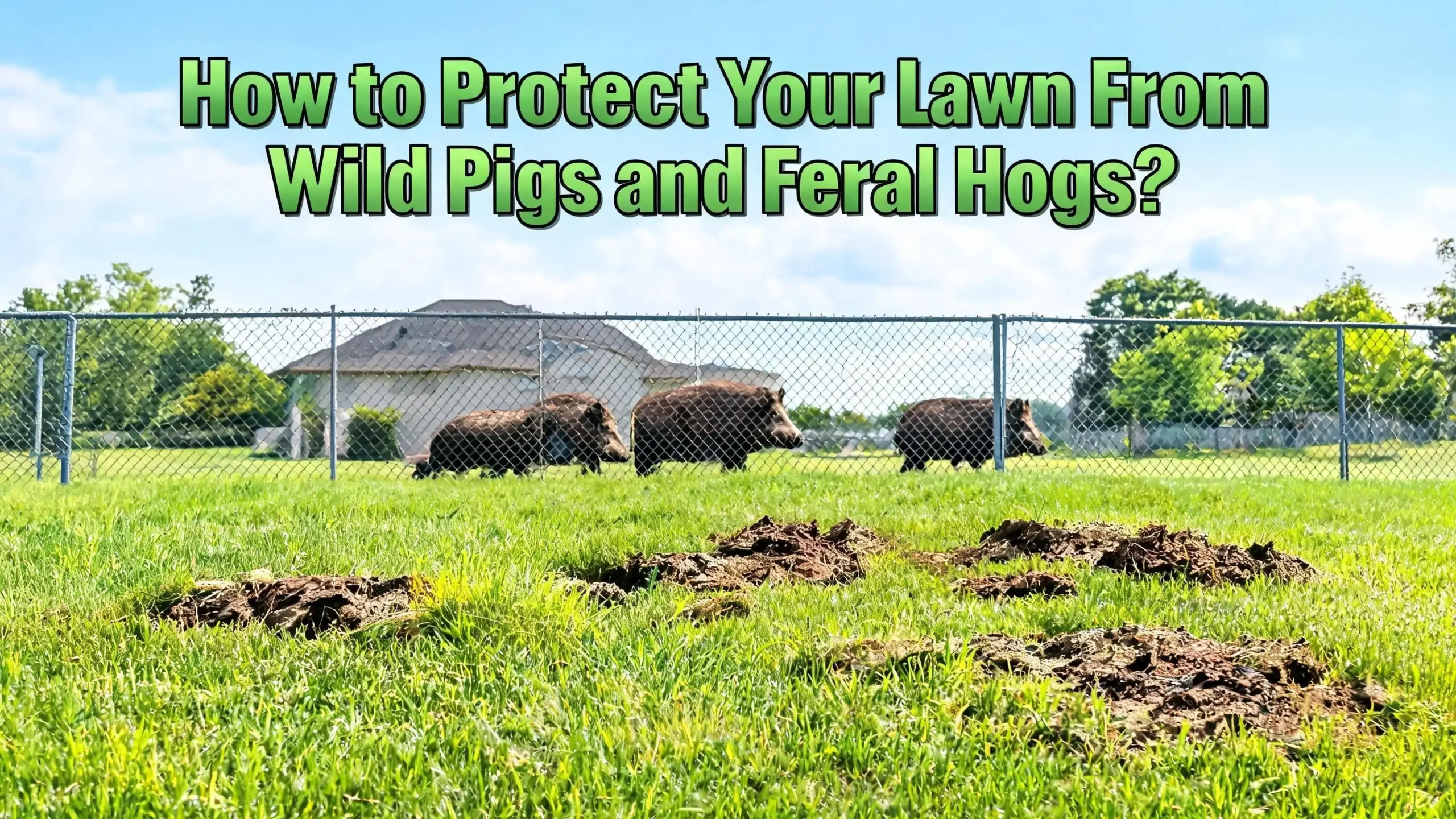
Imagine walking outside one morning to find your beautiful lawn ripped apart overnight. The turf is flipped in chunks, the soil is scattered, and deep grooves run across your yard like a small plow ran through it. This is the reality for millions of homeowners across the United States.
Feral hogs and wild pigs cause over $2.5 billion in damage annually, and residential lawns are one of their favorite targets. With an estimated population of over 6 million spread across at least 35 states, these invasive animals are a growing problem that shows no signs of slowing down.
Wild pigs root through lawns searching for grubs, worms, acorns and insect larvae buried just a few inches underground. A single group of hogs can destroy an entire yard in one night. They travel in family groups called sounders, often numbering 10 to 30 animals, and they return to the same spots once they find a reliable food source.
The good news? You can fight back. This guide gives you clear, practical solutions to protect your lawn and reclaim your property from these destructive invaders.
Key Takeaways
- Feral hogs root through lawns to find food such as grubs, earthworms, acorns and insect larvae. Removing these food sources through lawn treatment is one of the most effective first steps you can take to reduce hog visits.
- Strong physical fencing remains the best long term barrier against wild pigs. A 6 foot net wire fence with the bottom flush to the ground or buried several inches will stop most hogs from entering your property.
- Motion activated lights, sprinklers and sound devices can startle hogs and discourage them from visiting your lawn at night, since they are most active between dusk and dawn.
- Eliminating standing water and adjusting your irrigation schedule makes your property less attractive to wild pigs, who seek moist soil for easier rooting and wallowing.
- Trapping and professional wildlife removal are the most effective methods for permanently solving a feral hog problem. Contact your local USDA Wildlife Services or state wildlife agency for assistance.
- Lawn repair should begin quickly after hog damage occurs. Rake the displaced sod back into place, level the ground and reseed or fertilize promptly to speed recovery.
Why Wild Pigs and Feral Hogs Target Your Lawn
Feral hogs are not tearing up your lawn for fun. They are driven by hunger. Wild pigs are omnivores with an incredibly strong sense of smell. They can detect grubs, earthworms and insect larvae buried several inches below the surface of your turf.
The behavior you see is called rooting. Hogs use their powerful snouts like shovels to flip over soil and grass in search of protein rich food. A well maintained, regularly watered lawn is actually more attractive to hogs because moist soil holds more insects and is easier to dig through.
Your lawn may also attract hogs if you have oak trees dropping acorns, fruit trees with fallen fruit, or pet food left outside overnight. Bird feeders, compost piles and unsecured garbage cans also draw them in. Once hogs discover a food source, they remember the location and return again and again.
Understanding Feral Hog Behavior and Habits
Knowing how feral hogs behave gives you a major advantage in protecting your lawn. Wild pigs are mostly active at night. They prefer to forage between dusk and dawn because darkness provides cover from humans and predators.
Feral hogs are social animals. They travel in family groups called sounders, which usually include several adult females and their young. A sounder can include 10 to 30 animals. Adult males tend to be solitary and join groups only during mating season. This means that when hogs hit your lawn, they often arrive in large numbers and cause widespread damage in a single visit.
Hogs also have a home range that varies from 2 to 15 square miles depending on food availability. If food is easy to find on your property, their home range shrinks and your lawn becomes a regular stop on their nightly route. They also seek areas with water for wallowing, since hogs cannot sweat and rely on mud and moisture to cool their bodies.
Remove the Food Sources That Attract Wild Pigs
The most effective way to keep feral hogs off your lawn is to eliminate the food they are searching for. Since most hogs root through turf to eat grubs and insect larvae, treating your lawn for these pests removes the primary attraction.
Apply beneficial nematodes or a grub control product to your lawn according to the manufacturer’s instructions. These treatments kill grubs and larvae in the soil, making your yard far less interesting to hungry hogs. A professional lawn care company can also fumigate your yard to reduce insect populations.
Pick up fallen fruit from beneath fruit trees daily. Rake and remove acorns from under oak trees during autumn. Store pet food indoors and secure garbage cans with tight fitting lids. Remove bird feeders or switch to designs that minimize seed spillage on the ground.
Gallegos, a landscape professional from Texas, recommends fumigating lawns up to three times per year to keep insect levels low enough to discourage hog visits. This one step alone can dramatically reduce rooting damage.
Install Strong Physical Fencing Around Your Property
A sturdy fence is the single most reliable barrier you can place between feral hogs and your lawn. According to Texas A&M AgriLife Extension, a strong 6 foot net wire perimeter fence will stop most feral hogs from entering a property.
The bottom of the fence must touch the ground at every point. Wild pigs are strong and will squeeze under any gap they can find. For extra protection, bury the bottom of the fence 6 to 12 inches underground to prevent hogs from digging beneath it. This buried wire curtain also stops other digging animals from accessing your yard.
High tensile, woven wire steel mesh with a fixed knot design is the preferred material for hog barriers. It is stronger and more durable than standard barbed wire. Make sure all gates close securely and stay shut at night. Hogs are smart enough to push through a loose gate. If your homeowners association restricts fence types, check local regulations to explore approved options that still provide protection.
Use Electric Fencing as a Powerful Deterrent
Electric fencing is an excellent option for homeowners who want a strong deterrent without building a full perimeter fence. Even two strands of electrified wire placed close to the ground can stop wild pigs from crossing into your yard.
The lower strand should sit about 8 inches off the ground and the second strand at about 18 inches. This height ensures that both juvenile and adult hogs contact the wire with their sensitive noses. The charge must be strong enough to deliver an uncomfortable shock that teaches the hogs to avoid the area.
Keep all vegetation cleared away from the fence line. Grass, weeds and branches touching the wire can ground out the charge and make it ineffective. Electric fencing works best as an immediate solution while you plan a more permanent barrier. However, be aware that hogs may become desensitized to electric fencing over time, especially if food is scarce and they are desperate enough to push through the discomfort.
Set Up Motion Activated Deterrents
Motion activated devices take advantage of feral hogs’ preference for quiet, undisturbed environments. Bright lights, sudden bursts of water and loud noises can all startle hogs and send them running.
Motion activated sprinklers blast water when they detect movement. Place them along the perimeter of your yard and near areas where you have noticed rooting damage. Motion activated lights are another affordable option. Since hogs prefer darkness, a sudden flood of bright light can discourage them from staying on your property.
Sound devices that emit high frequency tones or loud alarms also work well as short term deterrents. The key word here is short term. Feral hogs are intelligent animals. They can eventually learn that lights, sounds and water are not actual threats. Rotate your deterrents regularly and combine multiple types for the best results. A sprinkler on one side of the yard, a light on the other and an alarm near the garden creates an unpredictable defense system.
Apply Natural and Commercial Repellents
Repellents offer another layer of defense against wild pigs. Several natural and commercial options can make your lawn less appealing to hogs.
Predator urine is one of the most common repellents used by homeowners. Coyote urine applied around the perimeter of your yard creates the impression that a natural predator is nearby. Hogs are cautious animals and often avoid areas where they sense danger.
Homemade sprays can also help. A strong mixture of cayenne pepper and water sprayed around the yard can irritate the sensitive noses of rooting hogs. Garlic sprays and crushed mothballs scattered near problem areas have also shown some success. Commercial granular repellents made from natural ingredients like fish oil and peanut shells can be spread across your lawn.
The limitation of repellents is that they need frequent reapplication, especially after rain. They also work best as a supplement to other methods rather than as a standalone solution. Combine repellents with fencing, motion activated devices and food source removal for the strongest possible defense.
Eliminate Standing Water and Adjust Your Irrigation
Wild pigs are drawn to water and moist soil. They need water for drinking and for wallowing, which is how they cool their bodies. Standing water on your property is an open invitation for hogs to move in and stay.
Walk your property and identify any areas where water pools after rain. Fill low spots, improve drainage and fix leaking irrigation lines. If you have a pond or water feature, consider fencing it off to block hog access.
Your watering schedule also matters. Landscape professionals in Texas recommend shifting your irrigation to after 8 a.m., especially during fall and winter when hog activity increases. Watering your lawn in the evening or overnight creates damp, soft soil during the exact hours when hogs are most active. Morning watering gives the soil time to firm up before nightfall, making rooting more difficult and your lawn less attractive to hungry hogs.
Use Trapping for Effective Hog Removal
If wild pigs have already established a pattern of visiting your property, deterrents alone may not solve the problem. Trapping is the most effective method for removing feral hogs from an area.
Large drop traps or corral style traps are the most successful designs. These traps can capture an entire sounder at once, which is critical because leaving even a few hogs behind allows the group to recover quickly. Research from Texas A&M University shows that large traps catch far more hogs than small box traps. Small traps also teach surviving hogs to avoid traps in the future.
The best bait for hog traps includes shelled corn, sometimes mixed with flavored drink powder to increase scent appeal. Set up trail cameras to monitor hog activity and confirm the entire group is visiting the trap site before triggering it.
Trapping on residential property may require permits depending on your state. Contact your local USDA Wildlife Services office or state wildlife agency before setting traps. Many agencies offer free assistance and will trap hogs on your property at no cost.
Contact Professional Wildlife Removal Services
Sometimes the hog problem is too large or too persistent for a homeowner to handle alone. Professional wildlife removal services have the experience, equipment and legal authority to deal with feral hogs effectively.
Your first call should be to your state wildlife agency or the USDA APHIS Wildlife Services program. This federal agency specifically manages feral swine populations and provides assistance to private landowners, often at no charge. In states like Texas, Missouri and Florida, organized elimination partnerships bring together multiple agencies to address hog populations at a regional level.
Private wildlife control companies also offer hog removal services. They can set professional grade traps, conduct nighttime removal operations and implement long term management plans for your property. If you live in a neighborhood where multiple homes are affected, coordinate with your neighbors to hire a service together. Hogs that are driven off one property simply move to the next unless the entire area is addressed.
Repair Your Lawn After Feral Hog Damage
Once you have addressed the hog problem, it is time to fix your lawn. Speed matters when repairing hog damage. The sooner you restore the turf, the better your chances of a full recovery.
Start by raking displaced sod and soil back into place. If the turf chunks are still attached and relatively fresh, flip them right side up and press them firmly into the ground. Water these sections thoroughly to help the roots reestablish contact with the soil.
For areas where the grass is destroyed beyond recovery, level the ground with a garden rake, fill holes with quality topsoil and reseed or lay new sod. Apply a starter fertilizer to encourage rapid growth. Some homeowners prefer to aerate the compacted soil first, which helps new roots penetrate the ground more easily.
Landscape professionals note that repair costs can run into the thousands of dollars for severe damage. Acting quickly keeps costs lower because existing turf can often be saved rather than replaced entirely.
Know the Laws in Your State
Feral hog management is regulated differently in every state. Before you take any action beyond passive deterrents, make sure you understand the rules that apply to your area.
In many states, feral hogs can be shot on private property at any time without a special permit. Other states require a hunting license or a specific depredation permit. In Missouri, for example, feral hogs may be taken on private property year round in any number, but public land hunting for hogs is restricted to deer and turkey seasons.
Trapping regulations also vary. Some states require you to report captured hogs or have them removed by a licensed operator. Releasing captured hogs is illegal in most states because it contributes to the spread of this invasive species.
Contact your state wildlife agency or local extension office to learn the specific regulations in your area. Knowing the law protects you from fines and ensures your efforts contribute to the broader goal of controlling this destructive invasive species.
Create a Long Term Hog Prevention Plan
Protecting your lawn from feral hogs is not a one time fix. A long term prevention plan combines multiple strategies and adapts as conditions change.
Start with the basics: reduce food sources, eliminate standing water and install physical barriers. Add motion activated deterrents and repellents as secondary layers of defense. Monitor your property regularly for signs of hog activity, including fresh rooting, tracks and wallows.
Install trail cameras around your yard to track hog movement patterns. This information tells you when hogs visit, how many are in the group and which areas they target. Use this data to adjust your defenses and focus your efforts where they matter most.
Talk to your neighbors. Feral hog problems affect entire communities, not just individual properties. A coordinated neighborhood response that includes shared fencing, group trapping efforts and collective reporting to wildlife agencies is far more effective than any single homeowner acting alone. The goal is to make your entire area unappealing and dangerous for hogs so they move on permanently.
Work With Your Community and Local Agencies
Feral hog control is most successful when entire communities work together. A single homeowner with a great fence and treated lawn can still have problems if neighboring properties offer easy food and water.
Organize a neighborhood meeting to discuss the hog problem. Share information about what works and what does not. Encourage every homeowner to treat their lawn for grubs, secure their garbage and remove outdoor food sources. If possible, coordinate on fencing so there are no weak points where hogs can enter the area.
Report every hog sighting to your local animal control or state wildlife agency. Consistent reporting helps agencies track population movements and allocate resources to areas with the greatest need. In many states, you can call a dedicated hotline or submit reports online.
Some communities have successfully partnered with USDA Wildlife Services to conduct organized trapping and removal operations across multiple properties at once. This whole sounder approach captures entire family groups and prevents the survivors from scattering and becoming harder to catch.
Frequently Asked Questions
What time of night do feral hogs usually damage lawns?
Feral hogs are most active between dusk and dawn. They prefer to forage in complete darkness when they feel safest from human activity. Most lawn damage occurs in the late night and early morning hours, typically between 10 p.m. and 5 a.m. This is why motion activated lights and sprinklers are effective. They disrupt the quiet, dark conditions that hogs prefer.
Will mothballs keep feral hogs away from my yard?
Mothballs can provide a temporary deterrent because their strong chemical odor is unpleasant to hogs. However, mothballs are not a reliable long term solution. They lose effectiveness as they dissolve, especially in wet conditions. They also contain chemicals that can be harmful to pets, children and the environment. Use mothballs only as a supplement to more effective methods like fencing and food source removal.
How much damage can feral hogs do to a lawn in one night?
A sounder of 10 to 30 hogs can destroy an entire residential lawn in a single night. Hogs root to depths of 2 to 8 inches, flipping large sections of turf and leaving deep grooves in the soil. Repair costs for severe damage can range from several hundred to several thousand dollars depending on the size of the lawn and the extent of the destruction.
Can I shoot feral hogs on my property?
Laws vary by state. In many states, landowners can shoot feral hogs on their private property at any time without a special permit. Other states require a hunting license or depredation permit. Check with your state wildlife agency for specific regulations. Remember that discharging firearms may be restricted or illegal in residential areas and subdivisions, even if hog removal is otherwise permitted.
Do feral hogs carry diseases that can affect my family or pets?
Yes. Feral hogs carry at least 30 known diseases and over 40 parasites. These include brucellosis, leptospirosis, tularemia and trichinosis. Some of these diseases can spread to domestic animals and humans through direct contact or contaminated soil and water. Avoid touching hog droppings or wallowing areas without gloves, and keep pets away from areas where hogs have been active.
What is the best fence to keep feral hogs out?
The best option is a 6 foot high tensile woven wire fence with a fixed knot design. The bottom of the fence should touch the ground and ideally be buried 6 to 12 inches deep to prevent digging. Standard barbed wire is not effective because hogs can push through or crawl under it. For smaller areas, two strands of electric wire at 8 and 18 inches high can serve as an effective deterrent.

Hi, I’m Jane! As a passionate gardener and product enthusiast, I spend my days testing garden tools, comparing products, and writing honest reviews so you don’t have to learn the hard way. Got a question? Feel free to reach out — I’d love to hear from you!