
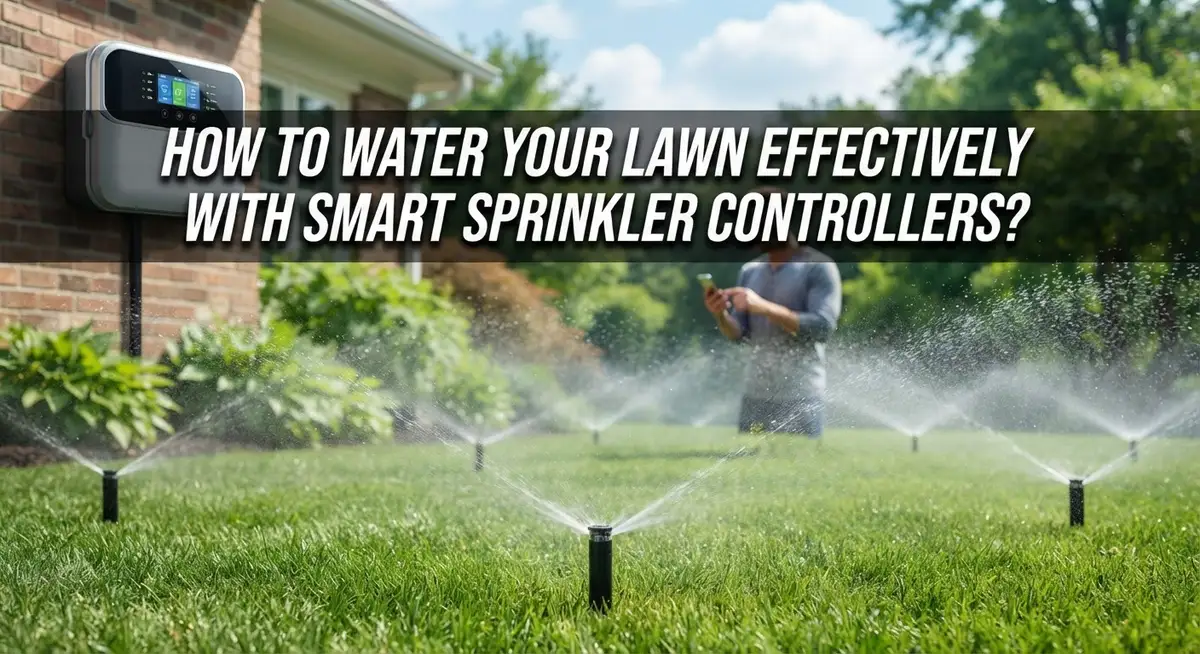
How to Water Your Lawn Effectively With Smart Sprinkler Controllers?
Your lawn wants water. But not too much, and not too little.
Most homeowners struggle to find that balance. They either overwater and create a breeding ground for fungus and weeds, or they underwater and watch their grass turn brown.
Here’s the good news. Smart sprinkler controllers solve this problem for you.
These devices use soil moisture sensors, sun exposure data, and real time weather forecasts. They calculate exactly how much water your lawn needs. No guesswork involved.
In this article, we will show you how to set up your smart sprinkler controller correctly. You will learn how to position sprinkler heads for full coverage.
In a Nutshell
- Smart controllers do the math for you. They check soil moisture, sun exposure, and weather before they water your lawn.
- Weekly water needs stay the same. Your lawn wants 1.5 to 2.5 inches of water each week, no matter the season.
- Placement matters more than power. Sprinkler heads need the right position to cover your whole yard without waste.
- Seasons change, schedules should too. Adjust your watering times as temperatures rise and fall throughout the year.
- Watch for pooling water. If water starts to pool on your lawn, that’s your sign to turn off the system.
- Overwatering hurts more than it helps. Too much water leads to weeds, fungus, and disease in your grass.
What Are Smart Sprinkler Controllers and How Do They Work?
Smart sprinkler controllers are automated watering systems that connect to your home’s Wi-Fi network. They adjust your lawn’s water schedule based on real conditions instead of running on a fixed timer.
How they gather information is the key to their success. These devices collect data from multiple sources. Soil moisture sensors tell the system when your ground is dry. Weather forecasts show rain coming in the next few days. Sun exposure monitors track how much heat your lawn receives.
The controller processes all this data automatically. It answers questions like: Does my lawn need water today? Will rain arrive tomorrow? Is my soil already saturated? Based on these answers, the system waters or skips watering.
The main benefit is water savings. Your lawn gets exactly what it needs, nothing more. This prevents the common problem of overwatering. Excess water runs off into streets, wastes money, and damages your grass by promoting disease and fungus growth.
Setup is straightforward for most homeowners. You install the controller where your current timer sits. You connect it to your home’s Wi-Fi network through a mobile app. You input basic information about your lawn’s size and sun exposure. The system then creates an optimal watering schedule.
The device learns over time as it collects more data. It adjusts for your specific soil type, grass variety, and local climate. Some systems even let you manually override schedules if you notice issues.
Smart controllers eliminate guesswork from lawn watering. They work 24/7 to monitor conditions and make decisions. You simply check your app occasionally to confirm everything runs smoothly. This technology transforms watering from a chore into an automatic, efficient process that keeps your grass healthy while conserving water.
Understanding Your Lawn’s Water Needs
Your lawn’s water needs depend on several factors working together. Soil type, grass species, sun exposure, and local climate all play important roles in how much water your grass requires.
Sandy soils drain quickly and need more frequent watering. Clay soils hold water longer and require less frequent applications. Loamy soils fall somewhere in between and offer the best balance for most lawns.
Different grass varieties have different thirst levels. Cool season grasses need more water during spring and fall. Warm season grasses peak their water demand during summer months.
Sun exposure creates major differences across your lawn. Areas with full sun lose water faster through evaporation. Shaded spots need less water because moisture stays in the soil longer.
Your region’s climate shapes overall water needs significantly. Humid areas receive more natural moisture from rainfall. Dry climates require more supplemental watering to keep grass healthy.
Smart sprinkler controllers measure these factors automatically. They check soil moisture levels throughout your lawn. They track rainfall amounts so they don’t water after rain. They monitor temperature and humidity to predict evaporation rates.
The real advantage comes from personalized scheduling. Your controller adjusts watering based on actual conditions, not just a calendar date. This means your lawn gets exactly what it needs, nothing more or nothing less.
Seasonal changes matter greatly for lawn health. Spring growth requires consistent moisture but not excessive amounts. Summer heat increases water demand significantly. Fall transitions need less water as growth slows down. Winter dormancy requires minimal to no watering.
Understanding these needs helps you work with your smart controller effectively. The device handles the calculations, but you benefit from knowing why it makes certain decisions. This knowledge helps you spot problems early and make adjustments when conditions change unexpectedly.
Setting Up Your Smart Sprinkler Controller: A Step-by-Step Guide
Your smart sprinkler controller needs proper setup to work effectively. Start by choosing the right location for your main controller unit. Place it indoors near your water source and Wi-Fi router for the strongest signal connection.
Next, install your sprinkler heads in strategic positions across your lawn. Each head should cover its zone without overlapping too much with neighbors. Poor placement causes wasted water and dry patches. Test your coverage by running the system and watching where water lands.
Connect your controller to your home Wi-Fi network. Most systems use a mobile app for this step. Download the app on your smartphone and follow the setup prompts. You will need your Wi-Fi password to complete this connection.
Input your lawn’s basic information into the system. Tell the controller your grass type, soil composition, and sun exposure levels. This data helps the system calculate accurate watering schedules. Be honest about these details because they directly affect water efficiency.
Set your watering frequency and duration. Most lawns need watering two to three times per week during growing seasons. Start with shorter sessions and adjust based on how your lawn responds. Watch for pooling water, which signals overwatering.
Enable weather-based adjustments in your app settings. This feature automatically skips watering when rain is forecasted or has recently fallen. This single feature saves significant water throughout the year.
Test your entire system before leaving it on automatic mode. Run each zone individually and confirm proper coverage. Check for dry spots or excessive runoff. Make adjustments to sprinkler head angles or positions as needed.
Finally, schedule seasonal adjustments in your app. Most systems let you create different schedules for spring, summer, fall, and winter. Update these schedules as temperatures and daylight hours change. Regular monitoring keeps your lawn healthy while conserving water.
Positioning Sprinkler Heads for Optimal Coverage
Proper positioning of sprinkler heads determines whether your lawn gets enough water or too much. The goal is coverage without overlap or dead zones where grass receives no water at all.
Start by mapping your lawn’s layout. Identify sunny areas, shaded corners, and spots with different soil types. Each zone may need different water amounts. Sprinkler heads work best when positioned to cover these distinct areas separately.
Space your sprinkler heads based on their spray pattern. Most heads spray in circles or arcs. Measure the distance each head can reach in your specific conditions. Wind and water pressure affect actual coverage, so test your system before finalizing positions.
Head placement follows a basic principle: coverage should overlap slightly, but not excessively. About 10 to 15 percent overlap prevents dry spots between heads. Too much overlap causes overwatering and wastes water.
Position heads at ground level or slightly above it. Elevated heads get blocked by grass blades and obstacles. Low positioning lets water reach soil more directly.
Consider your lawn’s shape when placing heads. Rectangular lawns need different arrangements than irregularly shaped yards. Corner areas and edges often need special attention since they receive less water from standard patterns.
Avoid placing heads near structures, sidewalks, or flower beds unless those areas need watering too. Sprinkler spray hitting pavement wastes water and creates slippery surfaces.
Test your positioning before connecting to your smart controller. Run each zone individually and observe where water lands. Adjust head angles and positions as needed until coverage looks even across your entire lawn.
Once positioning feels right, your smart controller takes over. The system monitors soil moisture and weather conditions. It adjusts watering schedules automatically based on your lawn’s actual needs. Good head positioning makes your smart system work at peak efficiency.
Adjusting Watering Schedules Through the Seasons
Smart sprinkler controllers adjust automatically as seasons change, which saves water and keeps your lawn healthy. Each season brings different weather patterns, temperature shifts, and grass growth rates that affect how much water your lawn actually needs.
Spring watering starts gentle because rain becomes more frequent. Your controller should reduce watering time by 25 to 40 percent compared to summer schedules. Grass begins growing actively, so it needs moisture, but excess water in spring causes fungus and disease. Monitor your soil moisture regularly and let the controller’s sensors guide adjustments.
Summer demands peak watering since heat increases evaporation dramatically. Your lawn needs the full 1.5 to 2.5 inches per week from rain and sprinklers combined. High temperatures stress grass, so consistent watering becomes critical. Enable your controller’s weather monitoring to skip watering on rainy days and reduce schedules during cooler weeks.
Fall requires gradual reduction as temperatures drop and growth slows. Decrease watering frequency by 15 to 20 percent each week as September transitions to November. Grass needs less water, but don’t stop completely. Proper fall watering strengthens roots before winter arrives.
Winter watering depends on your climate. Cold regions need minimal or zero watering since dormant grass requires almost nothing. Mild climates still need occasional watering during dry spells, but frequency drops significantly. Most controllers allow you to pause schedules entirely during winter months.
Check your app regularly to confirm seasonal adjustments are active. Many smart controllers include preset seasonal modes that handle these changes automatically. However, unusual weather patterns sometimes require manual tweaks. If your region experiences unexpected dry spells or unusual rainfall, adjust your schedule accordingly.
Your smart controller learns your lawn’s patterns over time, making seasonal transitions smoother and more efficient than manual adjustments.
Common Watering Mistakes and How to Avoid Them
Overwatering is the most common lawn mistake homeowners make. Many people assume more water means a healthier lawn, but this causes serious problems. Excess water leads to pooling, fungus growth, disease, and weed invasion. Your grass suffers when soil stays too wet.
Poor sprinkler timing wastes enormous amounts of water. If you water during the hottest part of the day, much of it evaporates before reaching grass roots. Water early in the morning instead, ideally between 4 and 8 AM. This timing lets water soak deep into soil while minimizing evaporation loss.
Ignoring weather conditions is another major mistake. Many people stick to fixed schedules without checking if it rained recently. Smart controllers solve this by monitoring weather automatically. If rain fell yesterday, your system skips watering today. This prevents runoff and saves money on your water bill.
Not checking soil moisture leads to guessing about water needs. Stick your finger two inches into the soil. If it feels moist, skip watering. Dry soil means it’s time to water. This simple test prevents both overwatering and underwatering.
Uneven sprinkler coverage creates dry patches and wet zones. Some areas get too much water while others get too little. Position your heads so spray patterns overlap slightly, creating uniform coverage across your entire lawn.
Running sprinklers on windy days wastes water through drift. Wind carries water away from your lawn to sidewalks and driveways. Choose calm days for watering, or let your smart controller handle timing automatically.
Most lawns need 1.5 to 2.5 inches of water weekly from rain and sprinklers combined. Track how much water your system applies by running it and measuring collected water in cups. Adjust duration and frequency based on actual output, not guesswork. This approach keeps your lawn healthy while conserving water.
Monitoring and Fine-Tuning Your Smart Watering System
Your smart sprinkler controller gives you real time data through its app or dashboard. Check this information regularly to see how much water your lawn actually receives. Most systems show you daily watering cycles, duration, and total gallons applied.
Compare your controller’s data against your lawn’s actual appearance. If you see brown patches, your system may need adjustment. If grass looks soggy or water pools form, you’re applying too much. Take photos weekly to track changes and identify problem areas.
Soil moisture sensors built into many smart controllers measure water levels in the ground. These sensors help the system decide when to water next. If your system has this feature, verify the sensors are clean and positioned correctly. Dirty sensors give false readings and cause watering errors.
Weather data integration is powerful for fine tuning. Your controller receives local forecasts and skips watering when rain is coming. However, review these decisions yourself. Sometimes forecasts change, and your lawn’s needs shift. Adjust the weather sensitivity settings if your system waters too frequently or not enough.
Check your app weekly during the growing season. Look for patterns in watering frequency and duration. If cycles seem too short, your sprinkler heads may not be reaching deep enough. If cycles are very long, water may be running off instead of soaking in.
Make small adjustments rather than big changes. Increase watering by 10 to 15 percent at a time, then observe results for one to two weeks. This approach prevents shock to your grass and helps you find the perfect balance.
Document what you change and when. This record helps you understand what works best for your specific lawn. Over time, you’ll build knowledge about your yard’s unique water needs throughout the year.
Final Thoughts
Smart sprinkler controllers make lawn care simple and smart. They take the guesswork out of watering. Your lawn gets exactly what it needs, when it needs it.
Water conservation becomes effortless with these systems. You save money on water bills. You also help protect a valuable resource for your community.
A healthy lawn depends on consistency. Smart controllers deliver that consistency without constant effort from you. They work quietly in the background, doing the heavy lifting.
Technology and nature work together here. Your controller reads weather patterns and soil conditions. It then makes decisions based on real data, not guesswork.
Remember that setup matters just as much as the technology itself. Take time to position your sprinkler heads correctly. Test your system before relying on it fully.
Patience pays off with smart watering systems. Give your controller time to learn your lawn’s specific needs. The results improve as the system gathers more data.
Watch your lawn closely during the first few weeks. Note any dry spots or overly wet areas. Use this information to fine tune your settings.
Your grass will thank you for the balanced approach. Proper watering leads to deeper roots and stronger growth. This creates a lawn that resists drought and disease better.
Think of your smart controller as a helpful partner. It handles the daily details so you can enjoy your lawn instead of worrying about it.
Start simple and build from there. Small improvements add up over time. Soon you will have a lush, green lawn that uses water wisely.
The investment in smart watering technology rewards you with less work and better results. Your lawn stays healthy through every season with minimal fuss on your part.
Frequently Asked Questions
How often should I water my lawn with a smart controller?
Most lawns need 1.5 to 2.5 inches of water per week. This includes rain plus sprinkler water combined. Your smart controller automatically adjusts watering days based on rainfall and soil moisture levels.
During hot, dry seasons, you may water more frequently. In cooler months, your system waters less often. The controller learns your lawn’s needs and adapts the schedule for you.
Can a smart controller really save water?
Yes. Smart controllers reduce water waste by monitoring soil moisture and weather conditions in real time. They skip watering when rain is forecasted or when soil already has enough moisture.
Traditional timers water on fixed schedules regardless of conditions. Smart systems make decisions based on actual lawn needs. Most homeowners see water savings of 20 to 50 percent.
What happens if my lawn gets too much water?
Overwatering causes pooling, dead patches, and fungal diseases. Excess water also encourages weeds and creates runoff that wastes resources.
Your smart controller prevents this by measuring soil saturation. When moisture levels are adequate, the system skips that watering cycle. Check your app if you notice soggy areas or standing water.
How do I know if my sprinkler placement is correct?
Good placement means even coverage across your entire lawn with no dry spots or overly wet zones. Walk your yard during a watering cycle and observe where water lands.
Adjust sprinkler head positions if coverage is uneven. Your smart controller works best when water reaches all areas consistently.
Should I adjust my smart controller seasonally?
Yes. Spring and fall need different watering than summer. Cooler seasons require less frequent watering since grass grows slower and evaporation decreases.
Check your app monthly and make small adjustments as seasons change. Your controller handles most seasonal shifts automatically, but minor tweaks improve results.

Hi, I’m Jane! As a passionate gardener and product enthusiast, I spend my days testing garden tools, comparing products, and writing honest reviews so you don’t have to learn the hard way. Got a question? Feel free to reach out — I’d love to hear from you!