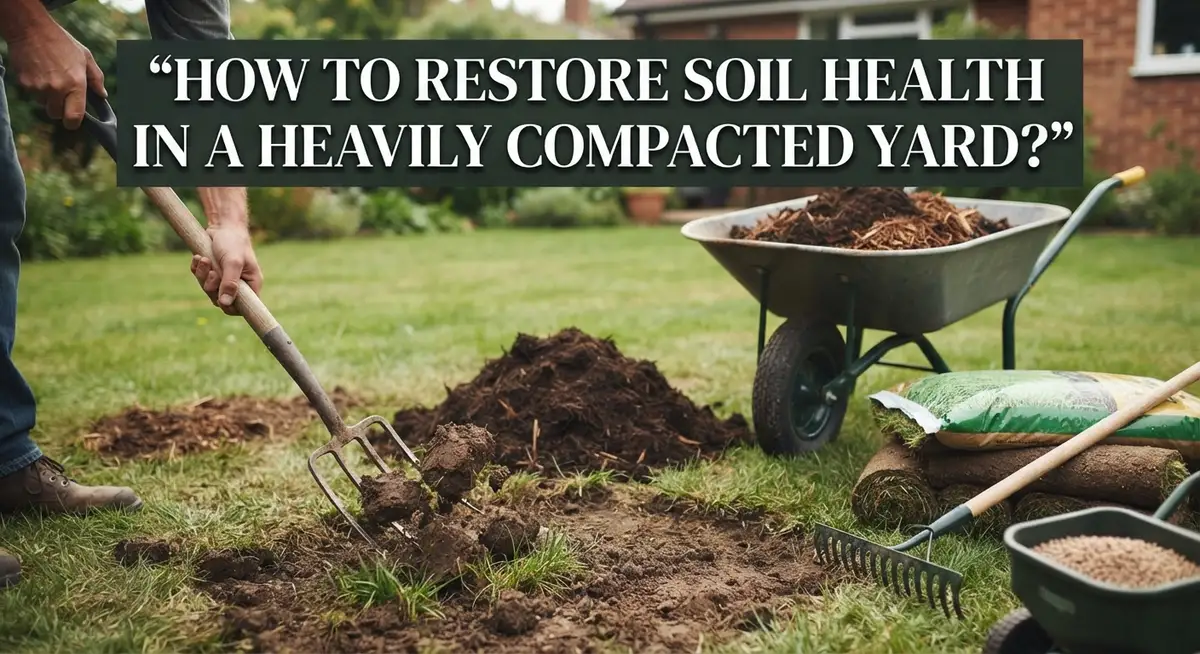
How to Restore Soil Health in a Heavily Compacted Yard?
Do you struggle with hard soil that turns into a brick after rain? Compacted soil is a common problem in many yards. It blocks water, air, and roots from moving freely below the surface.
When soil gets packed down, grass struggles to grow. Puddles form after rain instead of soaking in. Plant roots stay shallow and weak.
The good news is that you can fix this problem. Restoring soil health takes a mix of methods, not just one quick fix. Mechanical aeration alone will not solve compaction for good.
This guide walks you through every step of the process. You will learn how to aerate soil the right way. We will cover adding compost and mulch for lasting results.
In a Nutshell
- Break it up first. Use a broad fork or core aerator to create channels in the soil. This lets air and water reach the roots again.
- Feed the ground. Spread a layer of compost over the aerated area. Organic matter helps keep soil loose for the long term.
- Skip the tiller. Avoid roto-tilling on a regular basis. It breaks soil structure and often makes compaction worse over time.
- Water the smart way. Adjust your watering schedule to let moisture soak in slowly. This prevents new crusting on the surface.
- Let nature help. Some weeds with long taproots actually aerate soil naturally. You can leave a few in place while you work.
- Cover bare spots. Patch any exposed dirt with grass seed or mulch after treatment. This stops new compaction from starting again.
Combine these steps together for the best results. Mechanical loosening plus organic feeding gives your yard lasting health.
Understanding Soil Compaction and Its Causes
Soil compaction happens when soil particles get pressed tightly together. This creates a hard, dense layer that blocks water and air from moving through the ground. Your yard develops this problem for several common reasons.
Heavy foot traffic is one of the biggest culprits. When people walk the same paths repeatedly, they squeeze the soil down. Kids playing in the yard, pets running around, and regular maintenance work all contribute to this issue. Vehicle traffic makes it even worse. Parking cars or driving equipment across your lawn compresses soil faster than almost anything else.
Weather also plays a role. Rain and irrigation water can compact soil over time, especially if the ground stays wet while people or machines move across it. Construction work and landscaping projects frequently leave yards with severely compacted soil. Heavy equipment leaves deep ruts and flattened areas that take months to recover.
Compacted soil creates several problems for your yard. Water runs off instead of soaking in, so your grass gets thirsty even after rain. Roots cannot push through the hard layer, so plants stay shallow and weak. Grass thins out, and bare patches appear. Puddles form after storms because water has nowhere to go.
The soil structure itself changes when compacted. Pore spaces between soil particles shrink dramatically. These spaces normally hold air and water that plants need. Without them, your yard becomes hostile to growth. Beneficial microorganisms that live in soil also struggle in compacted conditions.
Understanding these causes helps you prevent future problems. Minimizing foot traffic on wet soil and avoiding unnecessary machinery use protects your yard. Once you recognize the signs of compaction, you can start fixing the problem before it gets worse. The good news is that restoration works well when you use the right combination of techniques.
Signs Your Yard Suffers from Compacted Soil
Your yard sends clear signals when soil becomes compacted. Learning to spot these signs helps you act before the problem worsens.
Stunted grass growth is often the first clue. Grass blades struggle to push roots deeper when soil sits hard and tight. You will notice thin patches or bare spots where nothing grows well. The grass that does emerge looks weak and pale rather than vibrant green.
Puddles that linger after rain indicate compaction. Water cannot soak into packed soil, so it pools on the surface instead. This standing water eventually runs off, leaving your yard both soggy and dry at the same time. Your lawn dries out quickly once the water disappears.
Hard soil that resists digging is another obvious sign. When you try to push a shovel into your yard, it feels like hitting concrete. A soil probe or screwdriver should slide in easily in healthy soil. If it stops after just a few inches, compaction is present.
Increased weed pressure can also point to compaction. Weeds tolerate hard soil better than desirable grass species. You may notice more dandelions, plantain, or other tough weeds taking over.
Poor drainage creates another problem. Even light rain leaves the soil soggy for days. This wet condition kills grass roots and promotes fungal diseases. Conversely, during dry spells, the ground becomes rock hard and cracks appear.
Reduced soil life happens beneath the surface. Earthworms, beneficial insects, and microorganisms cannot thrive in compressed soil. Your yard loses its natural ability to break down organic matter and cycle nutrients.
Pay attention to these warning signs. Early action prevents compaction from spreading to healthy areas. The sooner you identify the problem, the faster you can restore your soil to working condition.
Step-by-Step Guide to Aerating Compacted Soil
Aerating compacted soil is the first physical step toward restoration. This process creates channels that allow air, water, and roots to move through the earth more freely.
You have two main aeration methods to choose from. A core aerator removes small plugs of soil from your yard, leaving them on the surface to break down. A broad fork, used manually, pierces the ground and loosens soil without removing material. Core aerators work faster on large areas, while broad forks give you more control on smaller spaces.
Timing matters for success. Aerate during the growing season when your grass can recover quickly. Spring and fall work best in most climates. Avoid aerating during drought or extreme heat, as stressed soil needs time to heal.
Before you begin, water your yard one or two days prior. Soil should be moist but not soggy. Wet soil clogs equipment and compacts further. Dry soil resists penetration and makes the work harder.
Make multiple passes over your yard in different directions. One pass rarely solves heavy compaction. Crisscross your lawn to ensure thorough coverage. Spacing between holes should be roughly four to six inches apart.
Leave the soil plugs on your lawn after core aeration. They break down within weeks and return nutrients to the surface. Do not rake them away immediately.
After aeration, your soil is ready to receive amendments. This is the critical moment when organic matter works most effectively. Without adding compost or other organic materials, aeration alone provides only temporary relief.
Plan to aerate every two to three years in heavily trafficked yards. Regular maintenance prevents severe compaction from returning. Light foot traffic yards may only need aeration every three to five years.
Enriching Soil with Organic and Inorganic Amendments
Enriching your soil with amendments is the critical second step after aeration. Organic matter and inorganic materials work together to rebuild soil structure and restore its ability to hold water and nutrients.
Organic amendments break up dense soil particles and create space for air and water movement. Compost is your best choice because it adds beneficial microorganisms while improving texture. Spread a layer two to three inches thick over your aerated yard. You can also use aged manure, leaf mold, or shredded bark mulch. These materials decompose slowly and continue improving soil for months.
Work organic amendments into the top few inches of soil. You don’t need to dig deep. Just ensure good contact between the amendments and existing soil. This encourages microbes to colonize the compacted areas and further break down dense particles.
Inorganic amendments serve a different purpose. Calcined clay particles absorb water and create permanent pore space in soil. Expanded gypsum helps improve soil structure without adding nutrients. These materials don’t decompose, so their benefits last for years. Use them alongside organic matter for best results.
The combination approach matters most. Organic amendments feed soil life and improve texture temporarily. Inorganic amendments create lasting structural changes. Together, they address compaction from multiple angles.
Apply amendments in layers rather than all at once. Start with aeration, add organic matter, then incorporate inorganic materials if needed. Water thoroughly after application to help everything settle and begin working.
Don’t expect instant results. Soil restoration takes seasons, not weeks. Continue adding organic matter annually to maintain improvement. Over time, your soil biology will strengthen, and compaction resistance will improve naturally. Patience combined with consistent amendment application transforms even the most damaged yards.
Replanting and Stabilizing Restored Soil
After aeration and amendments, your soil needs living plants to truly stabilize and hold everything together. Replanting is the final piece that locks in your restoration work.
Grass is your first choice for stabilization. Choose a grass species that matches your climate and sun exposure. Cool season grasses work best in northern regions, while warm season varieties thrive in southern yards. Spread seed evenly across aerated areas or use sod for faster coverage. Water consistently for the first few weeks to help roots establish deep into the loosened soil.
Don’t skip bare spot patching. Aeration creates small holes that need filling. Bare soil invites weeds and erosion. Apply seed or sod to these areas within a week of aeration. This prevents compaction from returning in untreated zones.
Ground covers and native plants offer additional stabilization beyond grass. Clover, creeping thyme, and other low growing plants develop root systems that hold soil structure in place. These plants also reduce foot traffic pressure naturally. Consider adding them to high traffic areas where grass alone struggles.
Mulch plays a protective role during replanting. A two to three inch layer of organic mulch keeps soil moist and prevents crusting. This allows young roots to penetrate more easily. Mulch also feeds soil organisms as it breaks down over time.
Water management changes after replanting. Deep watering less frequently encourages roots to grow deeper into restored soil. Shallow frequent watering keeps roots near the surface where compaction problems persist. Adjust your watering schedule to support strong root development.
Monitor your yard for the first growing season. Young plants need consistent moisture but not waterlogged conditions. Watch for returning weeds and remove them promptly. This maintenance period ensures your restored soil stays stable and healthy for years ahead.
Mistakes That Undermine Soil Restoration Efforts
Many people make critical errors that actually slow down soil restoration. Understanding these mistakes helps you avoid wasting time and effort on your yard.
Over-tilling or roto-tilling is the biggest mistake. Many homeowners think repeated tilling breaks up compaction, but it does the opposite. Each pass with a tiller actually destroys soil structure further. The machine pulverizes soil particles and creates a cement-like layer deeper down. This makes compaction worse, not better.
Relying on aeration alone fails almost every time. You cannot fix compacted soil with aeration as your only tool. Aeration creates holes, but those holes close back up without organic matter to keep them open. The soil returns to its compacted state within weeks. You must combine aeration with compost and mulch additions.
Over-working the soil during restoration causes damage. Some people make multiple aeration passes in quick succession or work amendments in too aggressively. This excessive handling destroys the fragile soil structure you’re trying to rebuild. Your soil needs time to settle between treatments.
Ignoring the role of living plants is another critical error. Aeration plus amendments won’t hold lasting results without vegetation. Plant roots physically break up remaining compaction and stabilize the soil structure. Skipping this step means your yard will recompact within months.
Watering incorrectly undermines all your hard work. Frequent shallow watering encourages roots to stay near the surface. Your restored soil needs deep, infrequent watering to develop strong root systems that maintain soil structure long term.
Expecting instant results leads to frustration. Soil restoration takes time. You won’t see full improvement for one to two growing seasons. Patience and consistency matter more than rushing through multiple treatments at once.
Long-Term Practices to Prevent Future Compaction
Preventing future compaction starts with reducing foot and vehicle traffic on your yard. Heavy use crushes soil particles together and undoes all your restoration work. Create designated pathways instead of allowing random trampling across the entire space.
Minimize soil disturbance during regular yard maintenance. Stop using roto tillers for routine garden prep. Roto tilling actually worsens compaction by breaking soil structure into smaller, denser particles. Instead, use gentler methods like broad forks or hand digging when you need to work the soil.
Establish a regular aeration schedule to keep soil open and breathing. Yards with moderate foot traffic benefit from aeration every two to three years. Heavily trafficked areas may need annual aeration to stay healthy.
Maintain consistent mulch and compost layers on top of your soil. These protective covers absorb impact from foot traffic and reduce direct pressure on soil below. Refresh mulch annually to keep this buffer in place.
Plant deep rooted vegetation throughout your yard. Living roots naturally break through compacted layers and create channels for water and air. Native plants and ground covers work alongside grass to stabilize soil structure from within.
Adjust your watering practices to support soil health. Deep, infrequent watering encourages roots to grow deeper and stronger. Shallow, frequent watering keeps roots near the surface where they cannot help break up compaction.
Monitor your yard during wet seasons. If water pools or runs off instead of soaking in, compaction may be returning. Address these signs early with targeted aeration rather than waiting for widespread problems.
Leave long rooted weeds like dandelions undisturbed when possible. These plants naturally aerate soil with their deep taproots. Remove them only when they truly interfere with your landscaping goals.
Consistency matters most. Small preventive actions repeated each season keep your soil healthy and open for years to come.
Final Thoughts
Restoring a compacted yard takes patience. You won’t see perfect soil overnight.
But small steps add up fast. Aeration opens the door. Organic matter feeds what’s underneath.
Think of soil restoration as a system, not a single fix. Mechanical aeration alone won’t cut it. Compost alone won’t cut it either.
Combining methods gives your soil the best chance to recover. Break up dense layers first. Then feed the soil with organic material.
Plant life ties everything together. Grass roots and ground covers hold structure in place. They stop new compaction from forming.
Weeds with deep taproots can help too. Dandelions and similar plants naturally loosen soil layers. Leave them if they aren’t causing problems.
Watch your watering habits closely. Deep, infrequent watering trains roots to grow downward. This builds stronger, healthier soil over time.
Avoid the urge to rush results. Over-tilling or repeated aeration passes can undo your progress. Soil needs time to settle and rebuild.
Consistency matters more than intensity. A steady routine of light aeration, organic feeding, and mindful traffic control works better than aggressive one time fixes.
Your yard reflects the effort you put into it. Healthy soil supports stronger grass, deeper roots, and better water flow.
This isn’t a one season project. Soil health improves gradually with steady care. Give it a full growing cycle before judging results.
Keep monitoring bare spots and low areas. Patch them quickly to prevent new compaction from forming.
Restoring compacted soil is really about building better habits. Reduce heavy traffic. Feed the ground. Let roots do their work.
With time, your yard will breathe easier, drain better, and grow stronger. That’s the real goal behind every step you take.
Frequently Asked Questions
How long does soil restoration actually take?
Soil restoration is a gradual process. Most yards show visible improvement within 2 to 3 months of starting treatment. However, deep compaction takes 6 to 12 months to fully resolve. Your timeline depends on how severe the compaction is and how consistently you apply your methods.
The key is staying patient. Small improvements build momentum over time. You’ll notice better drainage first, then stronger plant growth, then easier digging.
Why doesn’t aeration alone fix compacted soil?
Aeration creates holes in the soil, but holes alone don’t solve the problem. Compacted soil needs organic material to fill those spaces and keep them open. Without compost or mulch, the soil settles back down within weeks.
Think of aeration as opening a door. Organic matter is what keeps the door from closing again. You need both working together for lasting results.
Can I use regular tilling to break up compaction?
No. Roto-tilling actually makes compaction worse over time. Repeated tilling destroys soil structure and kills beneficial microorganisms. It also creates a hardpan layer deeper down.
A broad fork works better for manual soil breaking. This tool loosens soil without destroying its structure. Combine it with organic amendments for real progress.
What’s the fastest way to restore a heavily compacted yard?
Combine multiple methods at once. Aerate the soil, add 2 to 3 inches of compost, plant grass or ground cover, and adjust your watering schedule. This integrated approach works much faster than any single method.
Patience still matters, but consistency speeds things up. Apply treatments regularly and monitor your progress monthly.

Hi, I’m Jane! As a passionate gardener and product enthusiast, I spend my days testing garden tools, comparing products, and writing honest reviews so you don’t have to learn the hard way. Got a question? Feel free to reach out — I’d love to hear from you!