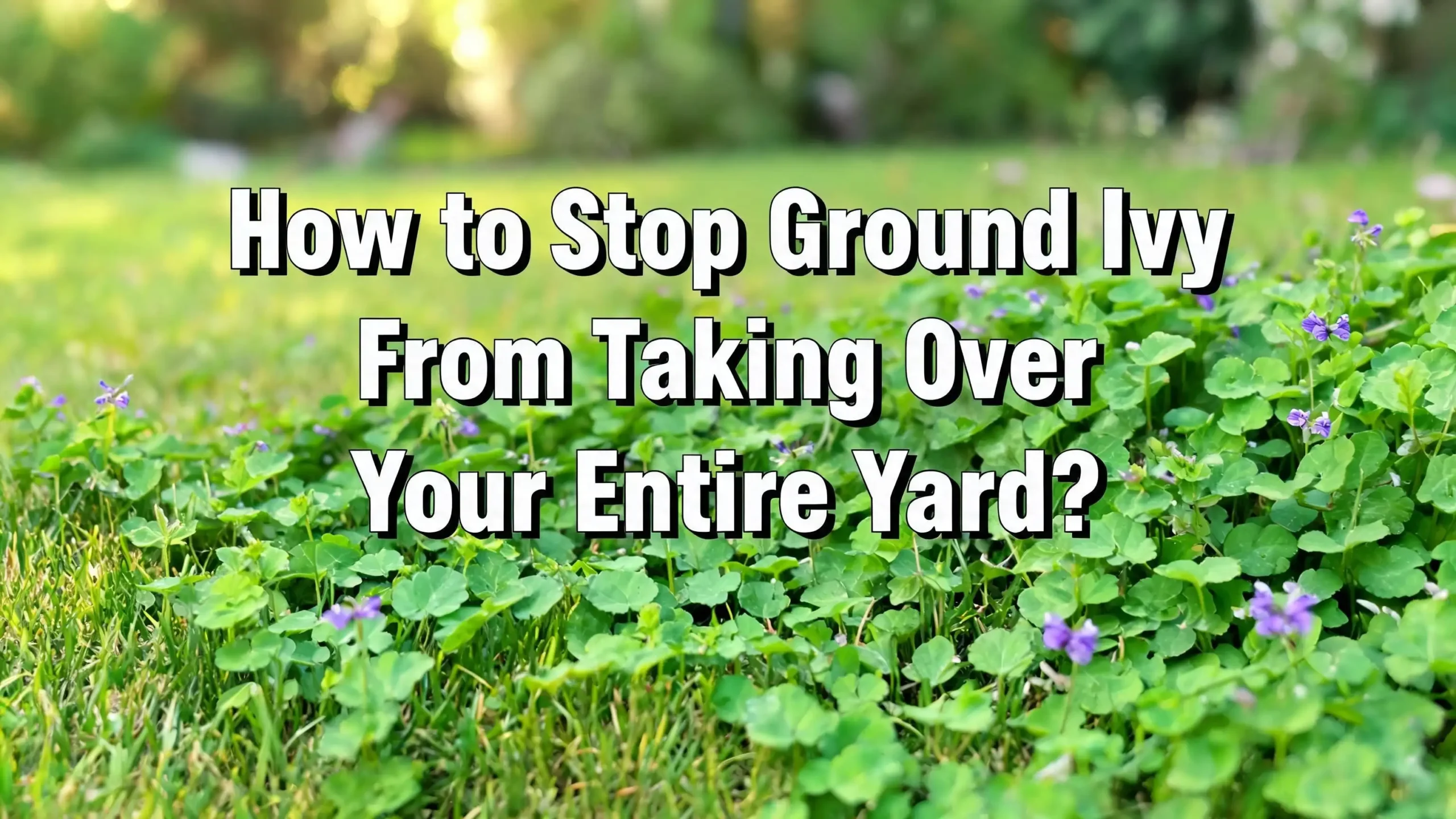
How to Stop Ground Ivy From Taking Over Your Entire Yard?
Have you noticed a green mat of scalloped leaves slowly swallowing your lawn? That stubborn invader is ground ivy, also called creeping Charlie. It creeps across your yard, roots at every node, and chokes out the grass you worked so hard to grow. Millions of homeowners deal with this aggressive weed each year, and many feel frustrated because it seems impossible to kill.
Ground ivy belongs to the mint family. It thrives in shady, moist spots but also grows in full sun. It spreads through horizontal stems called stolons that root wherever they touch soil.
A single plant can extend several feet in one growing season. If you ignore it, ground ivy will form dense mats that block light and steal nutrients from your grass.
The good news? You can stop ground ivy and reclaim your yard. This guide gives you clear, practical, and proven methods to identify, remove, and prevent ground ivy from returning.
Key Takeaways
- Ground ivy spreads through stolons that root at each node, making it one of the most aggressive lawn weeds in North America. You must remove every piece of stem and root to stop regrowth.
- Fall is the best time to treat ground ivy with herbicides. Late September through early November gives you the highest success rate because the plant moves chemicals down to its roots during this period.
- Herbicides containing triclopyr or fluroxypyr are the most effective chemical options. Products with 2,4-D alone often fall short against ground ivy. Combination products with multiple active ingredients deliver better results.
- Hand pulling works for small patches but requires persistence over multiple growing seasons. Pull after rain when the soil is soft and remove every fragment of stolon and root.
- A thick, healthy lawn is your best long term defense. Proper mowing height, regular fertilization, and overseeding create dense turf that crowds out ground ivy before it can establish.
- Natural methods like chelated iron and borax offer alternatives to synthetic herbicides, but results vary and caution is needed to avoid harming your lawn or soil.
What Is Ground Ivy and Why Does It Spread So Fast
Ground ivy (Glechoma hederacea) is an invasive perennial plant that originally came from Europe. Records show it arrived in New England as early as 1672. It was once used in ale production before hops became standard. Today, it is one of the most common and difficult lawn weeds across the United States and Canada.
This weed has round or kidney shaped leaves with scalloped edges and produces small bluish purple flowers in spring. Its stems are square, a signature trait of the mint family. When you crush or mow ground ivy, it releases a distinct minty smell. These features make it fairly easy to identify once you know what to look for.
Ground ivy spreads primarily through stolons, which are horizontal stems that grow along the soil surface. These stolons root at every node, creating new plants as they travel. A single ground ivy plant can spread one to three feet per year. It also produces seeds, giving it a second method of colonization. This dual spreading strategy makes ground ivy extremely hard to contain.
The plant thrives in damp, shady areas with compacted or nutrient poor soil. However, it adapts well to many conditions, including full sun. Scientists suspect ground ivy has allelopathic properties, meaning it releases chemicals into the soil that slow or stop the growth of nearby plants. This gives it a competitive edge over your grass and garden plants.
How to Identify Ground Ivy in Your Lawn
Correct identification is the first step to effective control. Many homeowners confuse ground ivy with similar looking weeds like henbit, purple deadnettle, or common mallow. Treating the wrong weed wastes time and money.
Look for these key identification features. Ground ivy has opposite leaves, meaning two leaves grow from each node on opposite sides of the stem. The leaves are rounded with scalloped or crenate margins. They sit on long petioles (leaf stalks). The stems are distinctly square. Roll a stem between your fingers, and you will feel the flat sides.
Ground ivy forms low, dense mats that spread along the ground. If you see a patch of lighter green, denser growth in your lawn, it is likely ground ivy. In spring, look for clusters of small purple or blue tubular flowers growing at the leaf intersections. Each flower produces four flat, egg shaped seeds.
The easiest test is the smell test. Crush a leaf or stem between your fingers. Ground ivy releases a strong minty odor. Henbit and purple deadnettle do not produce this scent. This quick check reliably separates ground ivy from its look alikes. Once you confirm the identity, you can choose the right control strategy.
Why Ground Ivy Keeps Coming Back After Treatment
Many homeowners treat ground ivy once and expect it to disappear forever. Weeks later, they see it growing right back. Understanding why this happens helps you plan a more effective attack.
Ground ivy survives treatment because its stolon network is extensive. Each stolon roots at multiple nodes along its length. Even if you kill the visible leaves, surviving root fragments and buried stolon pieces can regenerate the entire plant. Research from Purdue University confirms that ground ivy reestablishes quickly after incomplete removal.
Another reason is poor timing. Spring treatments are less effective than fall treatments. In spring, ground ivy actively produces new growth, and herbicides often only burn back the top growth without reaching the root system. In fall, the plant naturally transports sugars and nutrients down to its roots for winter storage. Herbicides applied during this period ride that flow directly into the root system, killing the plant from the inside out.
Population differences also play a role. Studies from Iowa State University show that different populations of ground ivy vary in their sensitivity to herbicides. One colony in your yard might respond well to 2,4-D, while another patch might resist it. This is why rotating active ingredients or using combination products with multiple herbicides produces better long term results.
Finally, if your lawn is thin and weak, ground ivy fills the empty space faster than grass can recover. Without improving your lawn’s overall health, you create open invitations for ground ivy to return after every treatment.
The Best Time of Year to Treat Ground Ivy
Timing your treatment correctly makes a dramatic difference in your results. Apply control methods at the wrong time, and you will waste effort. Apply them at the right time, and you can eliminate ground ivy in one or two seasons.
Fall is the best time to treat ground ivy. The ideal window runs from late September through early November. During this period, ground ivy prepares for winter by pulling nutrients from its leaves down into its root system. Any herbicide applied to the leaves gets carried along with those nutrients deep into the roots. This internal transport mechanism is what makes fall applications so effective.
If you miss the fall window, late spring is your second best option. Treat ground ivy at bloom time or just after the flowers fade. The plant is actively growing and moving energy through its system, which helps distribute the herbicide. However, spring results are generally weaker than fall results.
Summer applications produce inconsistent outcomes. Heat stress can reduce the plant’s uptake of herbicide, and many broadleaf herbicides carry label warnings against application during high temperatures because of the risk of damaging your lawn grass.
For the best results, plan on two applications spaced three to four weeks apart. The first application weakens the ground ivy. The second application finishes off survivors. Many extension services recommend a first fall treatment in late September or early October, followed by a second application in late October or early November. This two punch approach addresses the weed’s ability to recover from a single treatment.
How to Remove Ground Ivy by Hand Pulling
Hand pulling is the simplest and most chemical free way to deal with ground ivy. It works best on small patches and in garden beds where herbicides could damage desirable plants.
Start by watering the area deeply the day before you plan to pull. Moist soil loosens its grip on roots and stolons, making it easier to extract the entire plant. Dry soil causes stems to snap, leaving behind fragments that will regrow.
Use a garden rake or hand cultivator to lift the mat of ground ivy from the soil. Work slowly and carefully. Follow every stolon to its end and pull it out completely. Ground ivy roots at each node, so one plant can have dozens of rooting points. Leave even a small piece behind, and it will regenerate within weeks.
Place all removed plant material in a bag or on a tarp. Do not toss it into your compost pile. Ground ivy can root from stem fragments in compost and reinfest your yard. Dispose of it in yard waste bags or let it dry completely on pavement before discarding.
Persistence is the key to success with hand pulling. You will not eliminate ground ivy in a single session. Plan to check the area every two weeks and pull any new growth immediately. Iowa State University Extension confirms that repeated hand pulling over several growing seasons can reduce or eliminate ground ivy populations. Most gardeners need two to three seasons of consistent effort to see lasting results.
Using Broadleaf Herbicides to Kill Ground Ivy
Chemical herbicides offer the most effective control for large ground ivy infestations in lawns. The key is choosing the right active ingredients and applying them at the correct time.
Triclopyr is the most effective single active ingredient against ground ivy. University of Illinois research confirms that triclopyr and fluroxypyr deliver the best results. These work well as standalone products because the concentration of the active ingredient is higher than in combination formulas.
Three way broadleaf herbicide combinations also perform well. These products typically contain 2,4-D, MCPP (mecoprop), and dicamba in a single formula. The combination attacks ground ivy through multiple pathways, which helps overcome the weed’s variable resistance to individual chemicals. Many products labeled for lawn weed control contain this combination.
Be aware that 2,4-D alone is often not enough. The University of Minnesota Extension notes that 2,4-D by itself is not very effective against ground ivy. Pairing it with dicamba, triclopyr, or other active ingredients improves performance significantly.
Apply herbicides as a foliar spray on a calm day with no rain in the forecast for at least 24 hours. The ground ivy leaves need time to absorb the chemical before rain washes it off. Follow all label directions carefully, including application rates and safety precautions. Wear protective clothing and keep children and pets off treated areas until the product dries.
Always read the product label before purchase. Confirm that ground ivy or creeping Charlie is listed as a target weed. Some broadleaf herbicides skip this particular species.
Natural and Organic Methods to Control Ground Ivy
If you prefer to avoid synthetic herbicides, several natural options exist. They require more patience and repeated applications, but they can reduce ground ivy populations without harsh chemicals.
Chelated iron (also sold under brand names for organic lawn care) is the most effective non chemical option. Iron based herbicides cause ground ivy to turn black and die within days of application. The iron is safe for most lawn grasses. For best results, apply at double the standard rate and plan on two or three rounds of treatment spaced a few weeks apart. Reddit lawn care communities widely report positive results with this method.
Borax (sodium borate) is another option that has been studied at Iowa State University and other institutions. Ground ivy is unusually sensitive to boron. Researchers tested solutions of 20 to 30 ounces of borax mixed in one gallon of water applied to ground ivy patches. The results showed control of the weed. However, borax is not recommended by most extension services because the results are inconsistent. Too much boron accumulates in the soil and can damage grass, flowers, and other plants. Long term soil damage is a real risk with repeated borax use.
Smothering is a reliable non chemical option for garden beds. Cover the infested area with thick cardboard or black plastic sheeting. Secure the edges with rocks or soil. Leave the covering in place for several weeks during warm weather. The lack of light and buildup of heat kills the ground ivy underneath. After removal, check for survivors and pull any remaining growth.
Vinegar solutions (horticultural grade at 20 to 30 percent acetic acid) can burn back ground ivy foliage. However, vinegar is a contact killer that does not travel to the roots. You will need multiple applications, and the ground ivy will likely return from its root system. This method works best as a supplement to other strategies.
How to Improve Your Lawn to Prevent Ground Ivy
A thick, healthy lawn is the single best defense against ground ivy invasion. Dense turf blocks light from reaching the soil surface and prevents ground ivy seeds from germinating. It also physically crowds out creeping stolons.
Mow at the correct height. Set your mower deck to three inches or higher. Taller grass shades the soil and creates unfavorable conditions for ground ivy establishment. Many homeowners cut their grass too short, which thins the turf and opens space for weeds.
Fertilize your lawn on a regular schedule. Apply three to four pounds of nitrogen per 1,000 square feet per year. Iowa State University Extension recommends splitting this into three applications: one in late April or May, one in September, and one in late October or early November. Nitrogen boosts the vigor and density of your grass, giving it a competitive advantage over ground ivy.
Overseed thin or bare areas in late summer or early fall. Choose grass varieties suited to your climate and light conditions. For shady areas where ground ivy thrives, select shade tolerant grass cultivars like fine fescue. Fill every bare spot so ground ivy has nowhere to take hold.
Core aerate your lawn annually to reduce soil compaction. Ground ivy often signals compacted, poorly drained soil. Aeration improves water infiltration, root growth, and nutrient availability for your grass. This creates stronger turf that resists weed invasion.
Water deeply but infrequently. Deep watering encourages grass roots to grow deeper. Frequent, shallow watering keeps the soil surface moist, which is exactly what ground ivy prefers. Aim for one inch of water per week, applied in one or two sessions rather than daily sprinkling.
How to Stop Ground Ivy From Spreading Into Garden Beds
Ground ivy does not limit itself to lawns. It readily creeps into flower beds, vegetable gardens, and around shrubs. Protecting these areas requires a targeted approach.
Create a physical barrier between your lawn and garden beds. Install edging made of metal, plastic, or stone that extends at least three inches below the soil surface. Ground ivy stolons travel along the surface and just below it. A solid barrier stops them from crossing into your beds.
Mulch garden beds with a thick layer of organic material. Apply three to four inches of wood chips, shredded bark, or straw. Mulch blocks light and makes it harder for ground ivy to root. Refresh the mulch layer annually to maintain its effectiveness.
Do not use broadleaf herbicides in garden beds. These products kill all broadleaf plants, including your flowers and vegetables. Instead, rely on hand pulling and digging. Check your garden beds every week during the growing season and pull any ground ivy shoots immediately.
If ground ivy is already established in a bed, consider using a non selective herbicide as a spot treatment with extreme care. Protect surrounding plants with plastic sheets, buckets, or cardboard barriers. You can also apply herbicide with a sponge directly onto ground ivy leaves to avoid spraying desirable plants. Work on calm days with no wind to prevent drift.
Maintain clean borders around all garden areas. Mow or trim the edges regularly so ground ivy cannot sneak in from adjacent lawn areas. Vigilance at the border is easier than fighting an established invasion inside the bed.
Should You Use Preemergent Herbicides on Ground Ivy
Many homeowners wonder if preemergent herbicides, the products they use for crabgrass, will stop ground ivy. The answer is no, preemergent herbicides are not effective against ground ivy.
Preemergent herbicides work by creating a chemical barrier in the top layer of soil that kills weed seeds as they germinate. They target annual weeds that grow from seed each year. Ground ivy is a perennial weed that spreads primarily through stolons, not seeds. Its established root and stolon network is already below the soil surface, well past the zone where preemergent products work.
While ground ivy does produce seeds, its main method of invasion is vegetative spread. The stolons root at each node and create new plants without relying on seed germination. Preemergent herbicides simply cannot address this growth habit.
Focus your chemical efforts on postemergent broadleaf herbicides. These products are absorbed through the leaves of actively growing weeds and transported throughout the plant. Postemergent herbicides containing triclopyr, fluroxypyr, dicamba, or combinations of these active ingredients give you the best chance of killing ground ivy down to the roots.
Save your preemergent applications for actual annual weed threats like crabgrass and foxtail. Apply them in early spring before soil temperatures reach 55 degrees Fahrenheit. This keeps your lawn free of annual weeds while you separately address ground ivy with postemergent treatments in fall.
How to Deal With Ground Ivy in Shady Lawn Areas
Shade creates the perfect environment for ground ivy. Most lawn grasses struggle in low light, which gives ground ivy an open path to dominate. Fixing a shady ground ivy problem requires both weed control and shade management.
Start by removing the ground ivy using the methods described earlier in this guide. Hand pull small patches. Use postemergent herbicides on larger infestations. Time your herbicide applications for fall when they are most effective.
After the ground ivy is gone, assess the light conditions. If possible, prune lower tree branches to allow more sunlight to reach the lawn. Even modest increases in light help shade tolerant grasses grow thicker. Arborists recommend raising the canopy to at least eight feet above the ground where practical.
Reseed with shade tolerant grass varieties. Fine fescues, including creeping red fescue, chewing fescue, and hard fescue, perform well in partial shade. In warmer climates, St. Augustinegrass handles shade better than other warm season grasses. Choose the right variety for your region and overseed at a heavy rate to establish thick coverage quickly.
Adjust your expectations for shady areas. Even the best shade grasses need some filtered light to survive. In areas of deep, permanent shade under dense evergreen trees, grass may never grow thick enough to compete with ground ivy. In these spots, consider ground cover alternatives like pachysandra, sweet woodruff, or hostas that thrive in shade and resist ground ivy encroachment.
Reduce soil moisture in shady areas by improving drainage. Ground ivy loves wet conditions. Redirect downspouts, regrade low spots, and aerate compacted soil to move water away from the surface.
How Long Does It Take to Get Rid of Ground Ivy Completely
Patience is essential when fighting ground ivy. This weed did not take over your yard overnight, and it will not disappear overnight either. Setting realistic expectations keeps you motivated through the process.
With herbicides and good timing, most homeowners see significant control within one to two growing seasons. A fall application followed by a second treatment three to four weeks later kills the majority of ground ivy. However, scattered survivors often appear the following spring. A follow up treatment in the second fall usually finishes the job.
Hand pulling takes longer. Expect two to three years of consistent effort to eliminate ground ivy from garden beds using manual removal alone. The key is pulling every two weeks during the growing season and never allowing the weed to recover.
After the ground ivy is gone, maintain your lawn aggressively for at least one full year. Fertilize on schedule, mow at three inches, water deeply, and overseed any thin spots. This recovery period fills in the areas where ground ivy once grew and prevents reinvasion.
Monitor your yard every spring and fall for the first few years after treatment. Ground ivy seeds can remain viable in the soil, and stolons from neighboring properties can creep back into your yard. Catching new growth early, when patches are small, makes retreatment fast and simple.
Do not get discouraged if you see a few sprigs return. That is normal. Consistent follow up over two to three years produces a ground ivy free lawn. The homeowners who fail are the ones who treat once and then forget about it.
Common Mistakes to Avoid When Fighting Ground Ivy
Knowing what not to do saves you time, money, and frustration. These are the most common errors homeowners make when trying to control ground ivy.
Treating only in spring. Many people spray herbicides in spring when they first notice ground ivy in bloom. Spring applications provide weaker control because the plant is sending energy upward to leaves and flowers, not downward to roots. Always prioritize fall treatments.
Using the wrong herbicide. Grabbing a general purpose weed killer off the shelf without checking the active ingredients leads to poor results. Make sure the product contains triclopyr, fluroxypyr, or a three way combination of 2,4-D, MCPP, and dicamba. Verify that ground ivy or creeping Charlie appears on the target weed list.
Mowing too soon after treatment. Wait at least two to three days after applying herbicide before mowing. The ground ivy leaves need time to absorb the chemical. Mowing too soon removes treated foliage and reduces effectiveness.
Not following up. One treatment rarely eliminates ground ivy completely. Plan for at least two applications per season. Skipping the second treatment allows survivors to regrow and spread.
Ignoring lawn health. Killing ground ivy without improving your lawn creates a bare area that invites the weed right back. Always pair weed control with overseeding, fertilization, and proper mowing to fill in treated areas with thick grass.
Using too much borax. While borax can kill ground ivy, excess boron accumulates in the soil and damages everything growing there. Most extension services advise against borax for this reason. If you try it, use precise measurements and do not repeat applications in the same spot.
Frequently Asked Questions
Is ground ivy the same as creeping Charlie?
Yes, ground ivy and creeping Charlie are two names for the same plant, Glechoma hederacea. Other common names include gill over the ground and alehoof. The plant belongs to the mint family and is found across most of the United States and Canada. Regardless of which name you encounter, the identification traits and control methods are identical.
Will ground ivy go away on its own?
No. Ground ivy is a perennial weed that grows more aggressively each year if left unchecked. It spreads through stolons and seeds, and it can tolerate a wide range of soil and light conditions. Without active control measures, ground ivy will continue to expand and may eventually take over large portions of your yard and garden beds.
Is ground ivy harmful to pets or children?
Ground ivy itself is not highly toxic to humans or most pets. However, it can cause mild digestive upset in cats and dogs if they eat large amounts. The bigger concern is the herbicides used to treat it. Always follow label directions for any chemical product, keep children and pets off treated areas until the product dries, and store herbicides safely out of reach.
Can I just cover ground ivy with new sod?
Laying new sod over ground ivy without killing it first is a waste of money. Ground ivy will grow through the seams and edges of new sod within weeks. Always remove or kill the ground ivy completely before installing sod. Wait until the weed is fully dead, remove the debris, prepare the soil, and then lay your new sod for the best chance of success.
Does ground ivy have any benefits?
Ground ivy does provide nectar to bees in early spring when few other flowers are blooming. It has historical uses as an edible herb and medicinal plant. Some no mow lawn seed mixes include it intentionally. However, if you want a traditional lawn, ground ivy is an aggressive competitor that will crowd out your grass, and active management is necessary to keep it under control.
What is the fastest way to kill ground ivy?
The fastest effective method is applying a postemergent herbicide containing triclopyr in the fall, followed by a second application three to four weeks later. This two treatment approach can eliminate most ground ivy within a single season. Combine the herbicide applications with overseeding and fertilization to prevent the weed from returning the following year.

Hi, I’m Jane! As a passionate gardener and product enthusiast, I spend my days testing garden tools, comparing products, and writing honest reviews so you don’t have to learn the hard way. Got a question? Feel free to reach out — I’d love to hear from you!